
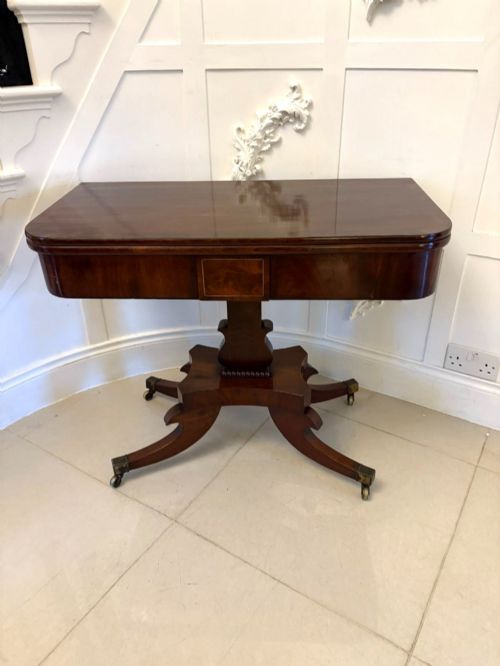


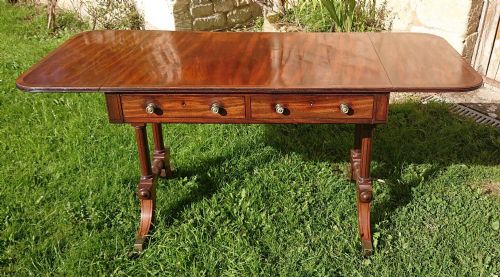


Splayed Leg Console Table
Splayed leg console table pieces are versatile side furniture pieces designed for elegant interiors, offering practical surface space and distinct period character.

Splayed Leg Console Table
When you search for a splayed leg console table, you are looking at versatile side and support furniture designed to stand against walls or function in the centre of principal rooms. The selection includes adaptable forms such as sofa tables, card tables, games tables, tea tables, and dedicated console tables spanning Georgian, Regency, Victorian, and later periods. You will encounter diverse iterations ranging from formal mahogany library pieces to rustic French provincial trestle designs.
The dominant aesthetic belongs to the Regency and Georgian eras, characterised by rich timbers and purposeful geometry. Makers adapted these forms for dining, card play, and tea service, often employing folding tops or trestle supports. The assortment bridges formal English cabinet-making and provincial European woodwork.
How they were made
Cabinet-makers relied on dense tropical hardwoods like mahogany and rosewood, frequently enhanced by contrasting stringing in satinwood, ebony, and brass. Sycamore and elm appear in provincial French trestle pieces, showing plain scrubbed surfaces or simpler joinery suited to domestic utility.
Construction techniques involve precise wood-turning, brass inlay, and folding leaf mechanisms for card and tea tables. Timber selection prioritises figured grain patterns on top surfaces supported by pedestal bases or outward-slanting legs.
Listings feature mahogany, rosewood, and brass alongside rustic sycamore and elm across Georgian and Regency periods.
What varies in quality
The distinction between standard domestic furniture and exceptional pieces rests upon timber selection and the precision of decorative inlays. Highly figured mahogany or rosewood paired with intricate brass work indicates a higher tier of workshop production.
Proportion and structural integrity define the overall success of the piece, particularly where legs splay outwards to support heavy folding tops. Refined turning and careful matching of wood veneers separate ambitious cabinet-making from basic utilitarian output.
The Splayed Leg Console Table Glossary
- Sofa table
- A rectangular side table traditionally placed in front of a sofa, usually featuring drop leaves at either end and twin drawer compartments.
- Card table
- A folding table designed for evening games, featuring a hinged top that opens to reveal a baize-lined playing surface.
- Trestle table
- A table comprising a horizontal beam supported by two vertical or splayed framing units, commonly found in French provincial designs.
- Stringing
- A thin inlay of contrasting wood or metal set into the surface of furniture to create delicate linear borders.
Splayed Leg Console Table: Frequently Asked Questions
What is a splayed leg console table?
A splayed leg console table is a supportive surface piece featuring outward-slanting legs for stability and distinct visual balance. These forms draw from Georgian and Regency traditions.
They function as decorative side furniture or adaptable serving surfaces within traditional and eclectic interiors.
How were these tables used?
Original uses varied from tea service and card playing to general display against drawing-room walls. Many examples include drop leaves or folding tops to expand their surface area.
They served domestic social rituals during the eighteenth and nineteenth centuries before evolving into decorative hall furniture.
Where should I place one?
These tables suit hallways, living rooms, and dining spaces where narrow footprints allow them to sit flat against walls. Sofa tables also function behind freestanding seating arrangements.
Their finished backs and detailed timber grains make them effective when placed in open room positions.
How do I identify Regency pieces?
Regency items typically display dark hardwoods like mahogany or rosewood, often accented with brass inlay or gilt mounts. Proportions tend to be classical and restrained.
Construction details include pedestal bases, saber legs, and crisp geometric veneer work characteristic of the early nineteenth century.