



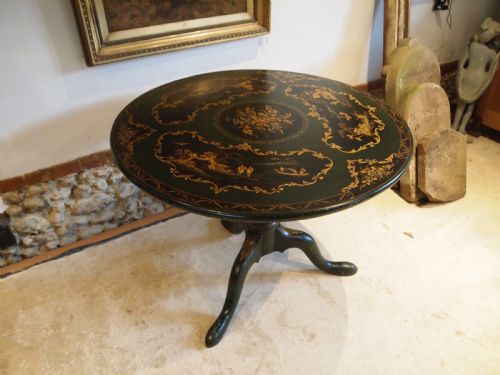

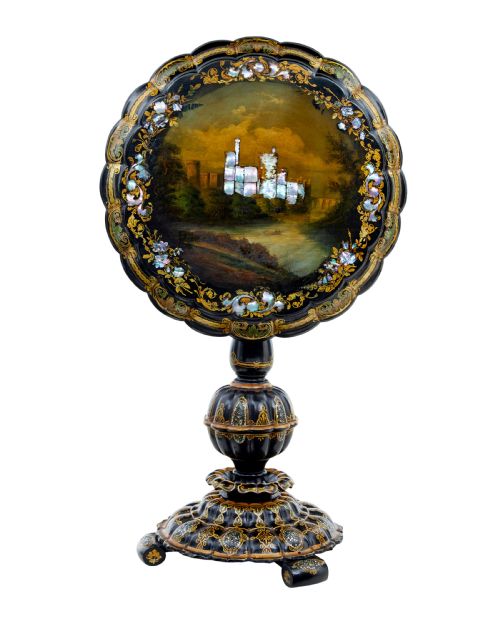

Black Lacquer Wine Table
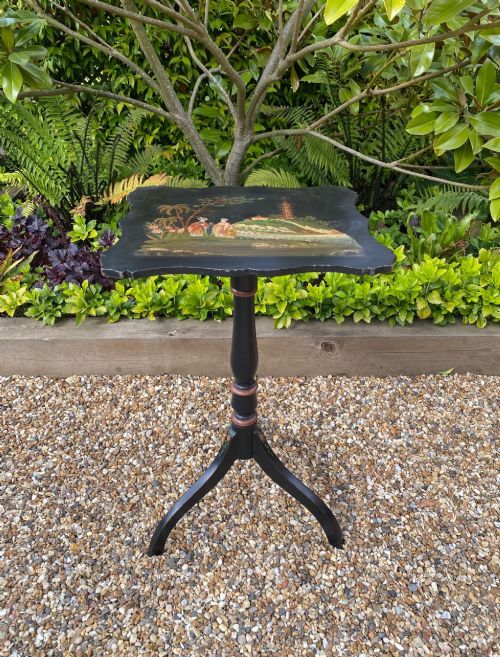
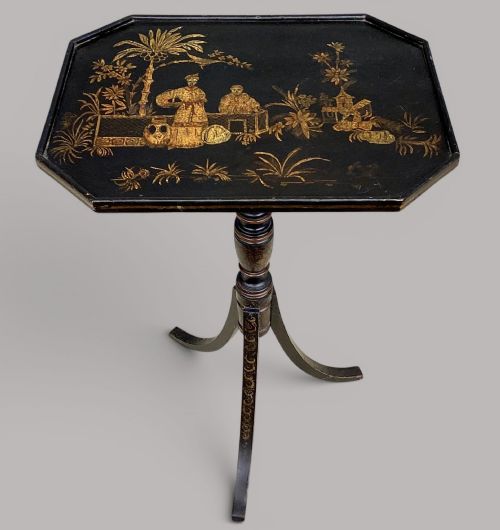
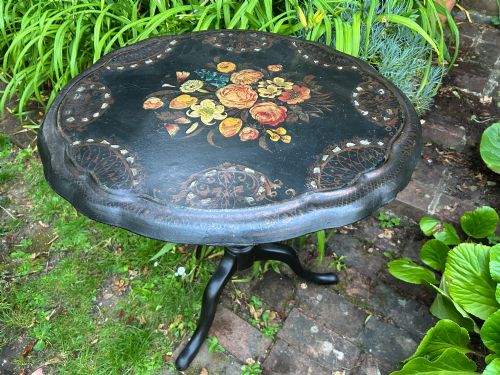
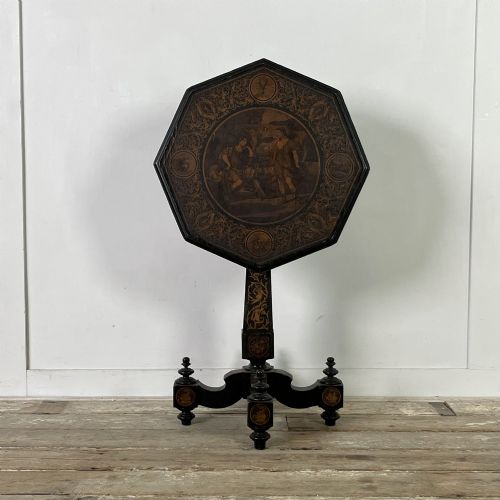
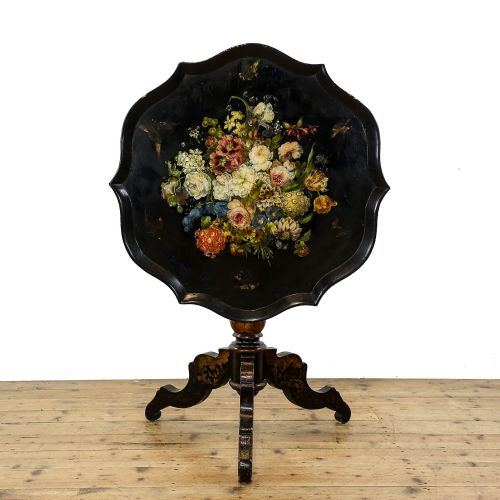
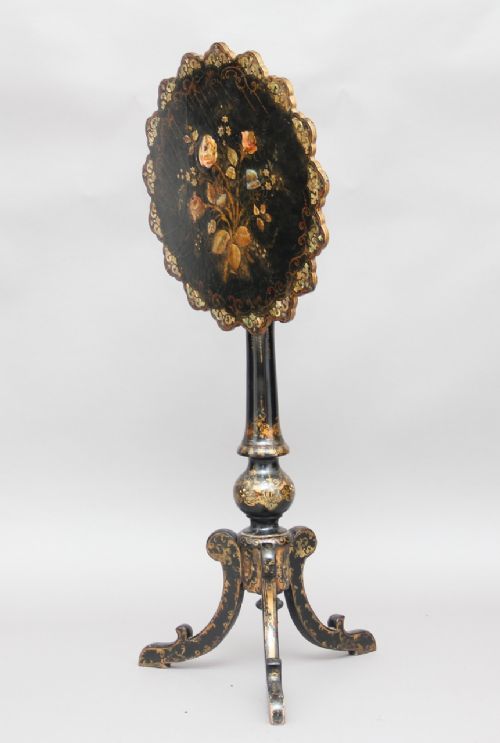
These black lacquer wine tables combine utility with decorative Chinoiserie finishes, offering a compact surface for drinks or display.
Black Lacquer Wine Table
A black lacquer wine table serves as a functional small surface, frequently taking the form of a tripod or tilt-top occasional table. These pieces emerge across the Georgian, Regency, Victorian, and Edwardian periods.
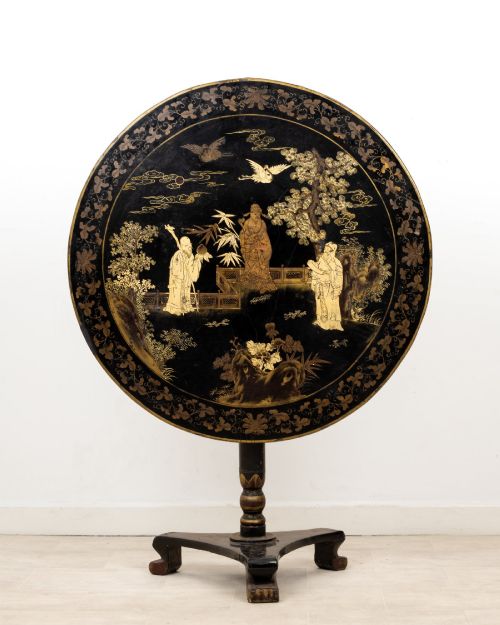
The most common examples on this page feature Chinoiserie decoration, japanning, or painted details on wood and papier-mâché bases. Buyers typically encounter tripod bases and tilt-top mechanisms designed for easy storage.
Materials and Construction
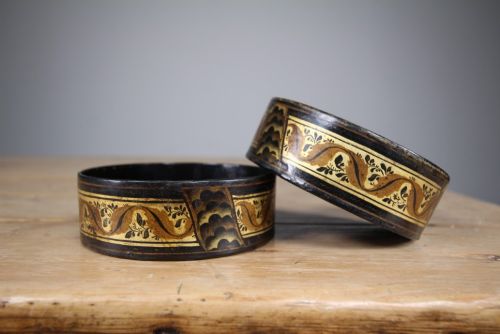
Construction relies primarily on wood and papier-mâché, shaped into occasional tables, wine coasters, and tilt-top tables. Artisans applied layers of lacquer or japanning to create the dark ground.
Decoration is achieved through gold leaf, paint, gilding, and occasionally mother-of-pearl inlay. These decorative elements define the Chinoiserie and painted styles recorded in the period evidence.
Several tables feature hidden tilt-top mechanisms, once deployed to clear floor space rapidly after the port bottle was finished.
Assessing Quality and Execution
Quality rests in the precision of the lacquer surface and the refinement of the painted or gilt Chinoiserie motifs. Superior examples display crisp detail in the hand-painted scenes rather than flat execution.
The stability of the tripod base and the seamless operation of the tilt-top mechanism indicate skilled cabinetmaking. Material choice also distinguishes the pieces, particularly the density of papier-mâché or the selection of solid wood.
The Black Lacquer Wine Table Glossary
- Chinoiserie
- European interpretation and imitation of Chinese and East Asian artistic traditions, prominent in the decoration of these tables.
- Japanning
- European process of finishing furniture with hard, black varnishes that emulate East Asian lacquerwork.
- Tilt-top table
- A table with a hinged top that rotates to a vertical position when not in use, saving space in domestic interiors.
- Papier-mâché
- A composite material made from paper pulp or reinforced paper sheets, pressed and varnished to form sturdy table tops.
- Tripod base
- A three-legged support structure commonly found beneath small occasional and wine tables.
Black Lacquer Wine Table: Frequently Asked Questions
What is a black lacquer wine table used for?
These pieces function primarily as small occasional surfaces for holding glasses, bottles, or decorative items within a room.
Historically, specific versions like wine coasters served portable dining needs, while tilt-top tables stood against walls when not in use.
How do I date a black lacquer table?
Dating relies on identifying structural characteristics, wood types, and decorative styles associated with periods such as Regency, Victorian, or Georgian.
Cabinetmaking techniques and the specific execution of Chinoiserie motifs provide further clues to the manufacturing era.
What is the difference between lacquer and japanning?
Traditional lacquer involves natural resin sap applied in multiple cured layers, whereas japanning is a European imitation technique using shellac and varnish.
Both finishes produce the dark, glossy surface characteristic of these antique tables.
Are these tables sturdy enough for daily use?
Most examples utilise robust wood or dense papier-mâché construction designed to support moderate weight on the surface.
Care should be taken with historical tilt-top mechanisms and delicate gilt or painted finishes during everyday handling.