





Black Gilt Occasional Table
A black gilt occasional table brings dark painted surfaces and bright metallic highlights into a room, serving as a versatile stand for lamps, drinks or small objects.
Black Gilt Occasional Table
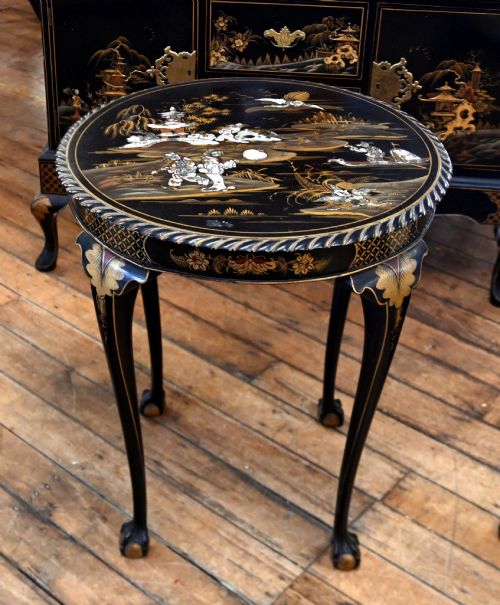
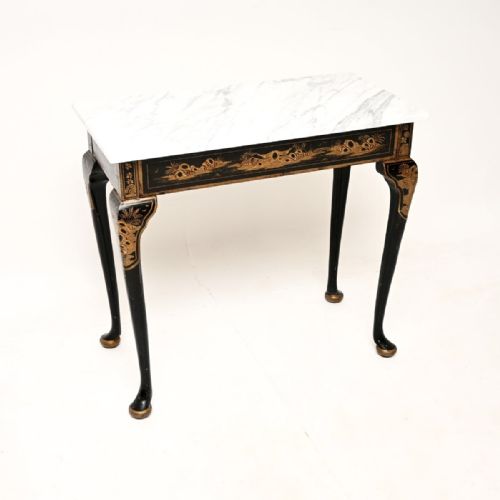
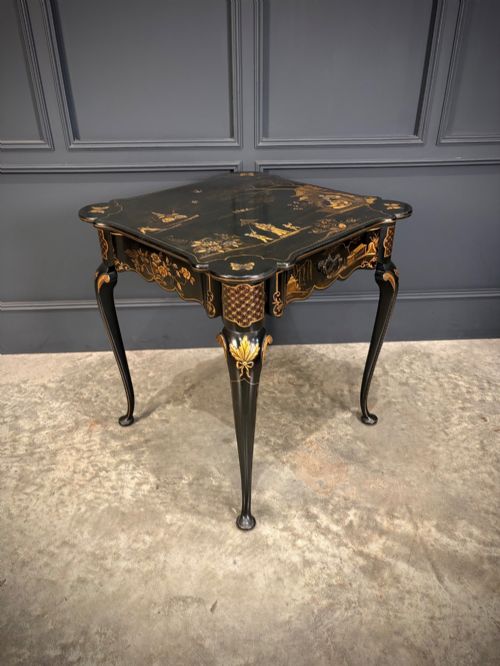
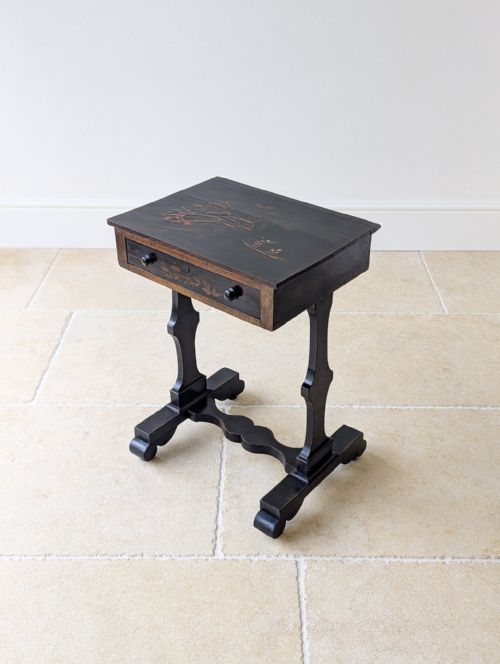
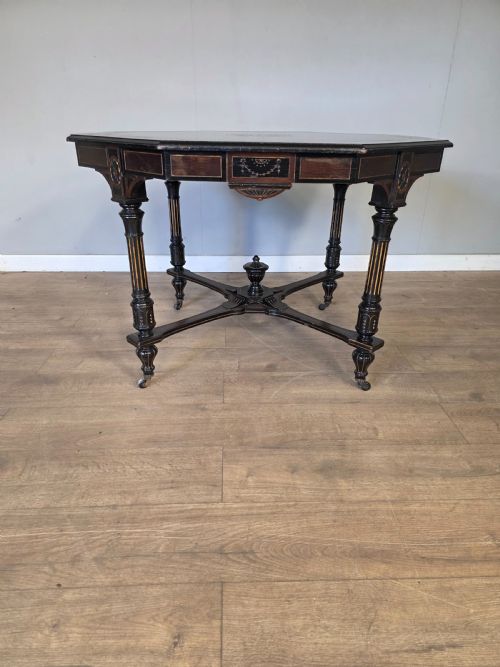
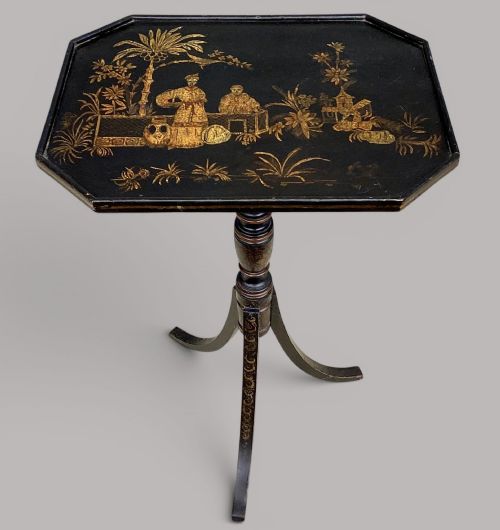
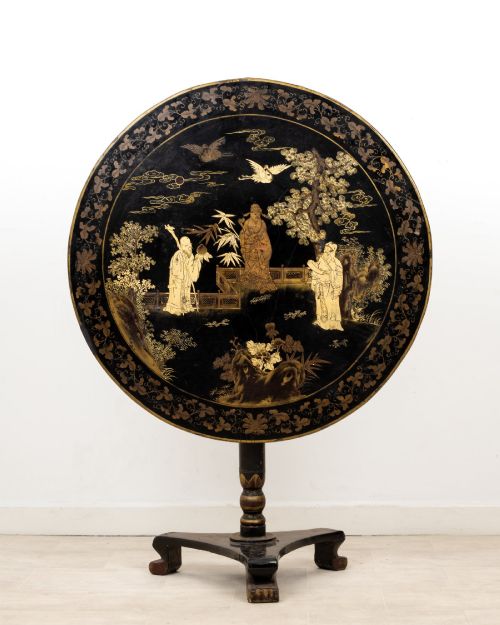
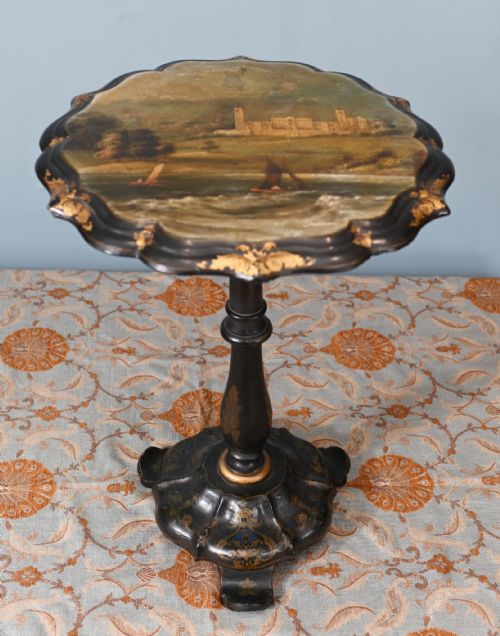
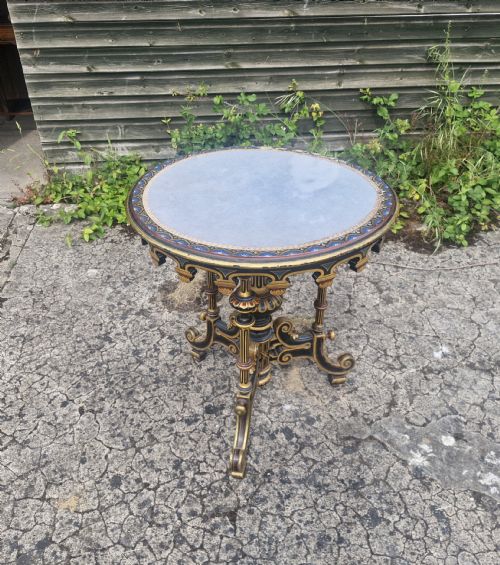
A black gilt occasional table combines a dark ground of lacquer, ebonised wood or papier-mâché with gilt or parcel-gilt highlights. These surfaces frequently carry Chinoiserie decoration, floral motifs or painted scenes.
The form appears across several periods, most notably in Regency, Victorian and Aesthetic Movement pieces. Side tables, centre tables, nests of tables, tilt-top tables and tray tables all fall within this grouping.
Originating from English, French and Chinese export workshops, these tables range from compact wine tables to multi-tiered stands. The selection relies heavily on nineteenth-century examples alongside early twentieth-century revivals.
Materials and Construction
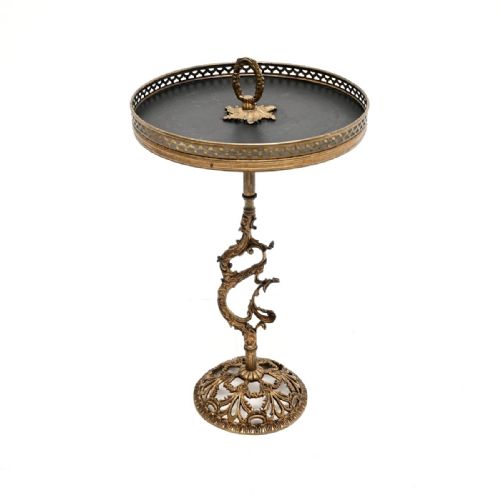
Wood, papier-mâché and brass form the primary structural materials, with ebonised finishes or black lacquer applied to create the dark ground. Gold leaf and parcel gilding provide the metallic contrast on moulded edges, legs and decorative panels.
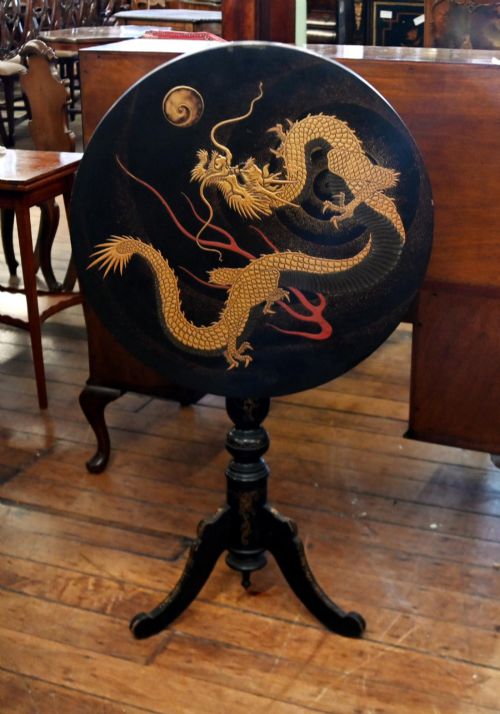
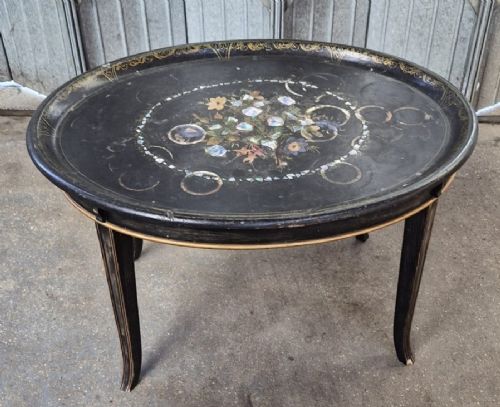
Specialised techniques include japanning, hand-painting and lacquer work, occasionally enhanced by mother-of-pearl inlay or marble tops. Trays are frequently mounted on separate stands, while tilt-top mechanisms utilise timber pillars and tripods.
Black Gilt Occasional Table Retail Price Guide 2026
Typical asking prices for black gilt occasional table among the pieces listed under this phrase on Sellingantiques today, from the lower quarter to the upper quarter. They describe what is for sale here now, not the wider market.
Current listings feature pieces spanning the late eighteenth century through the 1930s, utilising lacquer, papier-mâché, ebonised wood and brass.
Assessing Quality and Execution
Execution of the painted or lacquered decoration dictates the distinction between standard production and finer examples. Delicately rendered Chinoiserie scenes and crisp parcel gilding reflect higher skill than simple stencilling.
The integrity of the structural materials, such as heavy timber frames, stable papier-mâché trays and well-fitted brass mounts, separates robust pieces from fragile ones. Original surface patination also influences the character of the object.
Gillows
The Black Gilt Occasional Table Glossary
- Ebonised
- Wood stained or painted to imitate ebony. This dark finish provides the primary ground for many nineteenth-century tables.
- Parcel Gilt
- Partially gilded surfaces where gold leaf highlights specific carved or painted details. It creates contrast against the black lacquer or wood.
- Japanning
- European imitation of East Asian lacquerwork. Layers of varnish are applied and cured to produce a hard, glossy dark finish.
- Papier-mâché
- Masticated paper pulp pressed and dried into sturdy forms. It provides a smooth base for painted and inlaid tray tables.
Black Gilt Occasional Table: Frequently Asked Questions
Where should I place an occasional table?
These tables suit placement beside seating or in corners where surface space is needed without a large footprint. Their reflective gilt details catch light in darker corners of a room.
Smaller models like wine tables or nests of tables move easily between rooms depending on daily requirements.
How do I care for a lacquered surface?
Dust surfaces gently with a dry, soft cloth to prevent scratching the delicate lacquer or painted finish. Avoid placing damp items directly onto antique tops to protect the varnish.
Keep tables away from direct heat sources and strong sunlight to prevent the timber or lacquer from cracking over time.
What is the difference between ebonised wood and black lacquer?
Ebonised wood involves staining or painting timber to achieve a deep black appearance while retaining the underlying grain. Black lacquer applies built-up resin or varnish layers to create a smooth, glossy surface.
Both finishes provide a dark ground for gilt decoration but rely on distinct preparation methods.
Are these tables sturdy enough for daily use?
Most occasional tables serve well for holding lamps, books or cups when placed on stable flooring. Tilt-top and nest configurations benefit from gentle handling due to their mechanical joints and lighter frames.
Heavier centre tables and pedestal designs offer greater stability for everyday placement in a hallway or drawing room.