




Black Lacquer Decorative Tray
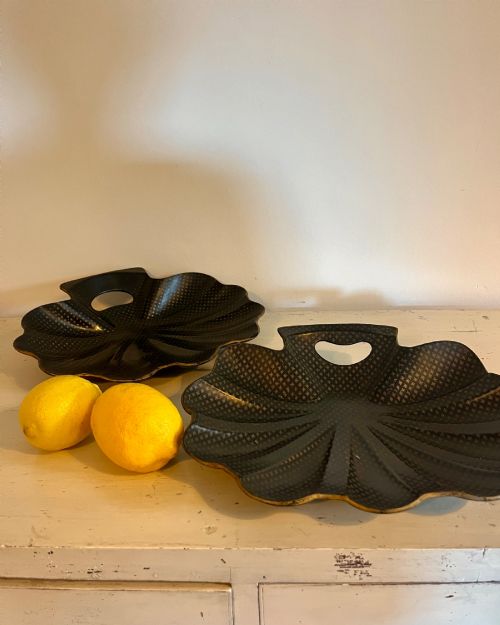
A black lacquer decorative tray brings depth and rich surface pattern to a room, offering both utility and a distinct historical presence.
Black Lacquer Decorative Tray
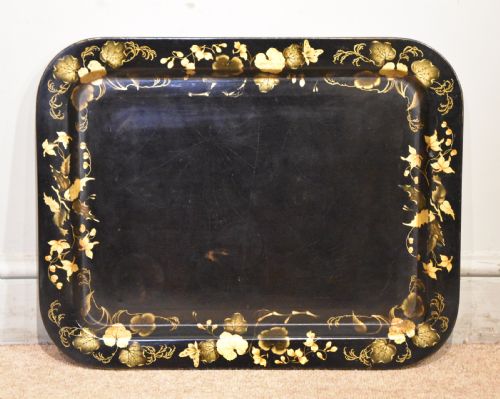
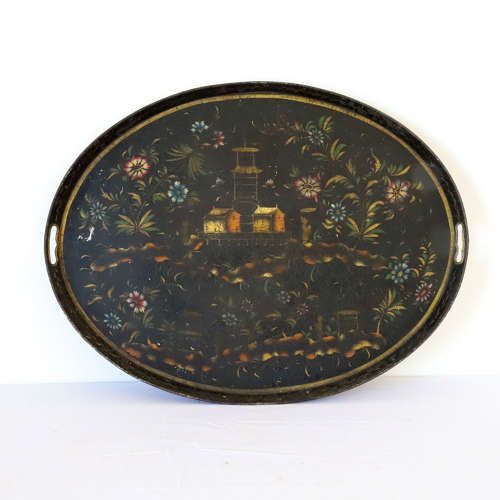
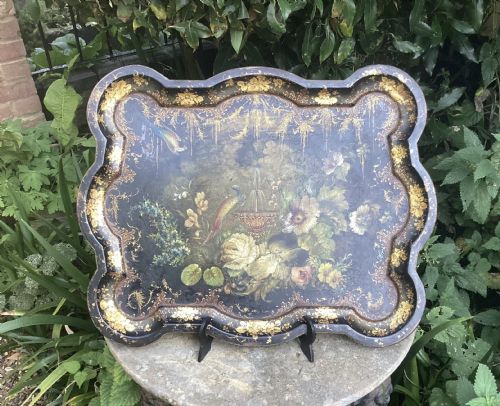
A black lacquer decorative tray represents a rich category of serving wares and display pieces originating from several distinct historical periods. Buyers seeking a black lacquer decorative tray will frequently encounter papier-mâché, lacquered wood, and toleware examples dating from the eighteenth century through to the early twentieth century. These objects appear in various forms, including oval trays, rectangular serving pieces, card baskets, and occasional tables.
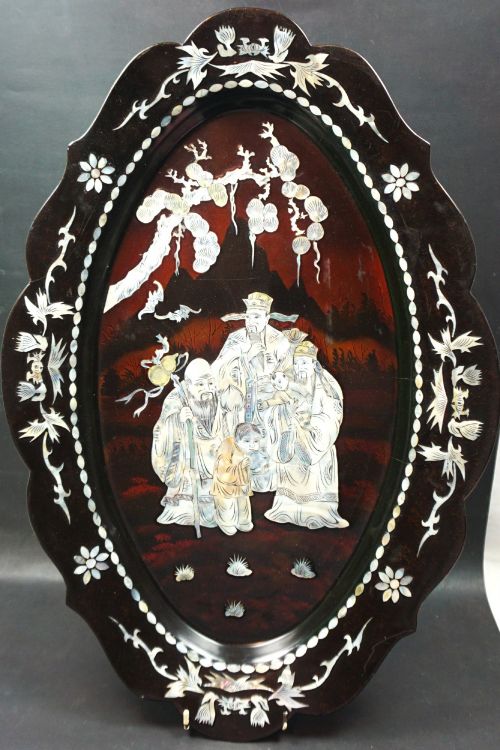
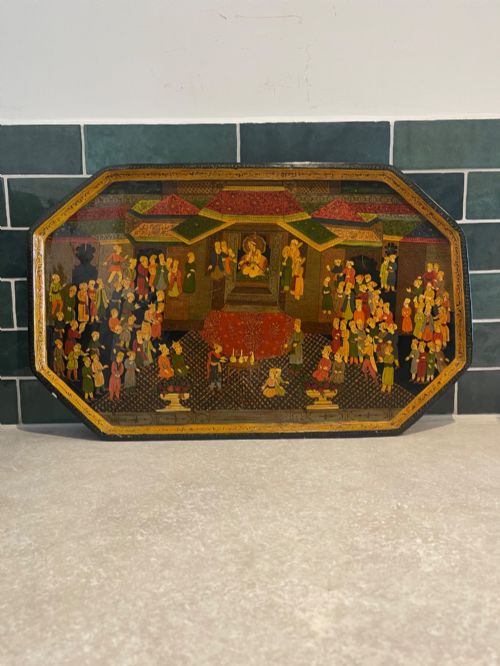
The materials and styles span English Regency and Victorian traditions, alongside Chinese Qing Dynasty, Japanese export work, Kashmiri craft, and Swedish chinoiserie. English papier-mâché pieces from the nineteenth century predominate on this page, often featuring painted landscapes, hunting scenes, or gilt embellishment. Alongside these, buyers find Asian lacquered wood platters, plaques, and toleware sets reflecting diverse global manufacturing centres.
How they were made
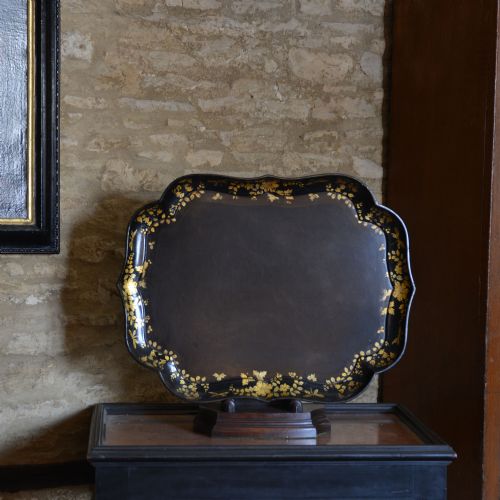
Makers constructed the foundation of these pieces using wood, iron for toleware, or layered paper pulp for papier-mâché. Artisans then applied coats of dark lacquer to achieve a smooth, glossy surface ready for ornamentation.
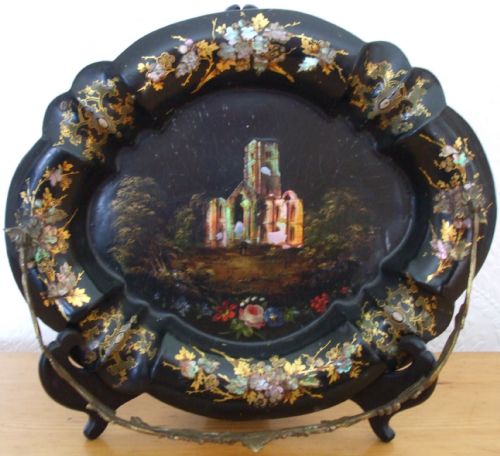
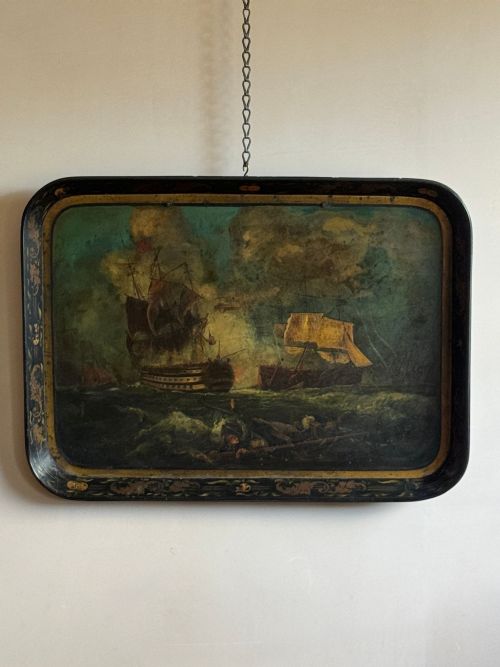
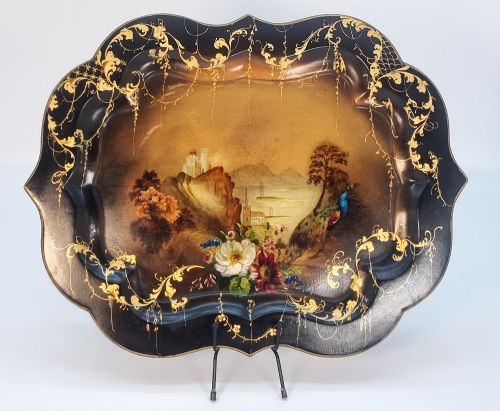
Decoration relied on hand painting, gold leaf application, and mother-of-pearl inlay. Skilled workers built up pictorial details such as landscapes and figurative scenes directly onto the lacquered base.
Listings feature items spanning the eighteenth century to 1920, incorporating papier-mâché, wood, and toleware across English, Asian, and European styles.
What varies in quality
The refinement of the painted or inlaid detail separates the standard examples from the finest works. Hand-painted scenes with careful brushwork and intricate mother-of-pearl placement indicate superior execution.
The structural integrity of the papier-mâché, wood, or metal core determines the longevity of the object. Pieces that retain their original surface sheen and applied decoration without substantial loss represent the higher tier of the range.
Jennens and Bettridge·Clay
The Black Lacquer Decorative Tray Glossary
- Papier-mâché
- A composite material made of paper pulp or layers of paper bound with glue, pressed, and dried to form a rigid base for lacquer. It was widely used in nineteenth-century English tray production.
- Toleware
- Painted or enamelled metalware, typically iron or tin, shaped into household items such as trays. These objects often feature dark grounds and gilt decoration.
- Japanning
- A European imitation of East Asian lacquerwork, created by applying layers of varnish and heat-curing the surface. It produced the glossy dark finishes seen on many Georgian and Regency pieces.
- Chinoiserie
- European artistic styles that reflect Chinese decorative motifs and cultural influences. This aesthetic appears frequently on eighteenth and nineteenth-century trays and decorative objects.
- Mother-of-pearl
- The iridescent inner layer of certain mollusc shells, cut into thin pieces and embedded into lacquer surfaces. It creates shimmering highlights within floral or figurative designs.
Black Lacquer Decorative Tray: Frequently Asked Questions
How were black lacquer decorative trays used historically?
These trays served practical functions for carrying tea, beverages, or cards in domestic settings. They also functioned as decorative display pieces when mounted on stands or placed upon tables.
Over time, their decorative qualities became equally important to their utility, leading to the creation of hanging plaques and tray tables.
How do I care for a papier-mâché tray?
Keep these items away from direct sunlight, moisture, and extreme temperature changes to protect the lacquer finish. Dust them gently with a dry, soft cloth without using liquid cleaners.
Handling them with clean hands prevents natural oils from degrading the painted or gilded surfaces over the years.
How can I tell a Regency tray from a Victorian one?
Regency trays often display restrained neoclassical lines, gilt embellishment, and specific japanning techniques typical of the early nineteenth century. Victorian examples frequently incorporate more complex painted scenes, naturalistic floral motifs, and mother-of-pearl inlay.
Examining the underlying material and the style of the painted decoration helps clarify the period of production.
What is the difference between lacquer and toleware?
Lacquer is built upon a base of wood or papier-mâché using resin or varnish finishes to create a deep, glossy surface. Toleware is formed from metal, usually iron or tin, which is then painted and varnished.
Both materials yield durable surfaces, but their weight and structural composition differ distinctly.