


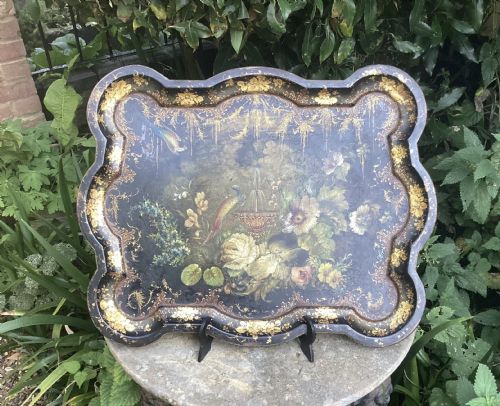


Gilt Botanical Tray
These gilt botanical tray examples bring painted florals and gilded borders to a table, combining utility with fine decorative craft.
Gilt Botanical Tray
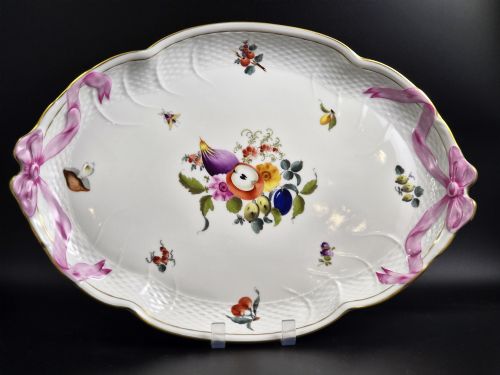
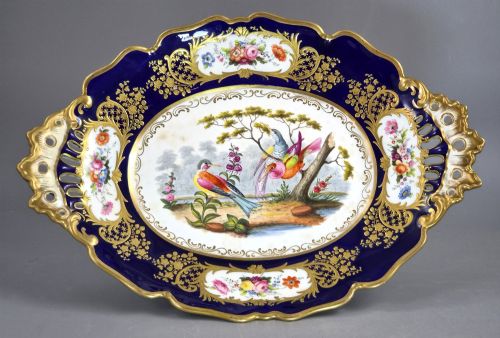
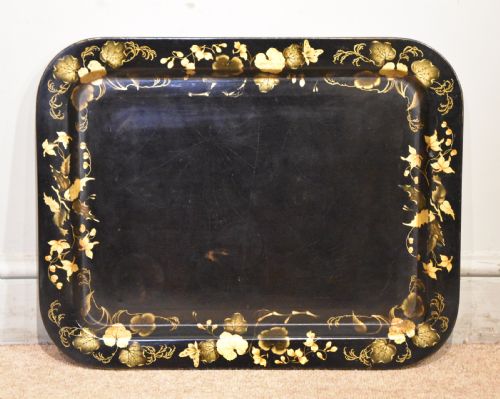
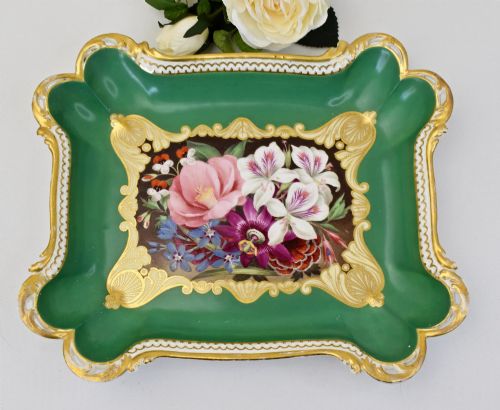
A gilt botanical tray brings together painted floral motifs and gilded enrichment on porcelain, papier-mâché, and toleware surfaces. The items gathered here span serving dishes, decorative trays, and letter racks from the Regency, Victorian, and later periods.
Buyers will most frequently encounter porcelain cabinet dishes, painted plates, and papier-mâché trays decorated with floral and bird studies. These pieces originated across English and continental factories, showing styles from Regency and Rococo Revival to later Edwardian designs.
How they were made
Makers utilised porcelain, papier-mâché, and metal toleware as the primary foundations for these painted objects. Artisans applied hand-painting for floral and bird subjects, using enamel colours directly onto the prepared ceramic body or primed metal surface.
Gold leaf and gilding were applied by hand to borders, rims, and handles to frame the central painted motifs. These metallic embellishments required careful firing or sizing to adhere permanently to porcelain, lacquer, or paint.
Materials recorded across current pieces include porcelain, enamel, gold leaf, papier-mâché, lacquer, and toleware.
What varies in quality
The precision and detail of the hand-painted botanical or bird subject separate standard production items from finer studio work. Skilled brushwork in botanical studies displays accurate shading, fine botanical nomenclature, and nuanced colour mixing.
The application and preservation of the gold leaf or gilding indicate the original standard of manufacture. Thick, burnished gold embellishments reflect careful craftsmanship compared to flat, unburnished metallic paint.
Herend·Coalport·Doe and Rogers·Worcester·Spode·KPM·Royal Crown Derby·Royal Doulton
The Gilt Botanical Tray Glossary
- Toleware
- Painted or enamelled metalware used for domestic trays, bowls, and decorative vessels. This material takes a smooth painted finish well.
- Papier-mâché
- A composite material made of paper pulp or sheets of paper mixed with glue and resin, pressed and dried into sturdy trays. It provides a lightweight yet durable base for lacquer and gilding.
- Gilding
- The application of gold leaf or gold powder to a surface. It adds a reflective metallic border to ceramic and metal pieces.
- Cabinet dish
- A decorative porcelain plate or tray intended for display in a cabinet rather than for serving food. These pieces often feature detailed hand-painted subjects.
- Enamel
- A glass-like substance fused to metal or porcelain through firing. It creates vibrant, durable colours for painted floral decoration.
Gilt Botanical Tray: Frequently Asked Questions
How do I clean a gilt botanical tray?
Wipe the surface gently with a soft, dry cloth to remove dust. Avoid using water, abrasives, or chemical cleaners that can damage the painted details and gold leaf.
Store or display the piece away from direct sunlight to preserve the enamel colours and prevent the lacquer or paint from fading over time.
Can I use these trays for serving food?
Many of these pieces, particularly porcelain dishes and papier-mâché trays, were designed for decorative use or light service. Using them for heavy daily dining may risk scratching the painted surface.
Examine the material and glaze to determine if the piece is suited for occasional table use or strictly intended as a cabinet display item.
How do I date a Regency toleware tray?
Examine the weight, construction of the metal edge, and the style of the hand-painted decoration. Regency pieces often feature specific neoclassical or early revival motifs alongside hand-applied gilt borders.
Compare the pigment types and the wear patterns on the underside to establish whether the piece aligns with early nineteenth-century manufacturing methods.
What is the difference between porcelain and papier-mâché trays?
Porcelain trays offer a rigid ceramic body fired with hard glaze, often featuring detailed botanical painting from major European factories. Papier-mâché trays use compressed paper composite finished with dark lacquer and gilt decoration.
Both materials require careful handling, but porcelain is heavier and more susceptible to chipping, while papier-mâché is lighter and sensitive to moisture.