
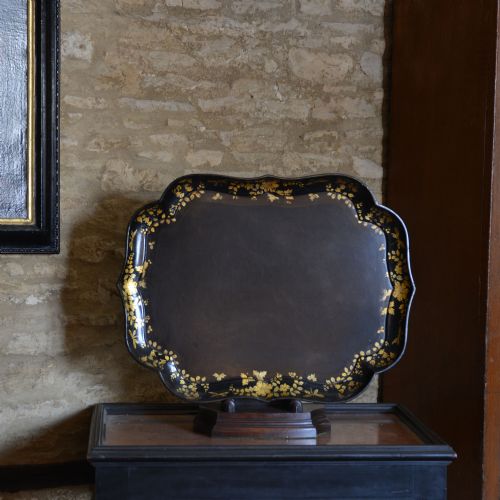
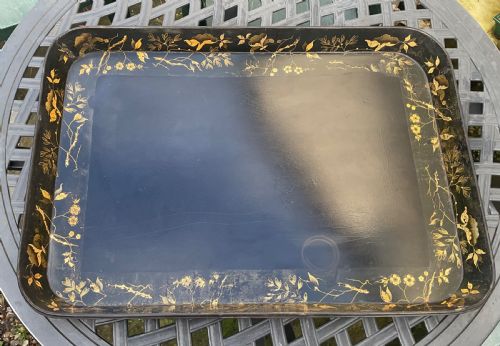


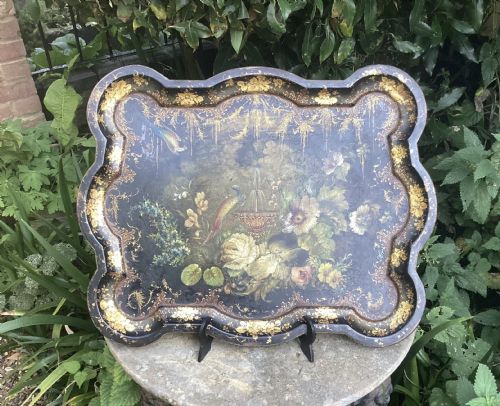

Regency Gilded Tray
A regency gilded tray brings sophisticated tactile presence to a room, offering both functional service and decorative depth through period craftsmanship.
Regency Gilded Tray
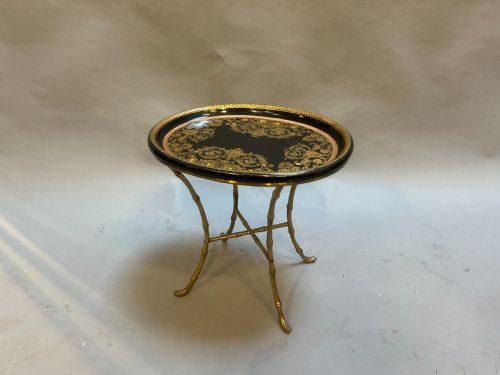
When searching for a regency gilded tray, buyers encounter serving pieces created during the late Georgian and Regency eras, spanning the early nineteenth century. These objects function as traditional serving dishes, tabletop display bases, or occasional tables when mounted on collapsible stands.
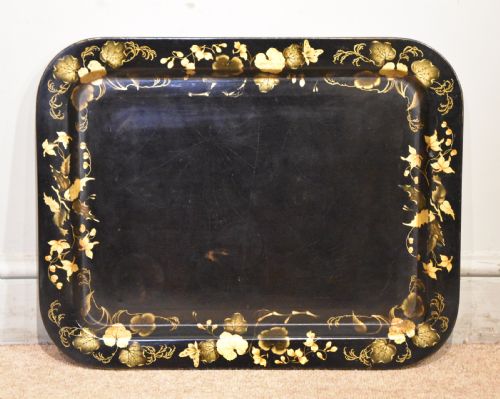
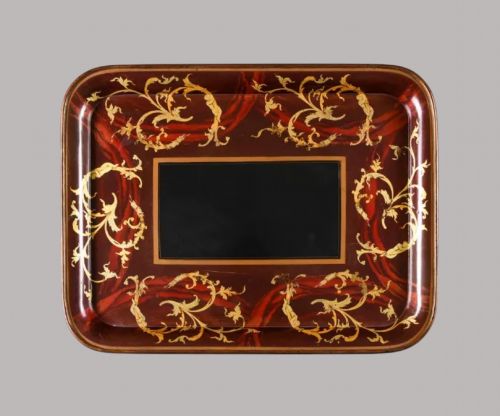
The selection on this page centres heavily upon papier-mâché and lacquered toleware substrates, alongside select porcelain and sterling silver serving vessels. Papier-mâché examples frequently exhibit deep rectangular proportions or shaped edges designed for handling hospitality items.
Makers and makers' marks occasionally appear on these objects, identifying prominent manufacturers of the period such as Jennens and Bettridge or Clay. These pieces represent the domestic elegance of elite households from the opening decades of the eighteen-hundreds.
Materials and construction techniques
Papier-mâché substrates are built from layers of paper pulp and adhesive pressed under heavy pressure, then dried and finished with thick black or dark green lacquer. This creates a remarkably robust yet lightweight foundation capable of supporting heavy porcelain and metalware.
Surface ornamentation relies heavily upon gold leaf application and hand-painted details, often depicting intricate Chinoiserie landscapes or pastoral hunting scenes. Artisans burnished the metallic leaf by hand to achieve a subtle, glowing lustre across the rims and central fields.
Evaluating craftsmanship and condition
The distinction between standard production and top-tier workshop output rests in the complexity of the hand-painted motifs and the intact state of the original gilding. Pieces bearing documented workshop signatures show superior control in fine brushwork and durable lacquer sealing.
Structural integrity of the papier-mâché or metal body directly influences value, particularly around the raised edges and corner joins where handling causes stress. Surviving items that retain their unusual original decoration without extensive repainting command stronger collector interest.
Jennens and Bettridge·Clay·Chamberlain’s Worcester·Ridgway·Spode·Duesbury and Kean·Barr Flight and Barr·Coalport·William Burwash
The Regency Gilded Tray Glossary
- Papier-mâché
- A composite material formed from paper pulp mixed with glue and resin, pressed into moulds and hardened to create durable trays and boxes. This medium takes a smooth lacquer finish exceptionally well.
- Toleware
- Tin-plated steel coated with lacquer or paint, commonly shaped into trays, bowls, and urns during the nineteenth century. It provides a sturdy metal alternative to papier-mâché.
- Chinoiserie
- European artistic interpretation of Chinese and East Asian decorative motifs, frequently rendered in gold leaf upon black lacquered surfaces. This style dominated fashionable interior decoration during the Regency period.
- Gilding
- The application of fine gold leaf or gold powder to a prepared surface to simulate solid gold enrichment. Artisans seal the metal leaf to protect it from tarnishing and daily wear.
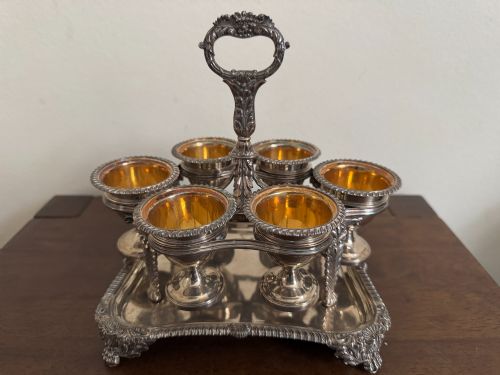
- Cruet stand
- A fitted framework designed to hold condiment bottles, cruets, or egg cups during formal dining. These stands often incorporate precious metals and fine porcelain components.
Regency Gilded Tray: Frequently Asked Questions
Were these trays used for serving food?
Historical households utilised these large vessels for carrying tea services, wine glasses, and dessert courses across formal rooms. Their sturdy papier-mâché and metal construction handled daily domestic movement with ease.
Today, many owners repurpose them as display surfaces on coffee tables or mount them onto custom stands. This keeps fragile surfaces safe from liquid spills while highlighting the painted artwork.
How can I tell a Regency piece from a Victorian one?
Regency items generally display restrained classical motifs, delicate Chinoiserie landscapes, and subtle gold leaf detailing aligned with early nineteenth-century tastes. The forms lean towards clean rectangular or shaped outlines without excessive embellishment.
As the Victorian era progressed, decoration became denser, incorporating mother-of-pearl inlay and heavier ornamentation. Examining the palette and baseline materials helps establish the exact manufacturing window.
What is the difference between toleware and papier-mâché?
Toleware utilises a metal substrate, specifically tin-plated iron, shaped into bowls, trays, and vases before receiving a painted or lacquered coat. It offers rigid durability and a smooth metallic base for dark finishes.
Papier-mâché relies on compressed paper pulp and binding agents, yielding a lighter object that absorbs lacquer deeply. Both materials served as prime canvases for intricate gilding and hand-painted artistry.