
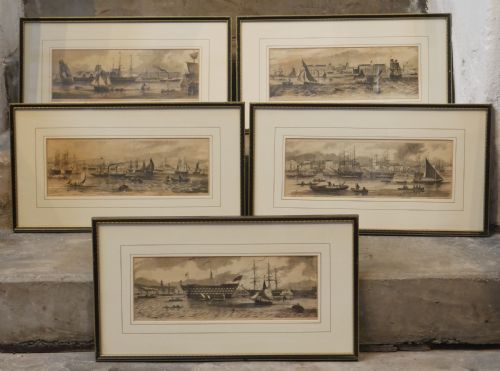

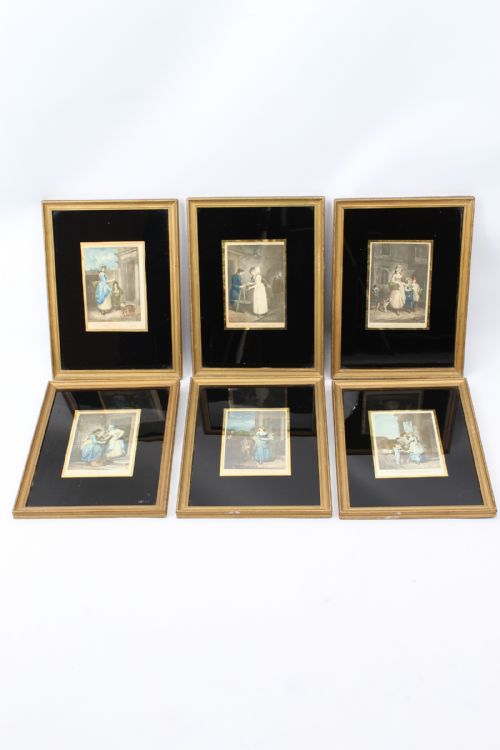

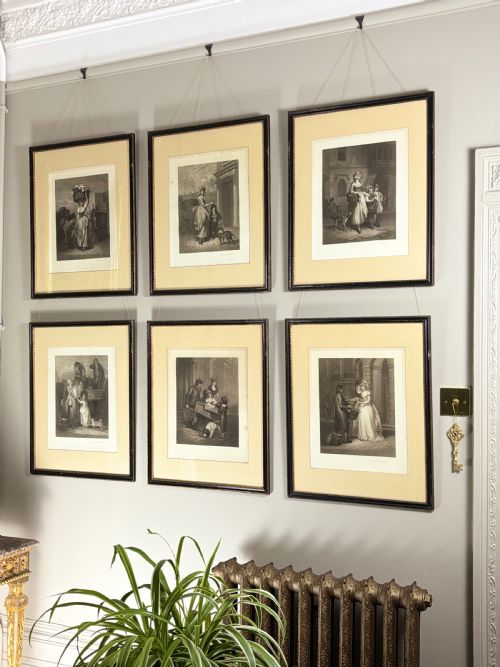


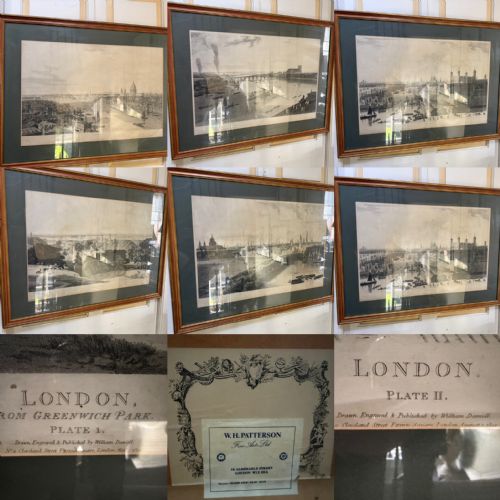

Black Framed Print Set
These black framed print set groupings gather multi-plate works from the eighteenth, nineteenth, and early twentieth centuries behind glass.

Black Framed Print Set
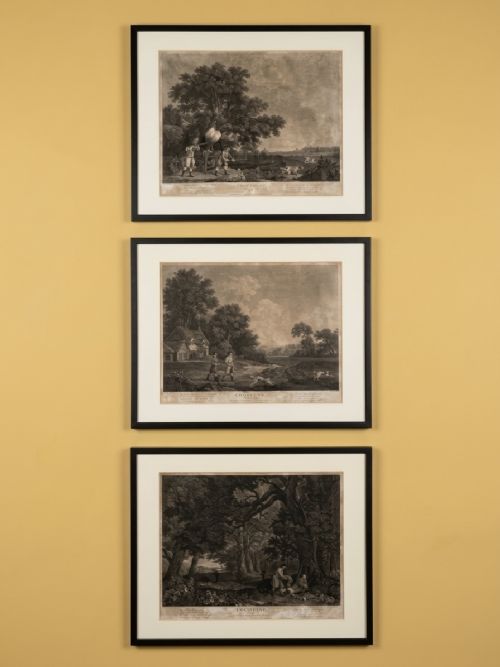
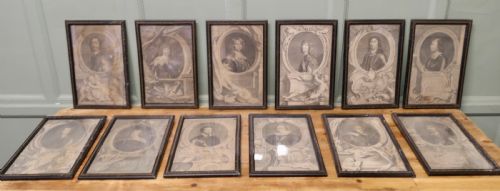
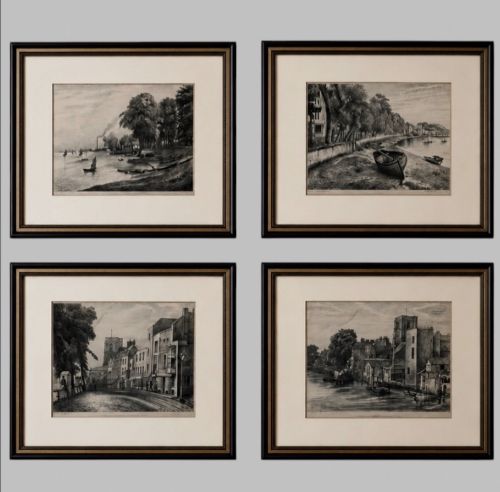
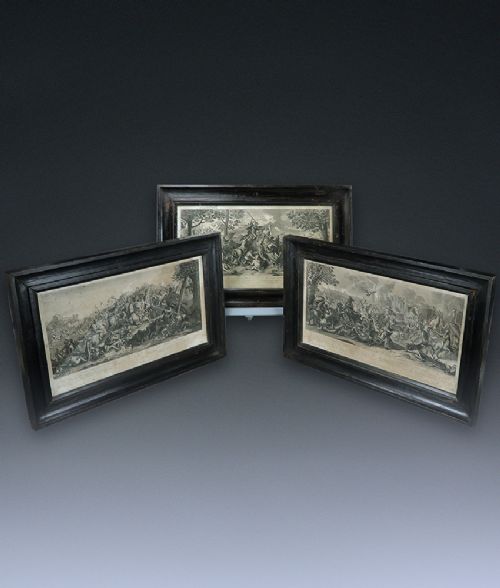
A black framed print set brings together matched historical plates, engravings, lithographs, or photographs unified by uniform dark timber mouldings. These groupings often comprise botanical studies, naval scenes, caricatures, or theatrical characters produced in series during the Georgian, Victorian, and later periods.
Buyers seeking a black framed print set encounter works ranging from small seventeenth-century gatherings to large twentieth-century photographic horse portraits and Vanity Fair caricatures. The unifying element across these disparate subjects is the paired presentation of multiple related images within disciplined dark frames.
Sets commonly originate from disassembled folios, atlases, or periodical series rather than single wall hangings, maintaining their original serial relationship through matching borders and glass protection.
Materials and construction
Plates utilise traditional printing techniques including copperplate engraving, mezzotint, woodblock carving, lithography, and aquatint on laid or wove paper. Many examples receive contemporary or later hand colouring with watercolour washes applied over ink foundations.
The surrounding mouldings consist of wood, frequently finished in dark or black paint to contrast with the cream paper sheets. Glazing protects the delicate ink surfaces, while historical framing methods often incorporate wooden backing boards and paper tape seals.
Listings feature eighteenth-century engravings, Victorian lithographs, and twentieth-century photographs framed behind glass in wood mouldings.
Evaluating distinction and integrity
Quality rests primarily on the clarity of the impression and the preservation of the paper margins. Early strikes from copperplates produce crisp lines and deep blacks, whereas worn plates yield blurred details and grey tones.
The integrity of the set matters as much as the individual sheet quality. Matched paper stock, uniform toning from age, and original or period-appropriate framing elevate the overall cohesion of the group.
Kitagawa Utamaro·Thomas G Appleton·Jan Wandelaar·Otto Pilny·Francis Calcroft Turner
The Black Framed Print Set Glossary
- Engraving
- A printmaking method where a design is cut directly into a metal plate with a burin. The resulting lines hold the ink under high pressure during the printing process.
- Mezzotint
- A tonal printing technique that works from dark to light by roughening the metal plate to hold ink. It produces rich velvety blacks and smooth gradations of shadow.
- Lithography
- A planographic printing process based on the repulsion of oil and water on a limestone slab or metal plate. Artists draw directly onto the surface to create fluid tonal images.
- Aquatint
- An etching method that creates areas of tone resembling watercolour washes by acid-bitting powdered resin sifted onto a metal plate. It frequently appears combined with linear engravings.
- Woodblock
- A relief printing technique where material is carved away from a wooden block, leaving the design raised to accept ink. Japanese ukiyo-e plates utilise this traditional method.
Black Framed Print Set: Frequently Asked Questions
How are matching sets displayed together?
Sets are usually arranged in symmetrical grids or linear sequences to preserve their narrative relationship on the wall.
Spacing between individual frames remains tight to maintain visual unity across the entire grouping.
Can prints be removed from their frames?
The paper sheets rest against historic backing materials and old glass, making frequent opening inadvisable.
Disturbing the original seals risks introducing dust and moisture that can damage delicate eighteenth and nineteenth century paper.
What subjects are most common?
Natural history, topography, portraiture, and satirical caricatures dominate these historical plate collections.
Publishers frequently issued these images in uniform volumes intended for educational or decorative portfolios.
How do I date an antique print?
Dating relies on paper watermarks, typographic styles, plate marks, and recorded publication dates for the specific series.
Stylistic cues within the imagery and the construction methods of the surrounding frame provide secondary chronological evidence.