


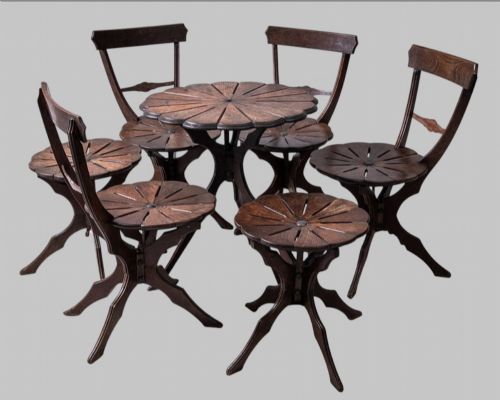


Black Forest Furniture
Black forest furniture brings dramatic alpine craft and carved woodland animals directly into domestic interiors through sculptural linden wood and antler forms.
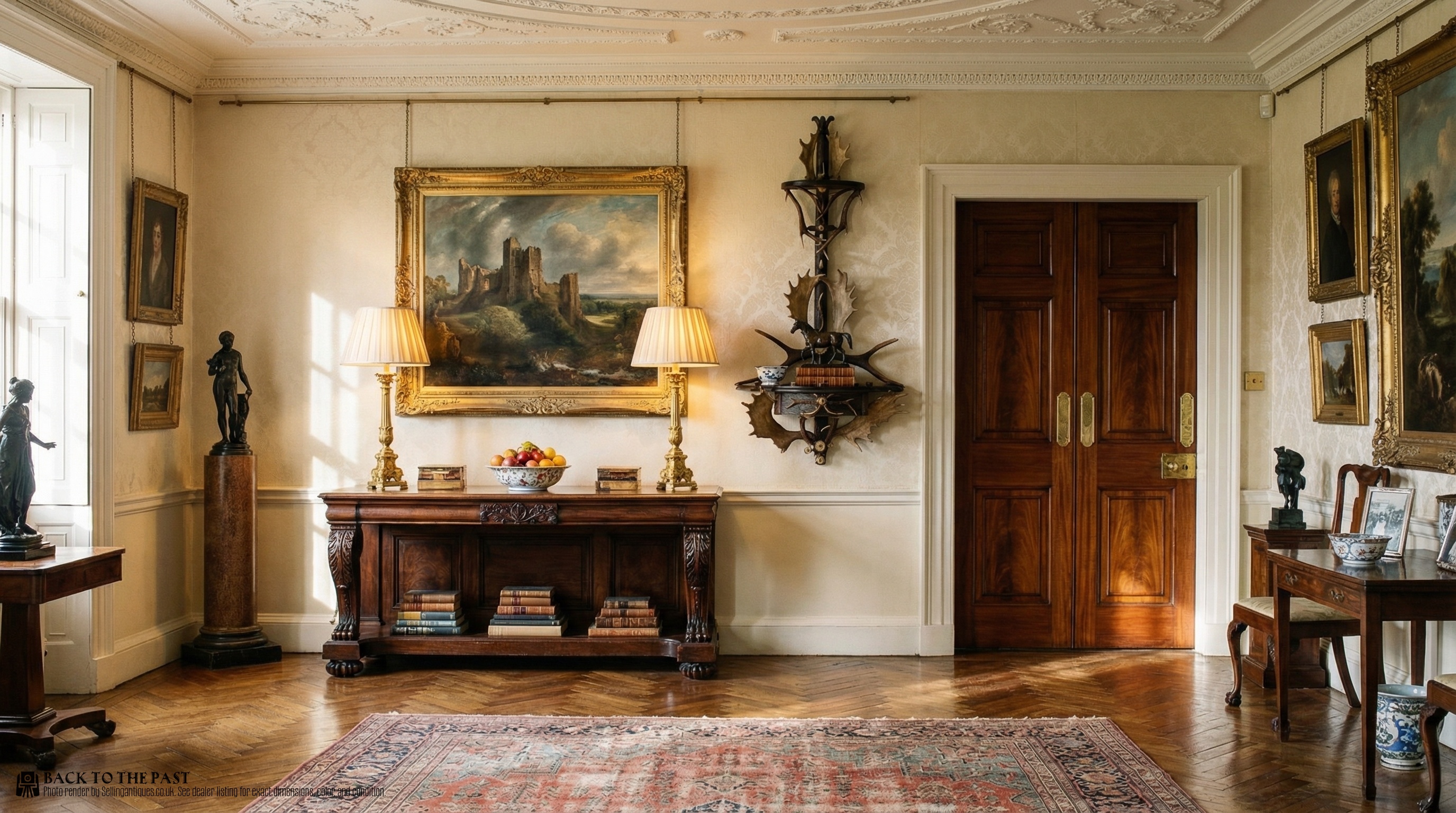
Black Forest Furniture
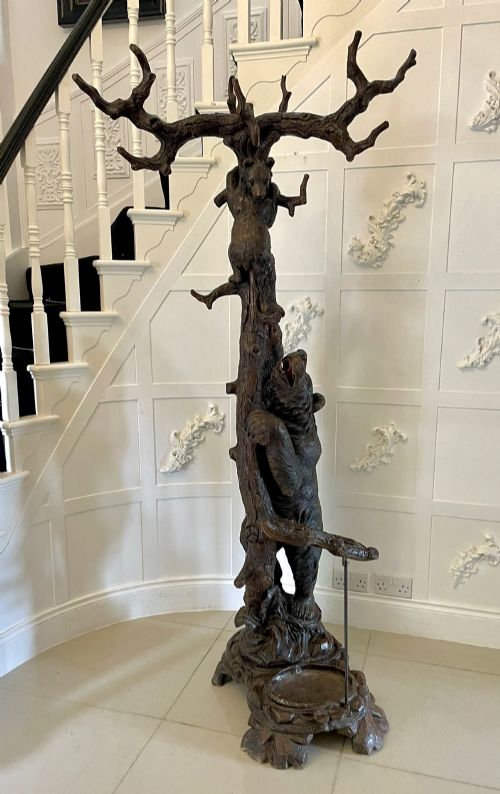
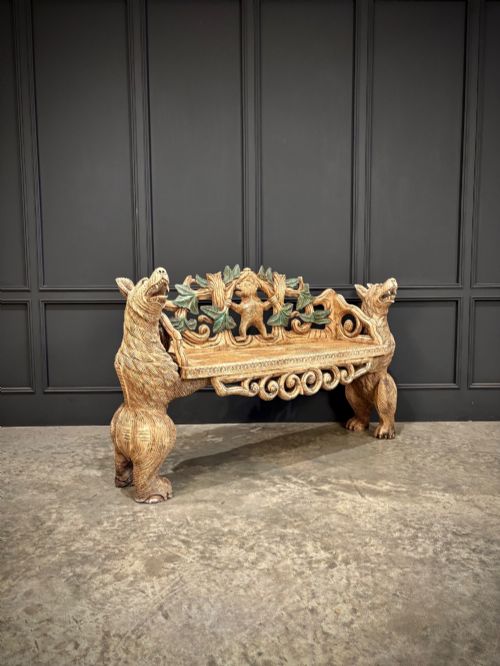
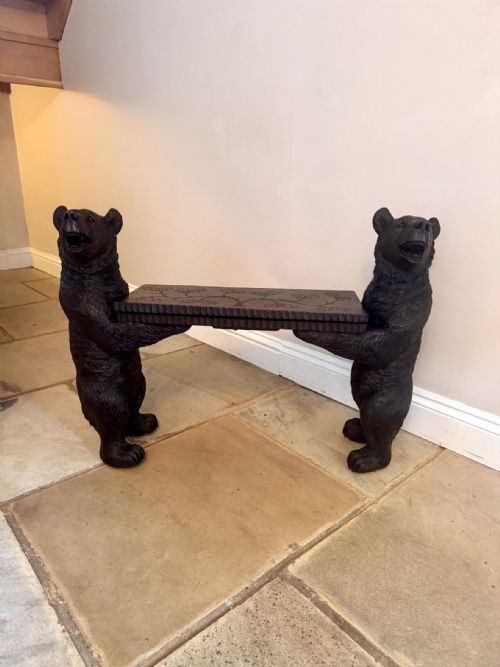
Black forest furniture encompasses highly sculptural wooden items and seating created in the nineteenth and early twentieth centuries, drawing heavily on Swiss and South German traditions. When exploring black forest furniture, you encounter robust forms shaped as bears, hounds, stags, and woodland trees designed for functional use.
The selection ranges from grand hall stands featuring carved bears and stick holders to occasional tables, benches, and antler armchairs. Pieces such as musical tables and folding chairs demonstrate the clever mechanics often integrated into these rustic yet sophisticated works.
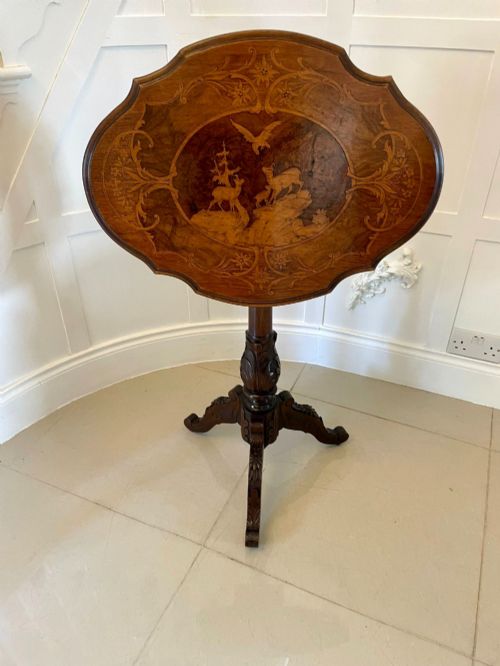
Originating predominantly from the Victorian era and running through the early twentieth century, these items span styles from alpine folk art to elaborate hunting lodge aesthetics. The most frequent encounters on this page include carved bear hall stands, occasional tables with marquetry inlay, and antler-mounted seating.
How they were made
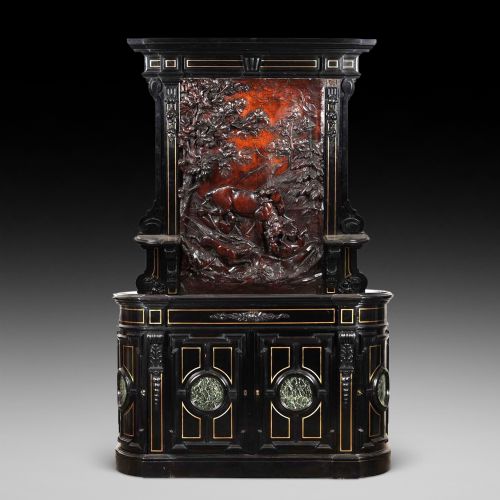
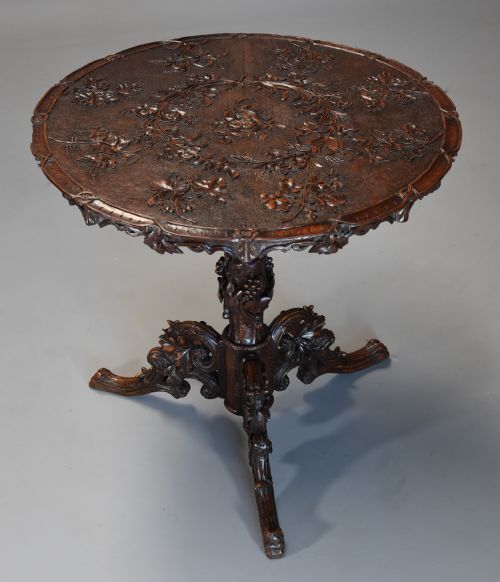
Carvers utilised soft timbers such as linden wood alongside oak and walnut to achieve deep, expressive relief work and freestanding animal figures. Woodworkers manipulated the grain to create lifelike fur textures, foliage, and structural elements like tree trunks.
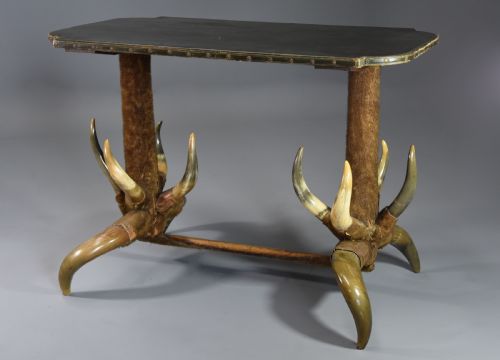
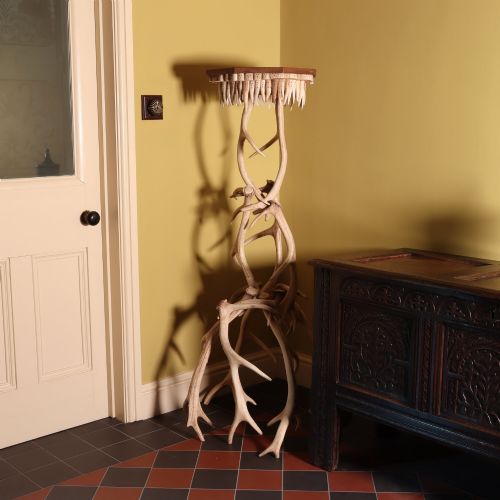
Makers integrated natural materials including red deer antlers, cow horn, and hide alongside carved hardwood and marquetry inlay. These organic components required careful joining and mounting techniques to withstand structural loads while maintaining natural contours.
Black Forest Furniture Retail Price Guide 2026
Typical asking prices for black forest furniture among the pieces listed under this phrase on Sellingantiques today, from the lower quarter to the upper quarter. They describe what is for sale here now, not the wider market.
Several pieces double as loyal sentries, featuring life-sized carved bears holding card trays or standing guard with walking stick bundles.
What varies in quality
The distinction between standard examples and top-tier works rests in the anatomical precision and sculptural depth of the carving. Master carvers rendered musculature, facial expressions, and fur with anatomical conviction, whereas lesser pieces rely on stiff, formulaic execution.
Complexity of form and clever construction separate ordinary tables and stands from exhibition pieces. Multi-figure compositions, integrated musical movements, and intricate marquetry inlay indicate ambitious workshops operating at the height of the movement.
The Black Forest Furniture Glossary
- Linden wood
- A pale timber with a fine, even grain favoured by Swiss and German carvers for detailed sculptural work. Its softness allows for deep undercut carving without splitting.
- Marquetry
- The art of applying small pieces of veneer to a structure to form decorative patterns or pictures. Walnut tables often incorporate floral or geometric marquetry panels.
- Torchiere
- A tall stand or floor lamp designed to hold a light source. Antler torchieres utilise natural horn and bone formations as structural shafts.
- Escabelle
- A traditional type of European wooden armchair or stool with a solid panel back and structural stretchers. Pairs of these chairs appear in alpine folk art styles.
- Hall stand
- A large piece of entrance hall furniture combining a mirror, coat hooks, and umbrella or stick stands. Black forest versions frequently feature carved bears holding the frame.
Black Forest Furniture: Frequently Asked Questions
Where did black forest furniture originate?
These pieces originated in the wooded mountainous regions of Switzerland and South Germany during the nineteenth century. Local woodcarvers developed the distinctive style to appeal to international travellers and the Victorian market.
Production centred around alpine communities where traditional woodworking skills met a growing demand for rustic yet dramatic interior furnishings.
How do I care for carved wood?
Maintain carved linden wood and walnut by keeping pieces away from direct heat sources and strong sunlight, which can dry out the timber. Dust the deep crevices regularly with a soft brush.
Apply a light microcrystalline wax occasionally to protect the finish without building up heavy layers in the carved details.
Are antler items structurally sturdy?
Stags' antlers and cow horns used in chairs and wall stands possess natural strength and resilience. Makers fitted and pinned these organic materials securely into wooden frames to ensure stability.
Normal daily use is suitable for these pieces, provided they are placed on level flooring and handled with reasonable care.
What is a musical table?
A musical table contains a mechanical musical movement housed within the wooden body or under the top. Opening the table or activating a mechanism triggers the cylinder to play a tune.
These clever Victorian novelties combined fine marquetry inlay and carved supports with intricate Swiss musical engineering.
How do I identify a hall stand?
Hall stands combine coat and hat hooks with vertical backboards, often incorporating a mirror and a base for umbrellas and walking sticks. Black forest versions use carved bears, dogs, or tree branches to form the upright supports.
They stood in entrance halls to greet visitors and store outerwear.