
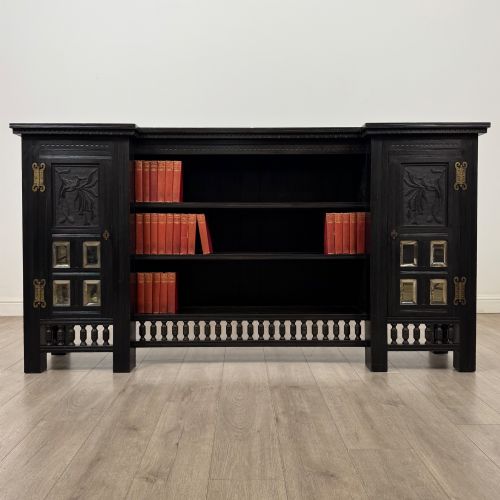
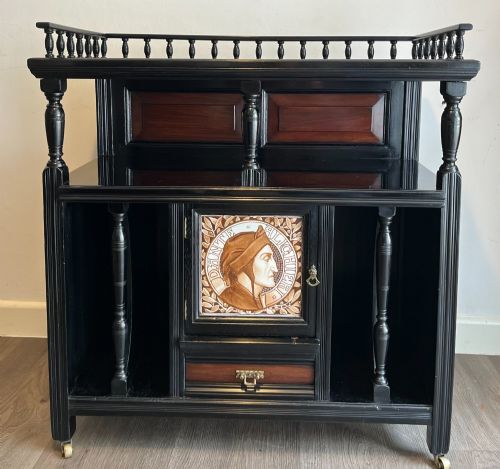
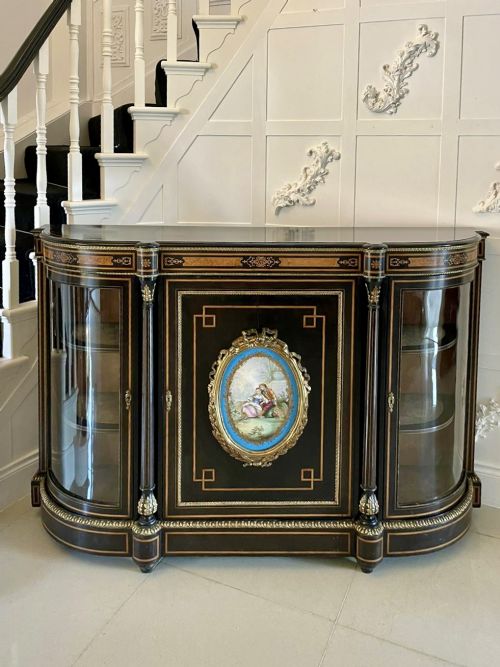
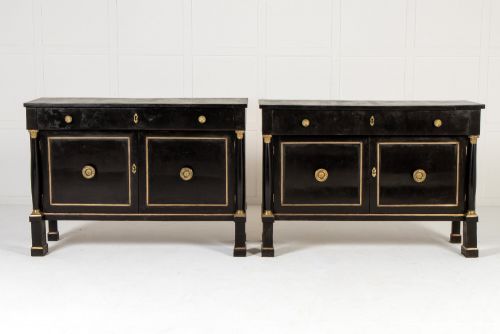


Ebonised Wood Sideboard
An ebonised wood sideboard offers a dramatic dark finish that brings striking contrast and formal elegance to a room.
Ebonised Wood Sideboard
An ebonised wood sideboard is a substantial storage piece finished with a deep, dark surface mimicking costly ebony, appearing frequently in Victorian and nineteenth-century forms. Buyers browsing this selection encounter credenzas, buffet cabinets, and side cabinets designed for formal dining rooms and parlours. These furnishings reflect diverse stylistic influences ranging from the Aesthetic Movement and Arts and Crafts to Italian Neoclassical and French design.
The pieces on this page span several decades of the nineteenth century alongside select eighteenth-century examples, displaying variations in scale from low credenzas to tall cabinets with mirror-backs. Many items integrate glazed doors or open shelving, serving both display and storage functions within domestic interiors. The construction reflects the heavy architectural presence characteristic of period dining and drawing room furniture.
Materials and construction methods
The creation of these cabinets relies on timber treated with dark stains or paint to achieve an ebony appearance, often paired with contrasting secondary woods such as walnut, mahogany, or amboyna. Makers frequently incorporated brass mounts, ormolu details, and ceramic or porcelain plaques into the primary structure to enrich the visual surface. Inlaid marquetry using floral motifs or geometric patterns demonstrates the intricate woodworking skills applied to the facades.
Structural complexity varies from single-carcase side cabinets to two-part buffets and multi-door credenzas featuring serpentine fronts or mirrored backs. Glazed panels and bevelled mirrors require precise framing within the wooden framework, while applied mouldings provide depth and shadow lines across the doors and cornices.
Some nineteenth-century makers evidently believed that a cabinet simply could not function without a mirror reflecting the back of your head.
Determining quality and execution
Quality in these pieces rests upon the precision of the marquetry inlay, the crispness of the applied brass or ormolu mounts, and the depth of the ebonised finish. Superior examples display balanced proportions, tightly fitted doors, and harmonious integration of contrasting timbers like burr walnut or amboyna.
The refinement of the carving, the condition of the mirrored glass, and the sophistication of the hardware separate standard utility pieces from exceptional decorative works. The integrity of the structural joinery and the preservation of the original surface finishes dictate the overall standing of each cabinet.
Gordovil Spain
The Ebonised Wood Sideboard Glossary
- Ebonised
- Wood treated with stain, dye, or paint to imitate solid ebony. This dark finish gained immense popularity during the nineteenth century for furniture mimicking more expensive exotic hardwoods.
- Credenza
- A low dining room or parlour cabinet used for serving food or displaying decorative objects. These pieces often feature central cupboards flanked by curved glass doors.
- Marquetry
- Decorative veneer applied to furniture in patterns using different woods, metals, or shells. This technique creates pictorial or geometric designs across drawer fronts and cabinet doors.
- Ormolu
- Gilded bronze mounts applied to furniture for decorative accent. The metal is cast and chased before receiving a gold finish.
- Aesthetic Movement
- A late nineteenth-century design style emphasising visual beauty over narrative subject matter. Furniture from this movement often utilises ebonised surfaces with Japanese-inspired motifs.
Ebonised Wood Sideboard: Frequently Asked Questions
What is an ebonised wood sideboard?
An ebonised wood sideboard is a large storage cabinet finished to resemble dense black ebony. These pieces served as focal points in formal rooms for storing tableware and displaying ornaments.
They appear primarily in nineteenth-century designs, incorporating styles such as the Aesthetic Movement and Victorian revivalism alongside marquetry and brass inlay.
Where were sideboards used historically?
These cabinets belonged predominantly in dining rooms, drawing rooms, and formal parlours. They functioned as serving surfaces during meals and as display areas for porcelain and glassware.
Their robust construction and enclosed storage made them central pieces of furniture for household organisation and entertaining.
How do I care for ebonised wood?
Maintain the dark finish by dusting regularly with a soft, dry cloth to prevent surface scratching. Avoid placing the furniture in direct sunlight or near heat sources that could dry out the wood.
Keep humidity levels stable in the room to protect both the timber carcase and any delicate marquetry inlay.
How do I identify Victorian styles?
Victorian pieces often display heavy proportions, dark ebonised finishes, and eclectic revivals of earlier historical periods. Look for applied mouldings, turned supports, and contrasting timber inlays.
Details like mirrored backs and ceramic tile inserts further help distinguish specific mid-to-late nineteenth-century cabinet designs.