

Carved Wood Server Cabinet
A carved wood server cabinet brings substantial storage and distinct period character to a dining room or hallway.
Carved Wood Server Cabinet
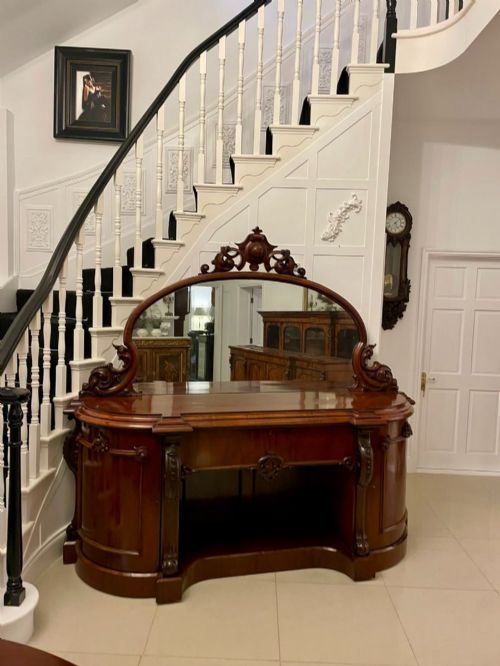
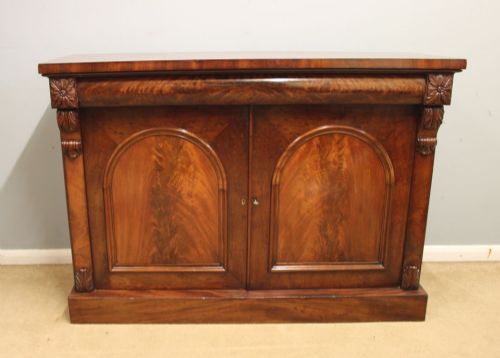
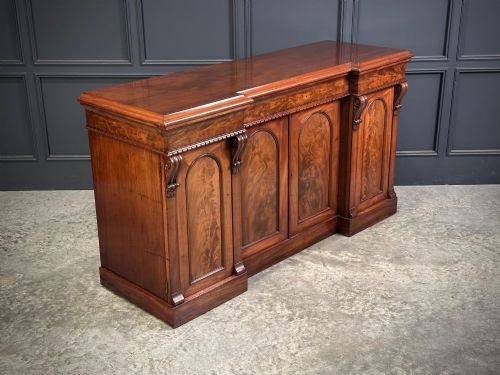
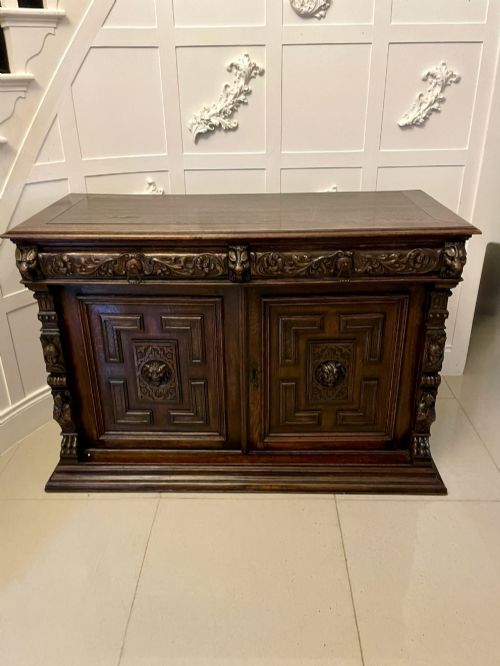
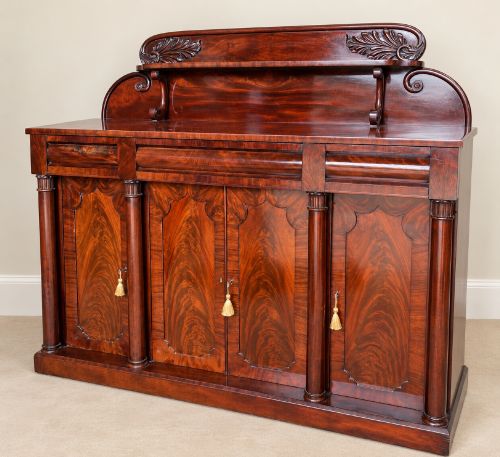
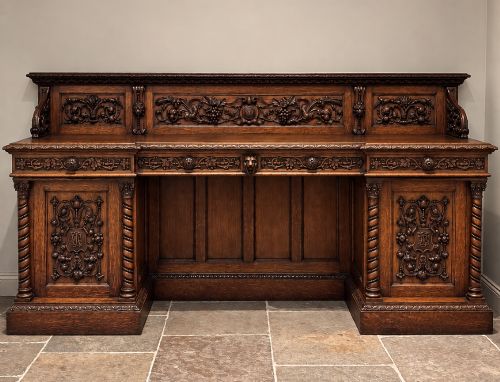
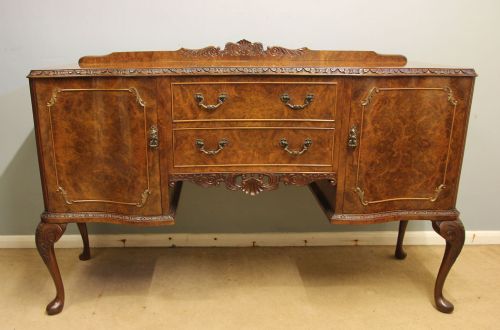
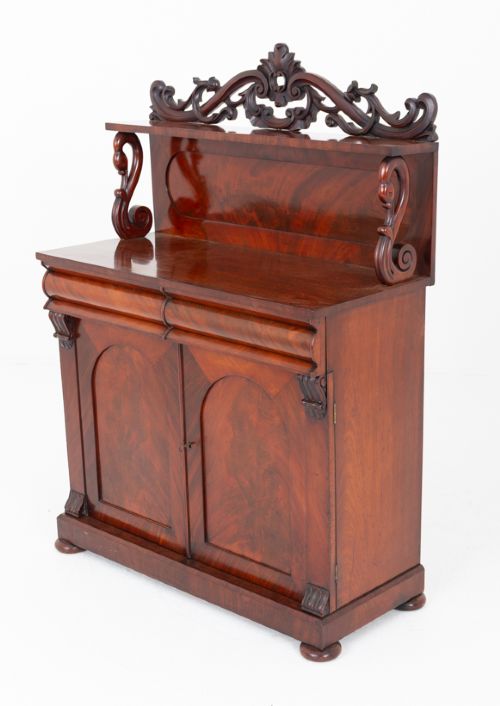
A carved wood server cabinet encompasses sideboards, buffets, chiffoniers, and cupboards originating mainly from the nineteenth and early twentieth centuries. These forms serve primarily for dining room storage and display, appearing in substantial proportions suited to period interiors.
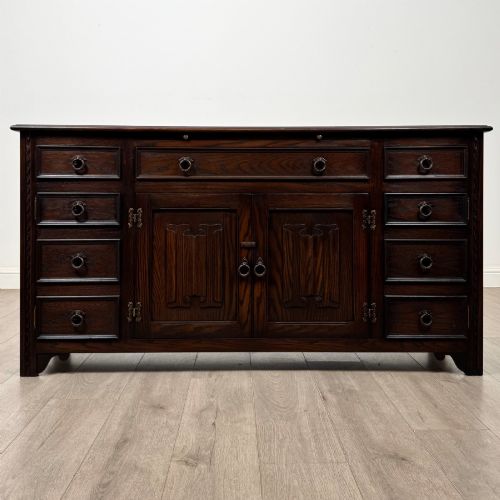
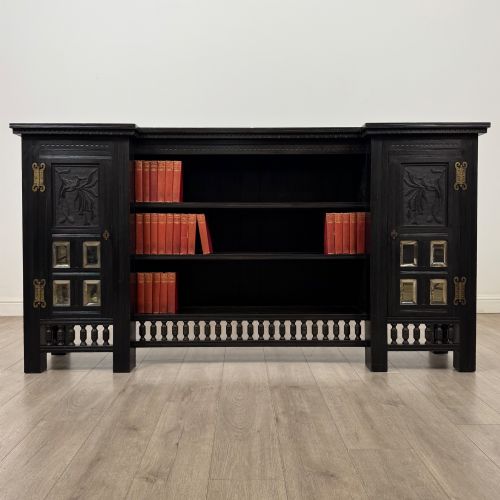
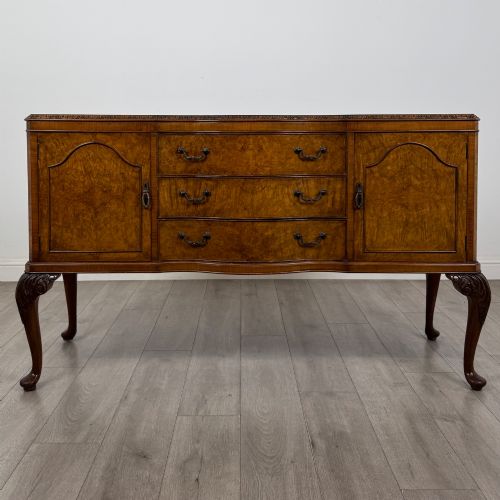
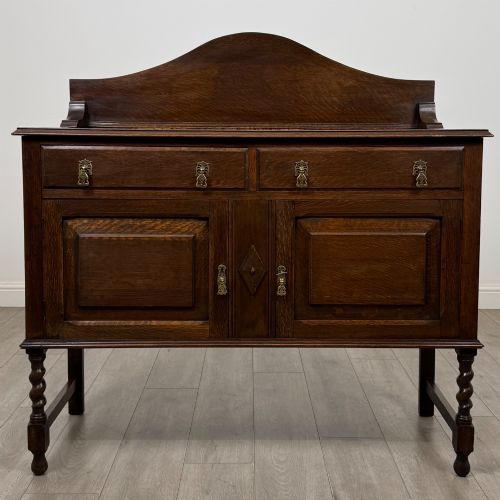
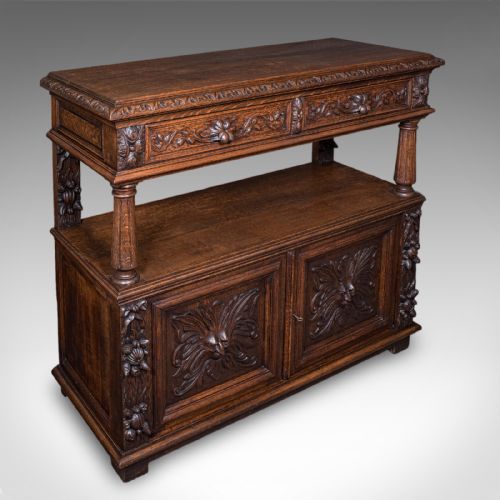
The pieces on this page lean heavily towards oak and mahogany constructions, spanning styles from Victorian and Edwardian periods to Jacobean Revival and Arts and Crafts. Buyers encounter everything from mirror-back display units to compact cupboards and serpentine server tables.
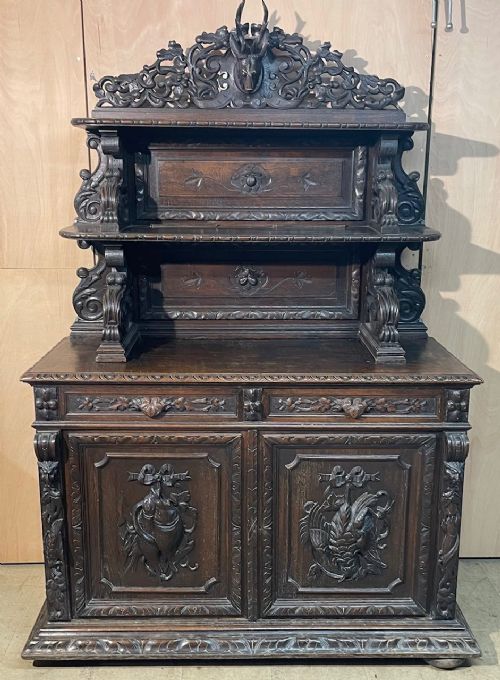
Regional variations include French hunting styles, Anglo-Indian carved work, and Scottish oak buffets alongside English Edwardian pieces. Oak and mahogany dominate the offerings, frequently enhanced by linenfold panels, barley twist legs, or elaborate carved motifs.
How they were made
Makers utilised solid timbers such as oak and walnut alongside figured veneers including flame mahogany and burr walnut applied to carcases. Structural stability relied on traditional joinery, whilst metal hardware like brass handles and iron fittings secured doors and drawers.
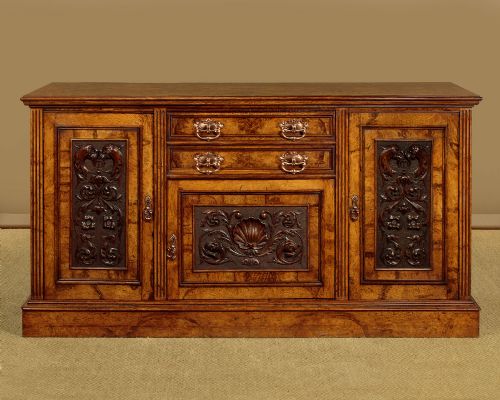
Carving defines the surface ornament across these items, executed directly into solid oak or mahogany panels with deep relief work. Glass panels appear in upper display doors, and selected French pieces incorporate marble tops above wooden storage sections.
Styles span Victorian, Edwardian, Arts and Crafts, Gothic Revival, and Anglo-Indian origins.
What varies in quality
Depth and crispness of the hand-carved detail separate standard production from superior examples, particularly on Jacobean Revival and Victorian oak panels. The choice of timber grain, such as heavily figured flame mahogany or burr walnut veneer, dictates the visual impact of the facade.
Structural integrity depends on the selection of solid timbers for primary frames and the precision of the original joinery. Secondary woods inside drawers and the preservation of original brass or glass components influence the standing of an individual cabinet.
The Carved Wood Server Cabinet Glossary
- Chiffonier
- A compact sideboard equipped with a raised shelf or small mirror back above enclosed storage cupboards. These pieces became popular during the nineteenth century for smaller reception rooms.
- Linenfold
- A style of carved wooden panelling that resembles folded vertical folds of fabric. It appears frequently on English oak furniture from revival periods.
- Serpentine
- A front profile characterised by a gentle convex centre flanked by concave curves. This contour requires precise woodworking and denotes high-status cabinet making.
- Barley twist
- A turned wooden column resembling the spirals of twisted barley sugar. The technique gained wide use on Edwardian and seventeenth-century revival supports.
- Pedestal sideboard
- A heavy dining room cabinet featuring central storage flanked by two floor-standing pillar cupboards. These large forms emerged during the nineteenth century.
Carved Wood Server Cabinet: Frequently Asked Questions
Where should I place a server cabinet?
These cabinets suit dining rooms, large hallways, or living spaces where they provide generous surface area and enclosed storage. Their substantial proportions require careful measurement of available wall space and clearance for opening doors.
Positioning them away from direct heat sources protects the timber and veneer surfaces from drying and splitting over time.
How do I maintain the wood finish?
Routine care involves dusting with a soft, dry cloth and applying traditional beeswax periodically to nourish the grain of oak and mahogany. Avoid using silicone sprays or harsh chemical cleaners that can degrade antique polishes.
Maintaining a stable room humidity prevents the solid wood and applied veneers from warping or cracking in seasonal climate shifts.
What is the difference between a sideboard and a chiffonier?
Sideboards are generally larger dining room pieces designed for serving food and storing heavy tableware, often featuring pedestals or extensive drawer arrangements. Chiffoniers are typically smaller and include an upper tier or mirror.
Both forms belong to the broader category of server cabinets but served slightly different domestic functions in nineteenth-century homes.
How can I identify Edwardian oak pieces?
Edwardian furniture often combines traditional heavy oak carving, such as linenfold or green man motifs, with lighter overall proportions than Victorian equivalents. These pieces frequently show brighter honey-coloured oak finishes.
Makers of this era also utilised barley twist turning and applied simpler geometric mouldings while maintaining sturdy solid wood construction.