


Victorian Arts Crafts Credenza
A victorian arts crafts credenza brings together solid oak construction and vernacular movement design.
Victorian Arts Crafts Credenza
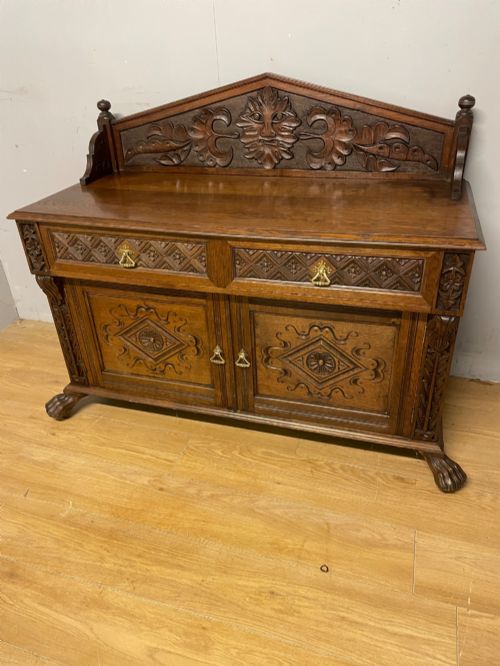
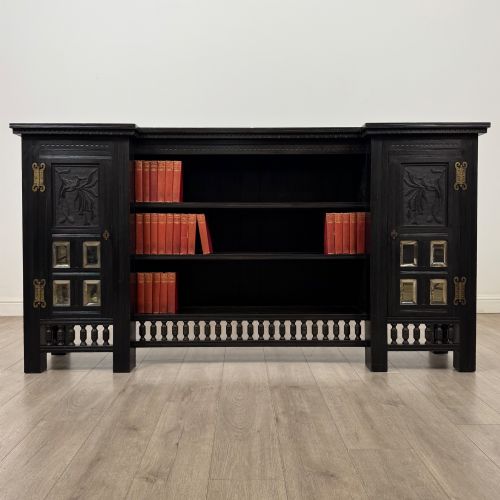
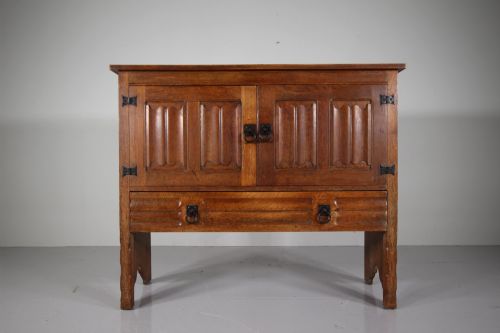
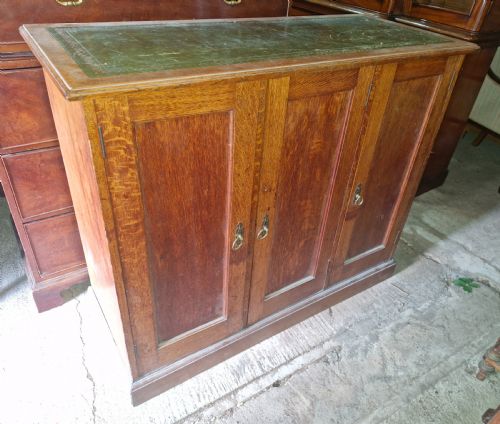
When you search for a victorian arts crafts credenza, you are looking at substantial storage furniture built during the nineteenth century and the early decades of the twentieth century. The examples on this page predominantly take the form of sideboards, side cabinets, and cupboards associated with the Arts and Crafts and Aesthetic movements.
You will most frequently meet oak pieces dating from the period around eighteen eighty to nineteen twenty. These items often feature mirrorbacks, cupboards, and generous proportions designed for dining rooms and large hallways.
The aesthetic bridges the ornate Victorian taste with simpler, functional forms that value material honesty and visible construction.
Materials and construction
Oak serves as the primary timber across these listings, providing a heavy and durable carcase for cupboards and sideboards. Ebonised wood also appears, offering a sharp contrast to standard timber finishes.
Metalwork plays a crucial role in the construction and decoration of these cabinets. Brass, copper, and iron components appear as hinges, handles, and strapwork, while glass panels and mirrors are integrated into the upper sections.
The listings on this page span the Victorian period, the eighteen eighties, the eighteen nineties, and nineteen twenty, alongside Edwardian examples.
Judging the standard
Quality in these pieces is dictated by the ambition of the design and the integrity of the timber selection. Workshop attribution and maker identity separate standard production items from ambitious furniture created by prominent designers.
The refinement of the metalwork fittings and the treatment of the oak surface distinguish finer examples. Superior execution shows in the crispness of carved details and the careful integration of mirrors and glass.
T Simpson and Son·Shapland and Petter·Bruce Talbert·Gillows
The Victorian Arts Crafts Credenza Glossary
- Credenza
- A sideboard or cabinet, traditionally used for displaying plate and serving food. In nineteenth century usage, the term often describes low flanking storage furniture.
- Mirrorback
- A sideboard superstructure incorporating a mirror plate above the main surface. This feature reflects light and displays decorative ceramics.
- Ebonised
- Timber treated with a dark chemical stain or finish to imitate ebony. This technique was popular in Aesthetic movement furniture.
- Aesthetic movement
- A late nineteenth century design current promoting art for art's sake. It draws inspiration from Japanese and gothic sources.
Victorian Arts Crafts Credenza: Frequently Asked Questions
What is a arts and crafts sideboard?
A substantial oak storage piece built during the late nineteenth or early twentieth century. It reflects the philosophy of vernacular craftsmanship and utility.
These items typically feature heavy timber construction, exposed joints, and metal hardware made from brass or copper.
How do I date these cabinets?
Dating relies on stylistic markers, timber characteristics, and construction methods. Pieces from the eighteen eighties often display gothic revival or aesthetic influences.
Later examples moving into the nineteen twenties adopt simpler lines while retaining the solid oak build characteristic of the movement.
Where were these pieces used?
They were designed principally for dining rooms and large entrance halls in period homes. Their primary function involved storing dining silver, linen, and servingware.
The upper surfaces and mirrorbacks provided space for displaying ceramic plates and decorative objects.
Are these items made of solid oak?
The listings show that oak is the dominant timber used across these sideboards and cabinets. Subsidiary woods and ebonised finishes also appear on specific models.
Makers utilised the natural grain of the timber as a primary decorative element rather than relying on heavy veneers.