



Black Carved Sideboard
These black carved sideboard examples range from nineteenth-century ebonised lindenwood to Chinese lacquered cabinets, offering striking dark surfaces and deep relief work for any interior.
Black Carved Sideboard
A black carved sideboard brings heavy timber construction and dark finishes together into a single prominent storage piece. Buyers searching this phrase encounter diverse interpretations, from nineteenth-century Black Forest lindenwood to Victorian ebonised designs and oriental lacquered cabinets.
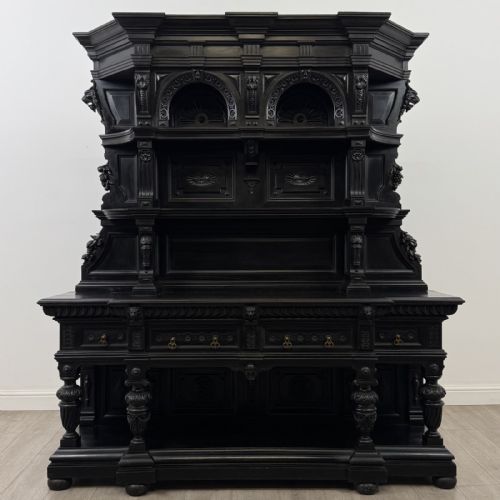
The forms span architectural proportions and detailed relief carving, often incorporating lions, foliage, or floral motifs. Pieces frequently integrate functional display surfaces with substantial cabinetry, serving as focal points in dining rooms and grand halls.
Origins vary across European and Asian workshops, introducing distinct regional characteristics like Victorian Gothic Revival detailing or Chinese lacquerwork on stands. Selecting the right version depends on whether the preference leans towards European dark wood carving or glossy oriental lacquer.
How they were made
Construction relies on durable timbers such as oak, mahogany, and lindenwood, frequently treated with ebonised finishes to achieve deep dark tones. Skilled artisans applied black lacquer or dark stains to create smooth, light-reflecting surfaces or dramatic matte contrasts.
Carving techniques required precise hand chiselling to render intricate motifs like lion masks, folk art panels, and floral ornamentation in high relief. Joinery methods varied from traditional pegged framing in earlier periods to robust nineteenth-century cabinet construction.
Black Carved Sideboard Retail Price Guide 2026
Typical asking prices for black carved sideboard among the pieces listed under this phrase on Sellingantiques today, from the lower quarter to the upper quarter. They describe what is for sale here now, not the wider market.
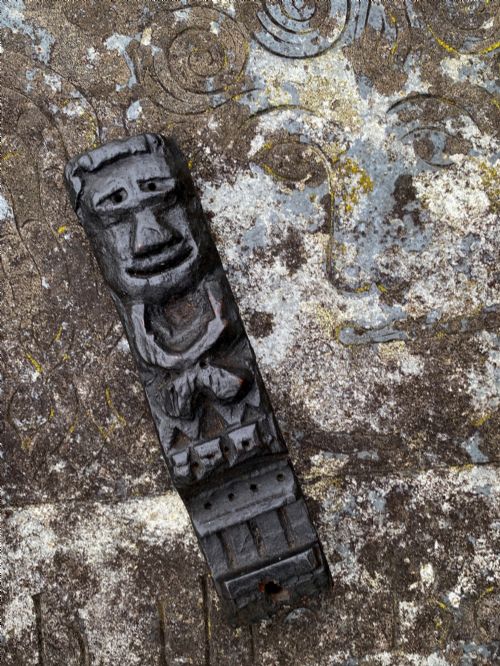
A ferocious lion mask peers out from beneath the top surface, keeping watch over the dining room.
What varies in quality
Depth and precision of the hand carving distinguish finer examples from simpler production pieces, particularly where figures and foliage emerge with sharp definition. The treatment of the ebonised or lacquered surface also sets standards, with superior finishes maintaining uniform depth and lustre over large timber panels.
Structural integrity and the quality of secondary timbers reveal the maker's original intent and subsequent care. Finer items retain crisp joinery, original hardware, and well-proportioned architectural framing that withstands decades of domestic use.
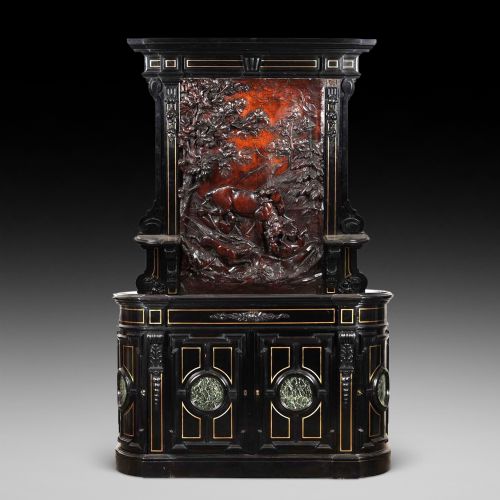
Krieger of Paris
The Black Carved Sideboard Glossary
- Ebonised
- Wood treated with stain or paint to imitate ebony. This finish was widely applied during the Victorian era to create dramatic dark furniture.
- Lindenwood
- A pale, close-grained timber frequently utilised for intricate wood carving. It allows artisans to execute deep relief work without splitting.
- Chinoiserie
- European artistic style reflecting Chinese decorative motifs. It appears on lacquered cabinets and decorative panels.
- Relief
- Sculpture technique where elements project from a background plane. Carved panels on these sideboards frequently employ high relief for theatrical depth.
Black Carved Sideboard: Frequently Asked Questions
What is a black carved sideboard?
A heavy timber storage unit finished in black paint, ebonisation, or lacquer, featuring detailed hand-carved ornamentation. These pieces date primarily from the nineteenth century and combine utility with dramatic dark aesthetics.
They serve as principal dining room or hallway furniture, offering enclosed shelving alongside decorative wooden relief work.
How do I clean ebonised wood?
Dust surfaces regularly with a soft, dry cloth to prevent abrasive particle buildup. Avoid harsh chemical cleaners that can strip the dark surface treatment.
Apply a microcrystalline wax sparingly if the finish requires nourishment, buffing gently to maintain the desired sheen.
Are these sideboards made of solid oak?
Many period examples utilise solid oak or lindenwood as a structural base beneath ebonised finishes or clear polishes. Other variations incorporate applied lacquered panels or exotic hardwoods.
Examination of interior panels and drawer linings typically reveals the primary timber species used in construction.
Where were these cabinets made?
Production spans European workshops, including British Victorian cabinetmakers, French makers, and Black Forest artisans. Asian export workshops also contributed lacquered cabinets on stands.
Regional carving styles and construction techniques usually indicate the geographical origin of each piece.