

19th Century Hall Rack
A 19th century hall rack organises hats, coats and umbrellas while setting the tone of a home entrance.
19th Century Hall Rack
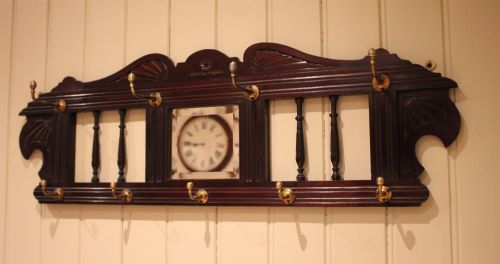
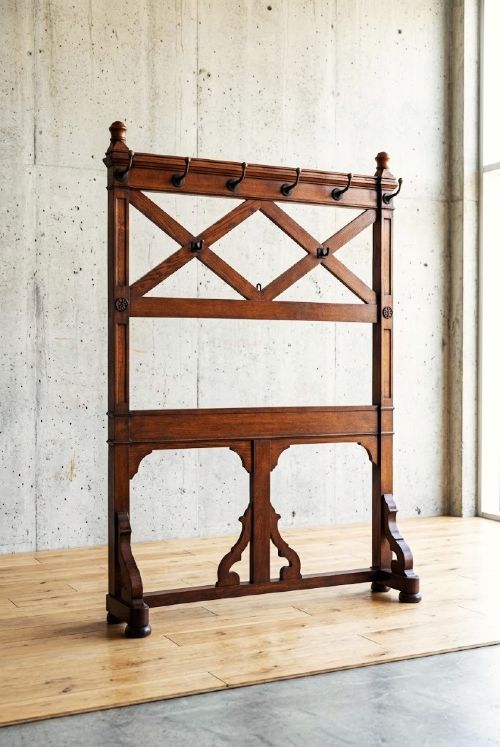
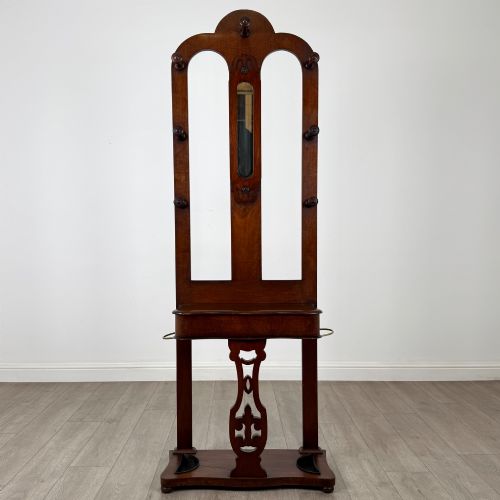
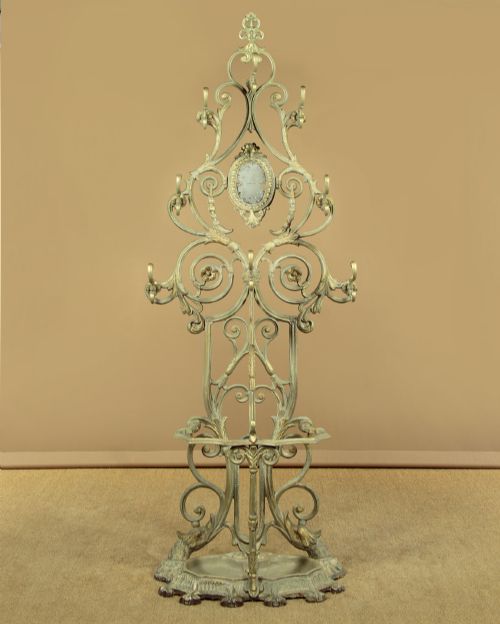
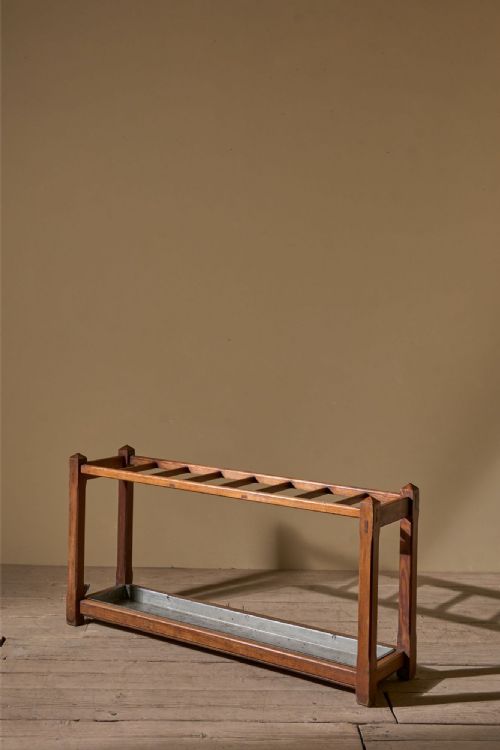
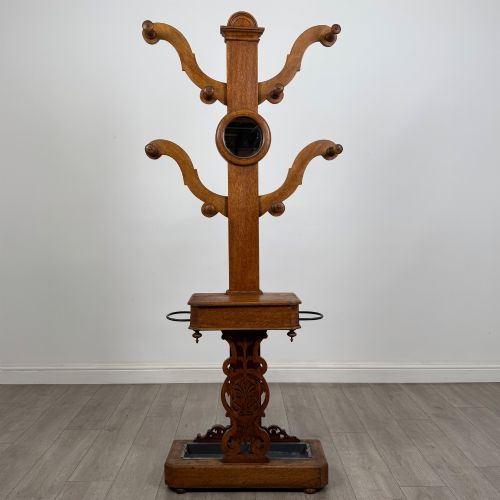
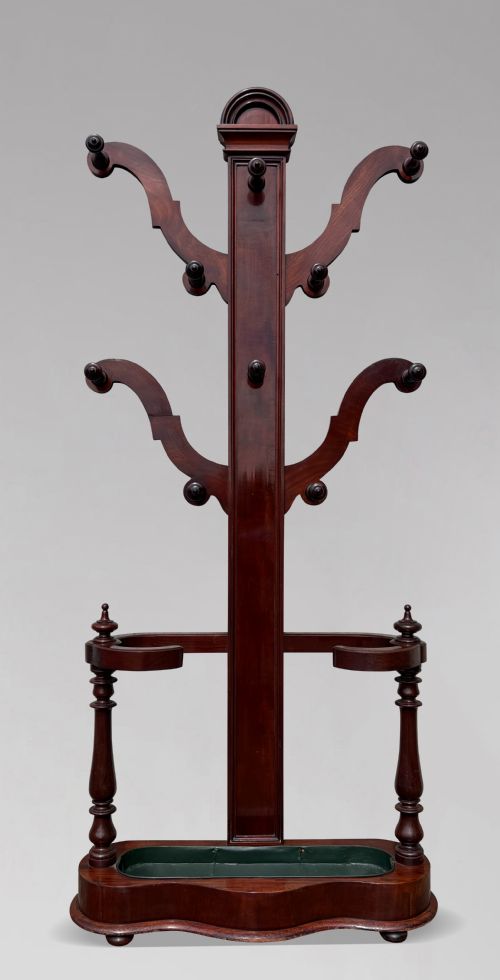
A 19th century hall rack serves as a grand entranceway piece designed to hold outdoor garments and walking gear. Buyers searching for a 19th century hall rack encounter substantial wooden hallstands, wall-mounted coat racks, and heavy metal stick stands.
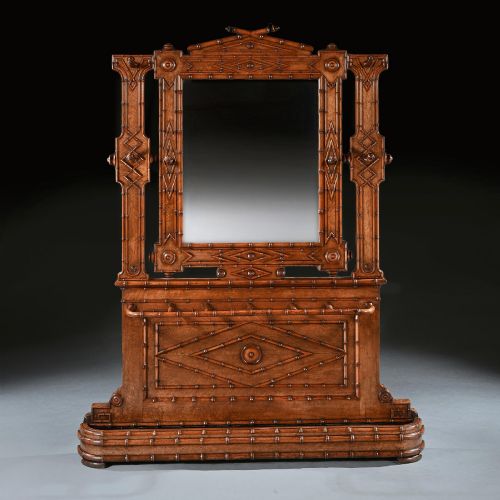
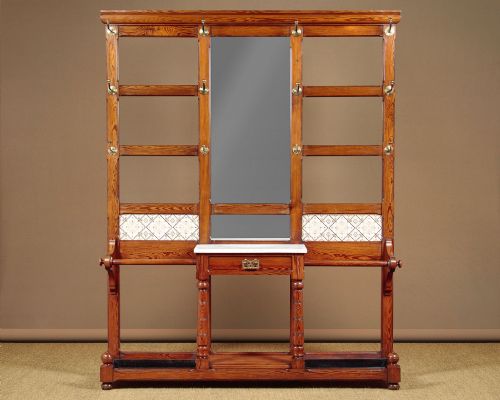
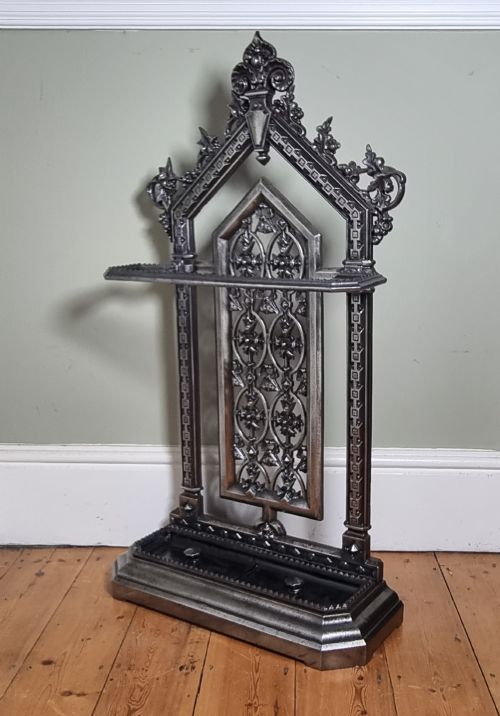
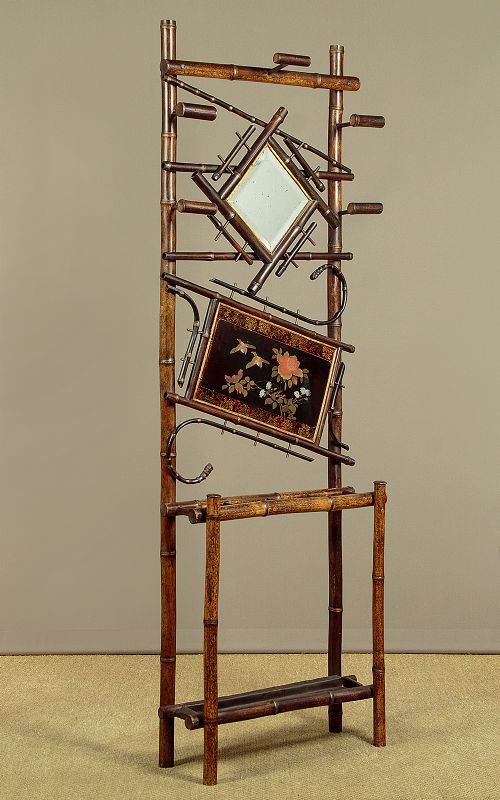
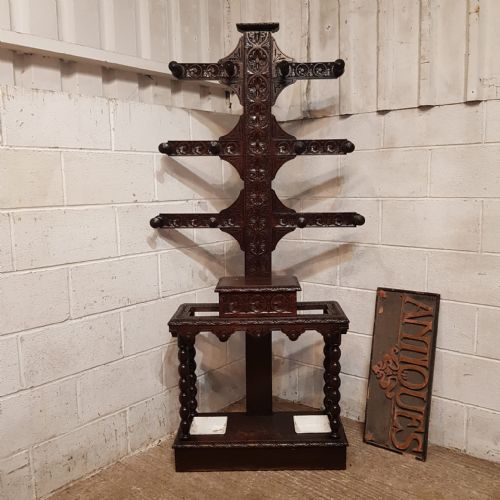
The pieces on this page span the Victorian era, alongside specific stylistic movements such as the Aesthetic Movement, Gothic Revival, and Black Forest carvings. Common forms include large mahogany and oak hallstands equipped with mirrors and marble shelves, alongside cast iron umbrella holders.
Materials and Construction
Construction relies heavily on timber such as mahogany, oak, pine, and walnut, frequently shaped through turning, carving, and steam bending. Bentwood examples utilise techniques popularised by makers like Thonet and Fischel to create curved frames.
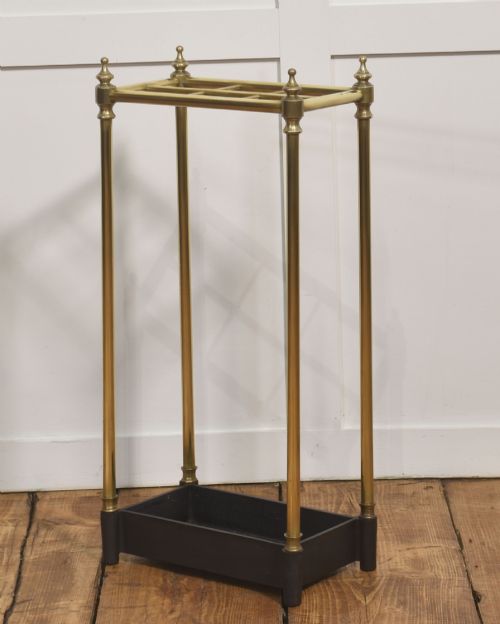
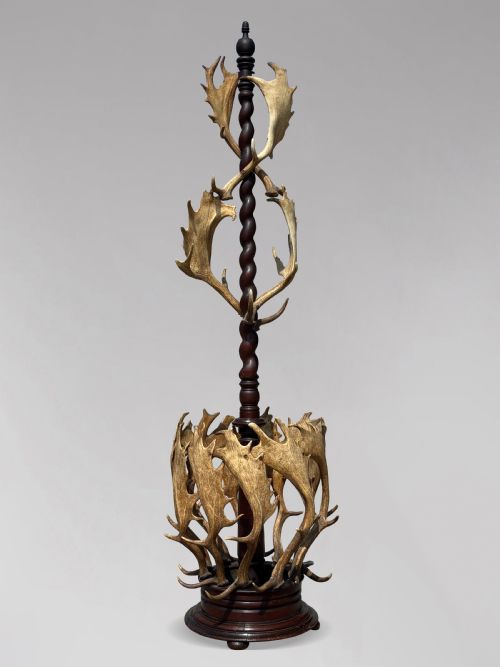
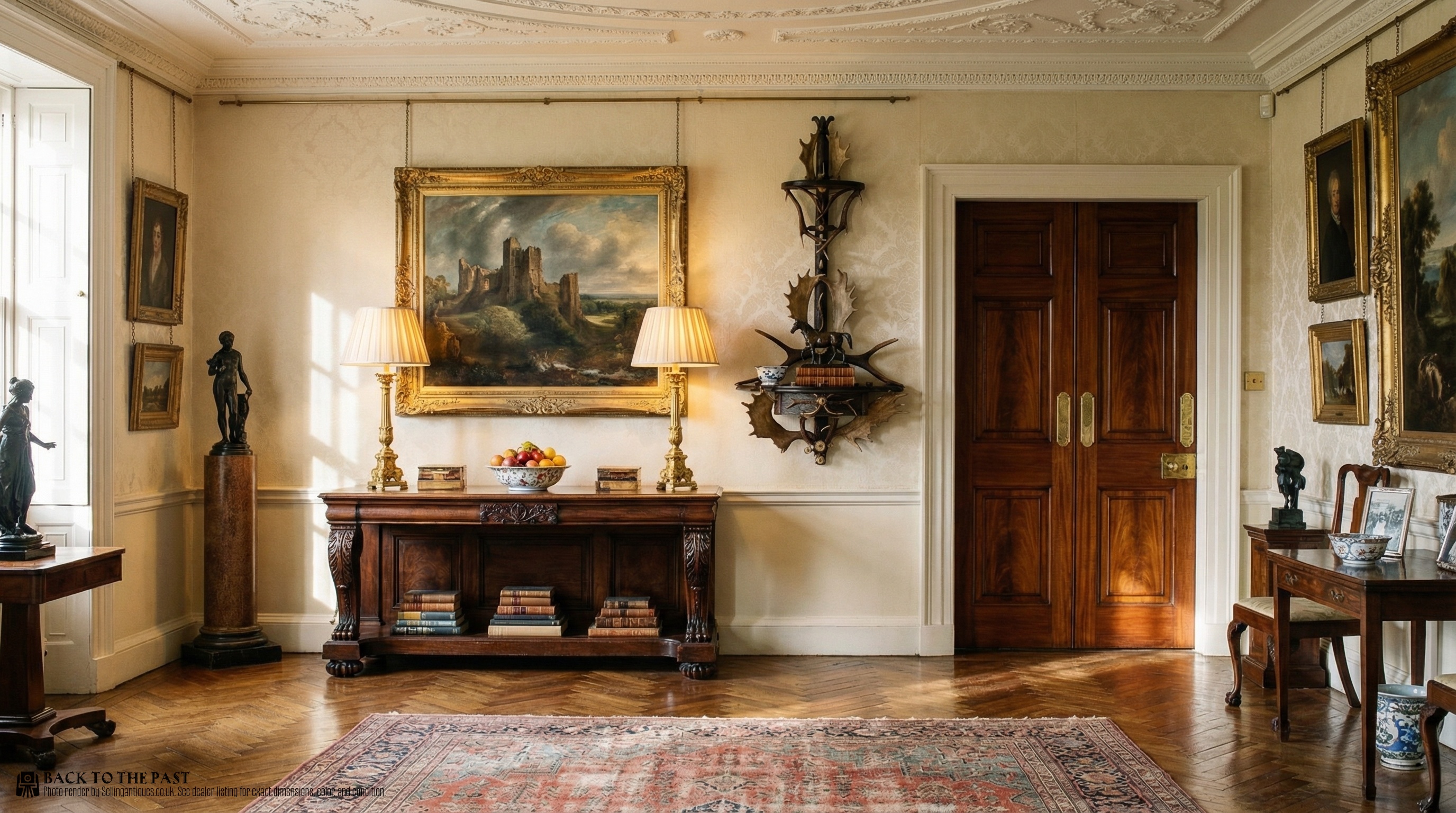
Metal components introduce structural rigidity and decorative contrast through cast iron, brass, and glass. Organic elements like horn, antler, and taxidermy appear in specialist pieces, while marble inserts provide durable surfaces for gloves and calling cards.
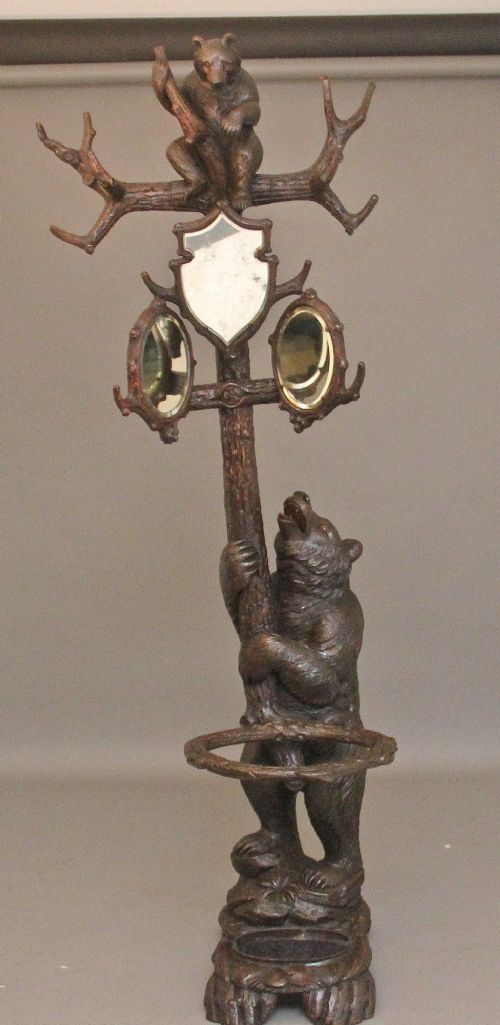
Several items feature carved wooden bears standing guard to hold wet umbrellas in the hallway.
Judging Quality
Quality rests on the depth of the carving, the integrity of the timber joinery, and the weight of the metalwork. Pieces displaying crisp hand-carved details or complex figurative elements separate themselves from plainer utilitarian versions.
Original components dictate the standing of a piece, including matching drip trays in stick stands, intact mirror plates, and authentic hardware. The selection of superior hardwoods like solid mahogany or figured oak elevates the construction above standard pine or mixed timbers.
J. Parker of Woodstock·Falkirk Ironworks·Falkirk Foundry·Fischel·Thonet
The 19th Century Hall Rack Glossary
- Hallstand
- A composite entranceway furniture item incorporating coat hooks, a mirror, umbrella wells, and often a small shelf or compartment. It combines several storage functions into a single vertical footprint.
- Stick Stand
- A dedicated holder for walking sticks, canes, and umbrellas, frequently manufactured from cast iron or coopered wood with metal bands. These often include a base tray to catch rainwater.
- Bentwood
- Wood softened through steaming and bent into curved shapes under pressure. This technique produced lightweight yet durable frames for hat and coat stands.
- Black Forest
- A style of wood carving originating from the mountainous regions of central Europe, characterised by realistic animal figures such as bears holding umbrella rings. These pieces utilise detailed oak and walnut carving.
- Aesthetic Movement
- A late 19th-century design approach prioritising visual beauty over narrative meaning, often drawing inspiration from Japanese art and employing materials like faux bamboo and brass.
19th Century Hall Rack: Frequently Asked Questions
How do I clean a wooden hallstand?
Dust the surfaces regularly with a soft cloth and feed the timber periodically with appropriate beeswax to maintain the finish.
Avoid placing wet umbrellas directly against unlined wood to prevent water staining the base.
Where should I place a heavy cast iron stick stand?
Position the stand near the primary entrance on a solid floor surface capable of supporting heavy metal and stone.
Ensure adequate room around the piece so that umbrellas and walking sticks can be retrieved easily without scraping surrounding walls.
Are wall-mounted racks secure for heavy coats?
Wall racks require firm fixing into studs or masonry rather than just plasterboard to bear the weight of winter garments.
Check that the mounting brackets and screw points are structurally sound before loading the hooks.
How do I identify Victorian pieces?
Look for dense hardwoods like mahogany and oak, dark patination accumulated over decades, and traditional joinery methods.
Stylistic cues such as Gothic Revival motifs or Aesthetic Movement Japonisme details often point directly to the 19th-century period of manufacture.