

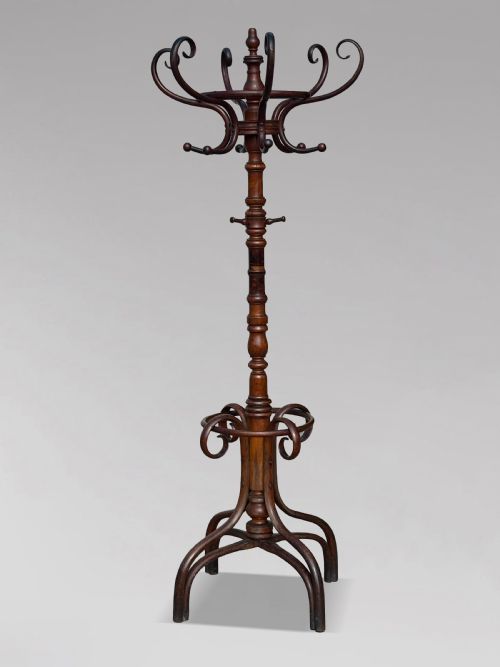


Victorian Oak Coat Rack
These pieces for a victorian oak coat rack combine practical utility with heavy nineteenth-century timber framing to anchor a hallway.
Victorian Oak Coat Rack
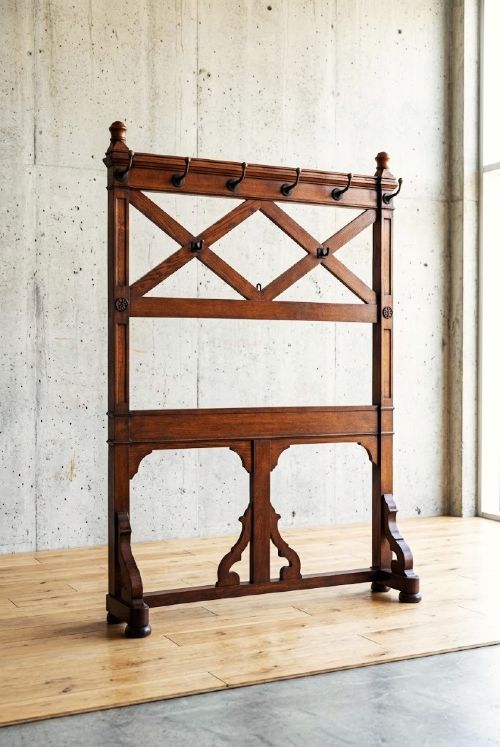
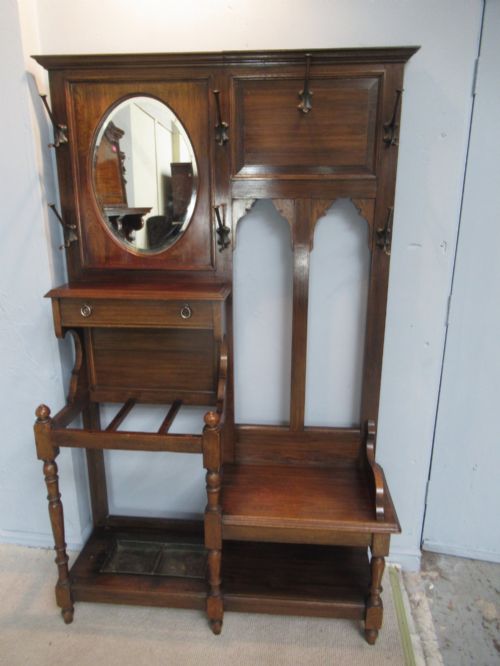
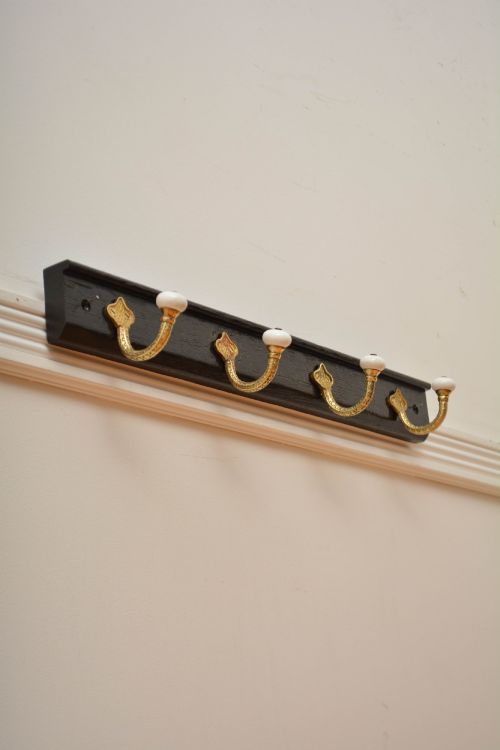
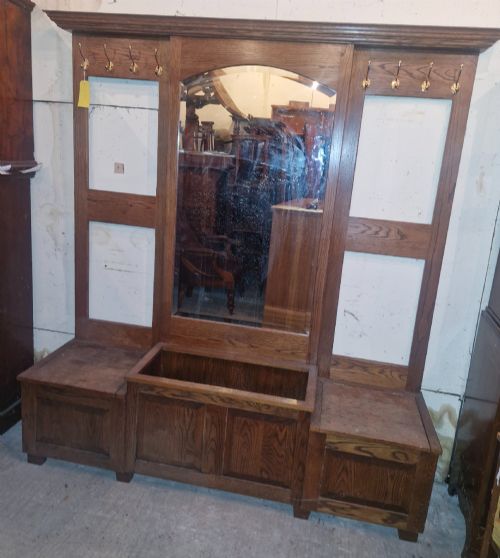
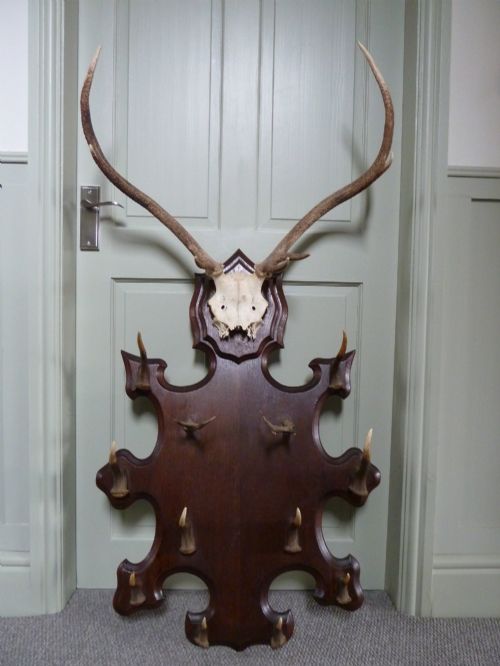
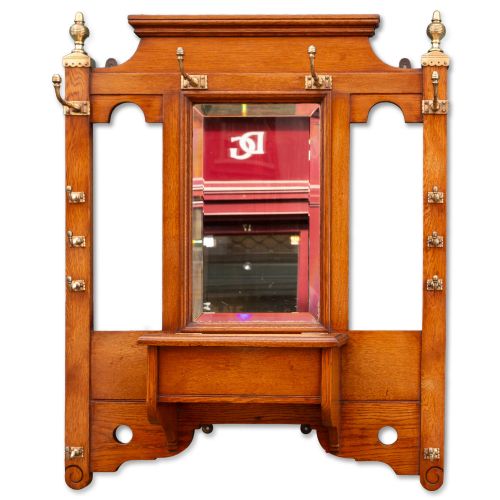
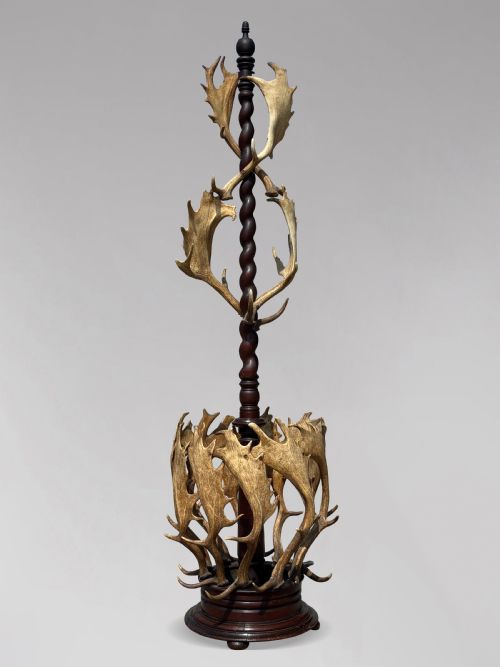
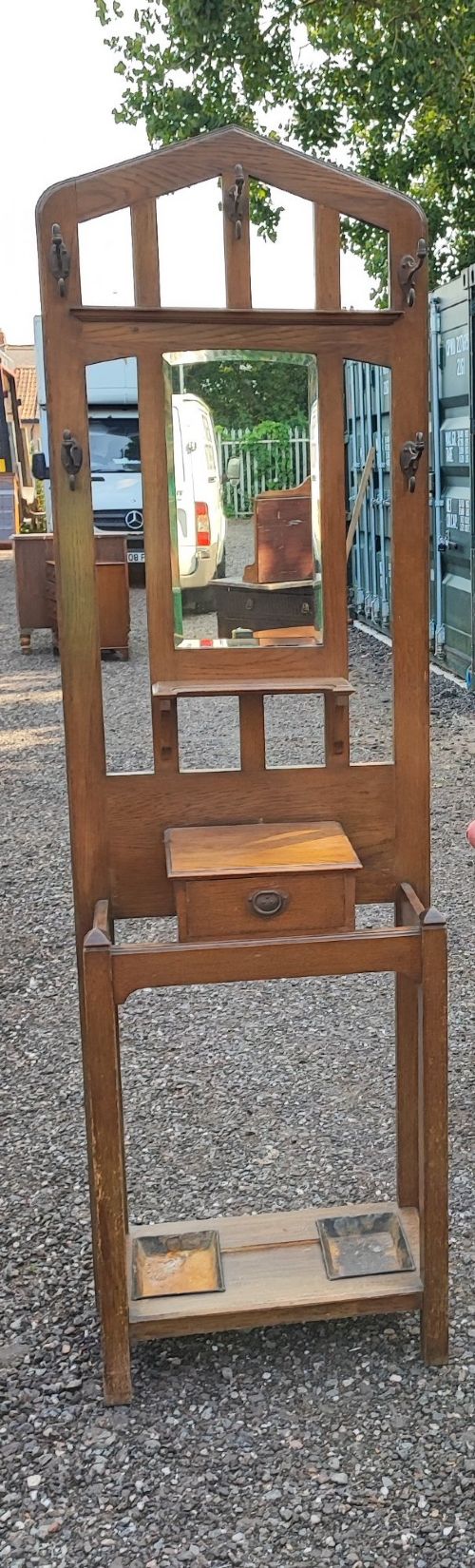
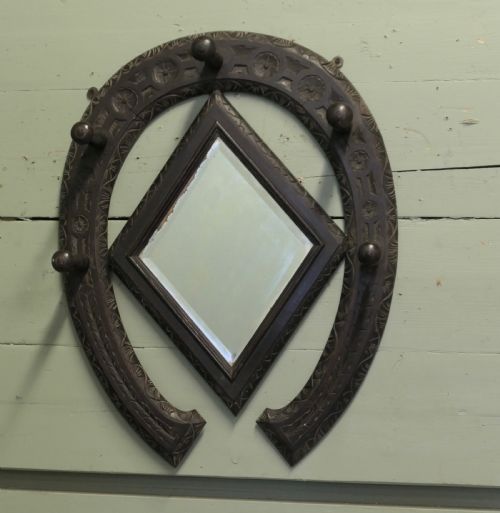
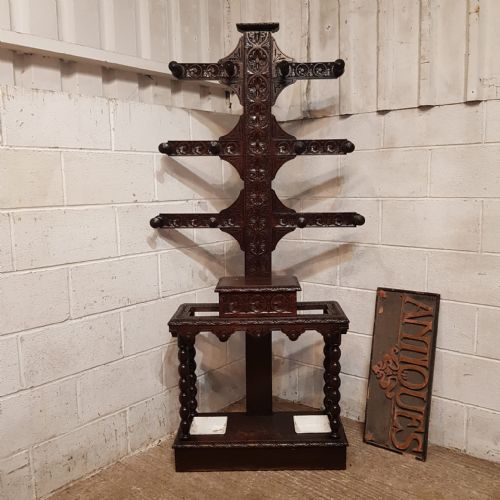
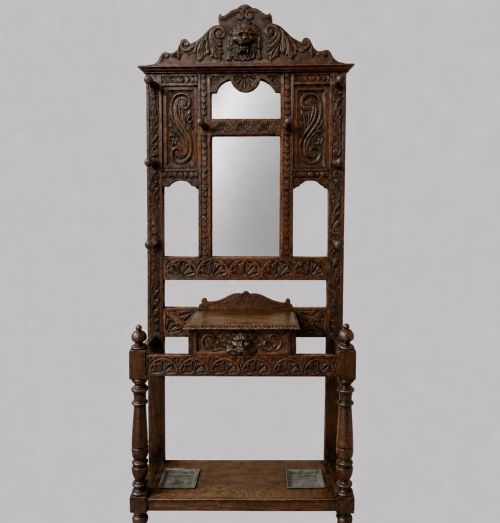
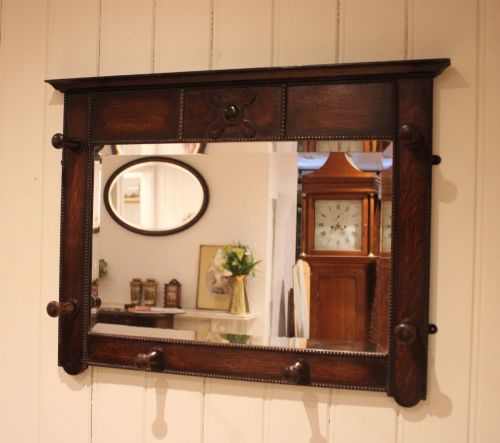
A victorian oak coat rack functions as a heavy timber piece designed to organise hats, coats, and walking items near an entrance. Buyers looking at this page find wall-mounted boards with metal hooks alongside larger floor-standing hall units incorporating mirrors and umbrella trays.
The material palette is predominantly oak, often paired with brass, iron, or ceramic fittings to take the weight of heavy wool garments. Many examples show carved ornamentation ranging from simple geometric mouldings to deep relief figures such as Green Men or gothic tracery.
Most items on offer date from the nineteenth century, spanning Victorian and Edwardian periods, with styles drawing on Gothic Revival, Arts and Crafts, and Black Forest traditions. The forms vary from compact wall racks to substantial furniture pieces that combine seating, storage, and mirrors.
How They Were Made
Joiners built these racks using solid oak boards, frequently quarter-sawn to reveal dense medullary rays and ensure structural stability against warping in draughty hallways. Carved details were executed by hand, resulting in spirited relief work on panels, corbels, and pediments.
Metalwork played a structural role, with brass, iron, and bronze used to cast robust coat hooks, drip pans, and umbrella rings that were screwed directly into the timber backplates. Glass mirrors, often bevelled, were rebated into the wood and secured with wooden beads at the rear.
Victorian Oak Coat Rack Retail Price Guide 2026
Typical asking prices for victorian oak coat rack among the pieces listed under this phrase on Sellingantiques today, from the lower quarter to the upper quarter. They describe what is for sale here now, not the wider market.
A carved wooden bear peers out from the hallway, standing guard over umbrellas and wet coats.
What Varies in Quality
The distinction between standard domestic pieces and exhibition examples lies in the depth and ambition of the carving. Superior items feature crisp, undercut foliage, figures, or animal carvings executed by skilled hands, whereas simpler racks rely on machine mouldings or plain chamfered edges.
Hardware selection marks another shift in quality, separating utilitarian brass hooks from matched sets of ceramic-tipped or intricately cast bronze mounts. The choice of timber grain, particularly figured golden oak or heavy ebonised framing, distinguishes standard utility items from grand country house furniture.
J. Parker of Woodstock·Fischel
The Victorian Oak Coat Rack Glossary
- Green Man
- A sculptural face carved from foliage or branches, frequently appearing on Victorian oak hall furniture. This motif symbolises rebirth and spring.
- Gothic Revival
- An architectural and decorative style drawing on medieval forms, featuring pointed arches, tracery, and heavy mouldings. It dominated much nineteenth-century interior design.
- Quarter-sawn oak
- Timber cut radially from the growth rings to produce durable boards marked by distinctive tiger-stripe medullary rays. This method minimises shrinkage and warping.
- Hall stand
- A composite piece of entrance furniture combining coat hooks, a mirror, and umbrella storage, often including a bench seat. These items anchored the Victorian hallway.
- Black Forest
- A carving style originating in Switzerland and Germany, noted for realistic animal sculptures and deep foliage. Bears and stags feature prominently in these designs.
Victorian Oak Coat Rack: Frequently Asked Questions
How do I secure a wall-mounted oak coat rack?
These racks carry substantial weight from hanging garments and require direct fixing into masonry or solid timber wall studs using appropriate heavy-duty screws.
Because nineteenth-century mounting points were spaced for standard period joists, contemporary installations may need discreet wooden battens to ensure a secure grip.
Were these racks used in homes or public buildings?
Most surviving pieces were made for domestic Victorian and Edwardian entrance halls, country houses, and substantial town residences.
Larger variations with integrated umbrella stands and boot boxes served busy family households where guests and residents removed outdoor gear before entering reception rooms.
How do I care for nineteenth-century oak furniture?
Feed the dry timber periodically with a quality beeswax to maintain the lustre of the oak without building up sticky surface layers.
Keep these pieces away from direct heat sources such as radiators to prevent the old wood from splitting or warping over time.
What is the difference between a hall stand and a coat rack?
A coat rack is a compact wall-mounted board fitted with hooks, designed to save floor space in narrow corridors or smaller passageways.
By contrast, a hall stand is a freestanding item of furniture that incorporates mirrors, umbrella wells, and sometimes a seat for changing footwear.