






Gothic Hall Coat Stand
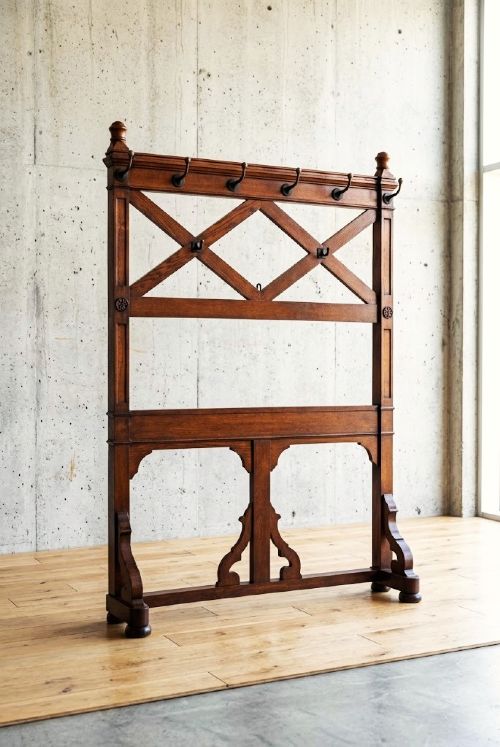
These gothic hall coat stands bring architectural presence to an entrance, offering sturdy hanging space forged from oak, cast iron and brass.
Gothic Hall Coat Stand
A gothic hall coat stand is a substantial entrance piece designed for hanging hats, coats and umbrellas, predominantly dating from the Victorian period and the nineteenth century. The examples recorded here span the decades from eighteen seventy to nineteen hundred, capturing the height of the Gothic Revival style.
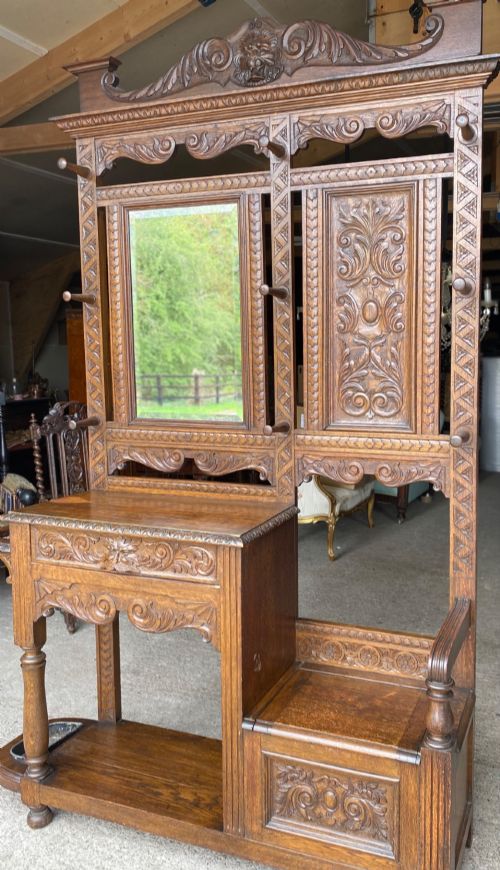
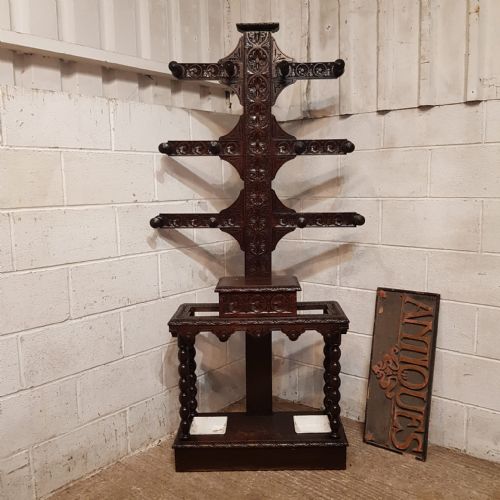
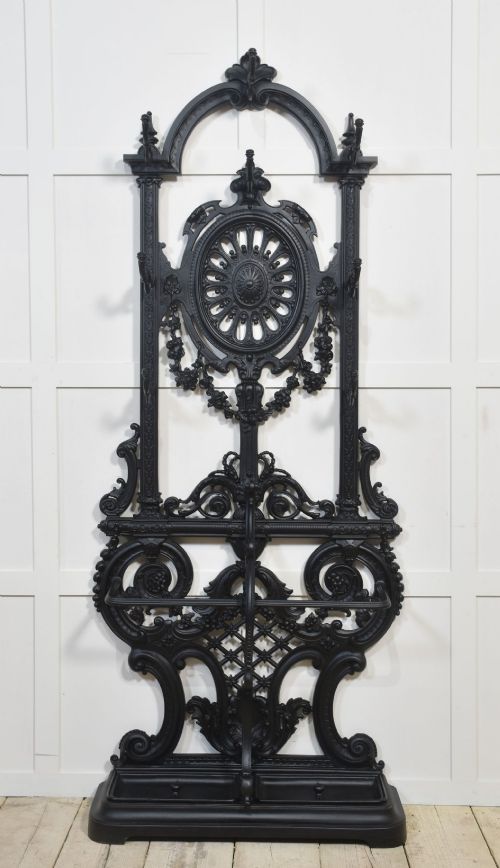
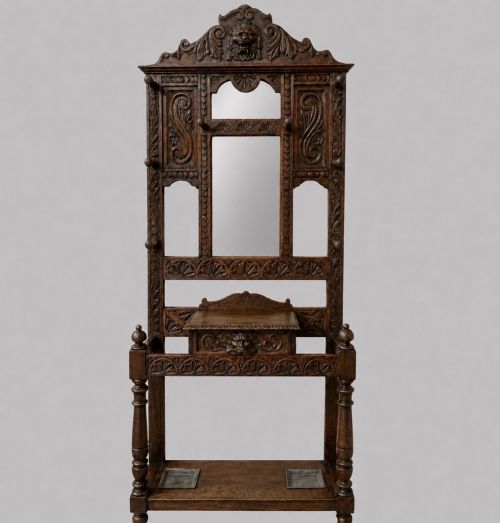
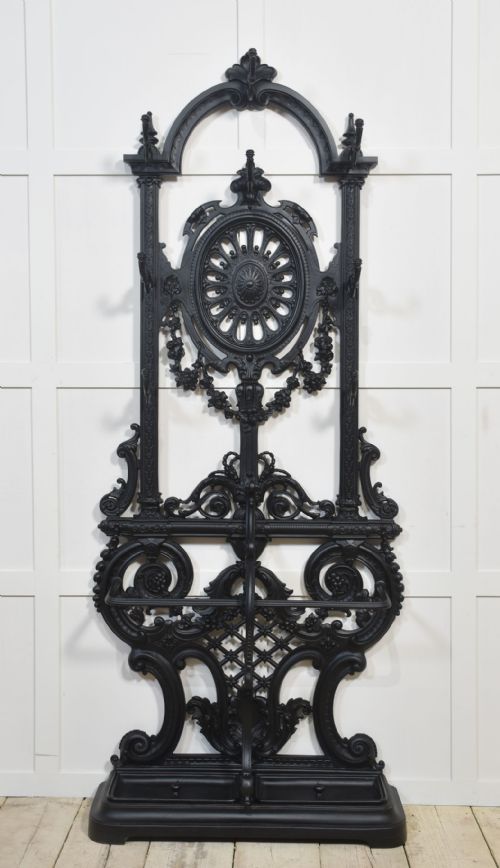
Most pieces encountered on this page are carved from oak, sometimes featuring a central mirror or a hall cupboard, while others are cast in iron by notable foundries. These forms serve the practical demands of a nineteenth-century hallway while displaying pointed arches, tracery and grotesque carvings.
Materials and construction
Makers utilised solid oak, often deeply carved with foliage, linenfold panels or Greenman motifs, joined to withstand heavy daily use in country houses and town residences. Brass and metal hooks are fastened securely to hold damp garments, while drip pans sit below umbrella wells.
Cast iron versions rely on intricate openwork frames produced by specialised foundries, finished with painted surfaces or left in metal. Glass panels occasionally accompany the timber framework, alongside inset marble sections designed to resist moisture from wet sticks.
Gothic Hall Coat Stand Retail Price Guide 2026
Typical asking prices for gothic hall coat stand among the pieces listed under this phrase on Sellingantiques today, from the lower quarter to the upper quarter. They describe what is for sale here now, not the wider market.
Some hall stands double as weaponry displays, formed entirely from three crossed iron halberds and pikes to greet unsuspecting guests.
Craftsmanship and distinction
Quality rests in the depth and crispness of the carving, distinguishing powerfully executed Greenman masks and foliate scrolls from simpler, shallower decoration. The integrity of the timber frame, original hooks and intact drip pans also separate everyday items from more ambitious architectural works.
Falkirk Foundry·Coalbrookdale·William Whiteley
The Gothic Hall Coat Stand Glossary
- Greenman
- A sculptural motif representing a human face entwined with leaves, vines or foliage, commonly found carved into Victorian oak furniture.
- Gothic Revival
- An architectural and decorative style drawing inspiration from medieval design, featuring pointed arches, tracery and heavy vertical lines.
- Halberd
- A two-handed medieval pole weapon comprising an axe blade and spike, imitated in the ironwork of specific nineteenth-century hall stands.
- Coalbrookdale
- A famous nineteenth-century ironworks known for producing ornate cast iron furniture, umbrella stands and garden pieces.
Gothic Hall Coat Stand: Frequently Asked Questions
How do I maintain an oak hall stand?
Keep the timber nourished with an appropriate wax polish applied sparingly with a soft cloth. Avoid placing the piece in direct sunlight or near strong heat sources to prevent the wood from splitting.
Check the metal hooks periodically to ensure the screws remain tight within the oak. Wipe out umbrella drip pans regularly to prevent moisture damage.
Where were these pieces originally placed?
These stands stood in the entrance halls of substantial Victorian houses, town residences and country estates. They provided a designated spot for guests and family to leave outdoor wear.
The lower sections typically accommodated walking sticks and umbrellas. This kept the main living rooms clear of damp garments and mud.
How do I distinguish cast iron from oak versions?
Cast iron stands utilise openwork metal framing produced by foundries, often featuring intricate scrollwork and built-in drip trays. Oak versions rely on solid timber panels and structural joinery.
Iron stands are heavier and suit damp umbrella storage exceptionally well. Oak stands offer warmth through carved details and integrated mirrors.