







Gothic Coat Stand
These gothic coat stand examples bring striking ecclesiastical architecture into the hallway with heavy timber and ironwork.
Gothic Coat Stand
A gothic coat stand combines architectural presence with practical utility, serving as a grand entranceway anchor in Victorian hallways. Buyers seeking a gothic coat stand encounter robust forms derived from Victorian Gothic Revival and Renaissance Revival design traditions.
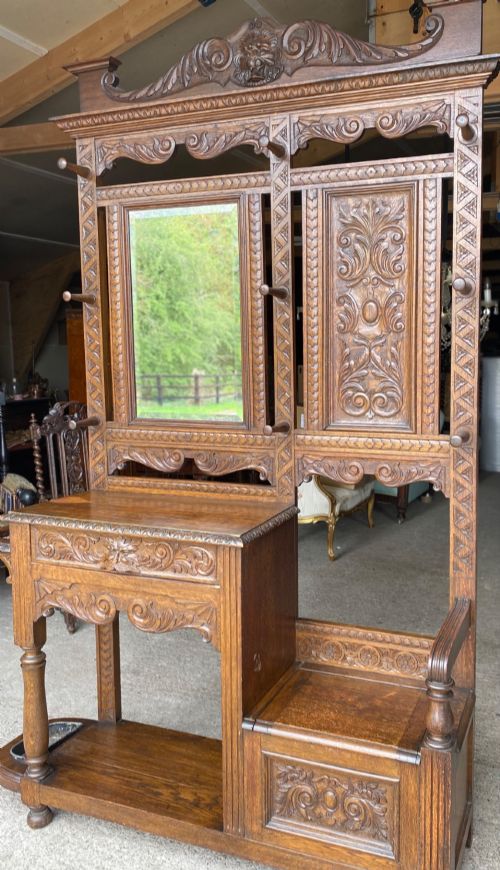
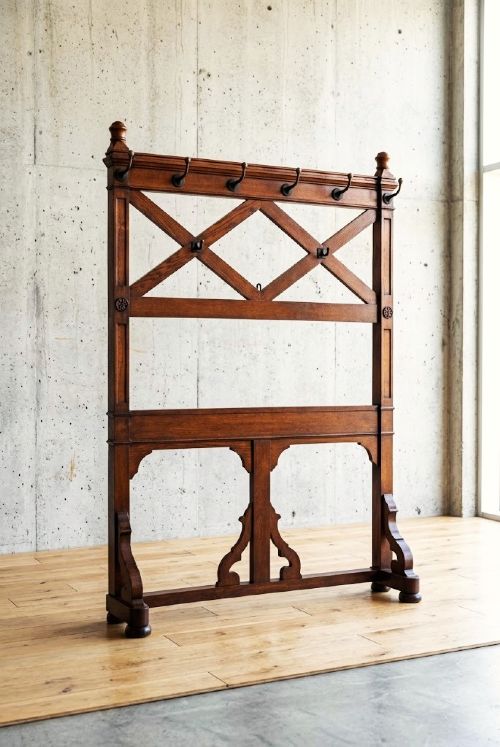
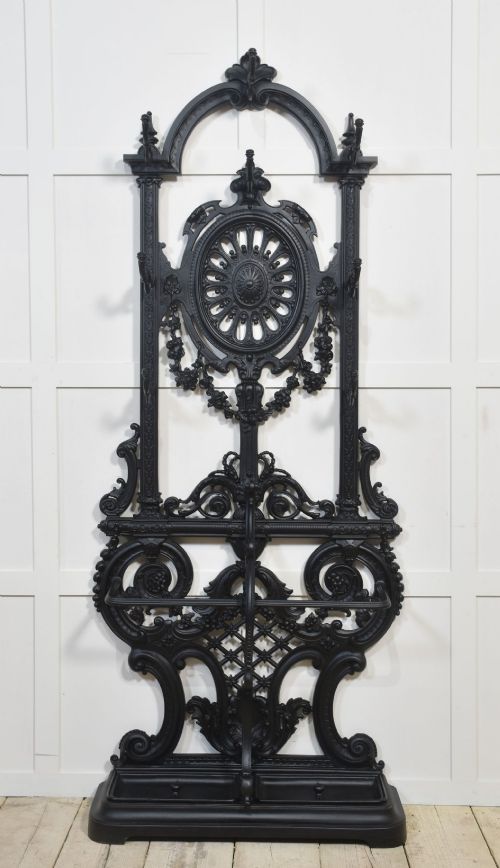
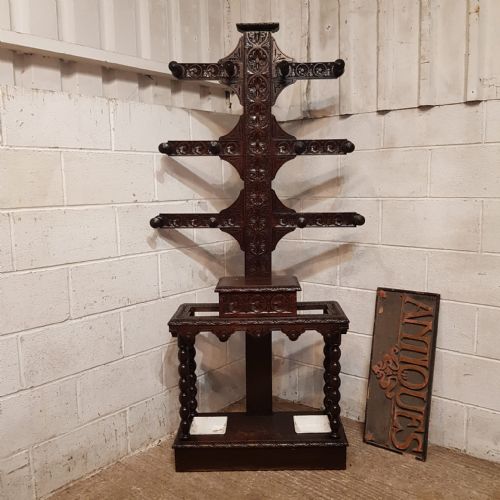
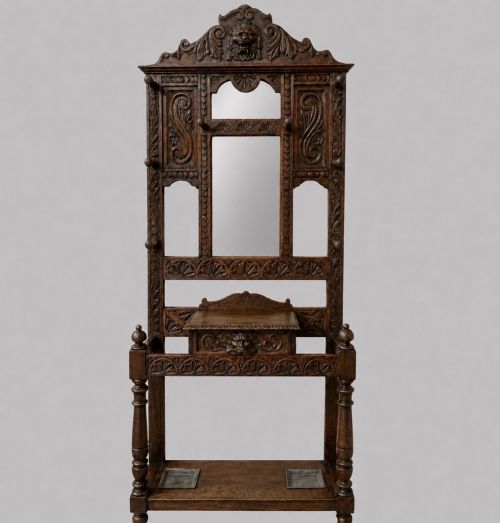
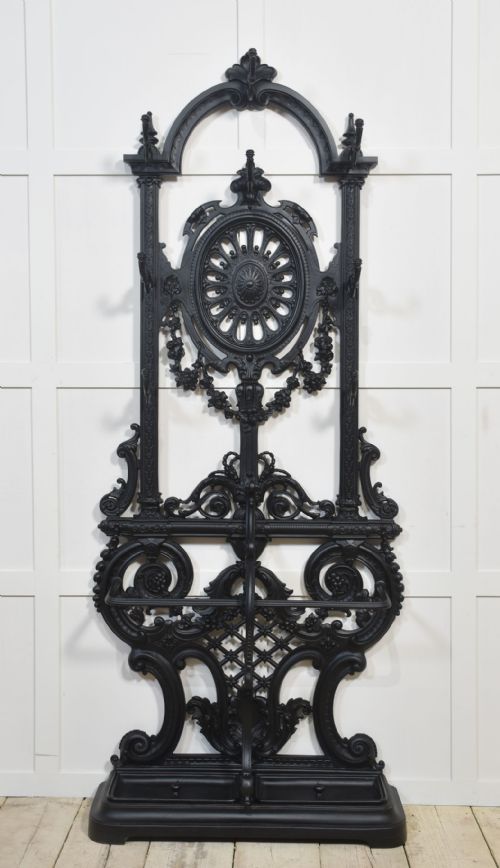
The surviving pieces fall predominantly into two distinct camps: heavily carved oak timber structures and intricately moulded cast iron frames. Oak examples frequently incorporate mirrors, umbrella wells, and distinct carving motifs, whereas iron variants utilise open scrolling work and original drip pans.
How They Were Made
Makers utilised solid oak, often deeply carved by hand with foliage and mythological motifs such as the Green Man. Metalwork components relied on durable cast iron, sometimes produced by major foundries using detailed mould patterns.
Additional materials included brass for coat hooks, integrated bevelled glass mirrors, and occasional marble inserts to catch moisture from wet umbrellas. Paint and ebonised finishes also appear on select French and English pieces from the period.
Gothic Coat Stand Retail Price Guide 2026
Typical asking prices for gothic coat stand among the pieces listed under this phrase on Sellingantiques today, from the lower quarter to the upper quarter. They describe what is for sale here now, not the wider market.
One unusual French design is ingeniously formed from three crossed military halberds and pikes to hold hats and coats.
What Varies in Quality
Quality rests in the depth and crispness of the timber carving or the clarity of the cast iron mouldings. Superior examples display substantial architectural mass, integrated original components such as drip trays and brass hooks, and robust structural joinery.
The Falkirk Foundry·William Whiteley
The Gothic Coat Stand Glossary
- Gothic Revival
- An architectural and decorative style drawing inspiration from medieval design. It gained immense popularity during the Victorian era for domestic furnishings.
- Green Man
- A sculptural motif depicting a human face entwined with foliage or vines. This ancient symbol frequently appears in carved oak woodwork.
- Hall Stand
- A multi-functional piece of entrance furniture incorporating hooks, a mirror, and umbrella storage. Many include a small compartment for gloves or calling cards.
- Coalbrookdale
- A famous ironworks location associated with ornamental castings. Pieces attributed to this tradition feature intricate openwork metal frames.
Gothic Coat Stand: Frequently Asked Questions
How do I choose the right size?
Measure your hallway height and depth carefully, as these stands often exceed six feet and demand proportional clearance.
Consider the projection of the umbrella wells and the weight of the timber before final placement.
Were these made for domestic use?
Most surviving examples were built for large Victorian country houses and town residences to impress visiting guests.
They served an essential organisational role upon entry, managing outerwear, hats, and wet umbrellas simultaneously.
How do I care for oak hall stands?
Maintain the timber with traditional beeswax to nourish the dry grain and preserve the rich patina over time.
Avoid placing them directly next to modern heat sources to prevent the solid oak panels from splitting.
Are cast iron stands stable?
Cast iron framework provides substantial weight at the base, ensuring these tall structures remain securely upright.
Original iron drip trays should be kept clean and dry to prevent corrosion of the surrounding metal.