






Carved Oak Hat Tree
A carved oak hat tree greets visitors with deep timber grain and practical sculpture, standing ready to hold coats and hats in a hallway.
Carved Oak Hat Tree
A carved oak hat tree is a substantial hall piece designed for everyday entryways, emerging primarily across the Victorian and Edwardian periods.
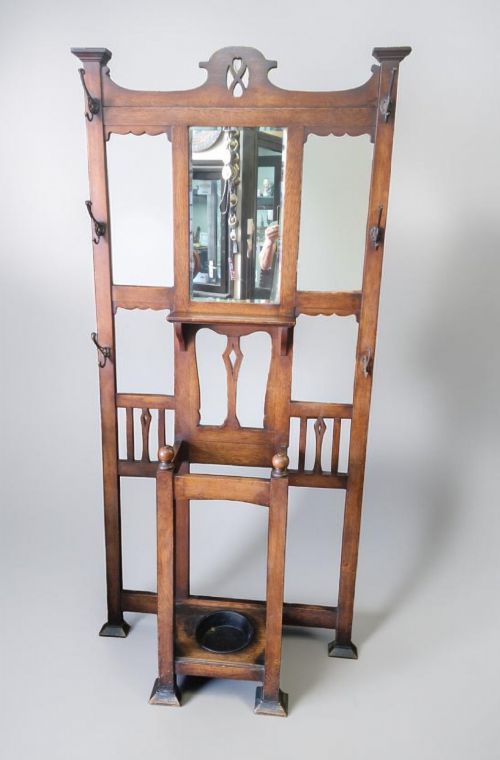
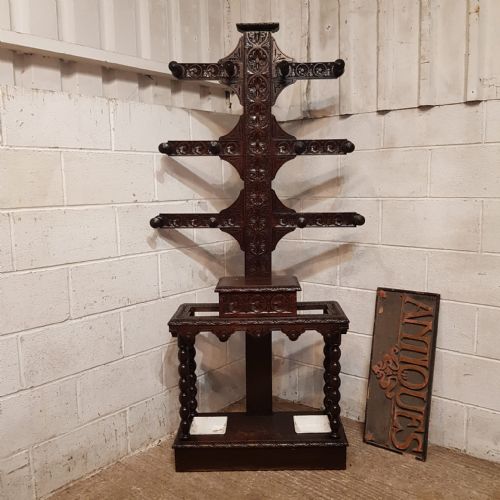
Most examples found here take the form of hall stands and coat stands combining upright timber panels with hooks and umbrella storage.
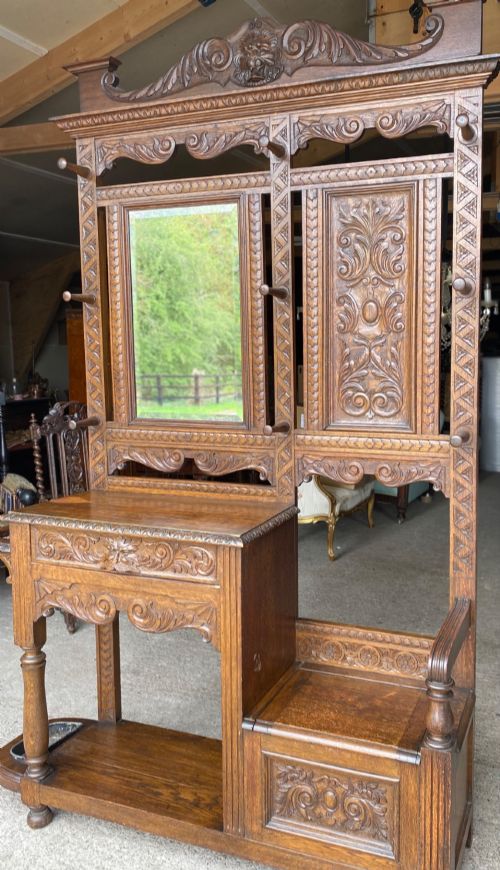
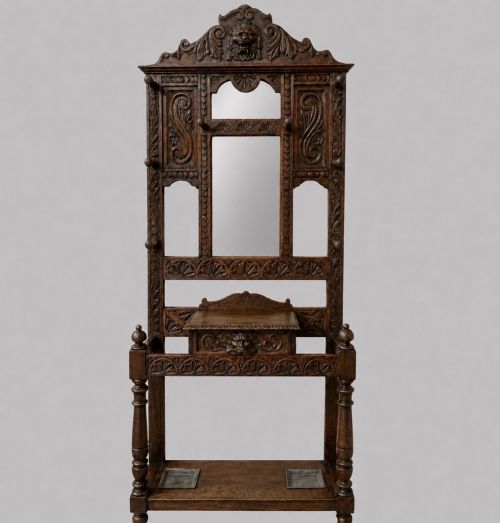
The wood is predominantly oak, often worked into deep relief carvings featuring foliage, mythical beasts, or architectural Gothic motifs.
Materials and construction methods
Makers utilised solid oak alongside golden oak variants, shaping the heavy timber through hand chiselling and joinery.
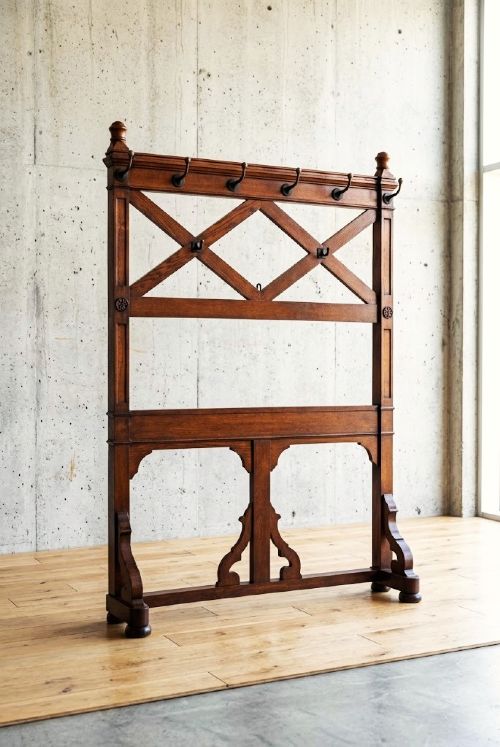
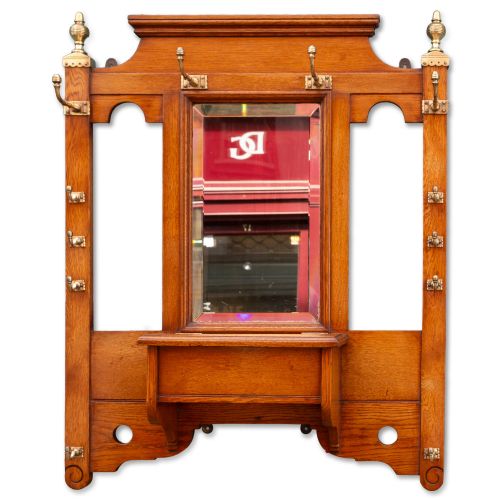
Functional metal elements such as brass hooks, iron brackets, and cast iron components were integrated to bear the weight of heavy winter garments.
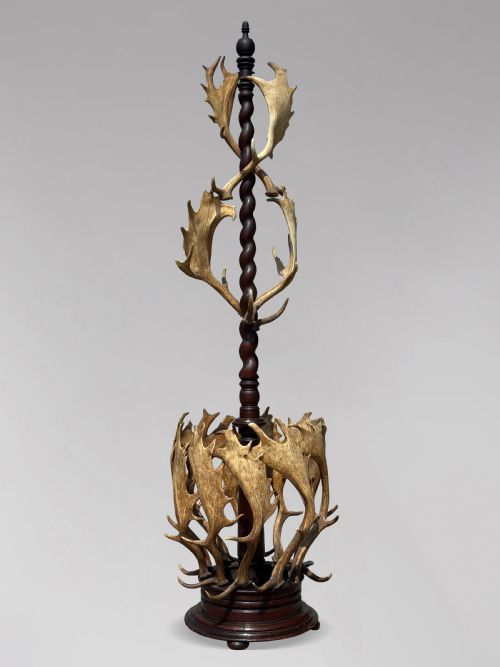
Many designs incorporate bevelled glass mirrors and occasionally marble drip pans or antler details to complete the assembly.
Carved Oak Hat Tree Retail Price Guide 2026
Typical asking prices for carved oak hat tree among the pieces listed under this phrase on Sellingantiques today, from the lower quarter to the upper quarter. They describe what is for sale here now, not the wider market.
The listings show oak combined with brass, iron, glass, marble, and antler across Victorian and Edwardian periods.
Distinctions in craftsmanship
Quality rests in the depth and clarity of the carving, distinguishing crisp relief work from mechanical or shallow decoration.
The choice of secondary materials, such as heavy cast iron bases or substantial brass fittings rather than plated alternatives, elevates a piece.
Proportion and architectural ambition dictate the standing of an example, ranging from narrow domestic hall stands to monumental Flemish designs.
J. Parker of Woodstock·William Whiteley
The Carved Oak Hat Tree Glossary
- Hallstand
- A primary piece of entrance furniture incorporating coat hooks, a mirror, and glove boxes. It serves both decorative and organisational roles in a Victorian hallway.
- Greenman
- A sculptural motif depicting a human face entwined with leaves, vines, or branches. This ancient symbol recurs frequently in nineteenth century wood carving.
- Gothic Revival
- An architectural and decorative style drawing on medieval forms. Pieces display pointed arches, tracery, and heavy structural timber.
- Black Forest
- A style of carving originating in central Europe known for naturalistic animal subjects. Bears, foxes, and eagles emerge from the timber frame.
- Arts and Crafts
- A design movement valuing manual skill and simple construction. These items emphasise the natural texture of oak without excessive ornament.
Carved Oak Hat Tree: Frequently Asked Questions
What is a carved oak hat tree?
A carved oak hat tree is a tall hall furniture piece built from oak timber to hold coats, hats, and umbrellas.
These items date largely from the nineteenth and early twentieth centuries, serving as functional sculpture in domestic entryways.
How were these stands used?
Visitors placed hats upon the upper pegs and hung heavy coats on the metal hooks provided.
Umbrellas and walking sticks found a tidy home in the base compartments, often equipped with metal or ceramic trays.
How do I identify the period?
Victorian and Edwardian versions display distinct stylistic cues such as Gothic tracery, Art Nouveau curves, or heavy Flemish carving.
The presence of original brass hardware and hand cut joinery helps date the timber construction.
Where should I place one?
These tall stands suit entrance halls and spacious corridors where their vertical proportions can command the room.
Adequate wall clearance ensures the pegs and attached mirrors function properly in daily use.