





Oak Stick Stand Mirror
An oak stick stand mirror brings a grounded architectural presence to an entranceway, combining timber framing with practical glass and storage.
Oak Stick Stand Mirror
An oak stick stand mirror combines a central looking glass with timber framework designed to hold coats, hats and umbrellas in a hallway. These pieces appear predominantly from the Victorian, Edwardian and Arts and Crafts periods, utilising robust native hardwoods.
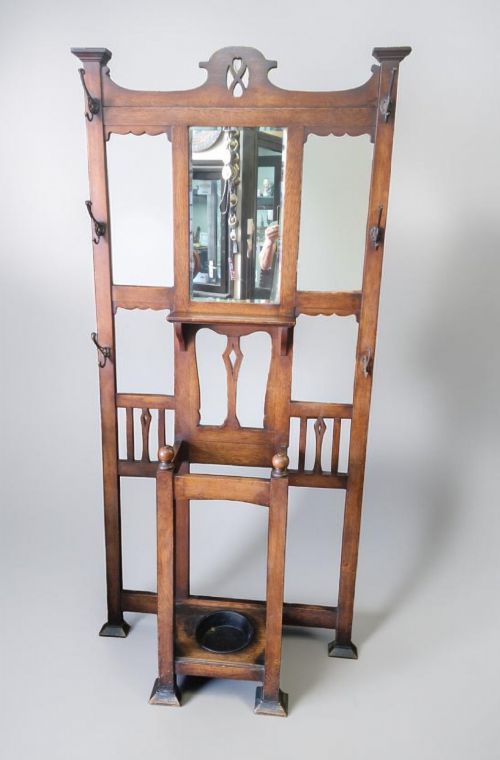
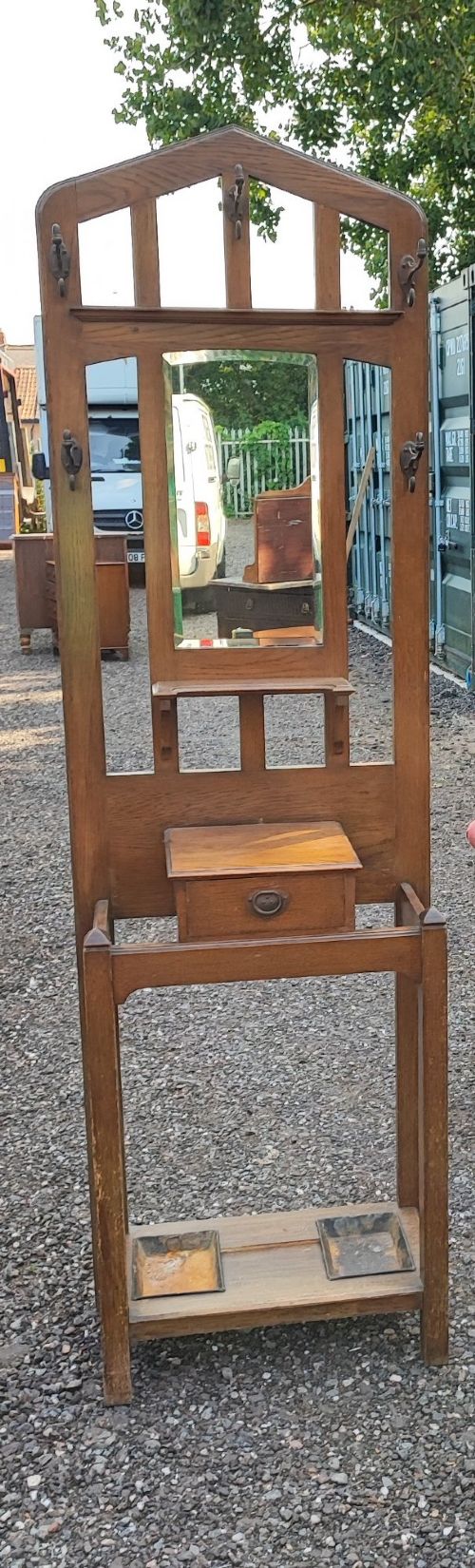
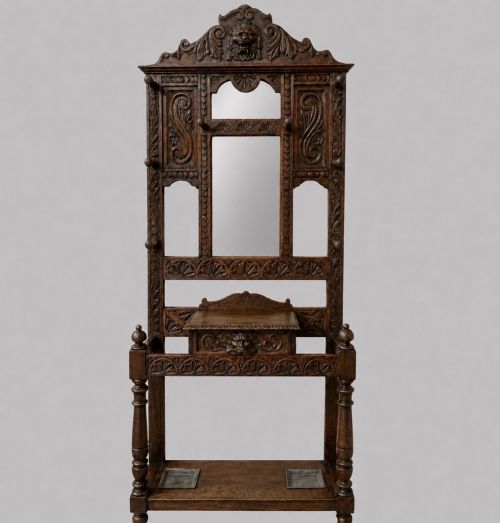
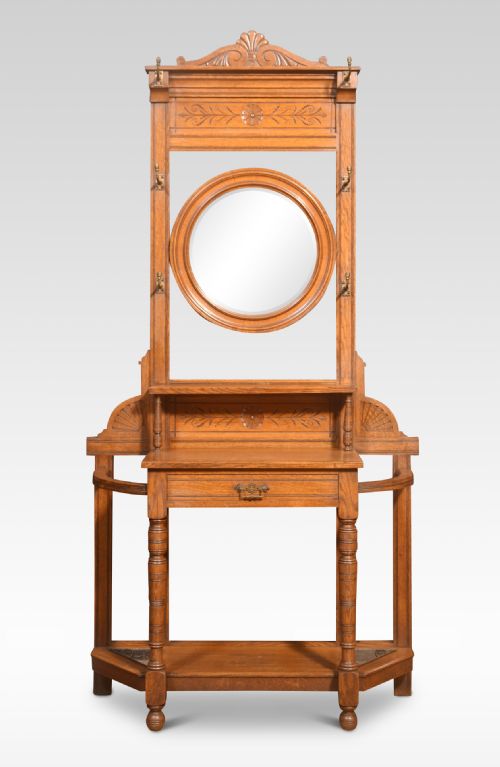
The versions met most frequently on this page take the form of substantial hall stands incorporating carved panels, brass or cast iron umbrella wells and bevelled mirror plates. Form follows function closely, providing designated hooks alongside integrated drip pans for wet weather gear.
How they were made
Makers built these pieces primarily from solid oak, sometimes highlighted as golden oak, employing panel construction to ensure stability across large vertical surfaces. Frames frequently feature hand-carved ornamentation, ranging from geometric Arts and Crafts motifs to elaborate Victorian Gothic Revival detailing.
Functional hardware was integrated directly into the timber frame, utilising brass coat hooks, cast iron stick wells and removable metal drip trays. Mirror glass was typically bevelled at the edges and secured behind timber backing boards within the central upper section.
Oak Stick Stand Mirror Retail Price Guide 2026
Typical asking prices for oak stick stand mirror among the pieces listed under this phrase on Sellingantiques today, from the lower quarter to the upper quarter. They describe what is for sale here now, not the wider market.
Listings show oak stick stand mirrors spanning from the nineteenth century into the 1920s, encompassing Victorian, Edwardian, Arts and Crafts and Art Nouveau styles.
What varies in quality
The distinction between standard examples and superior pieces rests largely on the ambition of the timber carving and the integrity of the original hardware. Pieces featuring deep relief work, such as Green Man motifs or crisp Arts and Crafts joinery, demonstrate a higher level of workshop execution.
Proportion and material completeness also define the grade of a piece, particularly the retention of original brass hooks and matching metal drip pans. Finer examples balance structural weight with refined decorative details rather than relying on plain panelwork alone.
The Oak Stick Stand Mirror Glossary
- Bevelled mirror
- A plate glass mirror with an angled edge polished around the perimeter. This catches the light and denotes a finer finish.
- Drip pan
- A removable metal or ceramic tray housed at the base of the umbrella section. It catches moisture from wet sticks and protects the surrounding timber.
- Golden oak
- A bright, warm tone of oak timber favoured during the late nineteenth and early twentieth centuries. It highlights the natural grain of the wood under clear finishes.
- Hall stand
- A composite hallway furnishing combining a mirror, coat hooks, hat shelf and stick stand into a single unit. It serves the practical needs of an entrance hall.
- Stick well
- The lower compartment or ringed section designed to store walking sticks and umbrellas upright. It usually pairs with a metal base to contain water.
Oak Stick Stand Mirror: Frequently Asked Questions
What is an oak stick stand mirror?
It is a combined hallway furnishing made from oak that incorporates a mirror alongside storage for coats, hats and walking sticks. These pieces were designed for entranceways to serve multiple practical domestic functions.
They emerged strongly during the Victorian and Edwardian eras, reflecting a period when hallway furniture formed an important part of interior presentation. The combination of timber, glass and metal hardware created durable items built for daily household use.
How were these hall stands used?
They were positioned near the front entrance of a home so residents and visitors could deposit outerwear upon arrival. Hats and coats hung from the brass hooks, while umbrellas and walking sticks stood upright in the lower wells.
The integrated mirror allowed individuals to check their appearance before leaving the house. The lower trays collected rainwater from wet sticks, protecting hallway floors from moisture.
How do I care for the oak?
Maintain the timber by dusting regularly with a dry cloth and occasionally applying a traditional beeswax to nourish the surface. Avoid placing the piece in direct sunlight or near heat sources to prevent the wood from drying out.
Keep the metal drip pans clean and dry to prevent rust transfer to the surrounding oak base. Check the wall stability if the stand is tall, ensuring it remains secure during everyday use.
How do I identify the period?
Look to the decorative style and carving motifs to suggest the era of manufacture. Heavy mouldings and dark finishes often align with Victorian pieces, while simpler, geometric lines point towards Arts and Crafts influence.
Construction methods also offer clues, such as the type of screw heads, backboards and mirror bevelling techniques. Edwardian and later pieces tend to show lighter golden oak tones and more restrained ornamentation.