
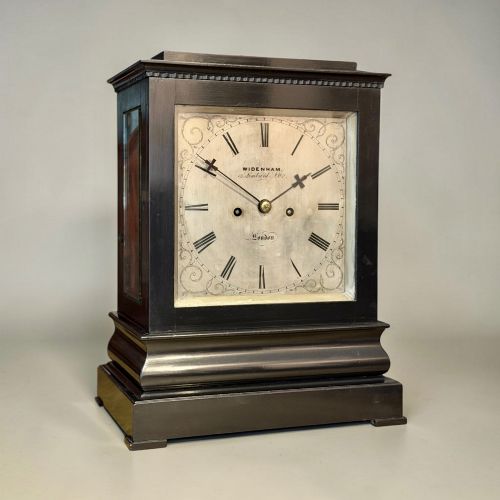
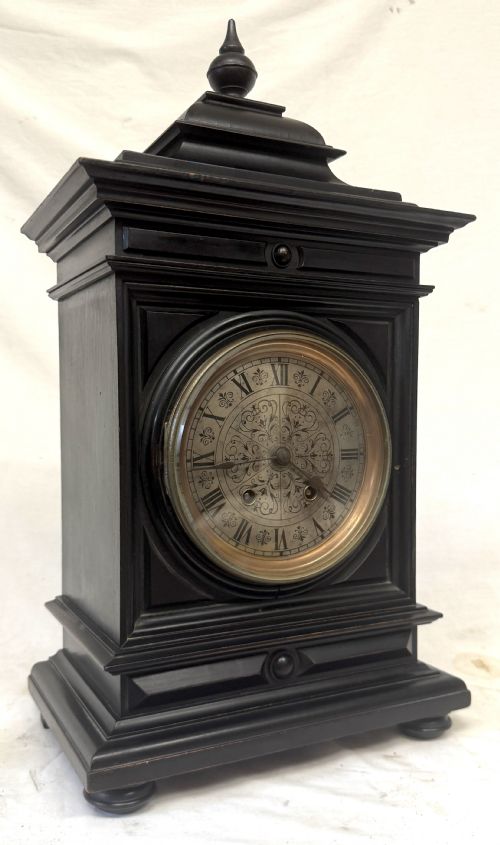
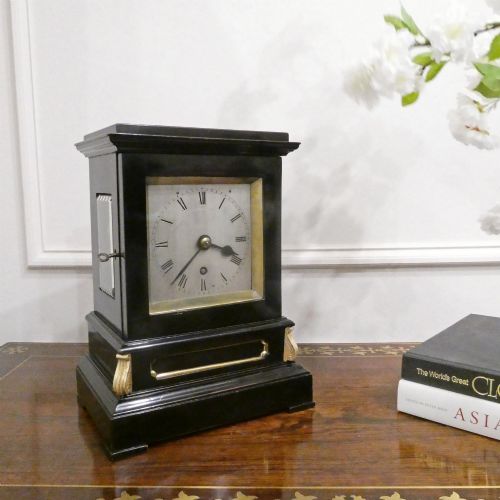
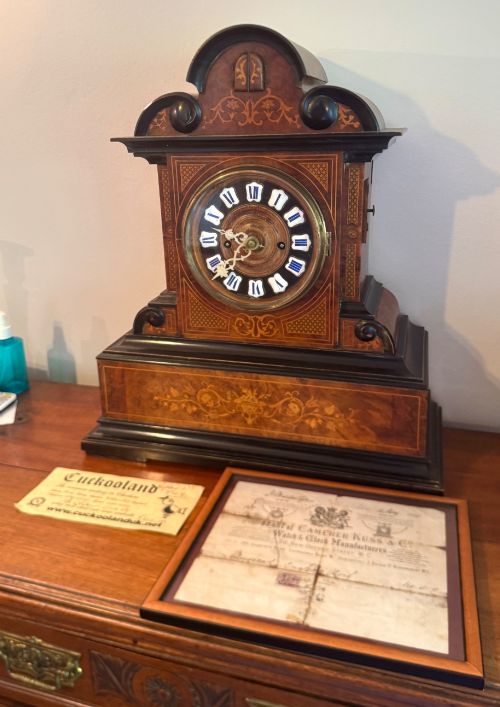


Black Ebonised Bracket Clock
These black ebonised bracket clocks combine dark wooden cases with precise mechanical movements, offering collectors a striking focal point for a room.
Black Ebonised Bracket Clock
When you search for a black ebonised bracket clock, you encounter timepieces housed in dark wooden cases shaped by periods from the seventeenth century through to the Victorian era. These pieces range from compact library timepieces and balloon clocks to massive triple fusee musical models with multiple bells.
The selections on this page span Georgian, Regency, and Victorian styles, alongside earlier seventeenth-century examples. Many take traditional forms such as bell-top cases, break-arch designs, and inverted bell-top configurations.
Makers and retailers from London and the regions produced these clocks for table, mantel, or wall bracket placement. They function both as mechanical timekeepers and as architectural pieces of furniture.
Materials and Construction
The makers constructed these cases primarily from wood treated with ebonisation to imitate ebony, occasionally incorporating walnut or marquetry inlay. They mounted brass dials, silvered metal chapters, and glass panels into the housing.
Interiors utilise brass fusee movements, verge escapements, and pendulum regulation. Details often include ormolu mounts, gilt bronze ornamentation, and enamel dial components.
Listings feature ebonised wood alongside brass, ormolu, and silvered metal across eighteenth-century, Regency, and Victorian periods.
Distinctions in Quality
Quality rests in the refinement of the brass movement, the precision of the engraving on the dial, and the crispness of the ebonised woodwork. Finer examples display complex striking or chiming trains, such as quarter repeating mechanisms or multiple bells.
The integrity of the original case mounts, signed dials, and well-preserved brass components distinguish standard timepieces from exceptional examples.
Widenham of London·Lenzkirch·John Witherston of Hereford·Henry Jones·Des Granges of London·Phillips Brothers·Thomas A Paris·Richard Rooker·Payne and Co·Grimaldi and Johnson·Somersall London·Andrew Marchant·Berguer of the Strand·William Withers·John Leroux·Desbois and Wheeler·John Fletcher·Barraud and Lunds·John Taylor·William Smith London·Percy Webster·Isaac Hurley·Joseph Lum·D Robertson of Perth·Henri Dasson
The Black Ebonised Bracket Clock Glossary
- Fusee
- A conical pulley used in mechanical clocks to equalise the drive of the mainspring as it unwinds. This mechanism helps maintain steady timekeeping across the power reserve.
- Verge escapement
- An early type of escapement mechanism that controls the release of power in pendulum or balance-wheel clocks. It produces a rapid, distinct ticking sound.
- Ebonised
- Wood finished with a dark stain or pigment to resemble genuine ebony. Cabinet makers used this technique extensively on bracket clock cases.
- Bell-top
- A style of clock case roof shaped like a dome or bell. This silhouette appears frequently on eighteenth-century designs.
- Quarter repeating
- A complication that strikes the hours and the elapsed quarters when a pull cord is activated. It allowed owners to tell the time in the dark.
Black Ebonised Bracket Clock: Frequently Asked Questions
What is a bracket clock?
A bracket clock is a portable mechanical clock originally designed to sit on a wall bracket or a table surface. They typically feature spring-driven movements rather than falling weights.
Over the centuries, the term evolved to describe mantel clocks of a certain size and architectural form, even when kept on flat surfaces.
How do fusee movements work?
A fusee movement uses a conical drum and a cord or chain to regulate the force delivered by the mainspring. As the spring loses tension, the chain pulls on a wider part of the cone to maintain consistent power.
This clever mechanical device ensures the clock keeps accurate time as the power winds down between sessions.
Where should I place a heavy mantel clock?
These clocks require a sturdy, level surface such as a heavy sideboard, a dedicated wall bracket, or a robust mantelpiece. The weight of the wooden case and brass movement demands stable support to prevent vibrations.
Keeping the clock steady on a level plane also ensures the pendulum or balance wheel swings evenly for proper timekeeping.
How do I identify a Georgian clock?
Georgian clocks often display architectural ebonised cases with bell-top or break-arch silhouettes, brass dial spandrels, and engraved silvered chapter rings. Makers from this era frequently signed their work directly on the dial.
Inspecting the internal fusee movement and verge escapement also helps confirm the eighteenth-century origins of the piece.