
Black Chinoiserie Cabinet
Black chinoiserie cabinets are painted lacquered storage pieces decorated with gilt motifs that bring striking depth and period character into a room.
Black Chinoiserie Cabinet
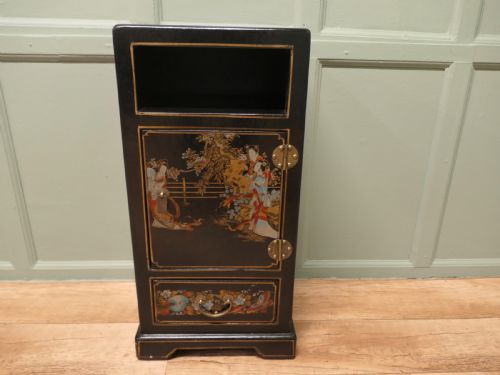
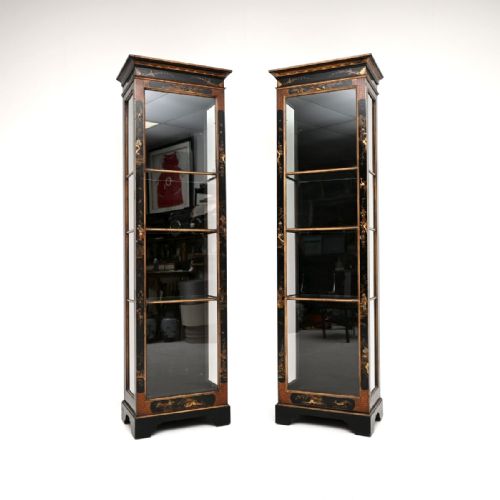
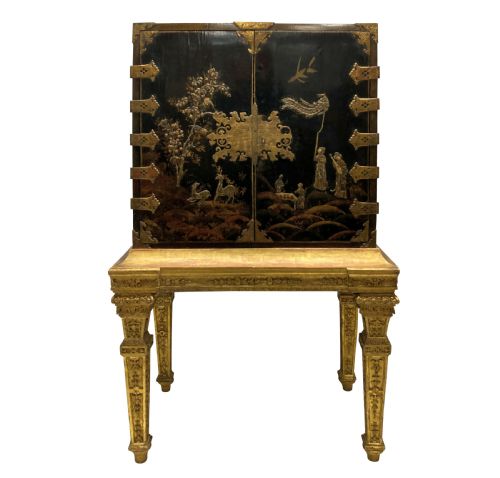
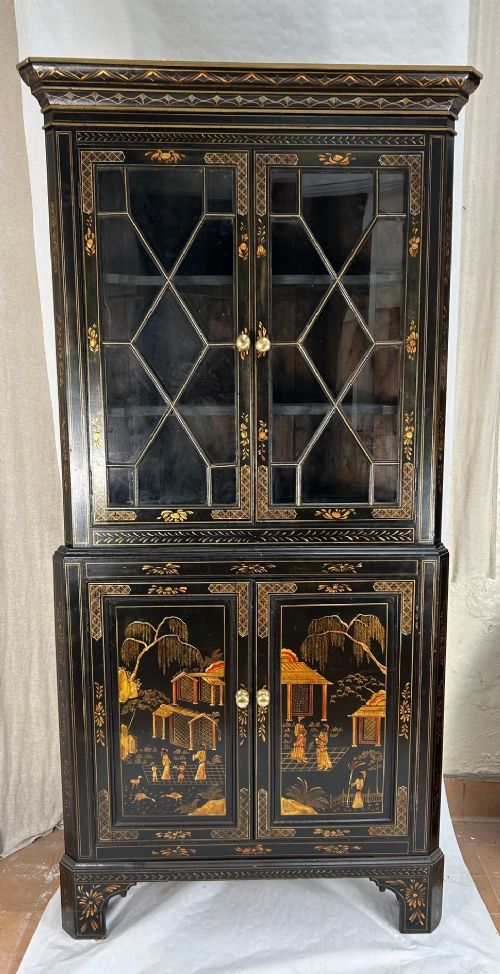
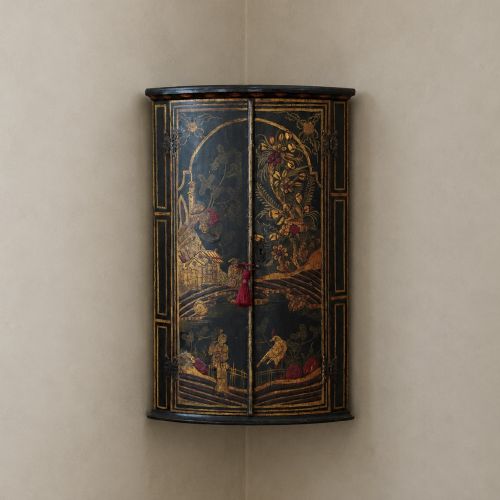
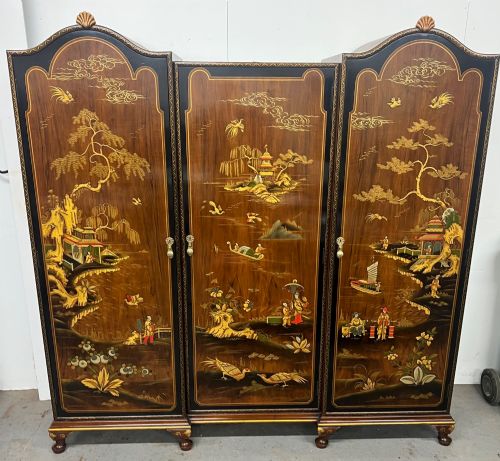
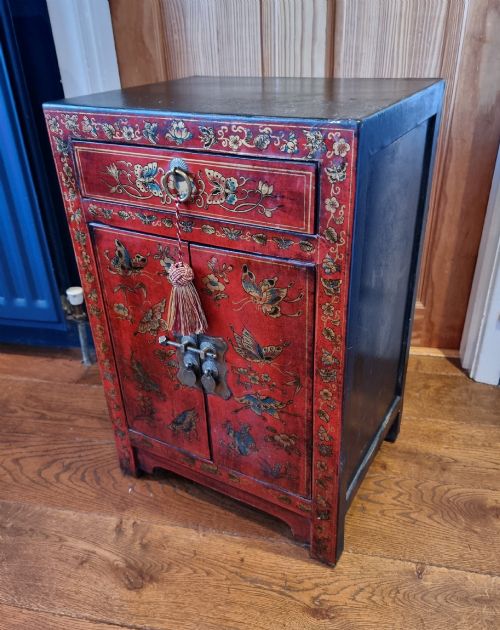
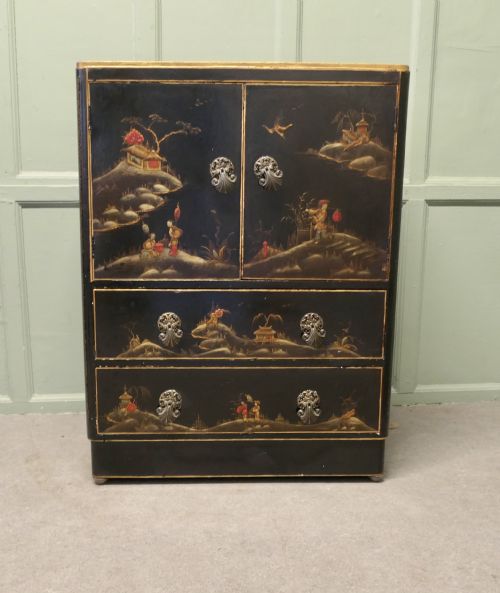
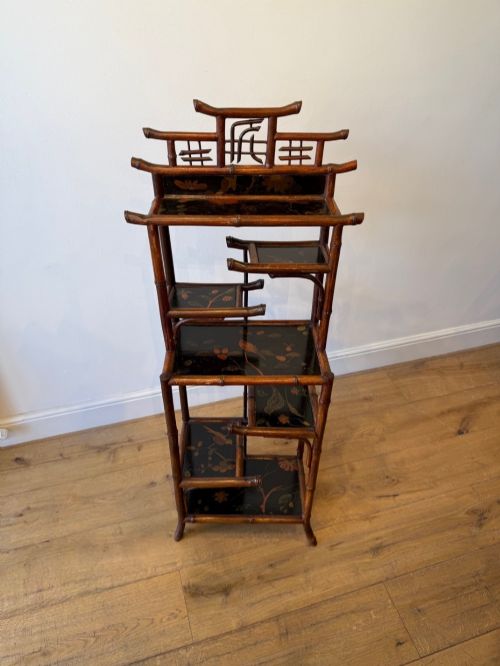
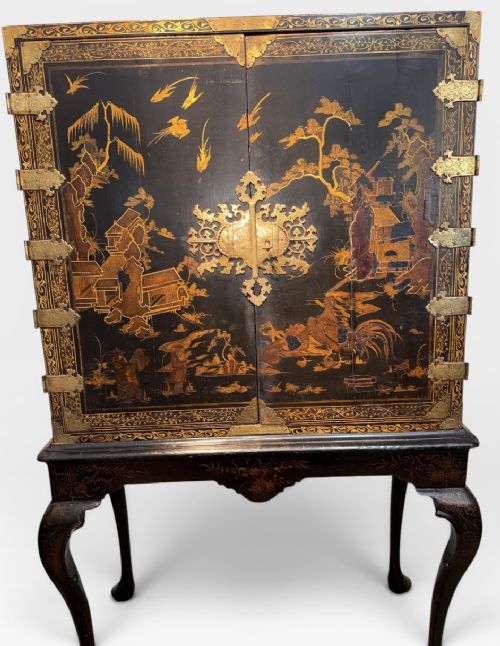
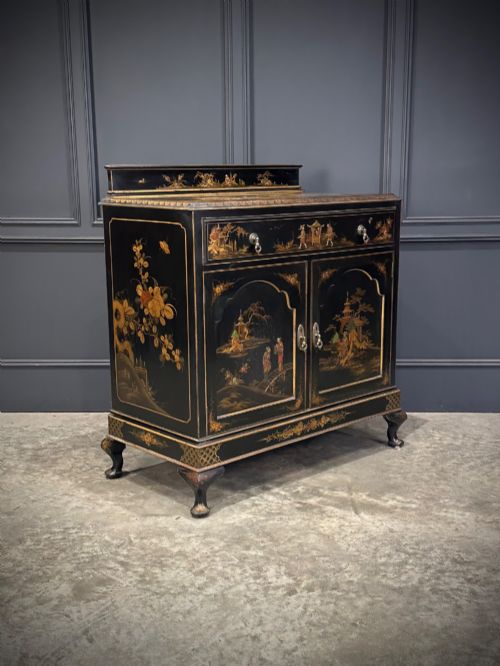
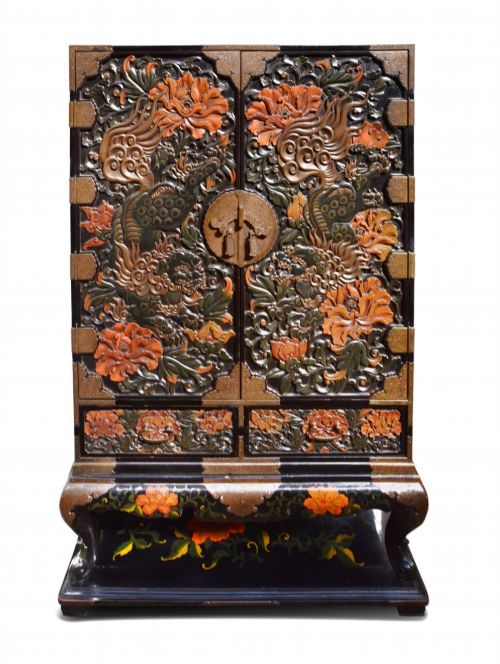
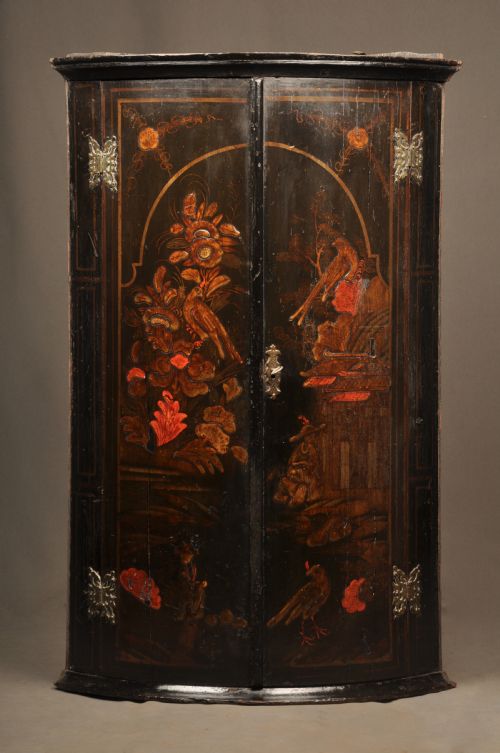
A black chinoiserie cabinet brings together decorative Asian-inspired ornamentation and classic European furniture forms, spanning corner cupboards, display cases and cabinets on stands. The pieces seen here range from 18th-century origin examples to Edwardian revivals and 1930s cocktail cabinets.
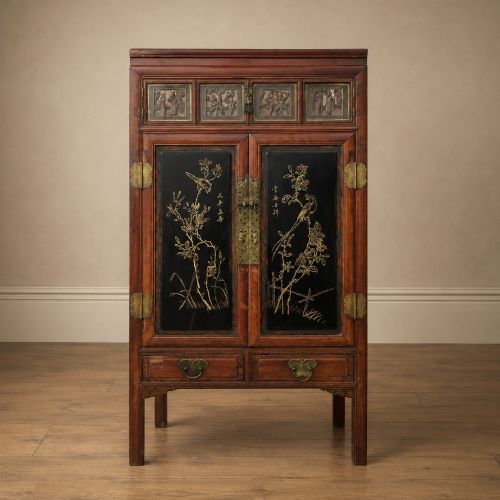
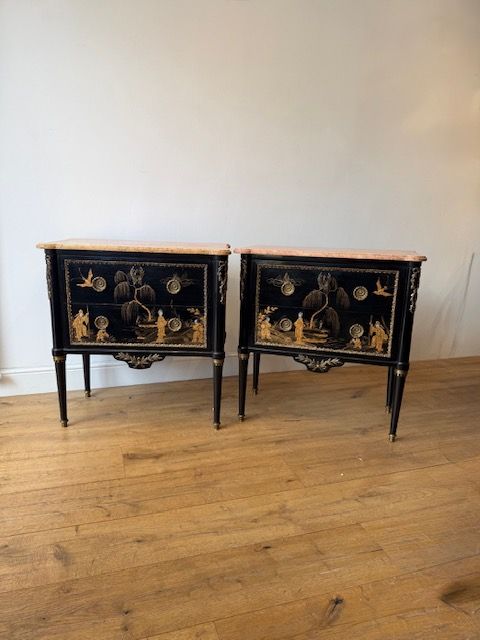
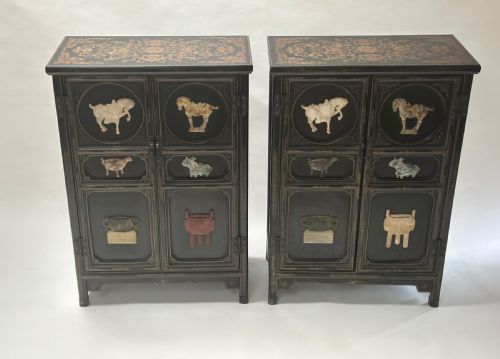
Buyers encounter distinct forms, including tall bureau bookcases, low side cabinets and corner cupboards designed to utilise awkward angles. Many examples employ dark lacquer surfaces embellished with gold leaf imagery depicting traditional figures, pavilions, birds and floral scenes.
The aesthetic bridges several eras, appearing in Georgian interpretations, Regency pen-work designs and later 20th-century creations. Selecting the right piece involves weighing the scale of the room against the commanding presence of a cabinet on stand or the compact footprint of a corner unit.
Materials and construction
Construction relies heavily on wood carcasses, including pine and various solid timbers, prepared to receive multiple layers of dark lacquer. Artisans applied successive coats of varnish and pigment, rubbing down each layer to achieve a smooth foundation for subsequent decoration.
Gilt ornamentation and gold leaf were applied by hand to render intricate figures, foliage and landscapes across the dark ground. Brass hardware such as hinges, escutcheons and drop handles frequently complement the polished lacquer surfaces and secure the doors.
Period examples span 18th Century, Regency, Victorian, and Edwardian eras.
Distinguishing quality
Quality reveals itself in the depth of the lacquer finish and the precision of the hand-applied gilding. Superior examples display layered pictorial scenes with fine details that retain their clarity and relief across the panels.
The integrity of the underlying cabinetwork, from the stability of the stand to the alignment of the doors, separates workshop pieces of high merit from simpler utility items. Well-executed corner joints and original brass furniture further elevate an example's standing.
Maples and Co
The Black Chinoiserie Cabinet Glossary
- Chinoiserie
- European decorative style imitating Chinese artistic traditions. It manifests through painted or raised motifs of landscapes, pagodas and figures.
- Japanned
- European imitation of East Asian lacquerwork. The technique employs heat-dried varnishes to produce a glossy dark finish.
- Cabinet on stand
- A storage enclosure raised on a separate supporting framework. This form lifts the main body off the floor to display decorative work.
- Gilt
- Application of gold leaf or powdered gold onto a surface. It highlights specific painted details and creates contrast against dark lacquer.
- Pen-work
- Surface decoration created using ink and nib rather than paint. This method produces fine linear detail resembling miniature engravings.
Black Chinoiserie Cabinet: Frequently Asked Questions
How were these cabinets used historically?
Historically, these cabinets stored valuable textiles, papers, china or personal collections behind secure doors. Their decorative surfaces demonstrated the owner's refined taste and engagement with global trade aesthetics.
Many styles, such as bureau bookcases or drinks cabinets, adapted internal compartments to hold writing materials or glassware for entertaining guests.
How do I style a black chinoiserie cabinet at home?
Placing a black chinoiserie cabinet against a neutral wall allows the dark lacquer and gold leaf details to stand out without overwhelming the room. They function effectively as standalone statement pieces in living areas or hallways.
Keep surrounding decor restrained to let the intricate painted scenes and brass hardware draw the eye naturally within the space.
How do I tell an 18th-century piece from an Edwardian revival?
Examination of the timber construction, interior drawer linings and the wear patterns within the lacquer helps indicate the age of a cabinet. 18th-century examples often exhibit hand-cut secondary woods and deeply patinated finishes.
Edwardian and later 20th-century revivals tend to show machine-prepared timbers and distinct preparation methods beneath the lacquer layers, reflecting the manufacturing standards of their respective decades.