
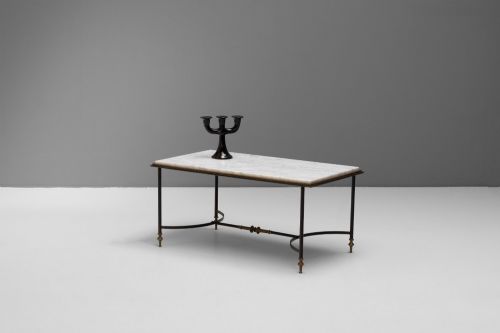
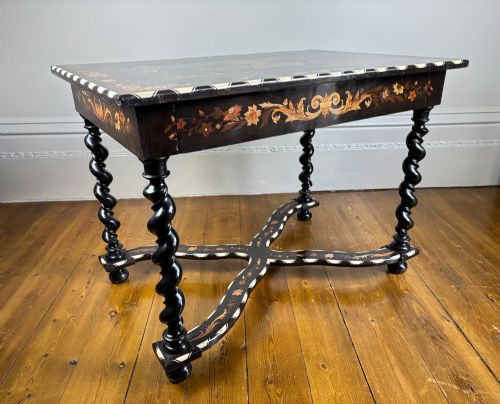
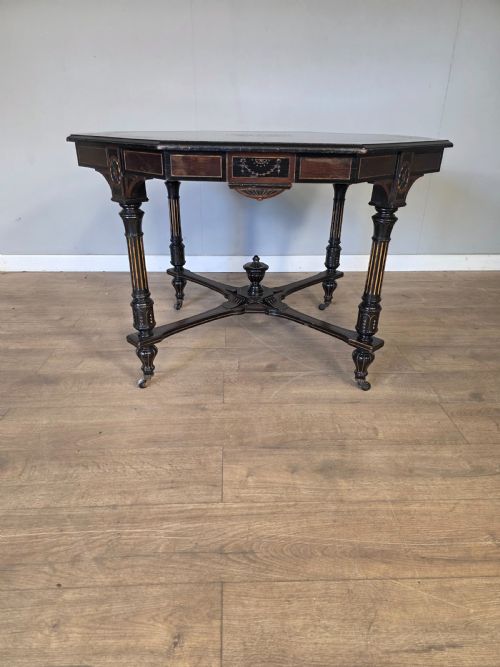
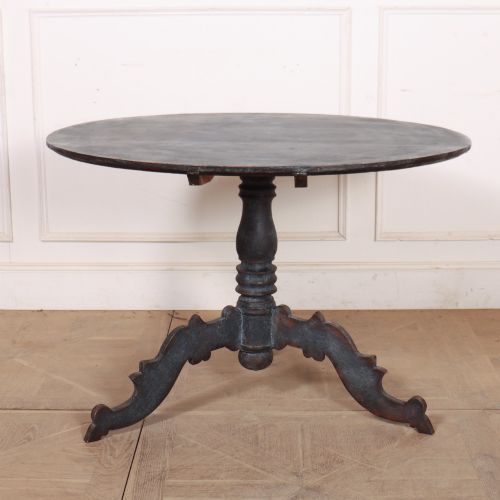




Black Centre Table
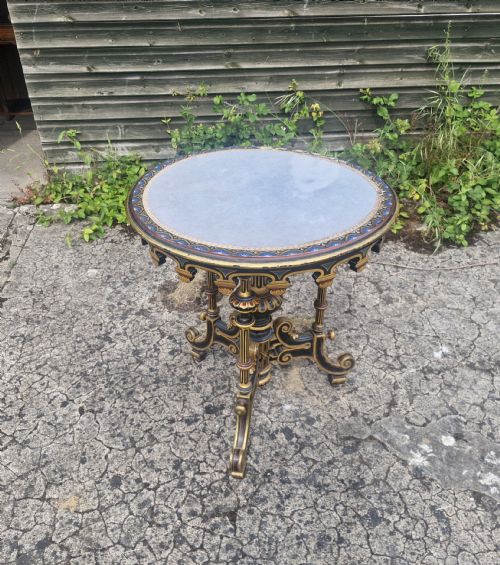
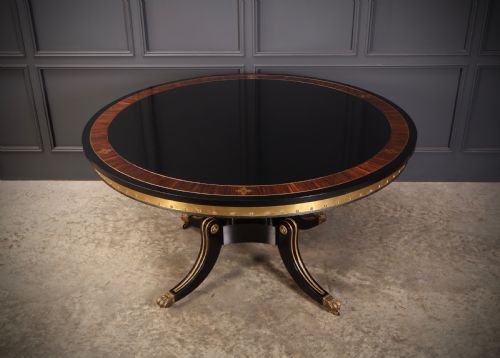
A black centre table commands the middle of a room, bringing dark wood, stone and polish together in a single striking surface.
How they were made
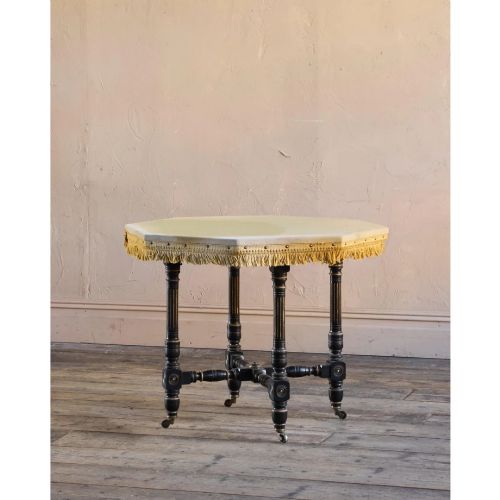
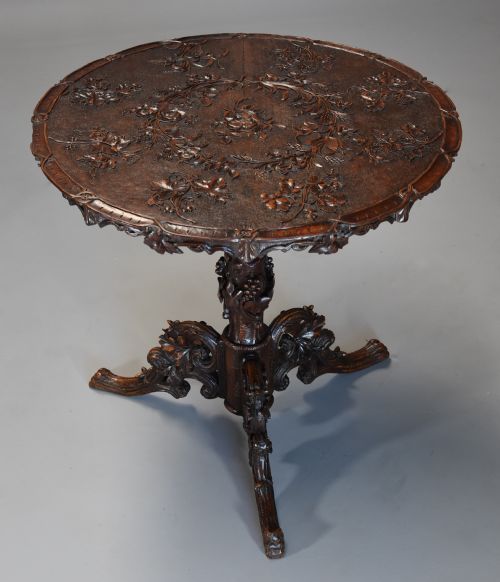
Craftsmen built these tables using foundational hardwoods like mahogany, oak, and linden, applying ebonisation treatments to achieve a deep, light-absorbing black finish. Parcel gilding or silvering often highlights the carved details on the borders and pedestals.
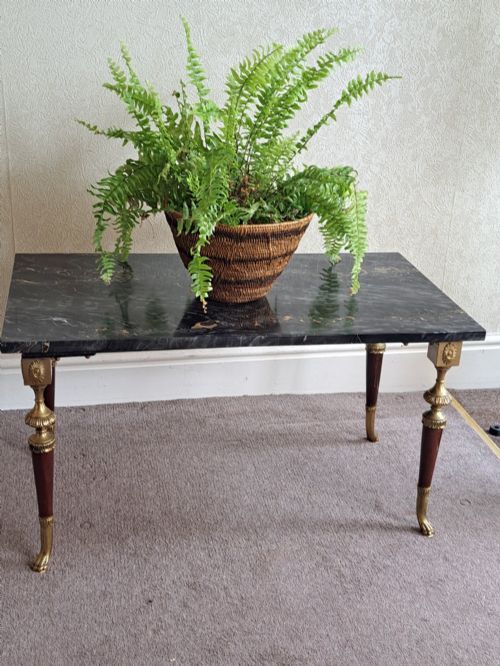
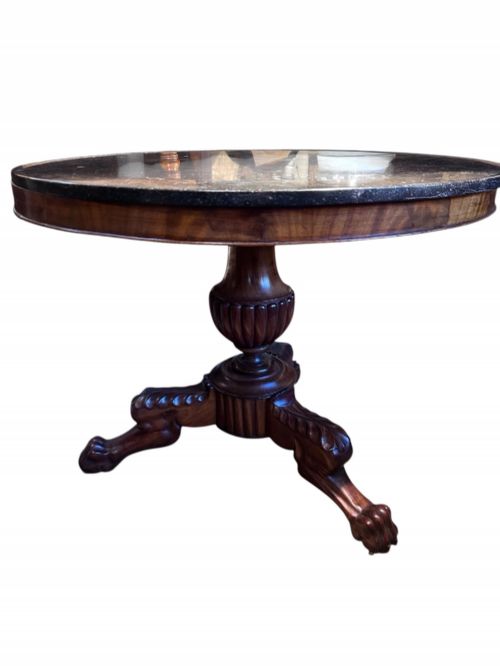
Surfaces frequently feature heavy slabs of white or black marble, alongside intricate marquetry and bone inlay set directly into the wood. Brass stringing and ormolu mounts provide metallic contrast against the dark timber bases.
What varies in quality
The precision of the surface inlay and the crispness of the carved ornament distinguish superior examples from simpler production. Hand-cut brass stringing and detailed bone work require skilled handiwork that elevates a piece above standard factory output.
The choice of top material alters the character and standing of the table, with weighty specimen marble or fine pietra dura panels indicating higher ambition than plain timber. Structural integrity in the central pillar and foot arrangement governs how steadily the table holds its heavy top.
The selection includes ebonised wood, mahogany, oak, and linden alongside marble, brass, and ormolu.
A Hindley & Sons·Maison Millet·Paul Sormani
The Black Centre Table Glossary
- Ebonisation
- The process of treating timber, commonly fruitwood or mahogany, to resemble ebony through staining and polishing. This dark finish defines many nineteenth-century tables.
- Guéridon
- A small French table, typically round and supported by a single central pillar or a cluster of legs. These pieces often feature marble tops.
- Marquetry
- Decorative patterns formed by the insertion of pieces of wood, bone, or ivory into a veneered surface. Makers utilised this technique to create geometric or floral motifs on table tops.
- Ormolu
- Gilded bronze mounts applied to furniture for decorative effect. French cabinetmakers favoured this material for accentuating table borders and legs.
- Pietra dura
- An inlay technique using cut and fitted polished coloured stones to create pictorial designs. Florentine workshops applied these stony panels to table surfaces.
Black Centre Table: Frequently Asked Questions
Where do I place a centre table?
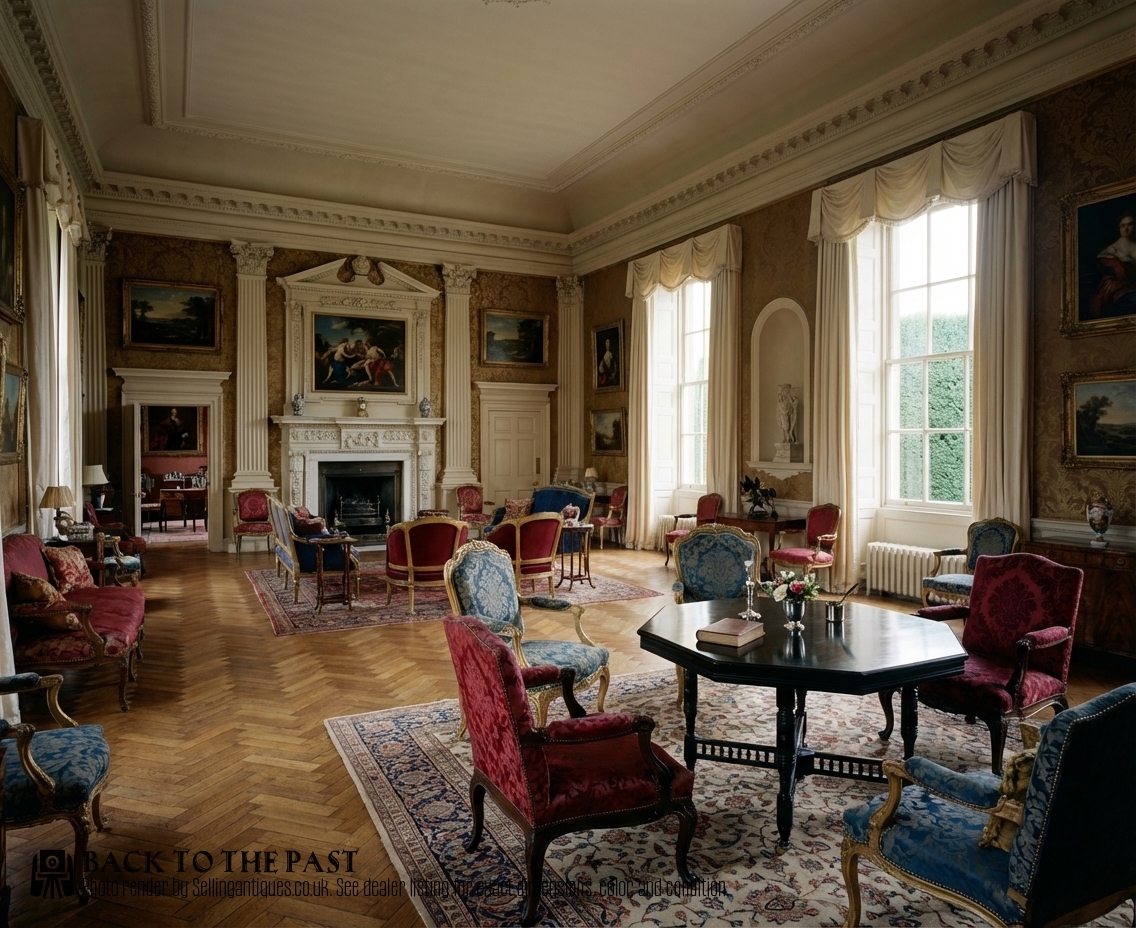
These tables stand in the middle of a room rather than against a perimeter wall, allowing access from all sides.
They function well beneath a central ceiling light or chandelier to display decorative objects.
How do I clean an ebonised surface?
Dust the timber regularly with a soft, dry cloth to prevent accumulation in carved recesses.
Avoid chemical polishes that can degrade the dark finish over time.
Are marble tops original?
Many nineteenth-century guéridons were constructed specifically to hold heavy stone inserts.
Examine the seating rebate beneath the top to confirm the marble rests securely in its original bed.
Can I use these as coffee tables?
Standard Victorian centre tables stand too high for low seating arrangements.
Lower adaptations and specific low tables from later decades suit modern lounge seating better.