

Black Drawers
Black antique drawers bring dark finishes and practical storage together, ranging from Georgian pine to Victorian painted chests.
Black Drawers
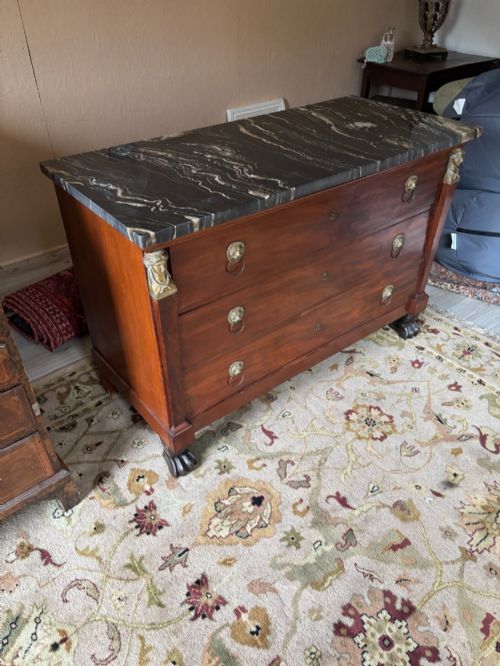
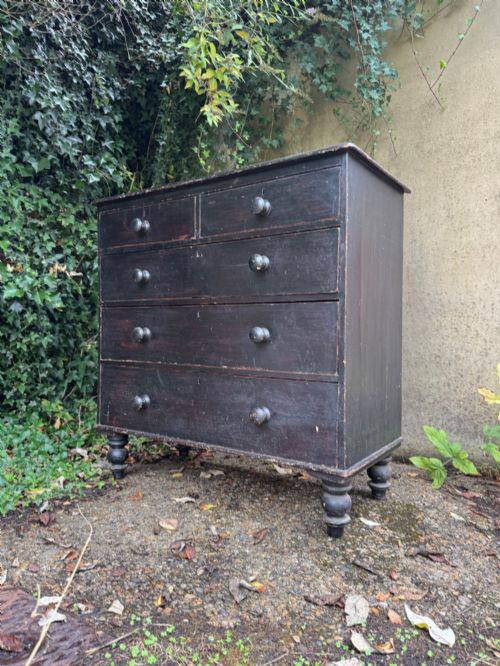
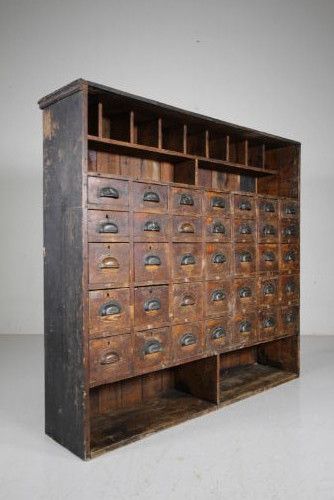
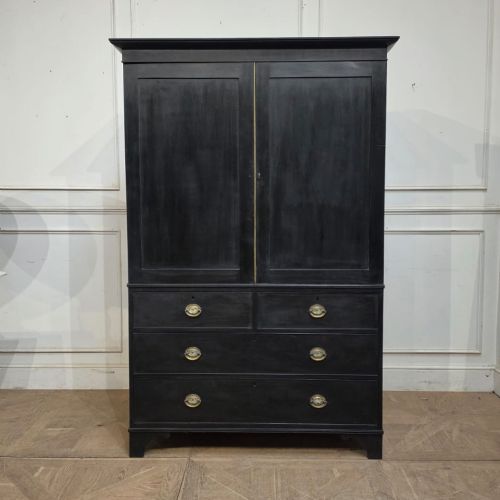
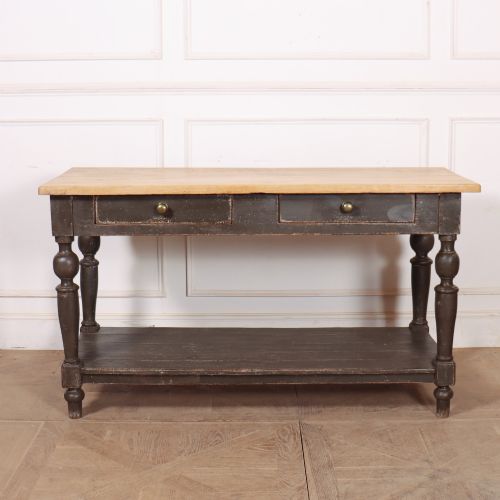
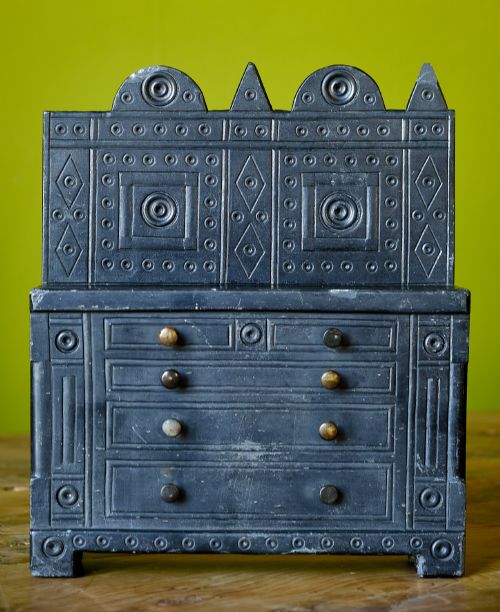
Black antique drawers encompass a varied group of storage furniture, primarily chests of drawers, desks, and cabinets originating from the eighteenth to the twentieth centuries. Buyers searching this phrase meet everything from Hungarian pine pieces to French commodes and Japanese tansu chests.
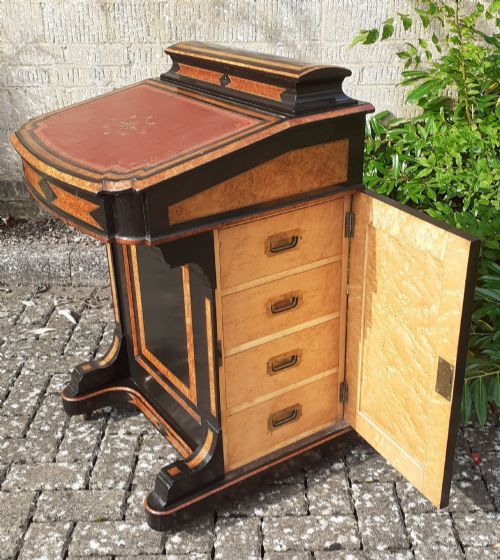
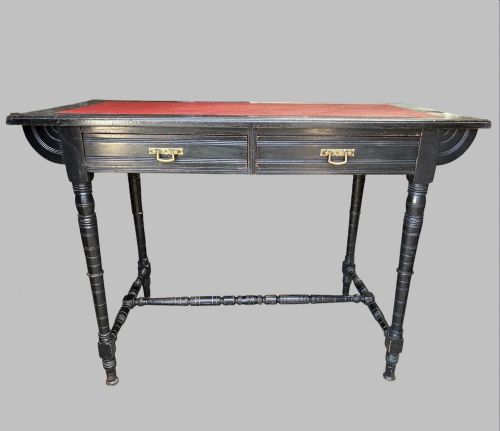
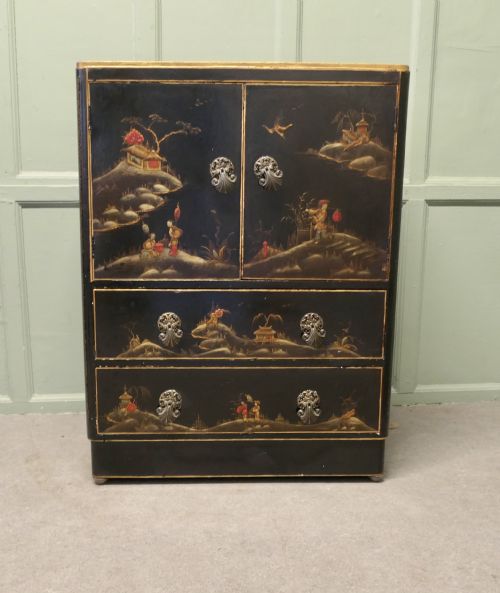
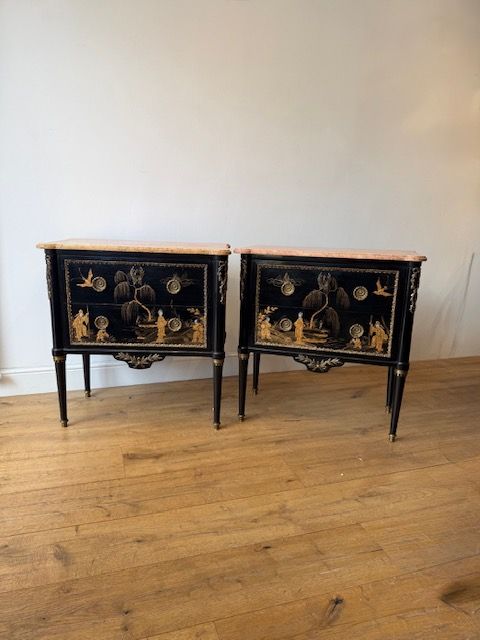
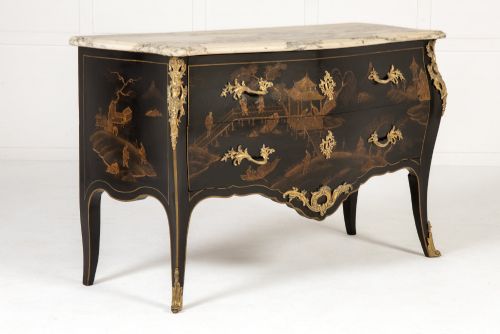
The material treatments define the aesthetic, uniting dark painted surfaces, ebonised wood, and lacquered finishes across multiple regional styles. English country items sit alongside Chinoiserie lacquerwork and Art Deco desks, demonstrating how different makers interpreted dark tones over centuries.
How they were made
Construction relies heavily on traditional timber frames using pine, oak, mahogany, and elm, often shaped into serpentine or bombe profiles. Workshops employed hand-painted layers, ebonisation, or applied lacquer to achieve the distinct dark surfaces seen on these pieces.
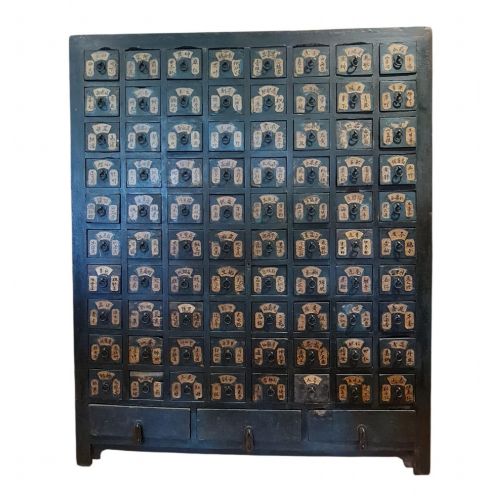
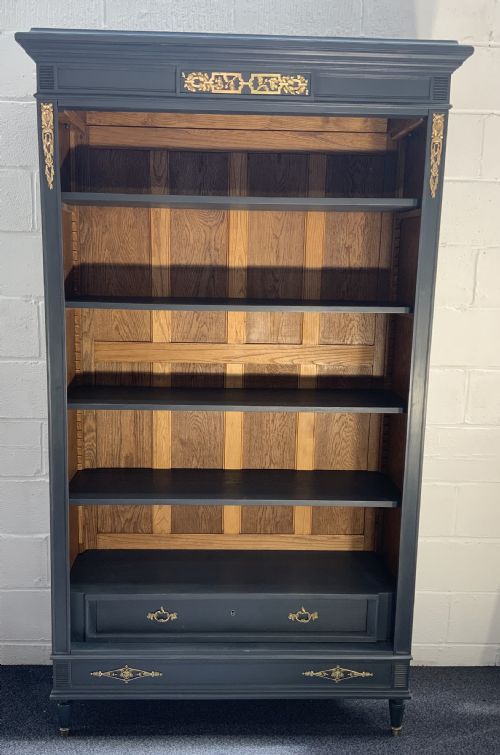
Hardware details such as brass handles, mounts, and escutcheons complement the dark timber and painted finishes. Joinery methods range from simple nineteenth-century pine construction to intricate Japanese joinery on tansu steps and apothecary chests.
The selection includes regional items from England, France, Hungary, Japan, Sweden, China, and America.
What varies in quality
Quality rests upon the integrity of the original surface finish, whether deep ebonisation, historical black paint, or layered lacquer. Pieces retaining their undisturbed surface patination stand apart from later repainted examples.
The sophistication of the form and cabinetmaking skill also dictate standard, separating utilitarian regional pieces from high-style Georgian commodes and detailed Chinoiserie cabinets.
The Black Drawers Glossary
- Ebonised
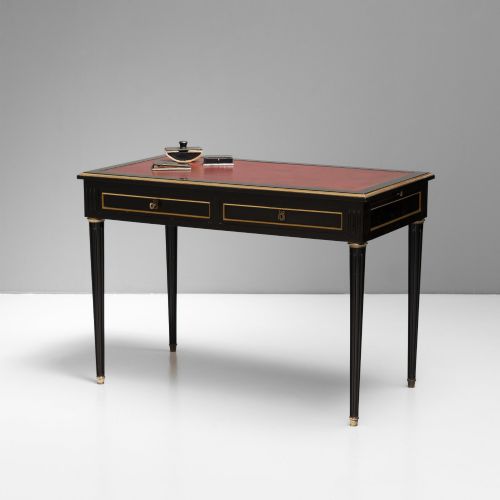
- Wood treated with a stain or finish to imitate ebony. This dark process was common on nineteenth-century desks and Victorian furniture.
- Chinoiserie
- European imitation of traditional Chinese artistic styles, frequently applied in black lacquer on cabinets and commodes.
- Bombe
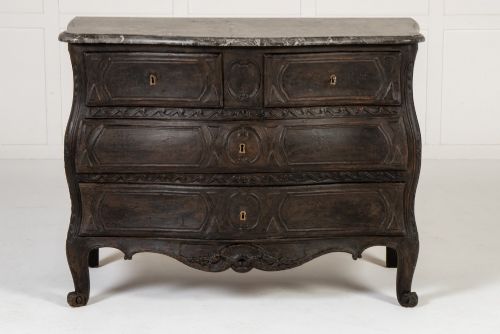
- A swollen or bulging outward profile found on eighteenth-century and later commodes. This curved shape requires advanced woodworking skill.
- Tansu
- Traditional Japanese mobile storage chests featuring multiple drawers and compartments. These cabinets often utilise clever locking systems and iron hardware.
- Serpentine
- A furniture front shaped with a central convex curve flanked by concave sections. This undulating line appears frequently on finer desks and chests.
Black Drawers: Frequently Asked Questions
What periods do black antique drawers come from?
The pieces span from the eighteenth century through the Georgian and Victorian eras up to the Art Deco period of the twentieth century. Examples include 18th-century French commodes and Victorian painted pine chests.
Design characteristics shift across these eras, moving from curved bombe profiles to structured campaign and office desks.
How do I care for ebonised wood furniture?
Keep ebonised and black-painted surfaces away from direct sunlight and excessive moisture to prevent fading and cracking. Dust regularly with a soft, dry cloth.
Avoid harsh modern cleaning chemicals that can strip the dark finish or damage the underlying wood patination.
What is a Japanese tansu chest?
A tansu is a traditional Japanese storage chest used for clothing or household goods, often constructed with multiple drawers and sliding panels. Examples include step chests and ship's tansu.
These pieces feature distinctive iron hardware and joinery designed for utility and portability.
Are painted black chests original?
Many Victorian and Georgian pine chests feature original black paint or historical hand-painted finishes, while others show later ebonisation. Examining the surface wear helps determine the age of the finish.
Regional pieces from Hungary and England frequently display authentic period painted surfaces.