

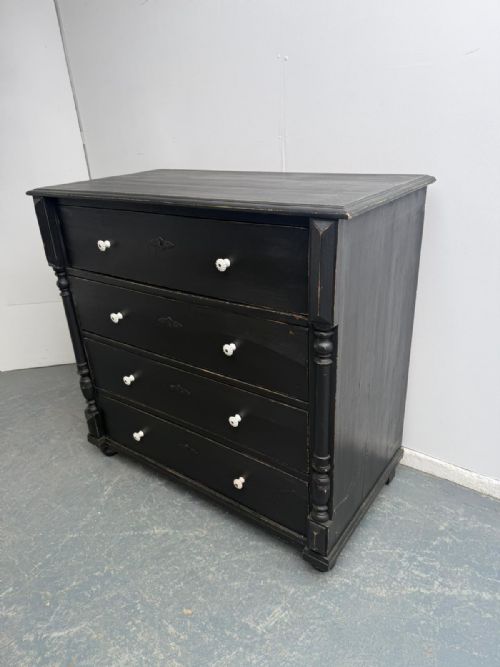

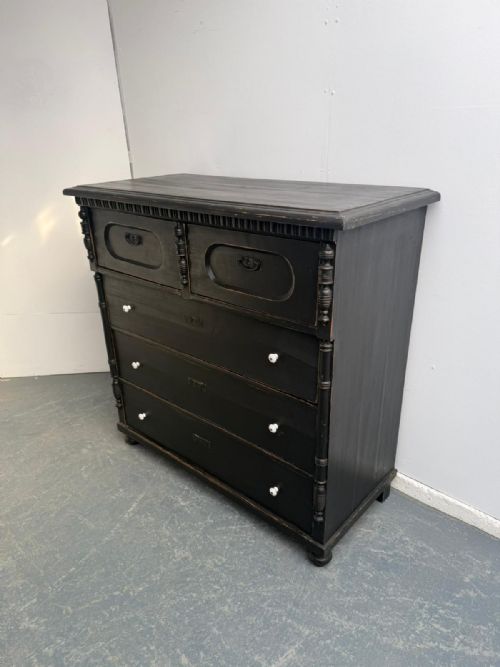

Antique Black Commode
An antique black commode brings sombre elegance to a room, offering deep drawer storage through polished mahogany, ebonised wood or painted pine.
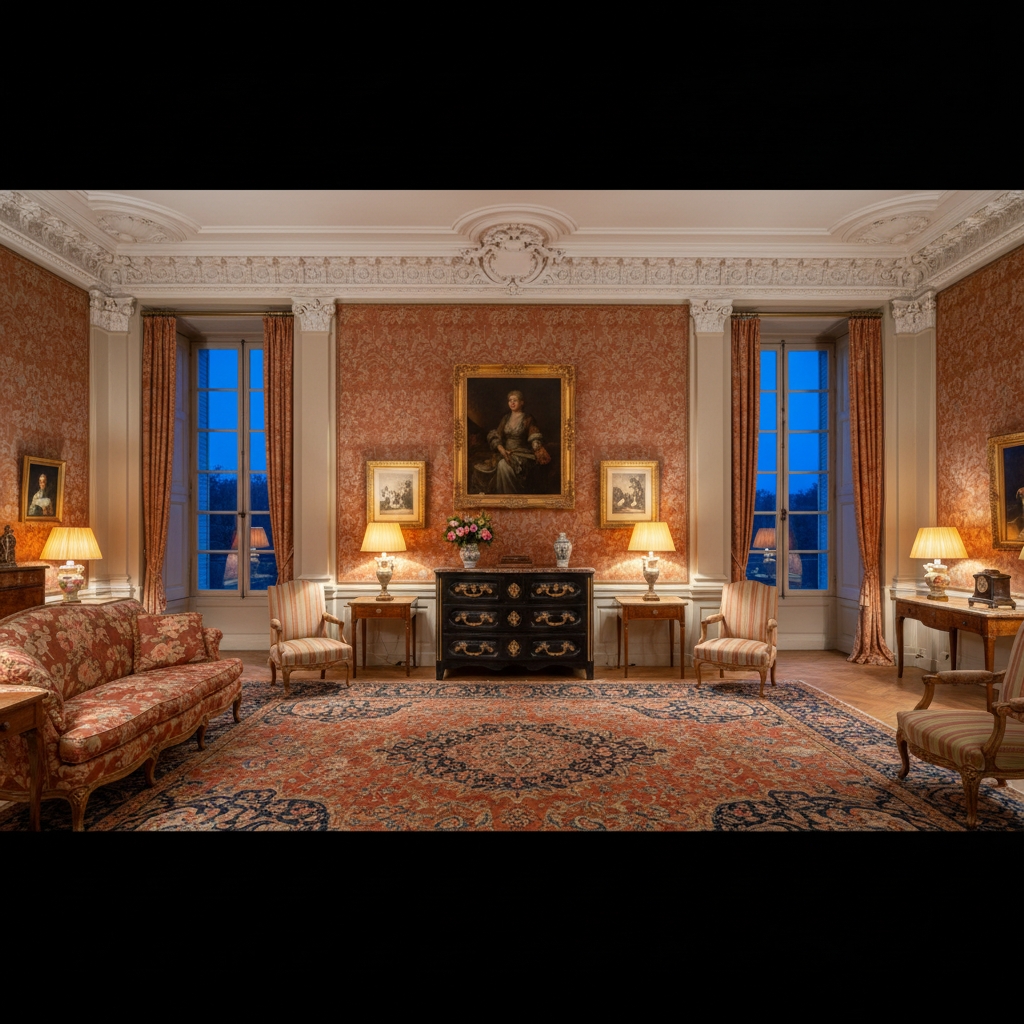
Antique Black Commode
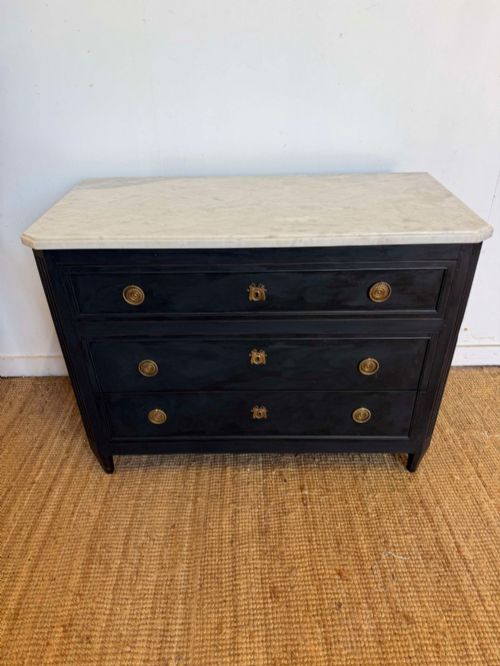
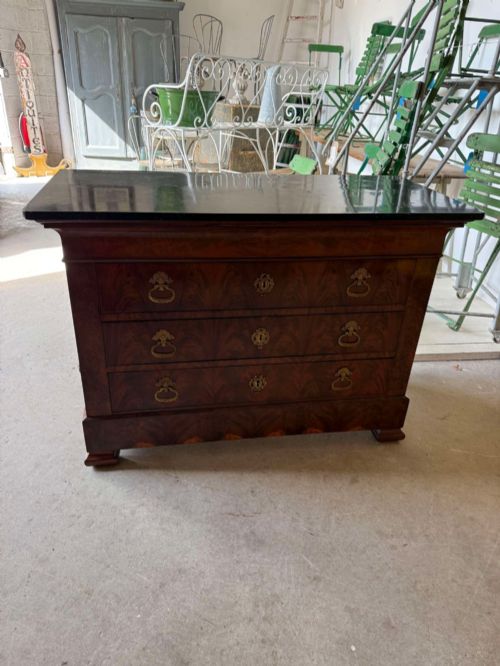
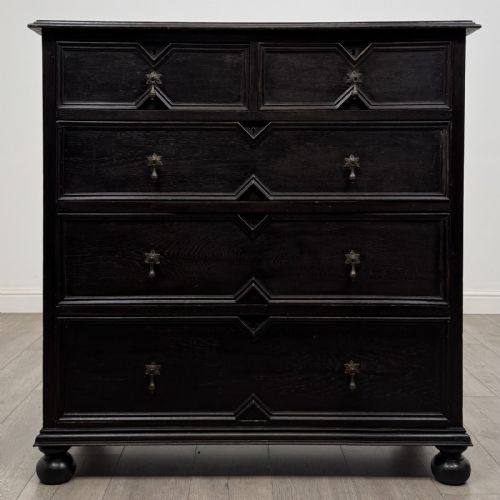
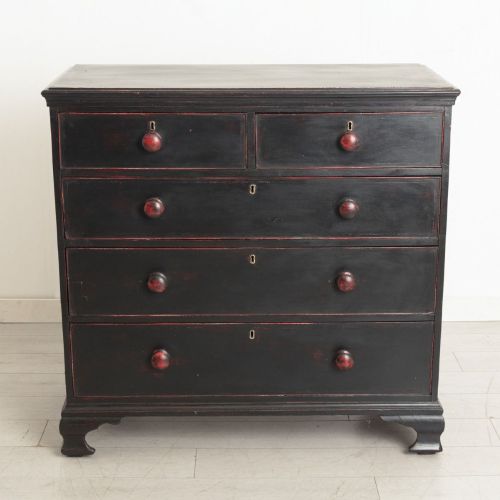
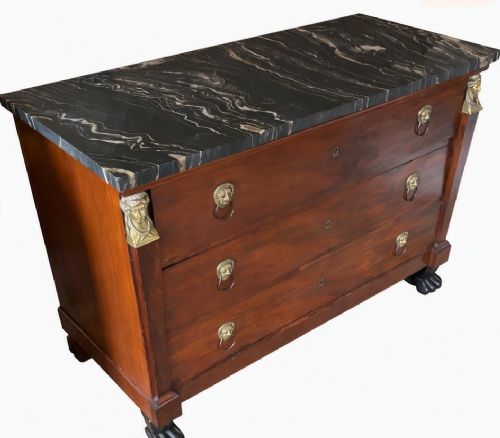
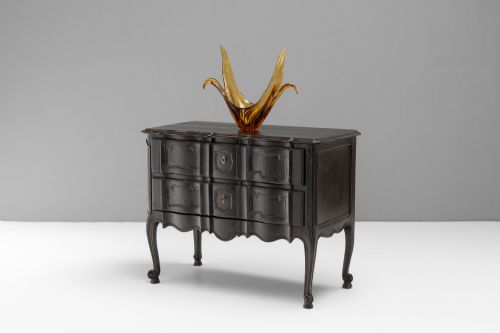
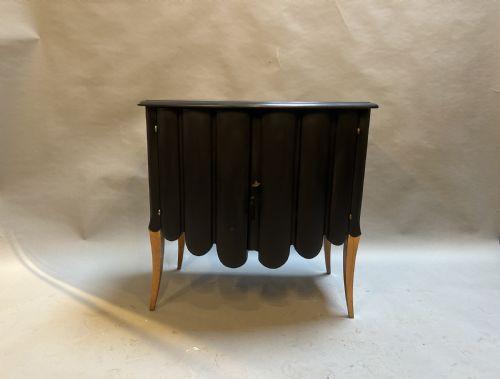
An antique black commode represents a substantial storage piece, typically taking the form of a chest of drawers or a low side cabinet with multiple operating drawers. These dark-toned surfaces span several distinct aesthetic traditions, from French Empire and Louis XV styles to 19th-century Victorian country pine and Art Deco forms.
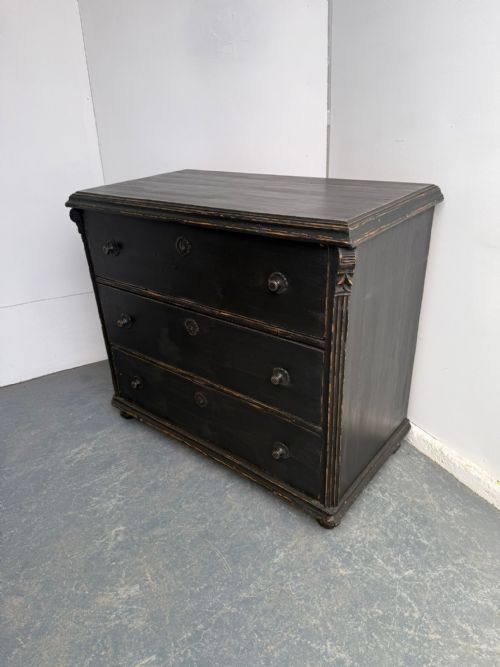
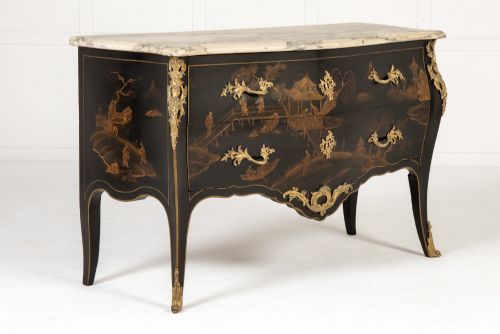
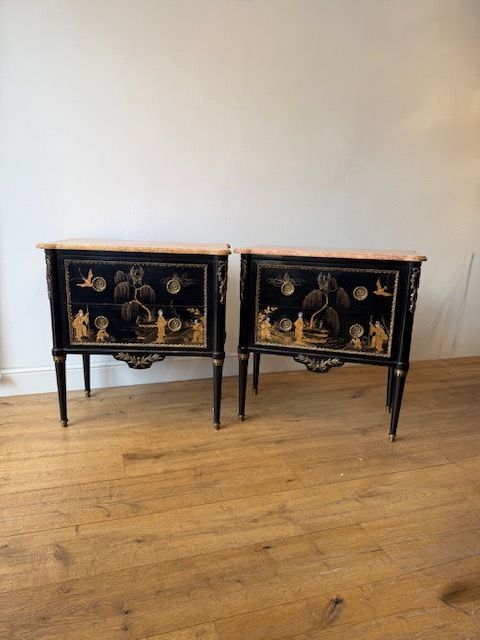
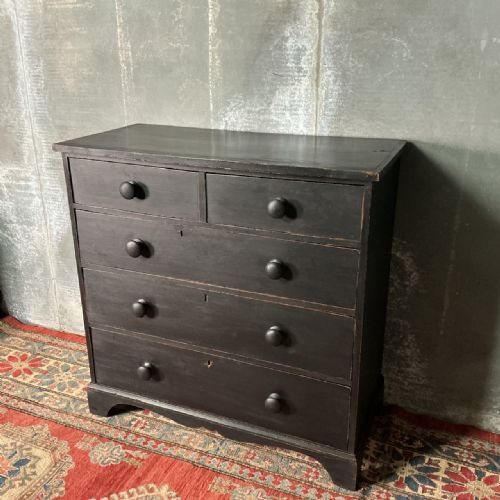
The versions most commonly met on this page include painted pine chests from Hungary alongside ebonised or lacquered French commodes featuring marble tops. Such pieces combine practical bedroom or parlour storage with dramatic dark finishes that anchor interior schemes.
Materials and construction
Construction relies heavily on robust carcases of pine, oak or mahogany, often transformed through specialised surface treatments like ebonising, japanning or dark paint. These wooden foundations provide the stability required for heavy drawer units.
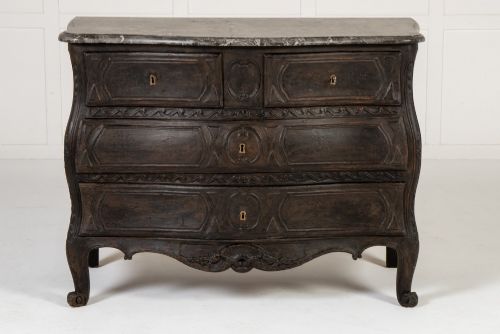
Metal mounts in brass, ormolu or silver frequently accent the dark exteriors, while many sophisticated examples incorporate heavy marble tops that contrast with the black or dark wood below.
Antique Black Commode Retail Price Guide 2026
Typical asking prices for black commode among the pieces listed under this phrase on Sellingantiques today, from the lower quarter to the upper quarter. They describe what is for sale here now, not the wider market.
Listings feature 18th-century to 1930s examples, utilising pine, oak, mahogany, marble, brass, ormolu, and ebonised wood across French, Victorian, and Art Deco styles.
Judging the range
Quality differences emerge in the execution of the surface finish, from simple painted pine to intricate japanned lacquerwork, ebonised timber and elaborate gilt metal mounts. The precision of the joinery and the integration of fitted marble slabs also set finer cabinetwork apart from simpler country utility pieces.
The Antique Black Commode Glossary
- Commode
- A low chest of drawers or cabinet designed for domestic storage. Originating in France, the form evolved from monumental case furniture into elegant bedroom and parlour pieces.
- Ebonised
- Wood treated with stain or polish to imitate costly ebony. This dark finish gained immense popularity during the 19th century on Victorian and Napoleonic furniture.
- Japanning
- A European imitation of East Asian lacquerwork using hard resin varnishes. Artisans built up dark layered surfaces often adorned with raised gilt motifs.
- Bombe
- A swollen or bulging convex shape characteristic of advanced cabinetmaking. This curved silhouette requires exceptional skill in construction to maintain structural integrity.
- Ormolu
- Gilt bronze mounts applied to furniture edges and handles. These decorative metal elements provide bright contrast against dark wooden surfaces.
Antique Black Commode: Frequently Asked Questions
How are antique black commodes cleaned?
Dust surfaces regularly with a soft, dry cloth to prevent accumulation. Avoid modern silicone polishes that can damage historic painted or ebonised finishes.
For waxed or polished wood, apply a traditional beeswax sparingly and buff gently. Painted pine surfaces require minimal moisture to protect the original pigment.
Where were these black commodes made?
Production spans several European regions, with strong representation from French cabinetmakers working in Paris and provincial workshops. Other distinct regional examples originate in Hungary and North Europe.
French pieces frequently display refined neoclassical or Rococo influences with marble tops. Hungarian examples typically showcase robust painted pine construction suited for country interiors.
What is the difference between a commode and a chest of drawers?
Historically, a commode refers specifically to a low, ornate cabinet or chest with drawers developed in France. The term often implies a more decorative piece intended for formal reception rooms.
A standard chest of drawers serves a purely utilitarian storage function in a bedroom. Many pieces merge these definitions through elaborate finishes like japanning or marble tops.
Are marble tops original to these cabinets?
Marble slabs frequently accompany 19th-century French ebonised commodes and 18th-century case pieces. These stone surfaces provided a durable, heat-resistant top for washing basins or display objects.
Inspect the edges and underside of the stone to verify period installation. Replacement marble is common on pieces that suffered heavy use over centuries.