


Bird Watercolour Painting
A bird watercolour painting captures avian life with fluid delicacy, offering collectors an intimate view of nature rendered in washes of pigment on paper.
Bird Watercolour Painting
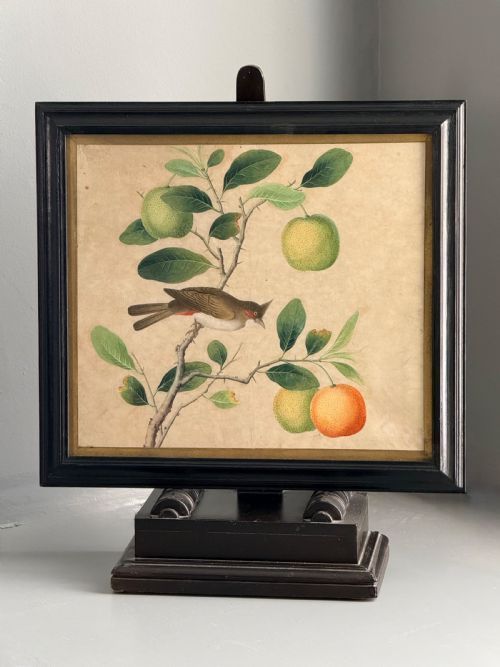
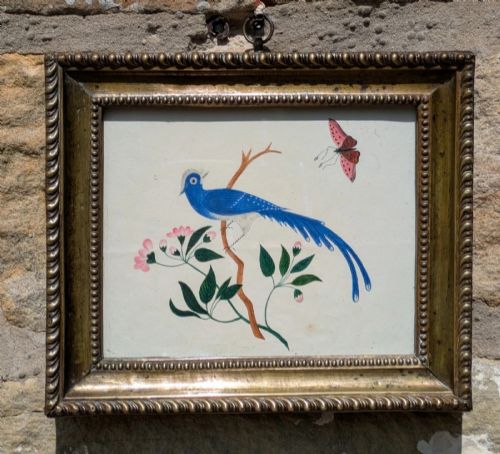
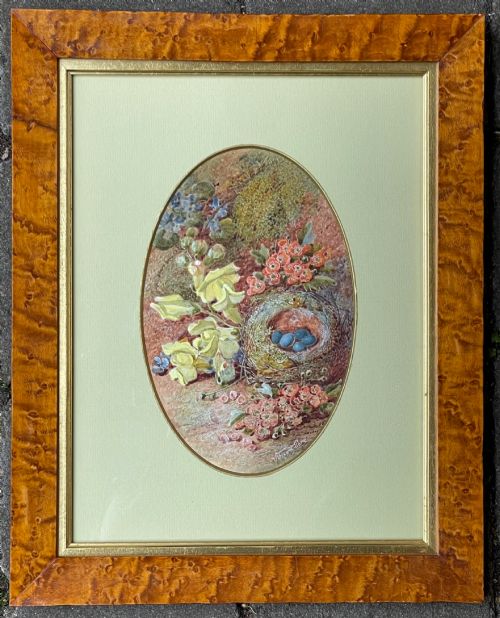
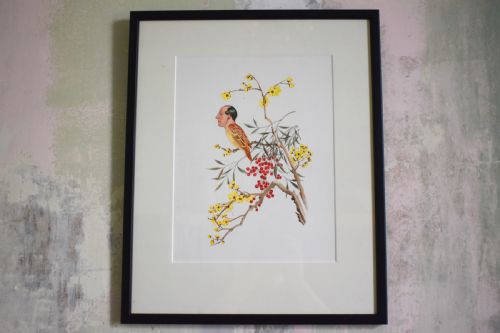
A bird watercolour painting spans several centuries of natural history illustration, decorative studies and naturalism. Buyers encounter Victorian portrayals of garden birds, twentieth-century ornithological studies and traditional Chinese paintings on silk or pith paper.
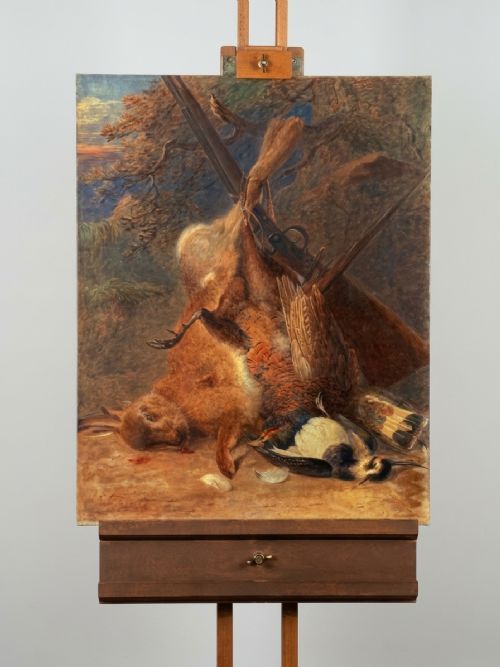
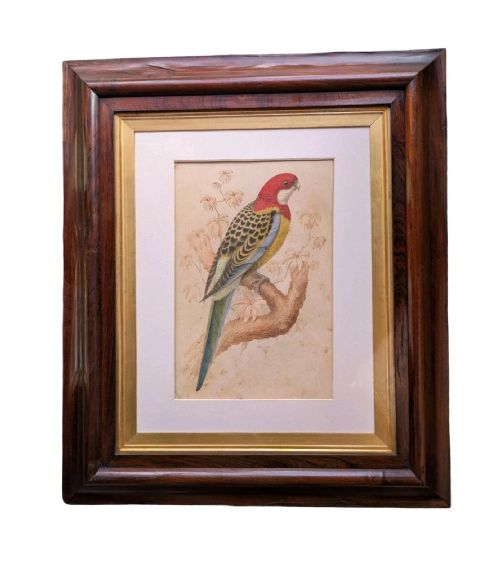
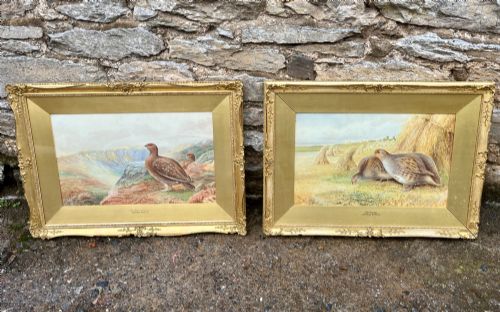
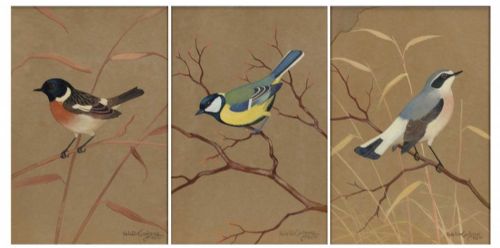
The works range from detailed portraits of individual parrots, falcons and songbirds to broader depictions of game birds, nests and birds among branches. Framed examples often retain period mounts and frames in maple, ebonised wood or gilt.
The selection includes British works from the nineteenth and twentieth centuries alongside traditional Chinese school paintings. Common formats include single framed sheets, pairs and sets of multiple studies.
Materials and methods
Artists applied watercolour paint, bodycolour and gouache onto supports such as paper, silk and pith paper. The pigment was worked in translucent washes to build feather detail, form and atmospheric depth.
Many works incorporate supplementary media including gold leaf and ink, while completed paintings were protected behind glass within wooden frames, often accented with giltwood mounts.
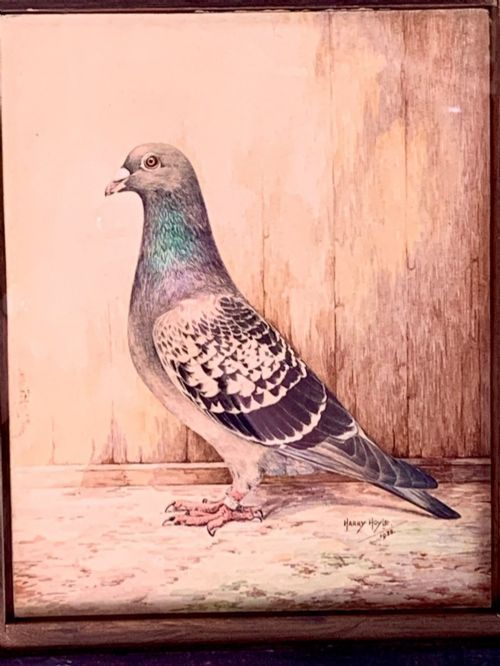
One recorded sheet depicts a royal messenger pigeon that won a Silver Jubilee prize in nineteen thirty-five.
What separates the fine from the ordinary
Quality rests upon the precision of the brushwork and the accuracy of the avian anatomy. Master practitioners capture the texture of plumage and the alertness of the subject with economy and vitality.
Condition plays a vital role, distinguishing works with vibrant, unfaded pigments from those damaged by light or dampness. The integrity of the original mount and frame also contributes to the standing of a piece.
George Sydney Shepherd·Frederick Tatham·George Rankin·Ralston Gudgeon·Elisabeth Frink·Charles F Tunnicliffe·William Andrews Nesfield·Harry Bright·Eloise Harriet Stannard·William Stephen Coleman·Arthur Wardle·Robin Hill·Rowland Henry Hill·Paul Louis Barruel·Donald Watson·Victor Noble Rainbird·William Cruikshank
The Bird Watercolour Painting Glossary
- Bodycolour
- Watercolour paint mixed with a white pigment to make it opaque. This technique allows artists to add solid highlights to feathers and foliage.
- Gouache
- A heavy water-based paint similar to bodycolour. It dries to a dense, matte finish.
- Pith paper
- A delicate material cut from the pith of the Tetrapanax papyrifer plant. It absorbs water-based pigments with exceptional brilliance.
- Natural history illustration
- Scientific or decorative art recording animal and plant species with precision. These works prioritize anatomical accuracy alongside aesthetic composition.
Bird Watercolour Painting: Frequently Asked Questions
How do I care for a watercolour?
Keep works out of direct sunlight to prevent the pigments from fading over time. Display them in rooms with stable humidity levels to protect the paper and mount.
Ensure the framing remains sealed against dust and insects. Handle framed pieces carefully by the outer edges of the frame rather than the backing boards.
Are these paintings original?
The listings consist of original hand-painted works created directly by the artists using watercolour, gouache and bodycolour. Each piece is a unique execution rather than a modern mechanical reproduction.
Signatures, artist attributions and period materials help confirm the authenticity of individual works.
What framing should I expect?
Period works frequently arrive in their original or contemporary frames made from maple, ebonised wood or gilt. These often include traditional mounts that complement the aesthetic of the painting.
Some pieces retain historical framer labels on the reverse, which provide additional context about the provenance of the artwork.
How are periods identified?
Dating relies on stylistic evidence, artist biography records, framing techniques and inscribed dates on the reverse or front of the work. Victorian pieces often display distinct naturalism, while twentieth-century examples reflect changing artistic movements.
Materials such as pith paper and specific styles of mount board further help narrow the era of production.