




Bird Painted Pottery
Bird painted pottery pieces bring avian detail to ceramic surfaces, offering collectors hand-painted natural subjects across centuries of global craft.
Bird Painted Pottery
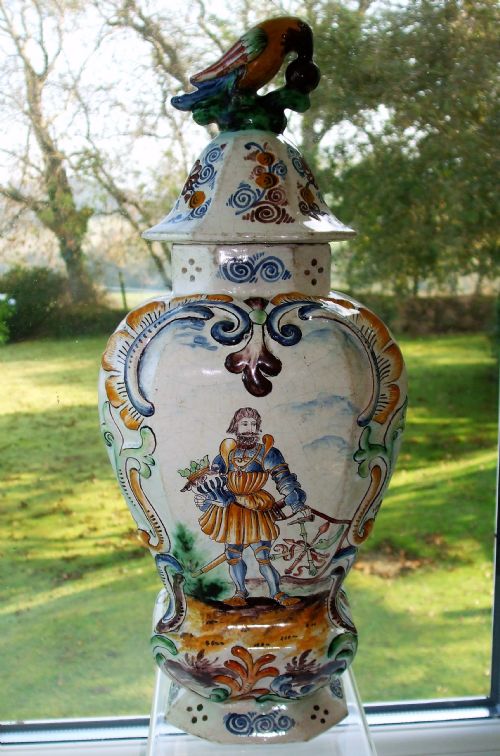
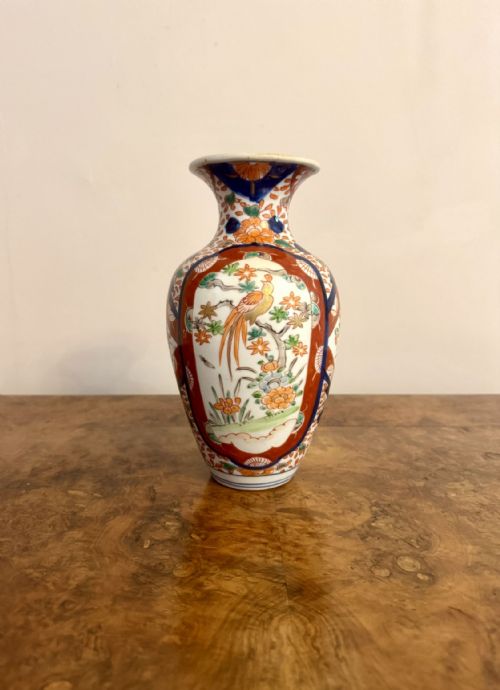
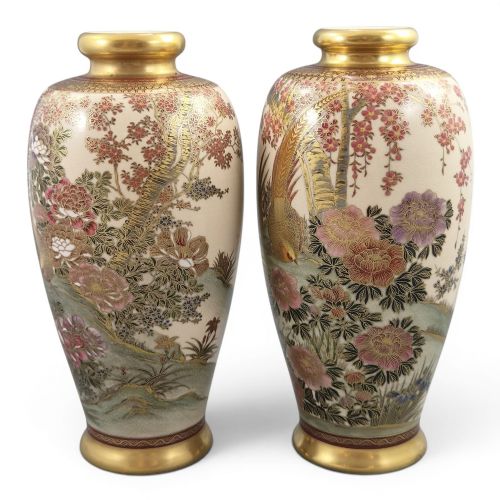
Bird painted pottery encompasses decorative plates, vases, and jars created across multiple centuries and regions. The selection leans heavily toward Japanese Satsuma and Imari wares alongside European tin-glazed earthenware.
Vessels range from large Dutch Delft vases to English pearlware plates and Japanese Meiji period bowls. Makers frequently rendered pheasants, parrots, ducks, and songbirds amidst floral and geometric panels.
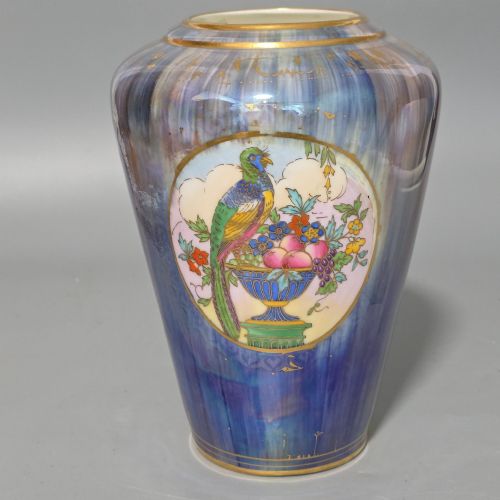
The assortment spans from seventeenth-century blue and white pieces to twentieth-century Art Deco and lustre productions. Domestic forms sit alongside exhibition-quality items featuring intricate mon and signature marks.
Materials and Working Methods
Potters shaped ceramic bodies from earthenware, porcelain, and stone china before applying tin-glaze, enamel, or sancai glaze. Artisans then hand painted avian motifs directly onto the prepared surfaces using mineral pigments.
Certain pieces incorporate raised enamel work and gold leaf details to highlight the plumage of exotic birds. Firing techniques varied from traditional Dutch kilns to specialised Japanese workshops utilising intricate stacking methods.
Listings feature items spanning from the 17th century through the Edwardian era and into the 1930s.
Assessing the Pieces
Quality rests in the precision of the brushwork and the complexity of the avian depiction. Finer examples display meticulous feather detailing and harmonious colour palettes rather than hurried or standard factory application.
The crispness of the underlying ceramic form and the preservation of enamel or gold leaf define the upper tier. Signed works by recognised makers command attention through superior control over glaze consistency and composition.
Manpei Kobe·Doulton Lambeth·Rozenburg·Bassano pottery works
The Bird Painted Pottery Glossary
- Satsuma
- A type of earthenware from Japan traditionally featuring a crackled ivory glaze and detailed polychrome enamel painting. Artisans often embellished these surfaces with gold to depict birds and floral scenes.
- Delftware
- Tin-glazed earthenware originating in the Netherlands, known for its white surface mimicking Chinese porcelain. Early pieces frequently display blue and white or polychrome bird and flower motifs.
- Pearlware
- A refined form of earthenware developed in eighteenth-century England featuring a subtle bluish glaze. It provided a smooth canvas for feather edge plates and hand-painted ornithological subjects.
- Imari
- Japanese export porcelain decorated in underglaze blue, iron red, and gold leaf. These wares commonly present complex panels containing exotic birds and botanical elements.
Bird Painted Pottery: Frequently Asked Questions
How do I identify Satsuma bird vases?
Look for a characteristic ivory-coloured body covered in a fine network of crackled glaze. The bird and floral decorations are typically applied in raised enamel and gold leaf.
Many pieces bear signature stamps or artist monograms on the base, helping to trace their origins to specific Japanese workshops.
What distinguishes Delftware bird jars?
Dutch Delftware relies on a tin-glaze that creates an opaque white background for blue and white or polychrome painting. The birds are usually rendered in a lively, freehand Chinoiserie style.
These pieces often feature fitted covers and heavy earthenware bodies characteristic of seventeenth and eighteenth-century European kilns.
How should I display antique pottery?
Position delicate ceramic vases and plates away from direct sunlight to preserve the stability of hand-applied enamels and gold leaf. Use stable, dedicated plate stands or enclosed cabinets to prevent accidental knocks.
Ensure that earthenware pieces are kept away from damp environments to protect the porous ceramic bodies and historic glazes.
Are these ceramic pieces suitable for daily use?
Historic painted pottery is best reserved for display rather than functional dining or utility. The antique glazes and delicate enamel work can wear down or stain with frequent washing and handling.
Gentle dusting with a dry microfibre cloth is sufficient to maintain the surface without risking damage to the painted bird motifs.