






Birch Accent Table
A birch accent table brings pale timber and clean grain into a room, offering a functional surface rooted in Scandinavian and British design.
Birch Accent Table
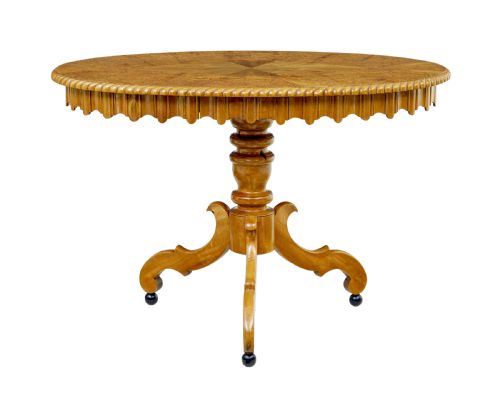
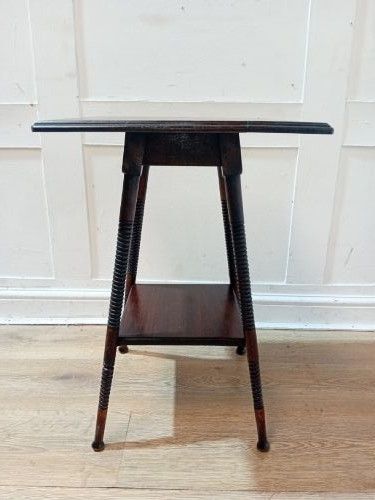
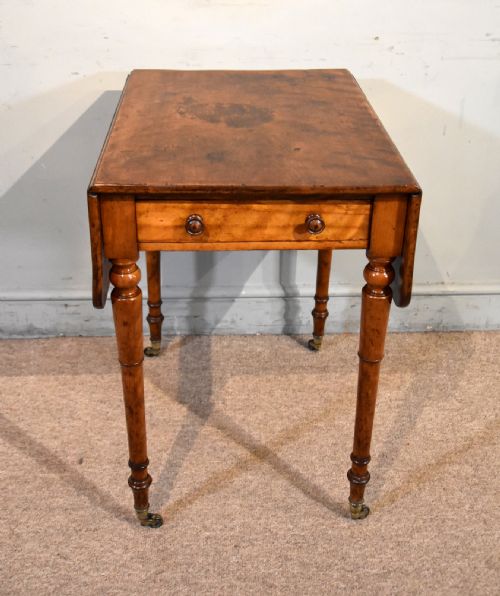
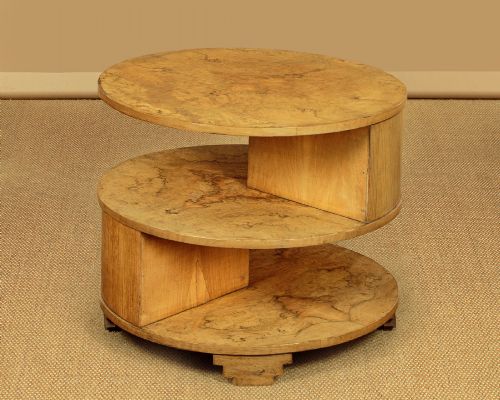
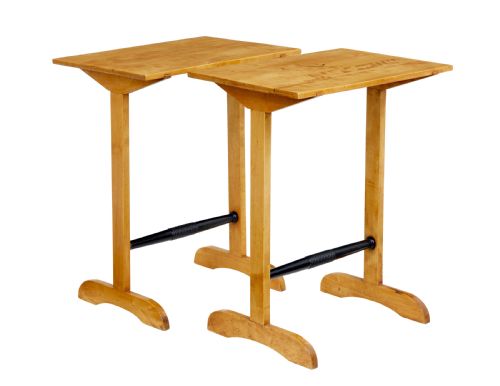
A birch accent table encompasses occasional tables, side tables, and coffee tables produced across the nineteenth and early twentieth centuries. The selection leans heavily toward Swedish Biedermeier, Arts and Crafts, and Art Deco designs that utilise the distinct tone of the wood. You will frequently encounter forms such as oval occasional tables, Pembroke tables, and octagonal stands.
Makers and workshops across Britain and Scandinavia turned to birch for its bright surface and varied grain patterns. Pieces range from simple nineteenth century side tables to more decorative inlaid centre tables and tea tables. These items served functional roles in period drawing rooms and parlours, providing a stable platform for lamps and tea service.
How they were made
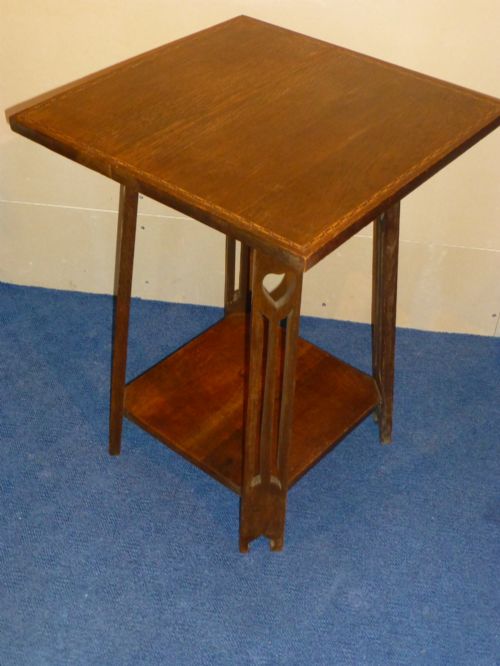
Cabinet makers utilised solid birch, satin birch, and burr birch veneers laid over secondary timbers like oak. Wood inlay and chequered patterns added geometric decoration to tabletops, particularly during the Arts and Crafts and Empire Revival periods. Brass fittings occasionally appear on castors or mounts.
Surfaces were finished to highlight the natural figure of the timber, ranging from pale honey tones to warmer golden hues. Joinery relied on traditional methods appropriate to each period, from nineteenth century hand-cut joints to early twentieth century production techniques.
Birch Accent Table Retail Price Guide 2026
Typical asking prices for birch accent table among the pieces listed under this phrase on Sellingantiques today, from the lower quarter to the upper quarter. They describe what is for sale here now, not the wider market.
Materials recorded across the inventory include solid birch, burr birch, satin birch, oak, and contrasting wood inlay.
What varies in quality
The choice of timber sets the baseline for quality, with figured burr birch and satin birch commanding greater visual interest than plain stock. The selection of veneer matching across a tabletop demonstrates the skill of the cabinet maker. Finer examples display meticulous grain continuity and precise execution of wood inlay.
Proportion and structural integrity define the better pieces, where legs and supports maintain a balanced relationship with the top. The integration of period styles, such as Swedish Biedermeier or Art Deco, reflects the designer's adherence to classical or modern lines.
William Birch·Liberty & Co.·Johnstone and Jeanes
The Birch Accent Table Glossary
- Burr birch
- A growth on the birch tree that produces swirling, highly figured grain patterns when sliced into veneer. Cabinet makers prized this wood for creating decorative focal points on tabletops.
- Satin birch
- A timber variant exhibiting a smooth, reflective sheen across the grain. This material was favoured in nineteenth century furniture for its pale, luminous appearance.
- Pembroke table
- A drop-leaf table featuring hinged flaps on two opposing sides. It often includes a single drawer and was designed to be moved easily around a room.
- Biedermeier
- A Central European design style spanning the nineteenth century characterised by utilitarian comfort and clean lines. It relies on the natural beauty of wood grain rather than heavy ornamentation.
- Chequered inlay
- A decorative technique using alternating light and dark wood squares arranged in a grid pattern. This detail often borders the edges of Arts and Crafts tables.
Birch Accent Table: Frequently Asked Questions
What is a birch accent table?
A birch accent table is a small occasional, side, or coffee table made using birch or burr birch timber. These pieces span the nineteenth and early twentieth centuries.
They originate primarily from British and Scandinavian workshops, incorporating styles from Biedermeier, Arts and Crafts, and Art Deco movements.
How do I style a vintage birch table?
The pale tone of birch allows these tables to blend easily with both traditional and modern interiors. Use them beside a sofa or armchair as a functional surface for lamps.
Their subtle grain patterns complement neutral colour schemes and contrast well against darker upholstery or architectural woodwork.
How do I identify Scandinavian birch furniture?
Scandinavian pieces from the nineteenth and early twentieth centuries often display restrained forms and luminous burr birch veneers. Look for clean architectural lines associated with Swedish design.
Makers in this region favoured the natural golden colour of the timber, sometimes pairing it with elm or subtle inlay.