

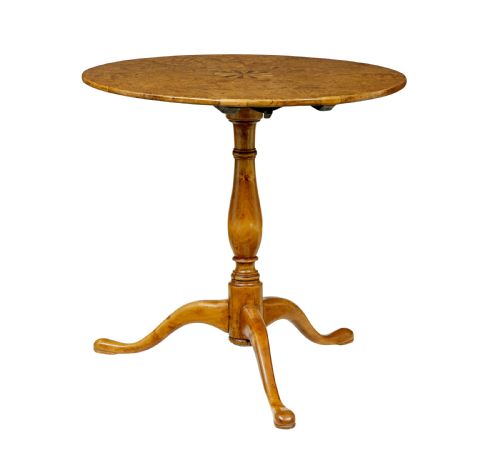


Birch Wine Table
A birch wine table is a compact, characterful support for evening drinks, combining pale figured timber with nimble tripod or pedestal framing.
Birch Wine Table
A birch wine table represents a specific form of small occasional furniture designed for portability and daily use in sitting rooms and parlours. These tables appear in round, oval, octagonal, and circular top formats, often supported by tripod bases or central pedestals.
The pieces listed on this page originate primarily from the nineteenth century, including Regency and Victorian periods, alongside Edwardian examples and Swedish Biedermeier interpretations. Makers applied varied styles ranging from clean Scandinavian lines to Adam-style ornamentation and Italian specimen marble integration.
Buyers most frequently encounter occasional tables and side tables fashioned for specific tasks like lamp placement or holding small objects. The forms rely on manageable proportions suited to flexible placement beside seating.
How they were made
Cabinetmakers utilised birch, burr birch, satin birch, and birch root to construct these pieces, often selecting veneers to highlight the natural figuring of the wood. Ebonised wood details frequently provide sharp contrast against the pale, warm tones of the primary timber.
Inlay work appears across several examples, introducing geometric or contrasting decorative elements into the table tops. Construction techniques combine solid timber framing with stable veneered surfaces supported by turned columns and tripod legs.
Birch Wine Table Retail Price Guide 2026
Typical asking prices for birch wine table among the pieces listed under this phrase on Sellingantiques today, from the lower quarter to the upper quarter. They describe what is for sale here now, not the wider market.
Several tables feature tilting tops, designed originally to save floor space by standing flat against walls when not holding evening refreshments.
What varies in quality
The visual strength of the timber grain marks a primary distinction between standard examples and finer items, with burr and satin varieties offering intricate natural patterns. Superior tables display careful book-matching of veneers and precise execution of inlaid details.
Proportion and structural balance dictate the refinement of the base, distinguishing robustly turned tripod legs and balanced pedestals from heavier or simpler forms. The integration of contrasting ebonised elements or specialised inlays demonstrates greater ambition in the workshop.
The Birch Wine Table Glossary
- Birch
- A pale, hard wood with a fine, uniform grain used extensively for nineteenth-century furniture. It accepts stains and polishes well while maintaining a bright natural surface.
- Burr Birch
- Wood taken from a tree growth or knot that produces swirling, highly decorative grain patterns. Cabinetmakers prize this material for creating striking tabletop panels.
- Satin Birch
- A trade term for birch timber selected for its particularly lustrous, light-reflecting surface quality. It resembles satinwood in sheen and visual warmth.
- Tripod Base
- A three-legged support structure commonly found on small occasional tables and wine tables. This design prevents rocking on uneven floors.
- Biedermeier
- A Central European style spanning the nineteenth century characterised by utilitarian comfort and clean lines. Swedish interpretations often employ pale birch veneers to emphasise minimalist elegance.
Birch Wine Table: Frequently Asked Questions
What is a birch wine table used for?
These pieces function primarily as movable stands for drinks, small lamps, or decorative objects within a living space.
Their compact size allows owners to place them easily beside chairs or sofas for convenient reach.
How do I identify a Regency table?
Regency pieces often display classical restraint, balanced proportions, and dark contrasting details against paler woods.
Examining the turning of the pedestal and the form of the feet helps connect the piece to early nineteenth-century design conventions.
Can these tables be used with modern furniture?
The neutral, pale tones of birch timber allow these tables to blend easily with contemporary interior schemes.
Their modest scale ensures they fit comfortably alongside modern seating without overwhelming the room.