
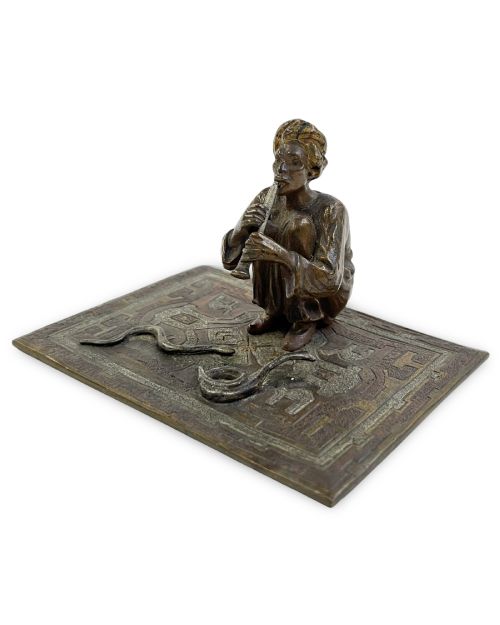
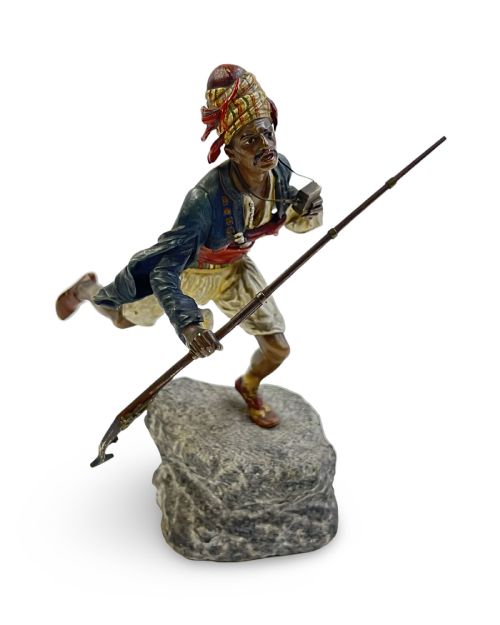
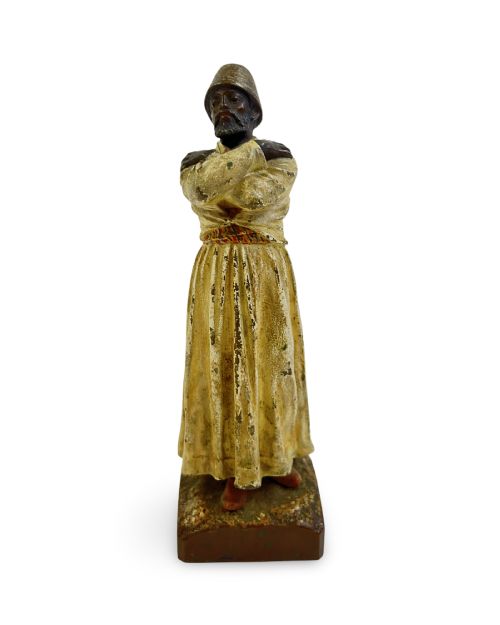


Bergman Orientalist Bronze
A bergman orientalist bronze is a masterwork of late nineteenth and early twentieth century Viennese foundry craft, prized for its narrative richness and vibrant polychrome surface.
Bergman Orientalist Bronze
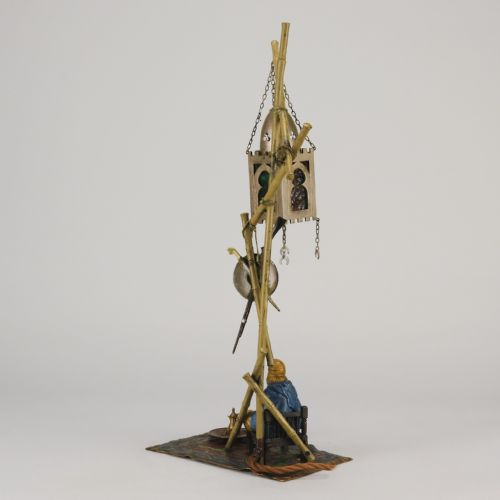
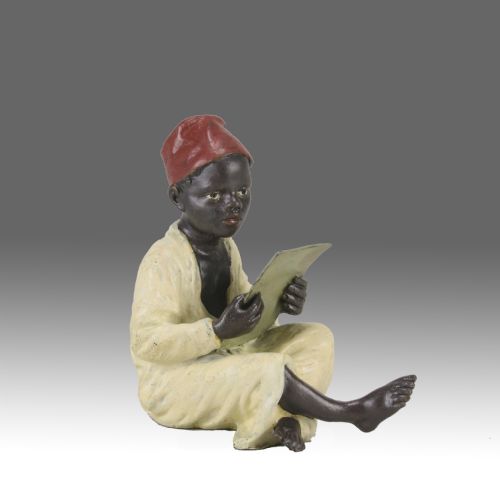
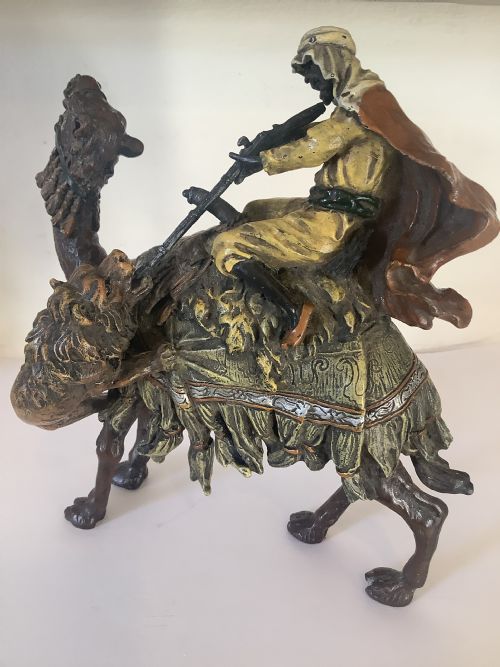
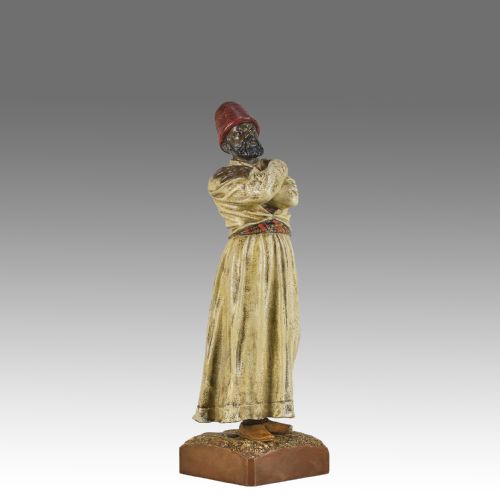
When you examine a bergman orientalist bronze, you encounter figurative sculptures and sculptural objects produced in Vienna primarily during the late nineteenth and early twentieth centuries. The pieces on this page span from the Victorian era and the 1880s through the 1930s, encompassing periods like 1900, 1910, and 1920. Figures frequently depict subjects such as Arab men, merchants, warriors, musicians, dervishes, and snake charmers, alongside figural table lamps and intricate multi-part groups.
The aesthetic is firmly rooted in Orientalism and Austrian Orientalism, occasionally intersecting with Art Nouveau design. You will find table-scale sculptures, statuettes, and figurines that capture narrative scenes of daily life, trade, and traditional dance. Each piece functions as a miniature stage, freezing a momentary gesture or interaction in cast metal.
What varies in quality
The integrity of the original paint layer dictates a significant portion of the piece's standing. Works retaining their vibrant, undisturbed cold paint, enamel, or oil pigments demonstrate superior preservation compared to those with extensive overpainting or pigment loss. Furthermore, the presence of clear foundry marks, stamps, or signatures influences how definitively an object connects to the premier workshops of the period.
Listings feature works spanning from the Victorian period through the 1930s, executed in bronze with cold paint, enamel, oil paint, marble, and glass.
Franz Bergman·Franz Xaver Bergman
The Bergman Orientalist Bronze Glossary
- Cold-painted bronze
- A sculpture technique where paint is applied to the cooled bronze surface without kiln firing. This method allows for subtle polychrome decoration on nineteenth and twentieth century figures.
- Orientalism
- An artistic movement focused on depictions of Middle Eastern and North African subjects, architecture, and cultures. It heavily influenced European decorative arts and sculpture during the Victorian era and beyond.
- Vienna bronze
- Small-scale metal sculptures produced by Austrian foundries, famed for naturalistic animal and human figures. They frequently feature detailed hand-painted surfaces.
- Polychrome
- The practice of decorating sculptural surfaces in multiple colours. In these bronzes, it brings realism to textiles, skin, and accessories.
- Namgreb
- An anagram of Bergman used as a foundry mark on authentic pieces. It appears alongside other stamps to identify workshop output.
Bergman Orientalist Bronze: Frequently Asked Questions
What is a cold-painted bronze?
A cold-painted bronze is a metal sculpture decorated with paint applied after the casting process, without the application of heat to fuse the pigment. This technique allowed Viennese workshops to achieve remarkable multi-coloured detail on clothing and skin.
Over time, this surface remains delicate and susceptible to flaking if handled improperly. Collectors prize pieces where the original pigment survives intact.
How can I identify a Bergman bronze?
Authentic pieces often bear specific foundry marks, stamps, or signatures associated with the Bergman workshop, including the clever 'Namgreb' anagram. Stylistic markers include fine casting detail, expressive human figures, and specific thematic subjects like dervishes and Arab traders.
Examining the quality of the cold-painted finish and comparing the subject matter to documented archival pieces helps confirm attribution. Consultation with specialised reference literature remains invaluable for verification.
Were these pieces used as lamps?
Certain examples were designed and manufactured to function as table lamps, integrating lighting elements into figural Orientalist scenes. These functional objects combined ambient illumination with detailed sculptural narratives.
Wiring on antique lamps usually requires professional updates to meet modern safety standards while preserving the original bronze and painted components.