
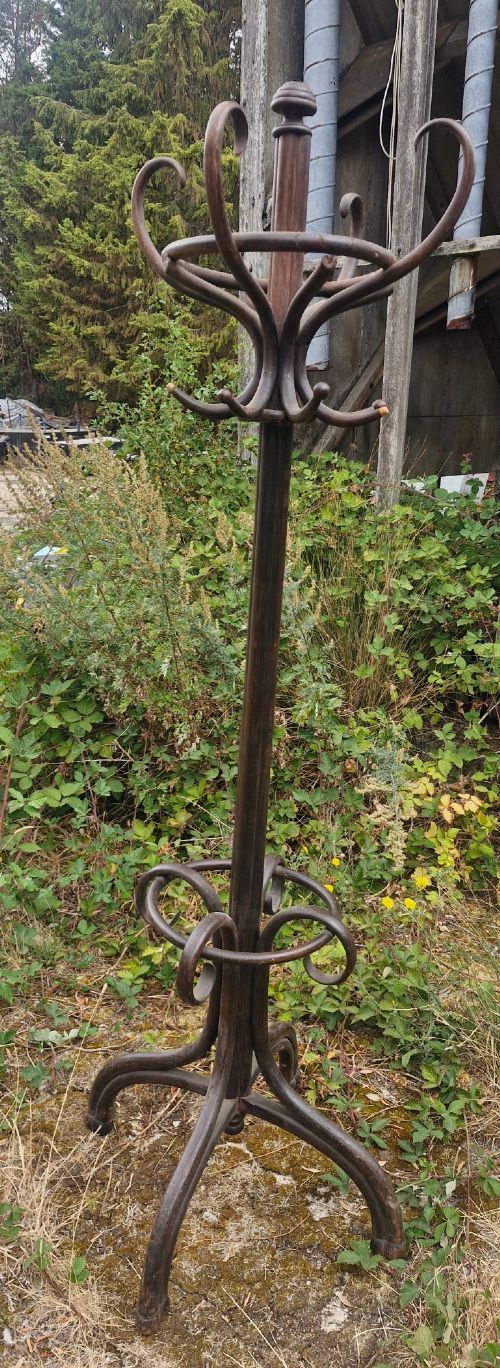
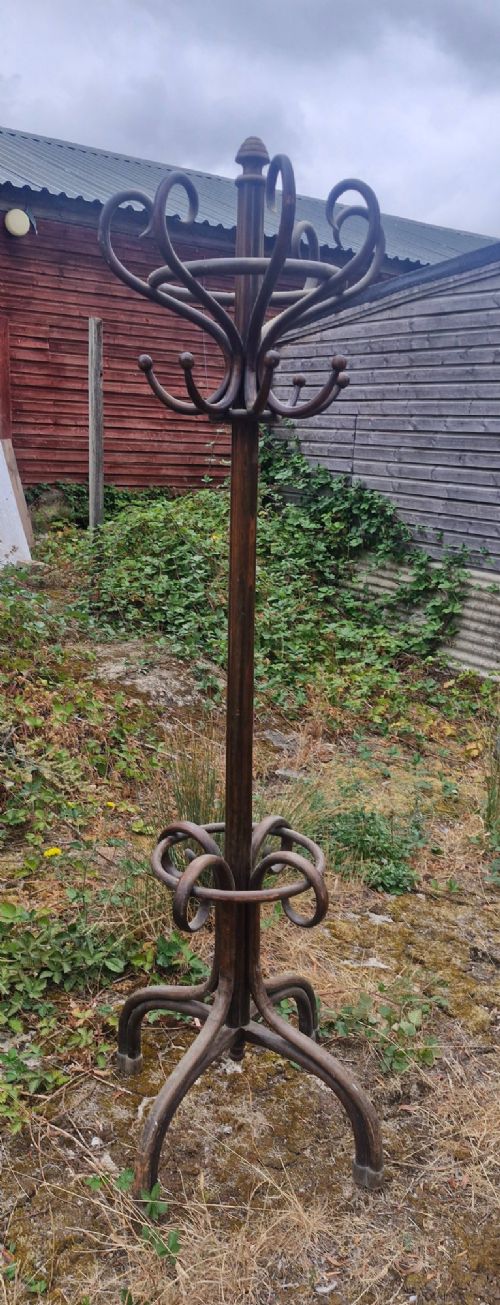
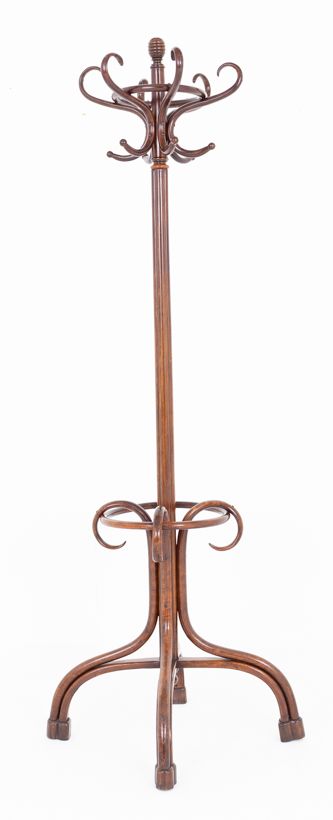
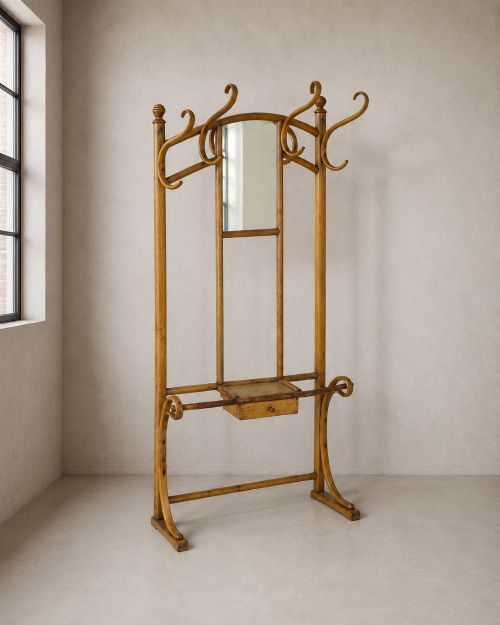
Bentwood Hat Tree Rack
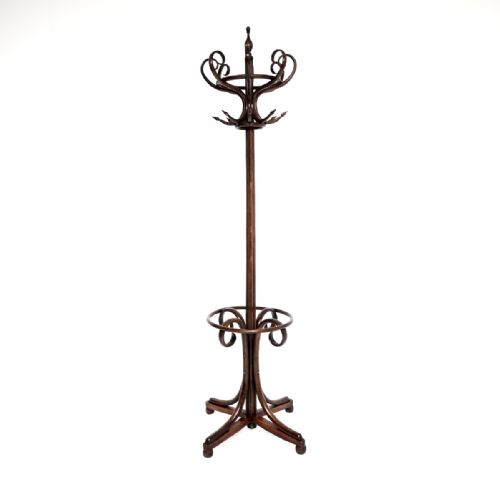
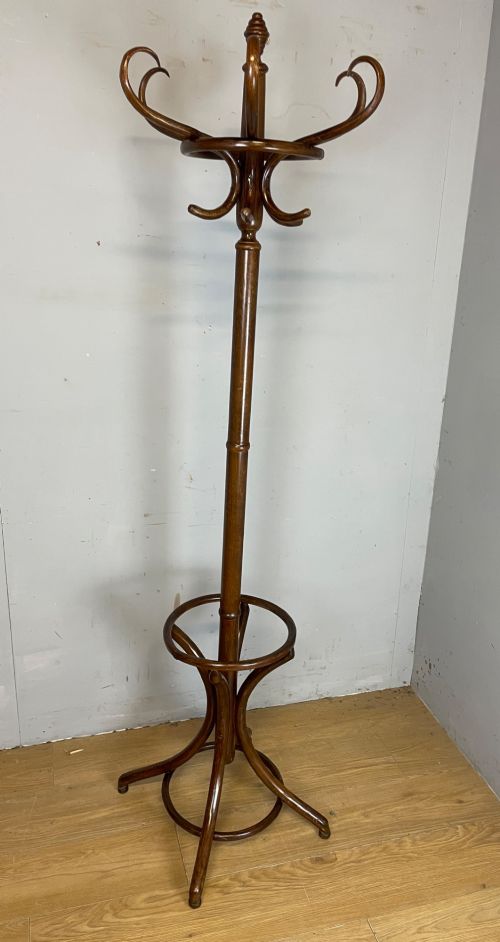
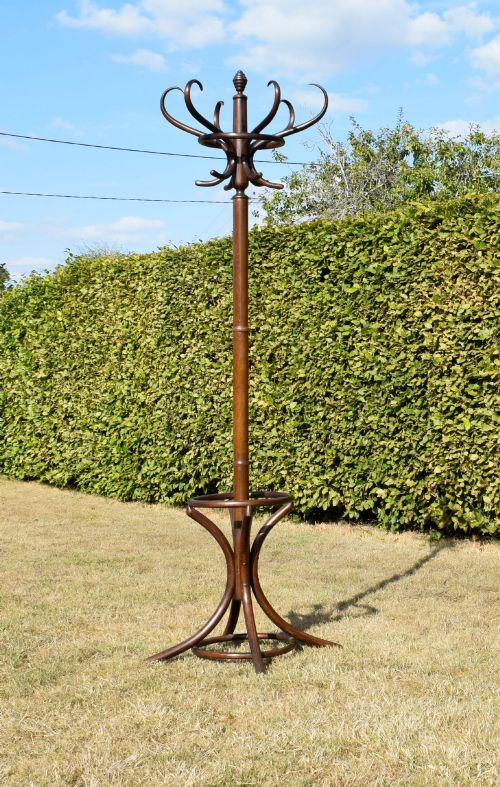
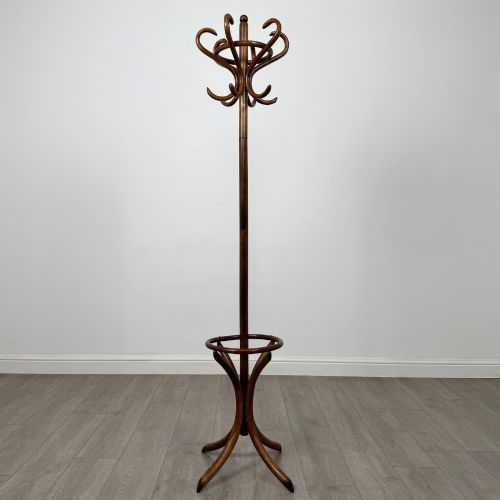
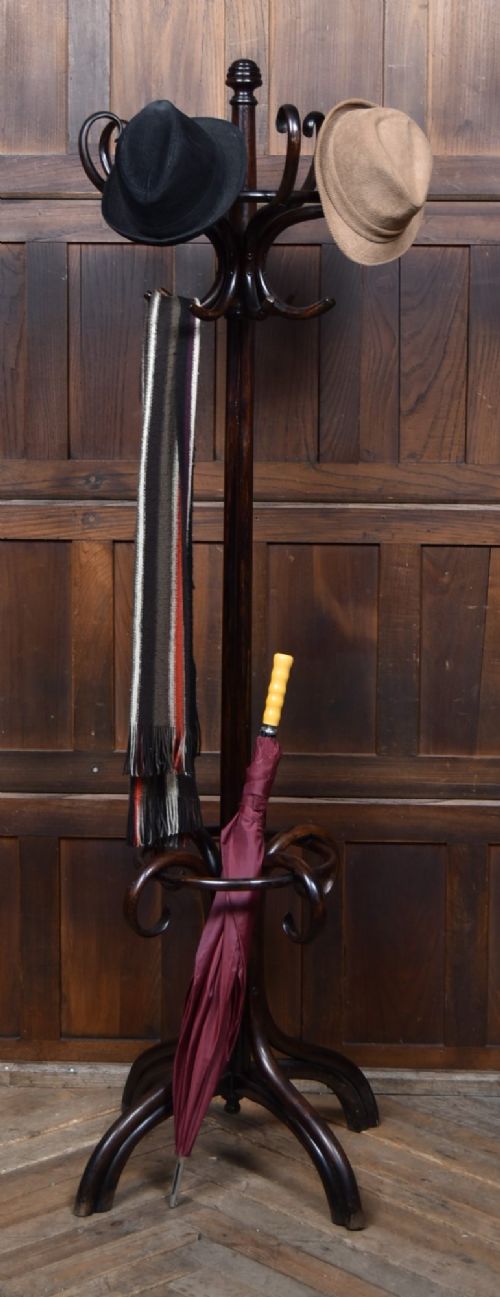
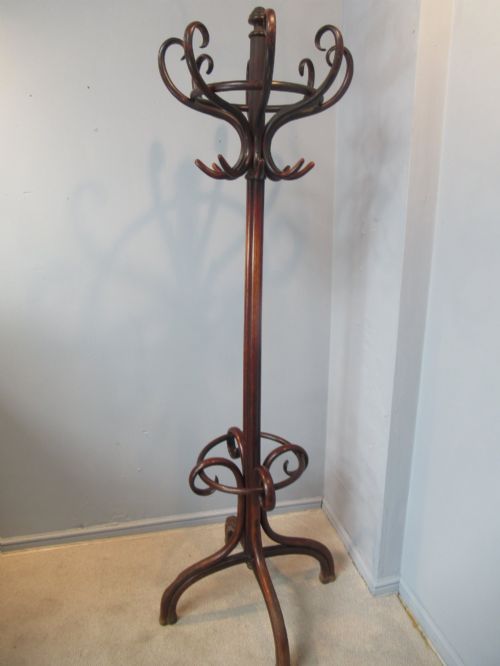
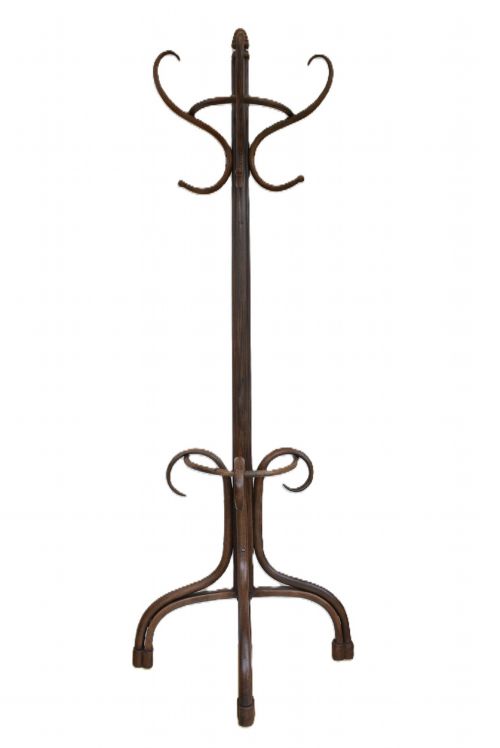
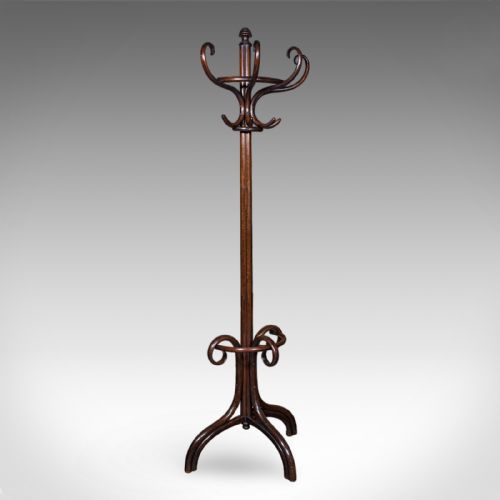
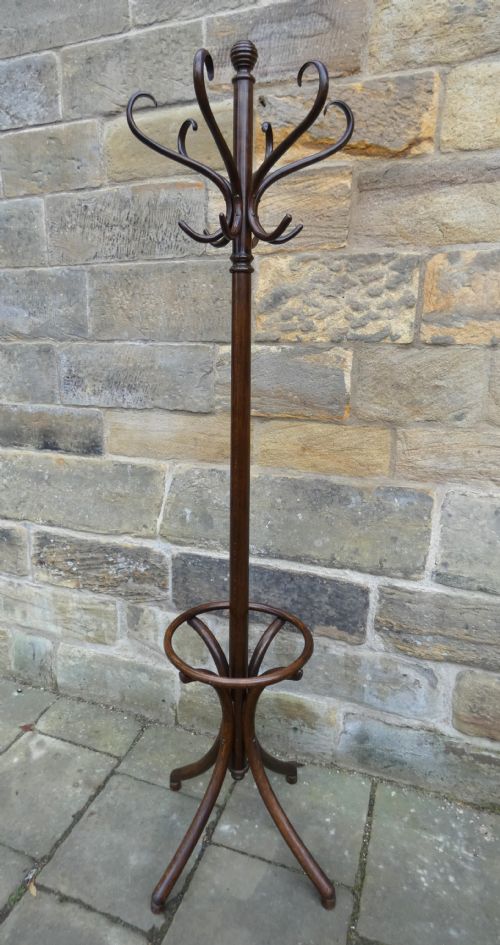
A bentwood hat tree rack holds coats and hats neatly in an entryway while bringing light, curving timber into the room.
Bentwood Hat Tree Rack
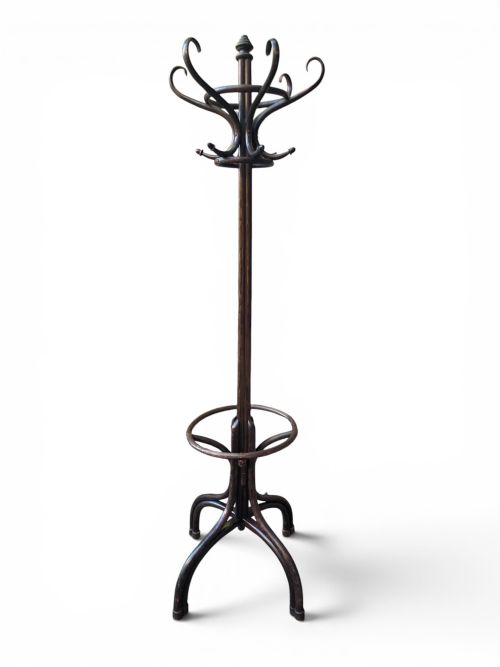
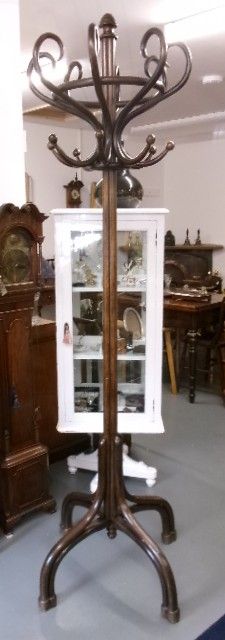
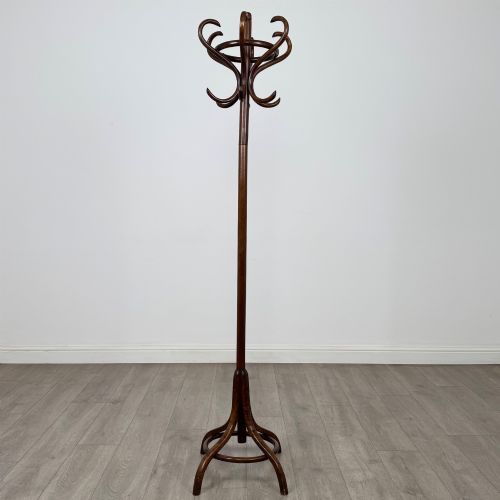
A bentwood hat tree rack serves as a tall, vertical stand designed for hanging coats, hats, and walking sticks in hallways and passages. These pieces emerged in various forms during the Victorian and Edwardian periods, as well as the early 20th century.
The most common formats on this page include revolving hall stands, half round and demi lune designs, and large wall-standing versions. They combine practicality with a slender footprint that suits narrow entrance spaces.
How they were made
Makers utilised beech, beechwood, and general wood, applying steam to soften the timber so it could bend into characteristic curves. This steamed beechwood formed the structural ribs, scrolls, and hanging hooks.
Surfaces received wood stain to enhance the grain and tone, producing honey coloured finishes alongside deeper shades. Glass components occasionally appeared on specific hall stand configurations.
Listings feature pieces spanning the 1880s through the 1930s, constructed predominantly in steamed beechwood.
What varies in quality
Construction robustness dictates the upper tier of these pieces, separating standard items from heavy quality examples with double tops or revolving mechanisms. Heavier timber sections and secure joints ensure stability under daily weight.
Design complexity and maker attribution also elevate certain stands, particularly documented pieces associated with Thonet or Fischel. Clean lines and intact original stain finishes distinguish the finer productions.
Thonet·Fischel
The Bentwood Hat Tree Rack Glossary
- Bentwood
- Wood shaped by applying moisture and heat, allowing makers to create sweeping curves without joints. This technique defined the structural framework of the entire category.
- Demi Lune
- A half-moon shape used for hall stands designed to sit flat against a wall. This configuration maximises floor space in narrow corridors.
- Revolving
- A rotating top section that allows users to access hats and coats from multiple angles without moving the heavy base. Such movement points to advanced joinery.
- Thonet Style
- Furniture manufactured following the pioneering industrial curving methods developed by Michael Thonet. It denotes the signature aesthetic of rounded beech frames.
Bentwood Hat Tree Rack: Frequently Asked Questions
Where should I place a bentwood hat tree rack?
These pieces suit entrance halls, porches, and narrow corridors where vertical storage is required without blocking pathways.
Their open framework allows light to pass through while keeping everyday garments organised near the door.
How do I identify a Thonet piece?
Many productions feature paper labels, stamped markings, or characteristic design numbers stamped into the wood.
The fluidity of the steam-bent beech curves and specific scroll configurations also offer strong clues.
Are these stands stable enough for heavy coats?
Heavier quality examples and larger designs distribute weight effectively across wide base rings or multiple legs.
Balanced loading helps maintain stability during daily use.
What periods do these stands come from?
The examples on this page span the late 19th century, the Victorian and Edwardian eras, and the early decades of the 20th century.
Production methods remained consistent across these decades, focusing on steam-bent beech.