


Curved Wood Coat Tree
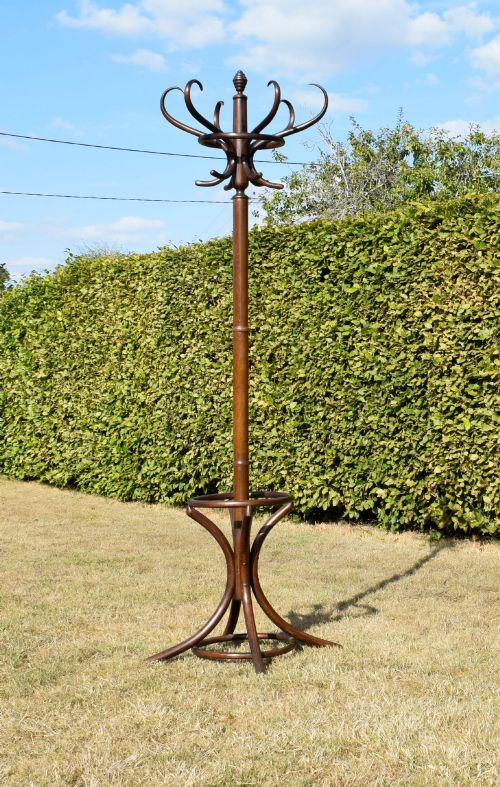
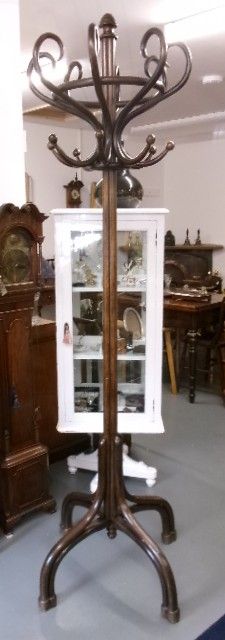
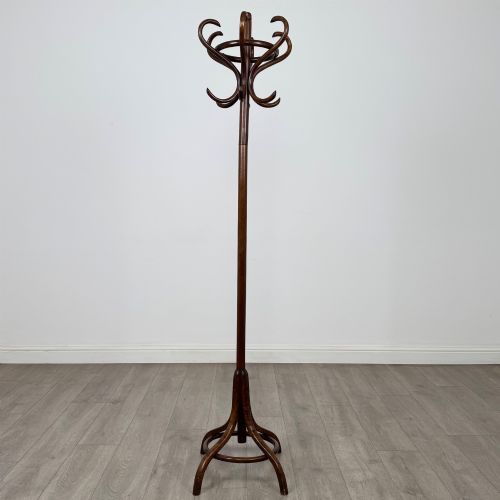
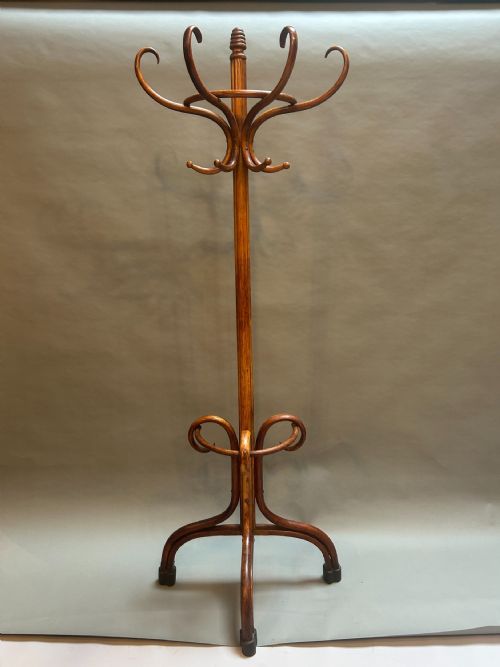
A curved wood coat tree is a piece of steam-bent furniture designed to hold garments, combining lightness with structural strength for the hallway.
Curved Wood Coat Tree
A curved wood coat tree is an upright stand designed for hats and coats, utilising curved elements to create branches for hanging garments. Buyers searching for this phrase encounter tall vertical stands intended for hallways and entryways, designed to maximise hanging space while maintaining a narrow footprint.
The versions most commonly met on this page span the Victorian, Edwardian, and early twentieth-century periods, alongside examples attributed to the Thonet style or Austrian bentwood tradition. These pieces often incorporate demi-lune configurations or integrated sections for hats and coats, reflecting the domestic needs of the nineteenth and early twentieth centuries.
Construction and Materials
The construction relies fundamentally on beech and beechwood, selected for its capacity to undergo steam-bending without fracturing. Craftsmen subjected timber to moisture and heat, bending the wood into continuous curves that form the characteristic uprights and sweeping upper hooks.
Stained wood finishes are frequently applied to enhance the grain of the beech, sometimes accompanied by metal elements for structural reinforcement. This method produces a frame that is remarkably light yet resilient, distributing the weight of heavy garments evenly across the curved branches.
Listings on this page span the Victorian period, Edwardian era, and the 1930s, utilising beech, bentwood, and stained wood finishes.
Assessing Quality
Quality in these pieces is dictated by the complexity of the steam-bending and the gauge of the timber employed. Heavier sections of beech provide greater rigidity at the base, preventing the stand from tipping under the weight of winter overcoats.
The refinement of the junctions and the symmetry of the curved hooks distinguish finer examples from standard workshop production. Better pieces display smooth, uninterrupted flowing lines where the branches meet the central shaft, maintaining structural integrity over decades of use.
The Curved Wood Coat Tree Glossary
- Bentwood
- Wood that has been shaped by heating and steam-bending. This technique allows long strips of timber to form graceful curves without losing their inherent strength.
- Demi-lune
- A half-moon shape. In hall stands, this often describes a semicircular base or design that sits flush against a wall.
- Thonet style
- Furniture following the pioneering manufacturing methods developed by Michael Thonet. It is characterised by steam-bent beech components and minimalist, functional elegance.
Curved Wood Coat Tree: Frequently Asked Questions
How do I clean a bentwood coat stand?
Dust the surface regularly with a dry, soft cloth to prevent grime accumulation in the curved joints. Avoid harsh chemical cleaners that can strip the traditional wood finish.
Occasionally nourish the wood with a mild, wax-based polish to maintain the sheen of the stained beech. Ensure the room humidity remains stable to protect the steam-bent timber from drying out.
Can these stands support heavy winter coats?
Most sturdy examples are engineered to hold multiple heavy garments without wobbling. Distributing the weight evenly across the upper hooks prevents undue strain on a single side.
Heavier quality pieces with substantial bases offer better stability for daily use in busy hallways. Lighter models benefit from holding everyday jackets rather than heavy wool overcoats.
How do I date an antique coat stand?
Examine the construction methods, fixing types, and wood finishes to determine the era. Pieces from the nineteenth century often display different joinery techniques compared to Edwardian or 1930s productions.
Stylistic markers such as the presence of a demi-lune base or specific Thonet-style branding can also narrow down the period. Comparing the timber patination helps confirm age.
Where should I place my coat tree?
Position the stand in an entryway or hallway where garments are easily accessible upon entering the home. Placing it near a wall provides additional stability, particularly for wall-standing variants.
Keep the stand away from direct radiators or damp areas to preserve the integrity of the steam-bent wood. Allow sufficient clearance around the base so guests can hang items without crowding.