
Bentwood Coat Rack Hall
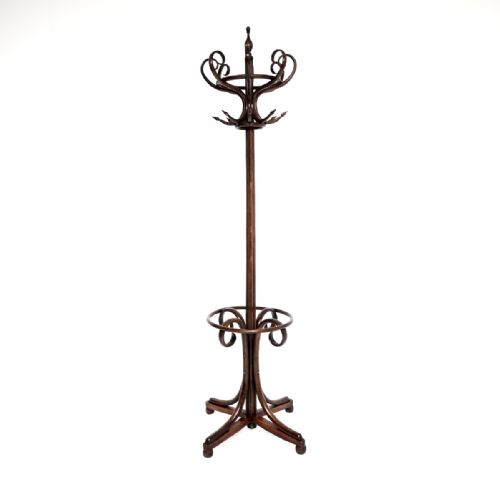
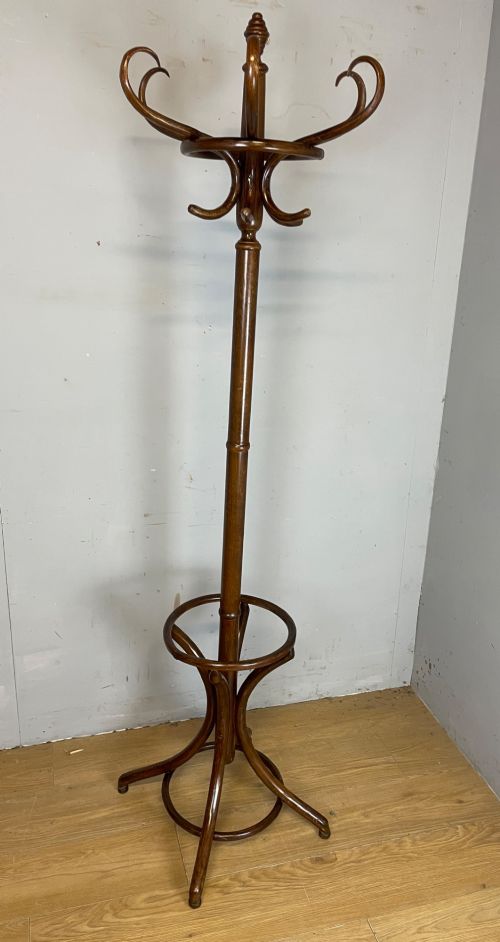
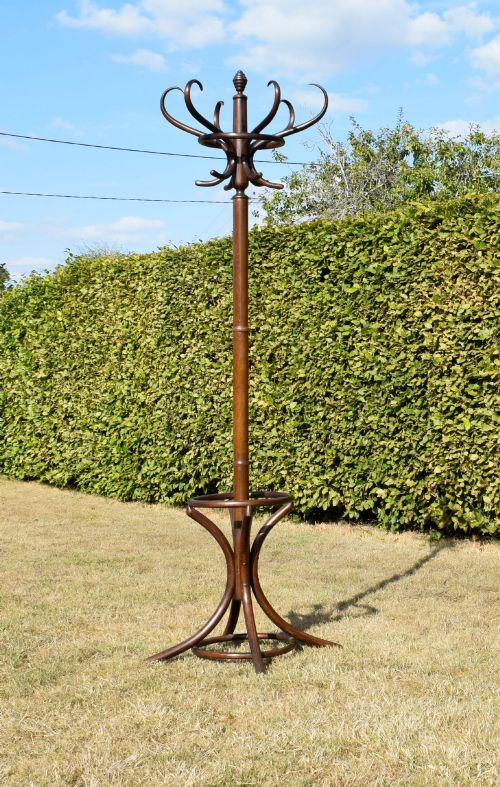
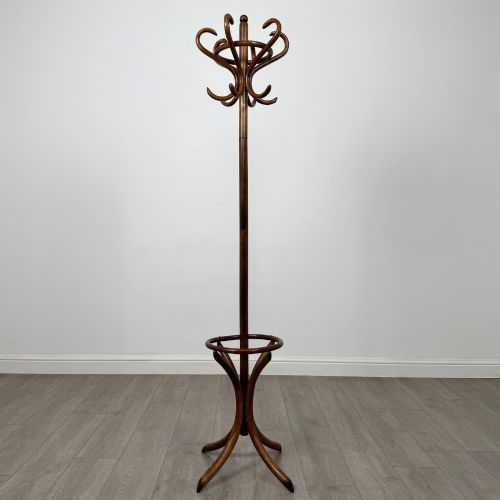
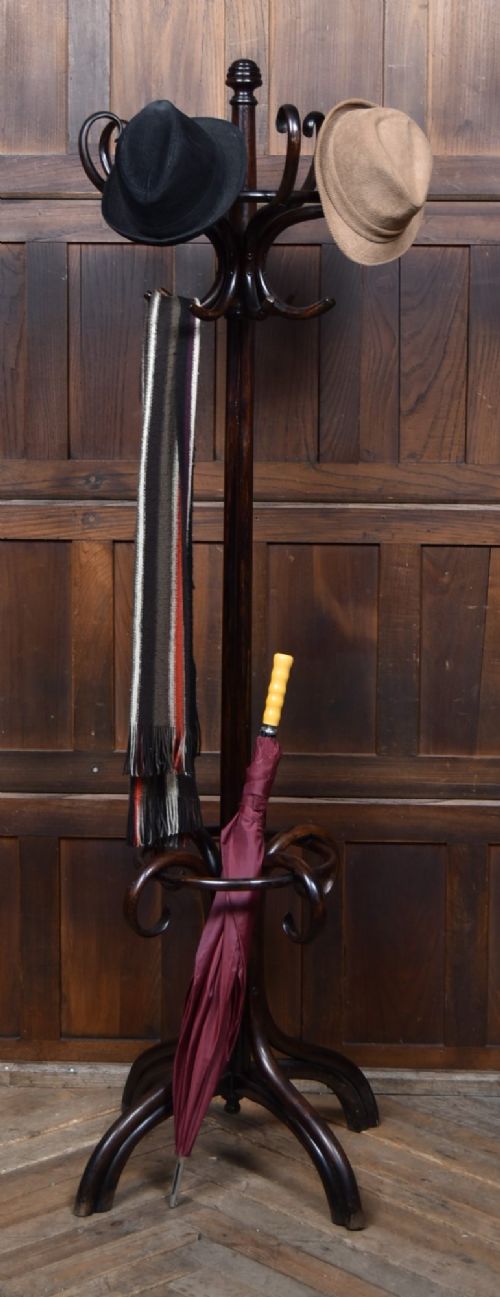
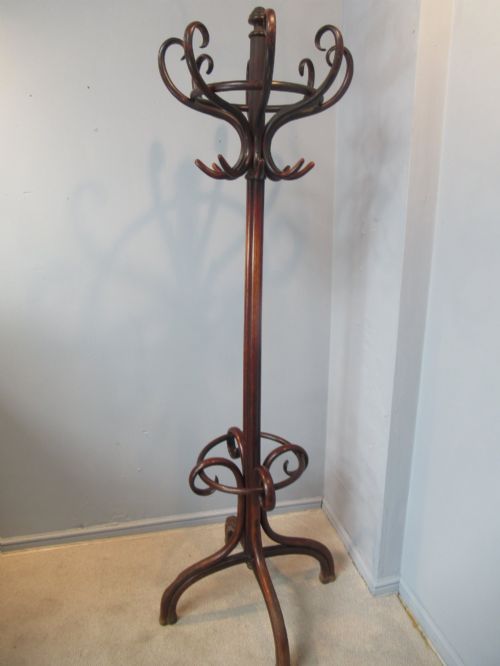
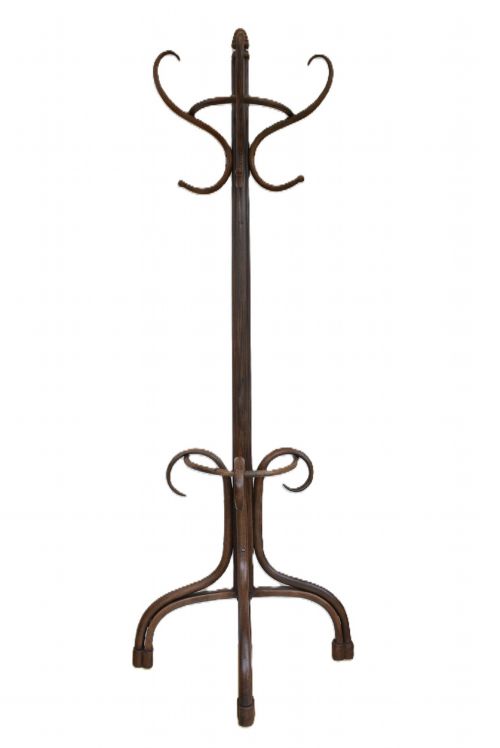
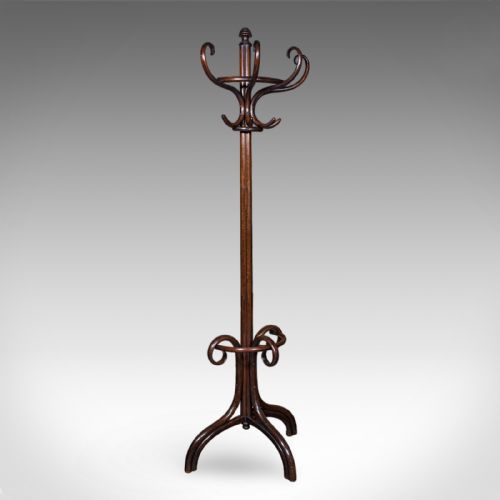
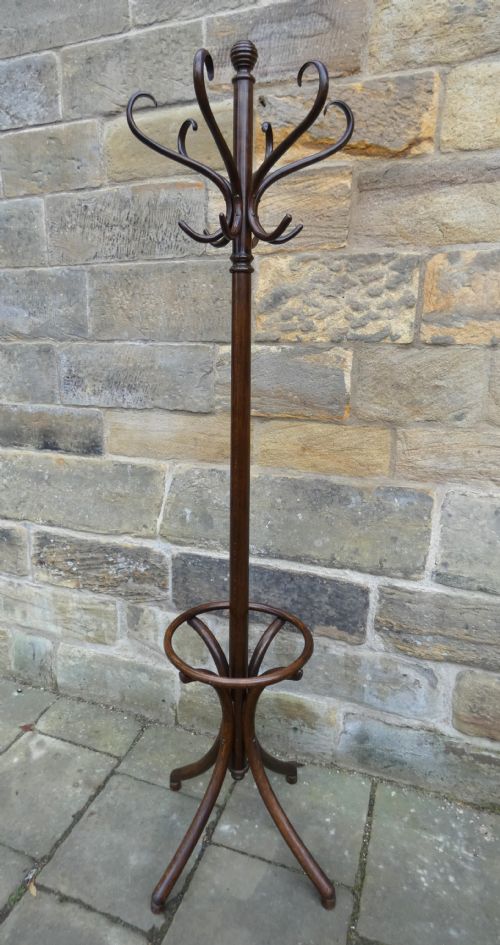
A bentwood coat rack hall piece brings the graceful curves of steam-shaped timber directly into an entryway to hold hats, coats, and sticks.
Bentwood Coat Rack Hall
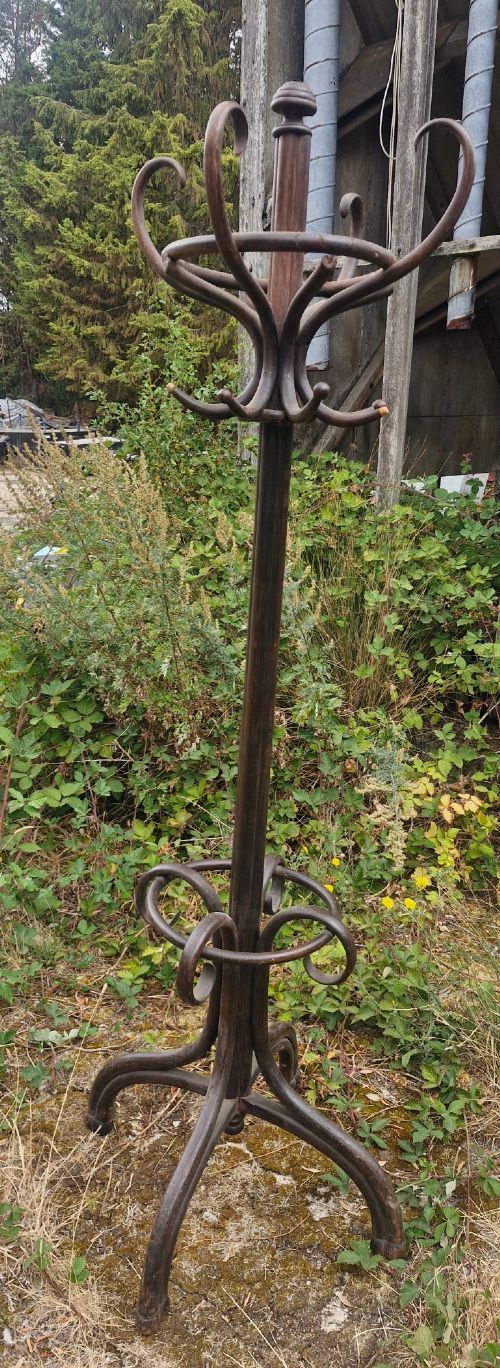
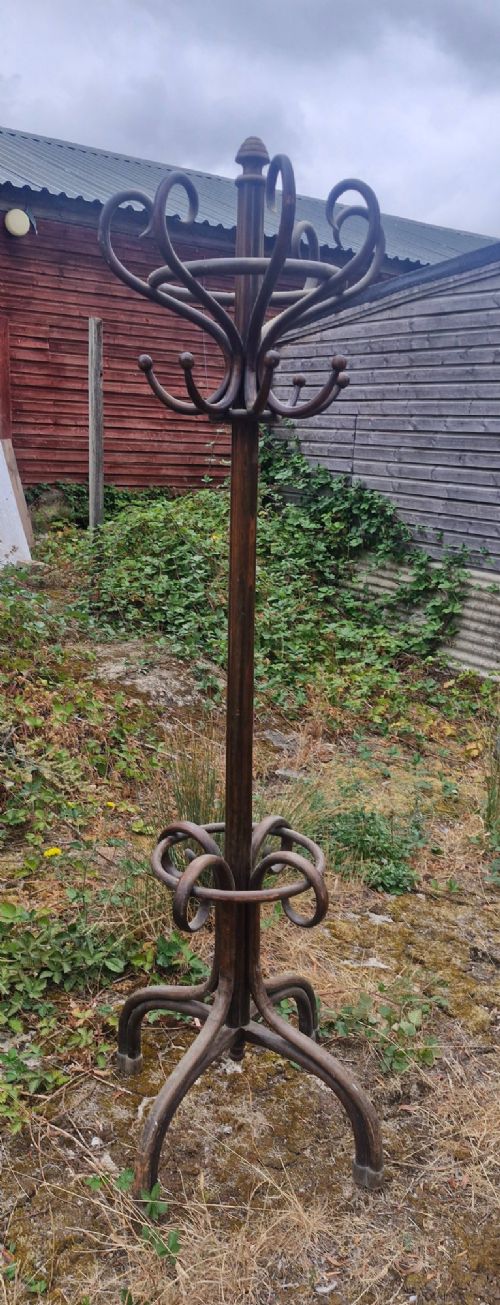
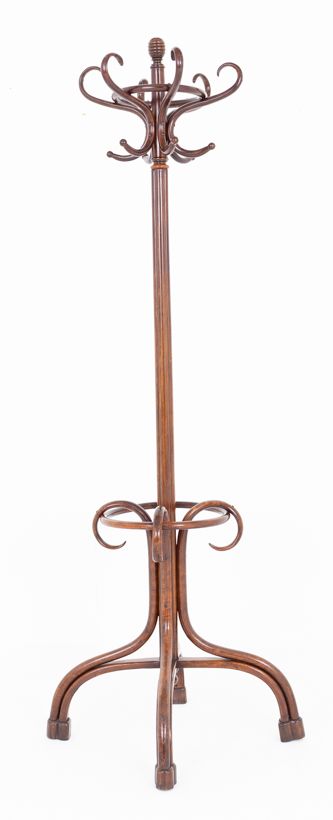
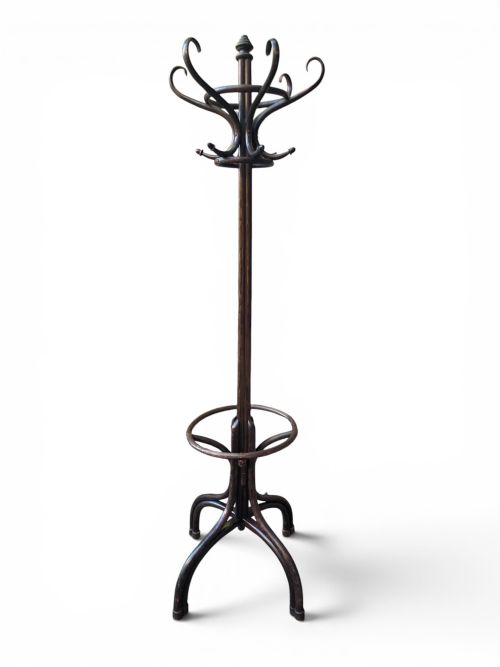
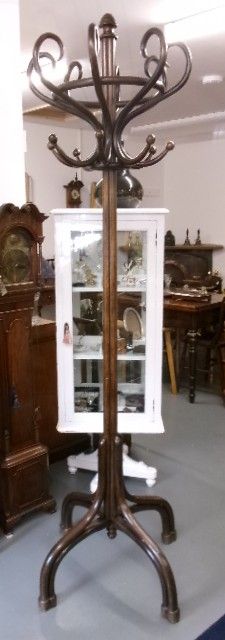
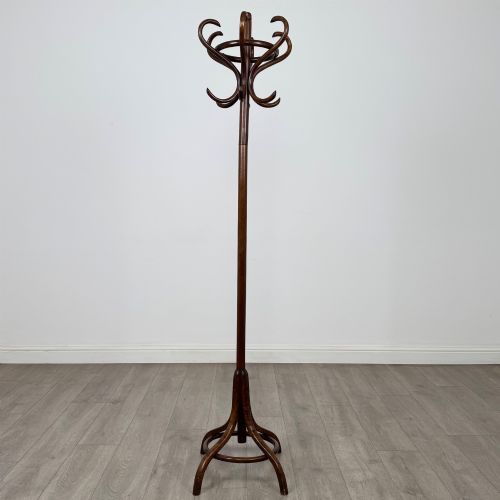
A bentwood coat rack hall piece is typically encountered as a tall, floor-standing coat stand, hall stand, or coat tree designed for an entrance hallway. The selection includes designs intended to stand against a wall, half-round or demi-lune configurations, and revolving stands that provide easy access to hooks. These items date from the late nineteenth century, through the Edwardian period, and into the 1920s and 1930s.
Alongside the upright freestanding trees, buyers also encounter wall-hanging coat racks and rows of hooks designed to maximise space in compact hallways. The forms originate from continental European makers and workshops working in the Austrian and Thonet styles, often combining coat storage with dedicated rings for walking sticks and umbrellas.
Materials and Techniques
The primary material used across these pieces is beech or steamed beechwood, chosen for its remarkable pliability when subjected to heat and moisture. Craftsmen placed solid lengths of wood into steam chambers until the timber softened enough to be bent around metal or wooden forms into sweeping, continuous curves.
Once dry and stable, the components were assembled using threaded screws and internal wooden bracing to create rigid, load-bearing joints without losing the characteristic spring of the bent profile. Surfaces were then finished with clear wood stain or honey-coloured polish to protect the grain while accentuating the natural warmth of the wood.
Many of these slender coat stands managed to outlive generations of household coats while holding damp umbrellas without complaint.
Evaluating the Pieces
Quality in these items is largely determined by the complexity of the wooden framework and the calibre of the steam-bending work. Superior examples exhibit fluid, uninterrupted compound curves and sturdy double-top configurations that distribute weight evenly across multiple tiers of hooks.
Finer specimens often retain original maker signatures or paper labels, alongside integrated cast-iron drip trays and robust umbrella rings at the base. Simpler wall racks and lighter stands represent the more utilitarian end of the spectrum, whereas substantial revolving hall stands demonstrate greater joinery ambition and heavier gauge timber.
Thonet·Fischel
The Bentwood Coat Rack Hall Glossary
- Bentwood
- Wood that has been heated with steam and manually bent into curved shapes. This technique allows for lightweight yet remarkably strong furniture frames without traditional joints.
- Hall Stand
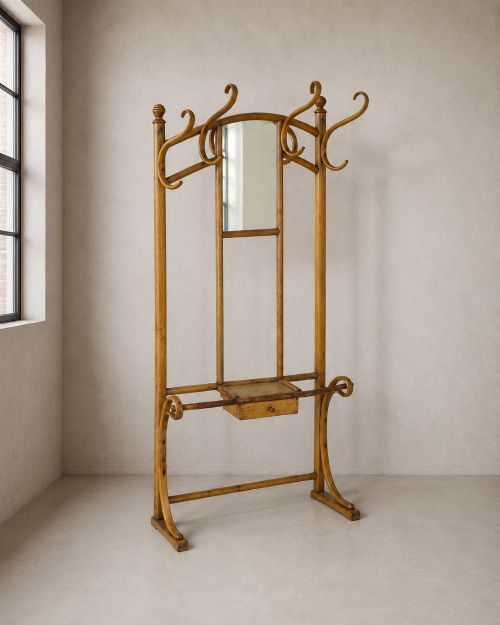
- A piece of hallway furniture combining coat hooks, hat storage, and umbrella or stick holders. Many variants also incorporate mirrors or small glove boxes.
- Demi-Lune
- Half-round in shape, designed to sit flat against a hallway wall. This profile makes efficient use of narrow corridors.
- Revolving Hall Stand
- A freestanding coat tree featuring a rotating upper section. This allows users to access hanging garments from every angle without moving the entire heavy base.
Bentwood Coat Rack Hall: Frequently Asked Questions
How do I distinguish a Thonet piece?
Thonet pieces often display stamped manufacturer marks, paper labels, or characteristic design registrations on the wooden components. The craftsmanship typically shows superior fluidity in the steam-bent curves and exceptionally robust structural joinery.
Comparing the specific scroll work and hardware against documented catalogued models helps confirm the origin of the piece.
Are these stands stable enough for heavy coats?
Freestanding bentwood coat trees are engineered to balance weight evenly when loaded across the upper tier of double hooks. Heavier specimens from the early period provide a substantial wooden base that anchors the structure during daily use.
Wall-standing and demi-lune variants offer additional stability by sitting directly against vertical hallway surfaces.
How should I care for steamed beechwood?
Steamed beechwood requires basic maintenance involving dry dusting and occasional treatment with mild furniture polish to nourish the stained surface. Keeping the timber away from direct heat sources and excessive moisture prevents the wood from drying out or splitting.
Checking the central assembly screws periodically ensures the frame remains rigid and properly aligned.