



Barware Silver Ice Bucket
When you seek a barware silver ice bucket, you uncover heavy-walled vessels for cooling wine and champagne that bring period elegance to entertaining.
Barware Silver Ice Bucket
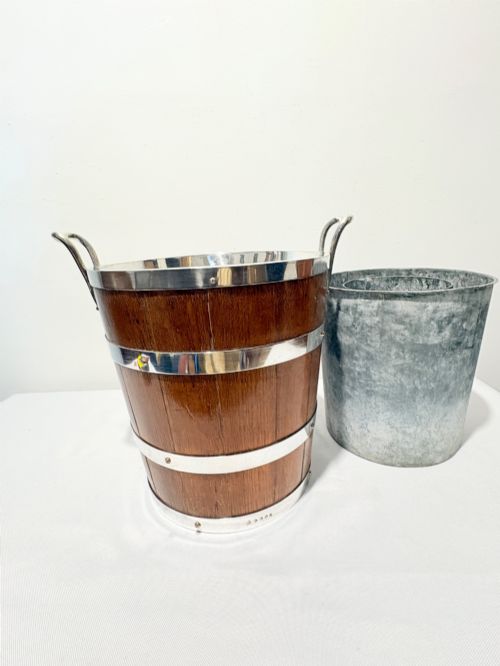
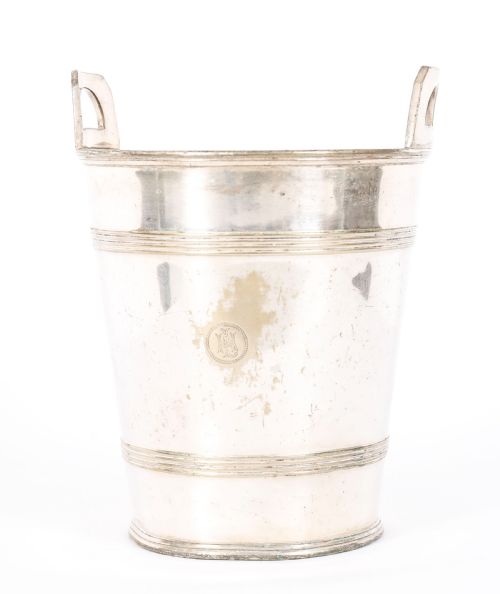
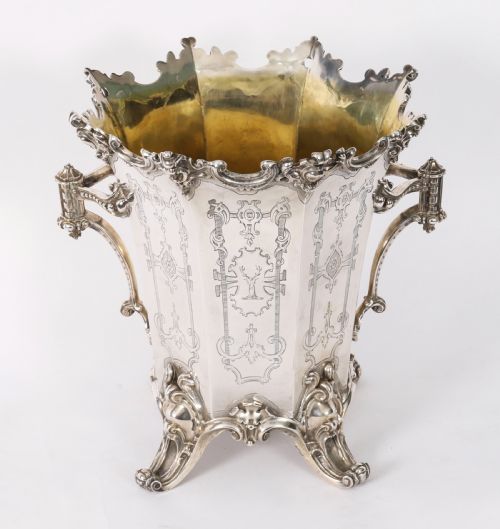
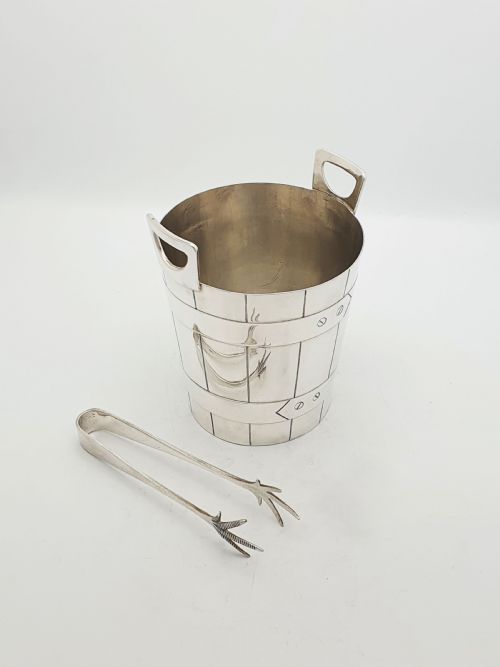
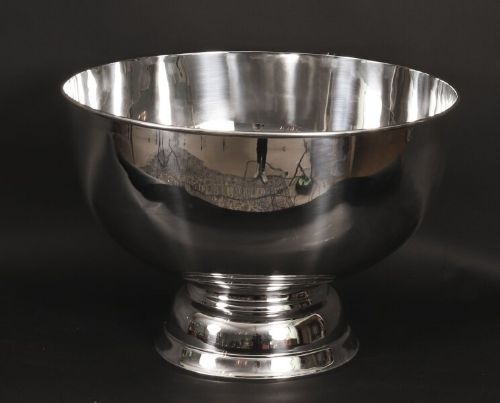
A barware silver ice bucket encompasses various serving vessels designed to chill wine, champagne, and ice during social gatherings. Buyers browsing this selection encounter forms ranging from simple cylindrical pails to twin-handled champagne coolers and novelty barrels.
The objects originate across multiple eras, with examples spanning Georgian and Regency periods through Victorian, Edwardian, and Art Deco epochs into mid-century modern design. Many pieces combine silver plate or Old Sheffield plate with cut glass, crystal, oak, or ceramic liners.
Makers and houses from England, France, and Italy created these items, producing both utilitarian table accessories and decorative showpieces. The most common survivals on this page date from the nineteenth and twentieth centuries.
Materials and Technique
Silversmiths constructed the primary body of these vessels using silver plate, Old Sheffield plate, or occasionally sterling silver over a base metal like copper. Old Sheffield plate involved fusing a thin sheet of silver to a copper ingot, creating a durable composite material.
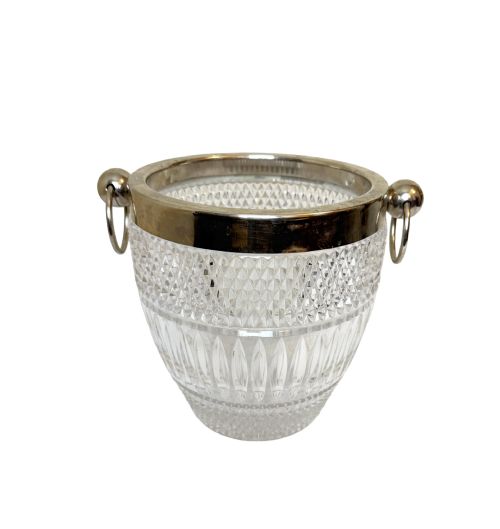
Many items incorporate heavy lead crystal or cut glass liners that fit securely inside the silver-plated outer pails. Artisans applied decorative treatments such as embossing, engraving, and applied mounts featuring cherubs, dolphins, horse heads, and geometric motifs.
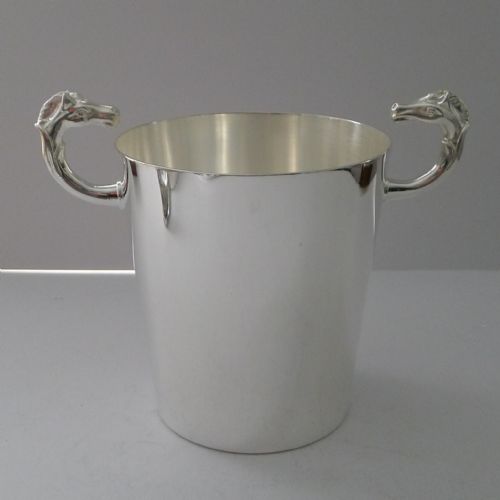
Equestrian ice buckets shaped as horse heads bring an unexpected stableyard charm directly to the cocktail hour.
Distinctions in Execution
Quality in these coolers rests upon the weight of the metal, the crispness of any chased or embossed decoration, and the integrity of the construction. Heavier lead crystal liners and thick silver plating indicate superior manufacture.
Wares produced by established firms display deliberate weight and balanced proportions, whereas standard commercial pieces show lighter gauges of metal. The precision of the joints and the retention of the original silver plating dictate the standing of an individual item.
Hutton Sheffield·Christofle·Elkington, Mason And Co·Mappin And Webb·Hermes Paris·Ercuis Paris·Matthew Boulton And Co·James Dixon And Sons
The Barware Silver Ice Bucket Glossary
- Old Sheffield plate
- A composite material made by fusing a layer of silver to a copper base before rolling into sheets. This technique predates modern electroplating.
- Silver plate
- A thin layer of pure silver applied to a base metal substrate, such as copper or white metal. This method became widespread during the nineteenth century.
- Cut glass
- Glass decorated by cutting facets or patterns into the surface using a rotating wheel. It provides weight and brilliance to internal liners.
- Champagne cooler
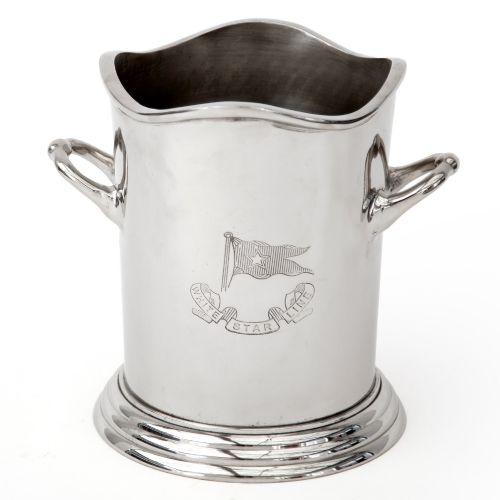
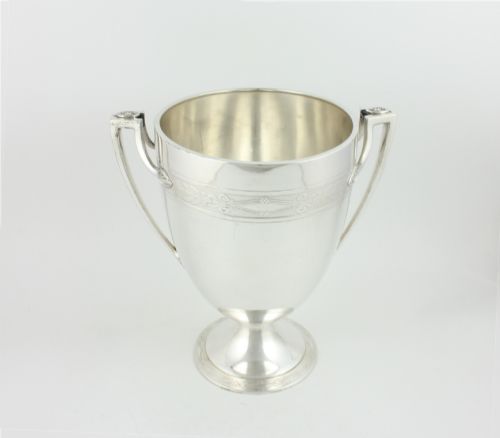
- A deep vessel designed to hold ice and water for chilling wine bottles. These pieces often feature twin handles for lifting.
- Biscuit barrel
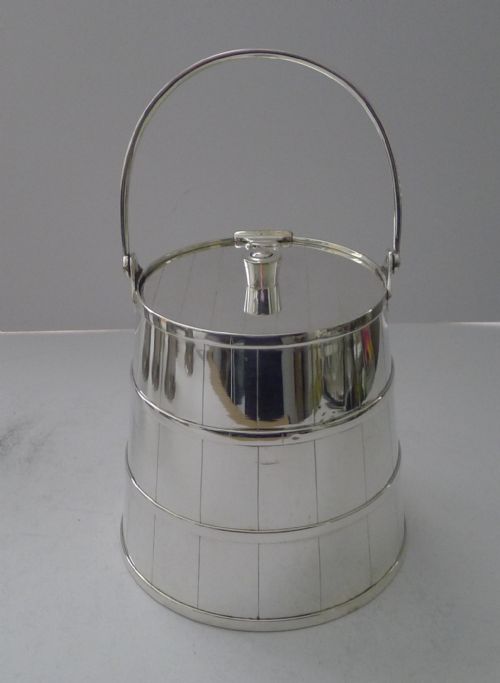
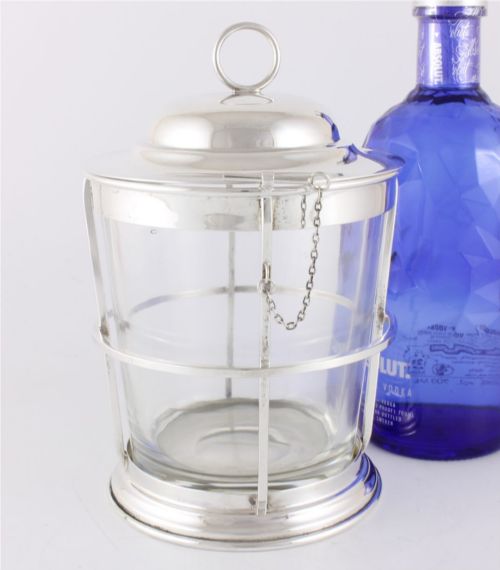
- A covered container traditionally used for storing dry biscuits. Some variants double as ice buckets in barware collections.
Barware Silver Ice Bucket: Frequently Asked Questions
How do I clean a silver-plated ice bucket?
Wash the vessel gently in warm, soapy water using a soft cloth to avoid scratching the plated surface. Dry thoroughly with a lint-free towel to prevent water spots.
Avoid harsh abrasive dips that strip the silver layer from the underlying copper or metal. Use a specialised silver polish sparingly only when tarnished.
Can I use an antique wine cooler for daily dining?
These robust vessels were built for active hospitality and withstand regular use on modern dining tables. Ensure you dry the interior thoroughly after holding ice or water to protect the metal.
Lined models with glass or ceramic inserts protect the outer silver plate from prolonged moisture exposure. Handle twin-handled pieces securely when filled with ice and bottles.
How do I distinguish Old Sheffield plate from later silver plate?
Examine the edges and wear points for a subtle reddish tint where the underlying copper shows through the silver layer. Old Sheffield plate relies on a fused sheet rather than an electrochemically applied coating.
Electroplated items typically display a uniform silver surface even as the plating wears thin. Maker marks also help date the piece to the appropriate nineteenth-century period.
What is the difference between a wine cooler and a champagne bucket?
Wine coolers often feature sturdier proportions and traditional footed bases suited for formal sideboards. Champagne buckets tend to be deeper and cylindrical to accommodate taller bottles surrounded by ice.
Many period listings use both terms interchangeably for vessels that perform identical cooling functions. Both forms appear frequently in silver plate and cut glass combinations.