
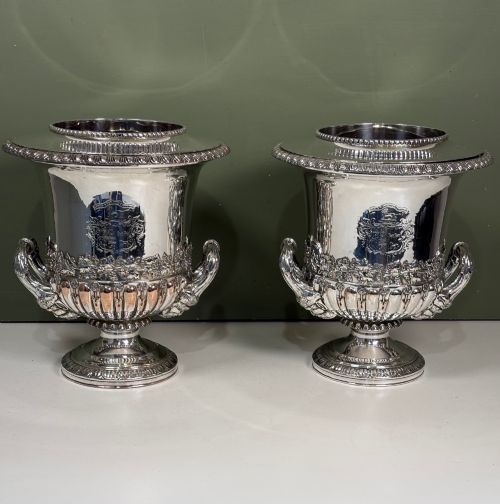


Engraved Silver Champagne Bucket
An engraved silver champagne bucket is a heavy, decorative vessel designed to chill bottles in style, bringing period elegance to any table.
Engraved Silver Champagne Bucket
When you search for an engraved silver champagne bucket, you encounter wine coolers, barware, and ice buckets originating from the eighteenth, nineteenth, and early twentieth centuries. These pieces encompass Georgian, Regency, Victorian, and Belle Epoque styles, alongside functional items linked to maritime liners and French bistros.
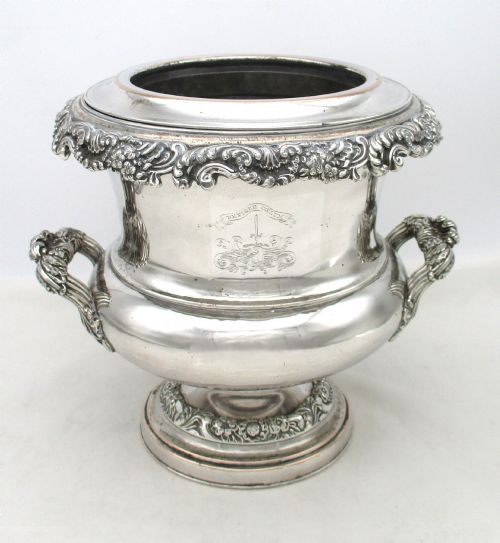
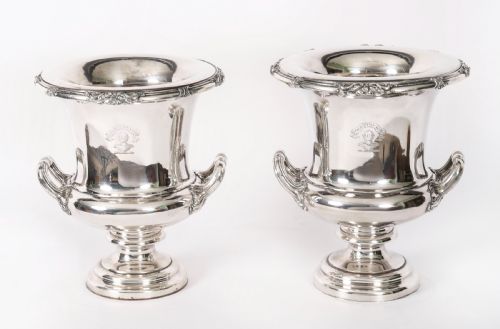
The majority of pieces seen on this page consist of silver plate, Old Sheffield plate, and electroplated nickel silver, accompanied by examples in solid silver, copper, and pewter. Forms range from twin-handled vessels to large bowls bearing family crests, coats of arms, or military inscriptions.
Materials and construction
Makers utilised copper fused with a thin layer of silver for Old Sheffield plate, while later pieces employed electroplating techniques over a base metal such as nickel silver. Solid silver items demanded traditional silversmithing methods including hammering, casting, and chasing.
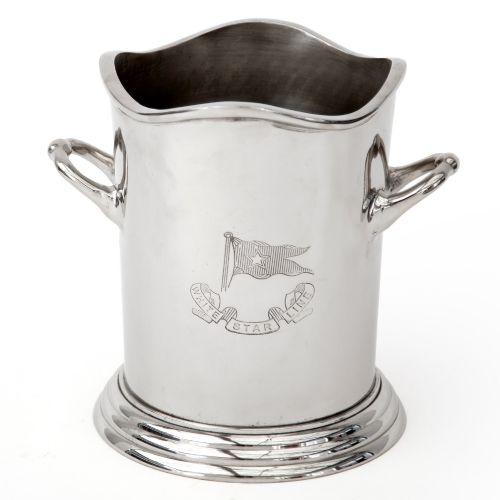
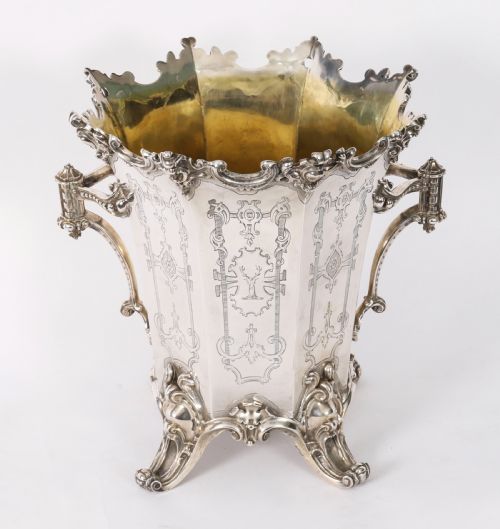
Engraving was applied by hand to display armorial crests, military insignia, or shipping line provenance. Gilt interiors frequently provided a protective coating against acidic wine and ice.
Listings span the eighteenth, nineteenth, and twentieth centuries, featuring materials from copper and pewter to Old Sheffield plate and solid silver.
Factors of quality
The crispness and depth of the hand engraving distinguish finer vessels from standard production items, particularly when coats of arms or regimental badges are involved. Crisp chasing on handles and rims indicates superior workshop standards.
The method of plating dictates durability and value, with Old Sheffield plate showing distinct fused copper edges, while worn electroplate reveals the base metal beneath. Weight and balance also separate substantial dining table coolers from lighter barware.
Elkington, Mason & Co·Christofle·Matthew Boulton & Co
The Engraved Silver Champagne Bucket Glossary
- Old Sheffield plate
- A material made by fusing a thin sheet of silver to a copper core before rolling them together into a single plate. This technique was largely superseded by electroplating in the nineteenth century.
- Electroplated nickel silver
- A base metal alloy of copper, nickel, and zinc coated with a thin layer of silver using an electrical current. It became the standard industrial method for producing durable silver-finished vessels.
- Coat of arms
- A distinct heraldic design displayed on metalware to denote family lineage or institutional ownership. These engravings often help trace the original commission of the piece.
- Gilt
- A thin application of gold wash applied to the interior surface of a vessel. This prevented the wine from tarnishing the silver metal.
- Wine cooler
- A large vessel designed to hold bottles upright surrounded by ice or water. Many items catalogued under this term function equally as champagne buckets.
Engraved Silver Champagne Bucket: Frequently Asked Questions
What is Old Sheffield plate?
Old Sheffield plate is an early material created by fusing a layer of silver to a copper block before shaping. This technique creates a distinctive edge where the copper base metal becomes visible through wear.
Items made this way date primarily from the eighteenth and early nineteenth centuries before electroplating took over the market.
How do I clean my silver cooler?
Clean silver-plated and solid silver vessels using a gentle, non-abrasive silver polish and a soft cloth. Avoid harsh scrubbing that might wear through thin plating or damage hand-engraved crests.
For pieces with gilt interiors, take care to keep polish away from the gold wash to preserve the inner finish.
Were these used on ships?
Some vessels served aboard ocean liners, such as those associated with the White Star Line. These pieces were built for heavy commercial use in dining saloons.
They often feature robust handles and thick walls to withstand the movement of the sea.
What do crests on buckets mean?
Engraved crests and coats of arms indicate the original aristocratic family, military regiment, or institution that commissioned the piece. Military pieces often bear specific regimental titles or campaign details.
These personalisations add historical context and help date the vessel.