
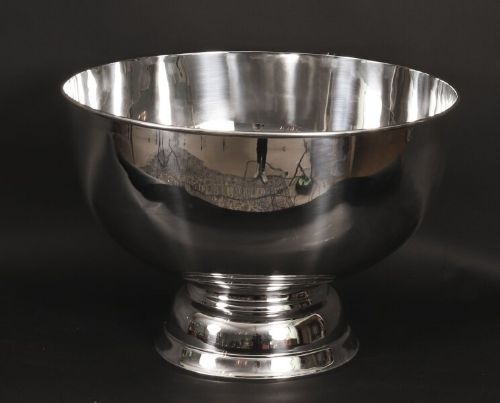


Art Deco Champagne Cooler
An art deco champagne cooler brings geometric elegance to the table, designed to keep vintage bottles chilled while making a distinct statement in silver plate or glass.
Art Deco Champagne Cooler
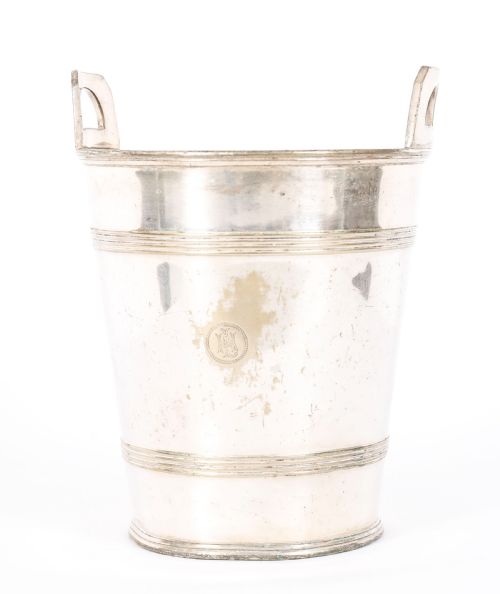
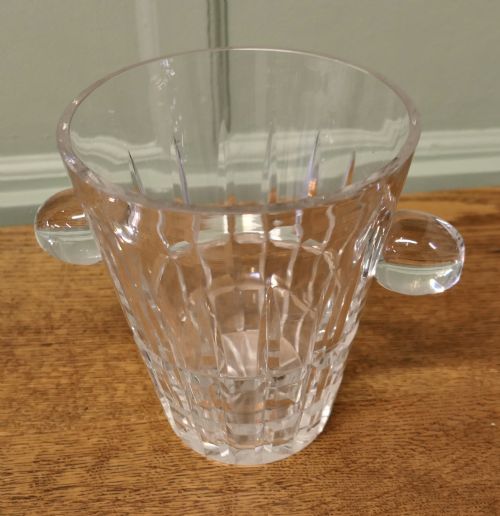
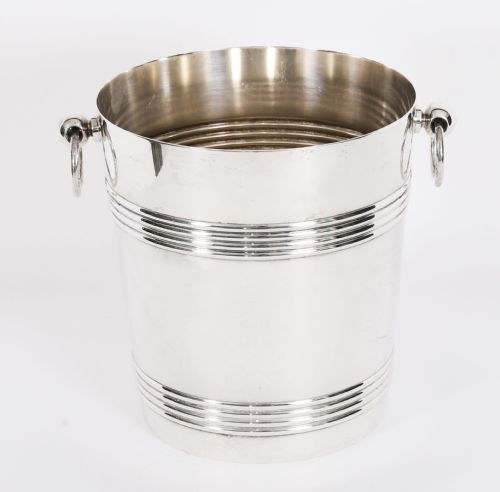
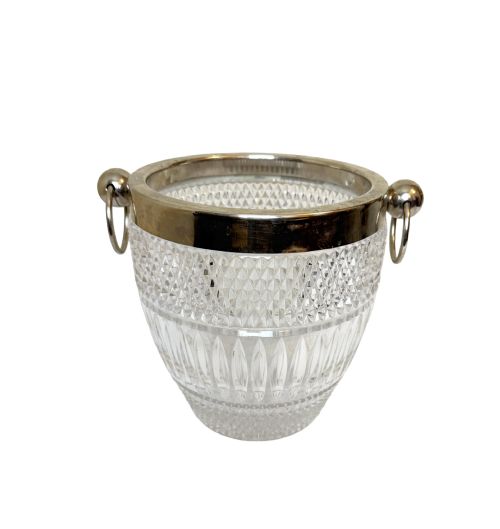
An art deco champagne cooler serves primarily to chill wine and champagne for the table, taking the form of ice buckets, standing vessels, and handled bowls. The pieces appear in silver plate, metal, chrome, copper, and cut crystal or glass, dating from the early decades of the twentieth century.
Silver plated vessels dominate the selection, often produced by prominent European and English makers with clean vertical lines, stepped bases, or banded details. French examples sit alongside English manufacturers, ranging from compact ice buckets to floor-standing coolers and jardiniere hybrids.
The objects function as both practical barware and decorative centerpieces, reflecting the modernist aesthetic of the interwar period. Buyers select them for hosting dinner parties or displaying on sideboards.
How they were made
Silversmiths plated base metals such as copper or white metal with silver, applying heavy silver plate to withstand repeated use and polishing. Selected pieces utilise hand-blown or hand-cut crystal and glass, featuring deep geometric facets that catch the light.
Makers shaped metal through spinning, stamping, and soldering, assembling handles and rims with precise geometric articulation. Oak elements appear combined with copper or silver plate in specific jardiniere and cooler hybrids.
Some coolers are heavy enough to double as kettlebells if your dinner party runs exceptionally late.
What varies in quality
The distinction between standard production and exceptional work rests on the weight of the metal, the crispness of the geometric casting, and the thickness of the silver plating. Heavier gauge silver plate on copper provides superior durability and a more substantial feel in the hand.
Pieces bearing the marks of renowned design directors or specialised metalwork ateliers exhibit greater refinement in their proportions and decorative restraint. The quality of hand-cut crystal, with deep, clean facets and heavy lead content, elevates the standing of glass ice buckets.
Hutton Sheffield·Christofle·Mappin & Webb·WMF·Elkington·Luc Lanel·Wiskemann·Cailar & Bayard·Ercuis·St Medard·Berger·Lee and Wigfull
The Art Deco Champagne Cooler Glossary
- Silver Plate
- A layer of pure silver bonded to a base metal, typically copper, nickel silver, or brass. This technique allowed manufacturers to produce solid-looking vessels at a lower cost than solid silver.
- Cut Crystal
- Glass containing lead oxide that is hand-cut with geometric patterns using a rotating wheel. The lead content increases the refractive index and weight of the vessel.
- Gallia
- A high-grade silver-plated metal alloy introduced by the French manufacturer Christofle in the late nineteenth century. It became synonymous with luxury tableware of the modernist period.
- Jardiniere
- A decorative pot or stand intended for holding plants, which makers sometimes adapted for use as a wine cooler or ice bucket during the period.
Art Deco Champagne Cooler: Frequently Asked Questions
How do I clean an antique silver plated cooler?
Wash the vessel in warm water with a mild, non-abrasive liquid soap and dry it thoroughly with a soft cloth. Avoid harsh chemical dips that strip the remaining silver layer from the base metal.
For tarnish, apply a specialised silver cream gently with a cotton cloth, rubbing in straight lines rather than circles. Rinse thoroughly and buff to restore the original shine.
Can I use these coolers for everyday dining?
These vessels were built for functional use in hospitality and domestic dining, utilising robust silver plate and thick crystal. They handle ice and bottled wine safely during regular meals.
Ensure moisture is not left standing in contact with the interior for days at a time to preserve the lining. Hand washing maintains the finish far better than mechanical dishwashers.
How do I identify a French piece from an English one?
French vessels frequently display maker marks associated with Parisian ateliers and distinct punch stamps on the foot rim or body. They often feature heavier crystal cutting and bolder modernist silhouettes.
English pieces commonly carry hallmarks or maker stamps from Sheffield and London silversmiths. Their proportions tend toward traditional symmetry combined with subtle geometric motifs.
What is the difference between an ice bucket and a champagne cooler?
Champagne coolers feature a wider, deeper body designed to hold an upright bottle surrounded by substantial quantities of ice and water. They generally stand taller to accommodate the full height of sparkling wine bottles.
Ice buckets are typically smaller and more compact, intended specifically for serving ice cubes to individual glasses rather than chilling bottles. Some convertible forms, however, function adequately for both purposes.