




Crystal Champagne Bucket
A crystal champagne bucket brings sparkle to any table, holding ice and bottles in style.
Crystal Champagne Bucket
When you search for a crystal champagne bucket, you encounter vessels designed to chill wine and champagne using ice. The pieces listed span from the nineteenth century through the Art Deco and Art Nouveau periods, showcasing varied forms.
You are most likely to meet French and English examples on this page, often combining cut crystal or lead crystal with silver plate, silverplate, or brass mounts. These coolers serve practical functions while offering decorative appeal.
The objects appear under descriptions including wine coolers and ice buckets, reflecting their dual uses. Makers and origins stretch across European traditions, incorporating gilt bronze mounts and hand blown glass.
Manufacturing and Materials
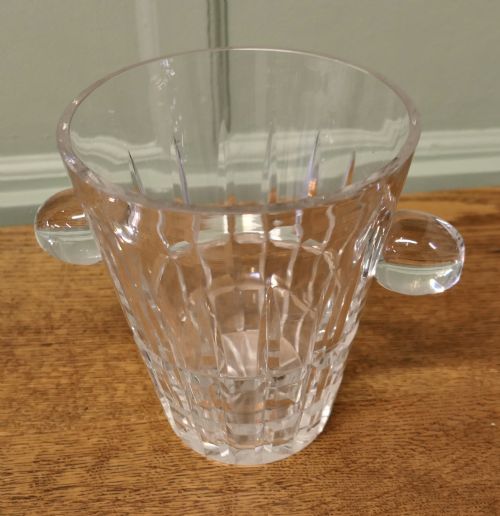
These pieces rely on heavy lead crystal or cut glass, shaped through hand blowing and precise cutting techniques. The refractive surfaces catch the light, creating deep patterns across the body of the bucket.
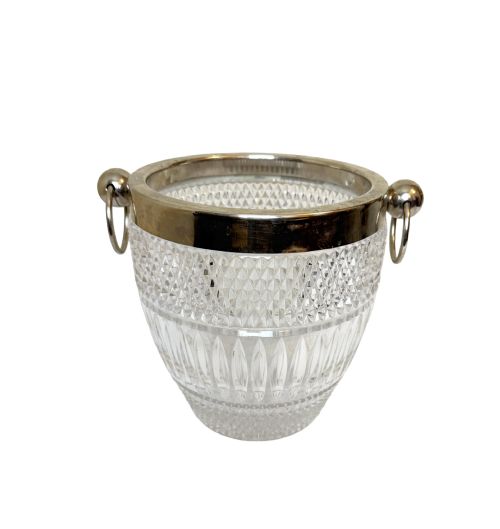
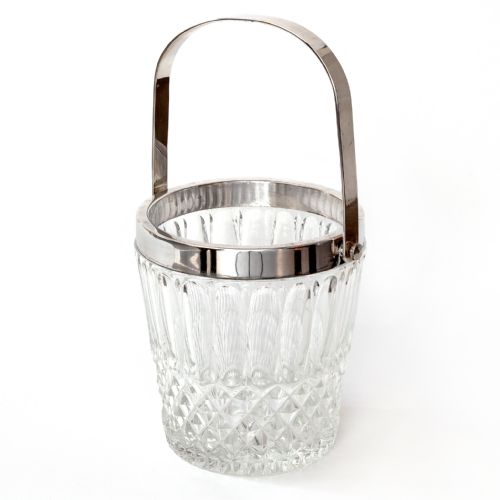
Metal components such as silver plate, silverplate, brass, and gilt bronze mounts are integrated to form rims, handles, and bases. These mixed media constructions demand expert assembly to secure the heavy glass within metal hardware.
Some champagne buckets carry descriptions of extreme heaviness, ensuring your table stays firmly anchored.
Assessing Quality
Quality rests in the weight and clarity of the crystal, alongside the crispness of the hand cut facets. Heavy lead crystal provides a solid presence and deep resonance when struck gently.
The execution of the metal mounts, whether gilt bronze, silver-plate, or brass, dictates the refinement of the piece. Clean integration between the glass vessel and its metal fittings marks superior production.
The Crystal Champagne Bucket Glossary
- Lead Crystal
- Glass containing metallic oxide to increase weight, brilliance, and workability for deep cutting. This material allows for sharp, light-catching facets.
- Silver Plate
- A thin layer of silver fused to a base metal such as copper or brass. This technique provides the appearance of solid silver.
- Gilt Bronze
- Bronze mounted with a thin layer of gold applied via mercury amalgamation or electroplating. It adds a warm metallic accent to stone and glass objects.
- Art Deco
- A design style spanning the 1920s and 1930s characterised by geometric symmetry and streamlined forms. It follows the ornate lines of earlier periods.
Crystal Champagne Bucket: Frequently Asked Questions
What is a crystal champagne bucket used for?
These vessels are designed to hold ice and bottles of champagne or wine at the dining table. They keep beverages chilled throughout a meal.
Beyond dining use, many collectors display them as decorative centrepieces when not holding ice.
How do I date a crystal champagne bucket?
Dating relies on stylistic clues such as Art Deco geometric lines or Art Nouveau organic curves. Material combinations like silver plate with cut crystal also point to specific eras.
Examining the depth of the cut glass and the construction of metal mounts helps narrow down the period of manufacture.
Are these buckets heavy?
Many examples utilise heavy lead crystal or thick cut glass, giving them a substantial weight. Metal mounts in brass or silverplate add further heft.
This weight ensures the bucket remains stable on the table even when filled with ice and bottles.
Can I use it for wine instead of champagne?
These coolers accommodate various bottled beverages, including wine, alongside champagne. The dimensions suit standard wine bottles.
Historical titles frequently list them interchangeably as wine coolers and ice buckets.