


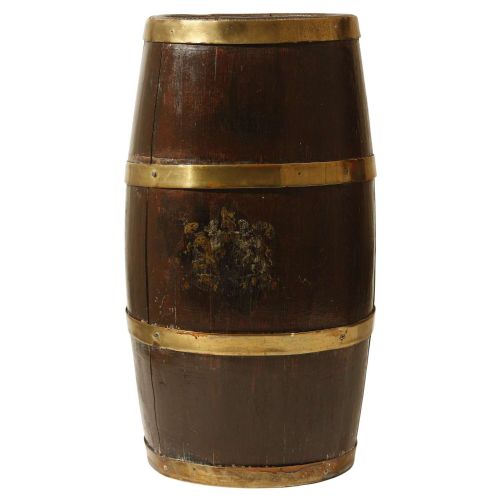


Barrel Umbrella Stand
A barrel umbrella stand brings sturdy, time-served character to a hallway while keeping wet sticks and brollies neatly contained.
Barrel Umbrella Stand
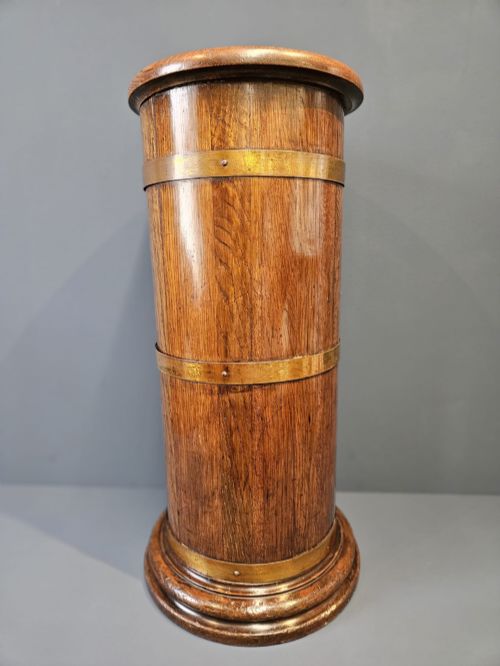
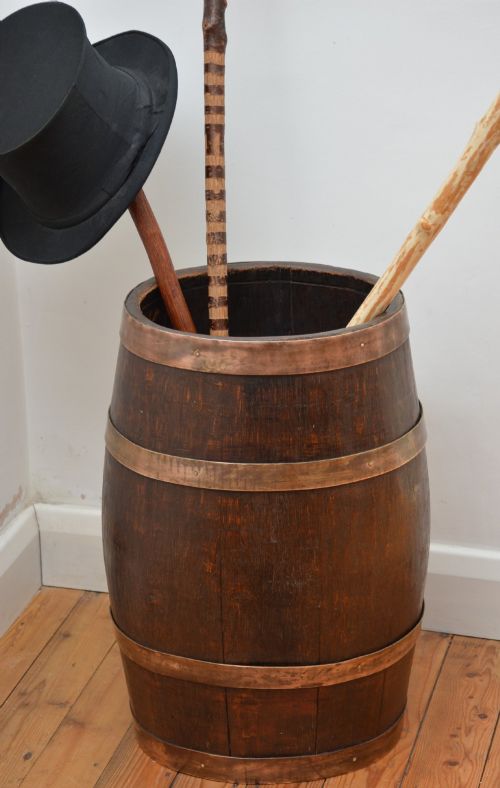
A barrel umbrella stand takes the traditional form of a coopered cask or vessel and repurposes it to hold walking sticks and wet umbrellas in the hallway. When you search for a barrel umbrella stand, you meet robust vessels designed to handle daily household use without losing their decorative presence.
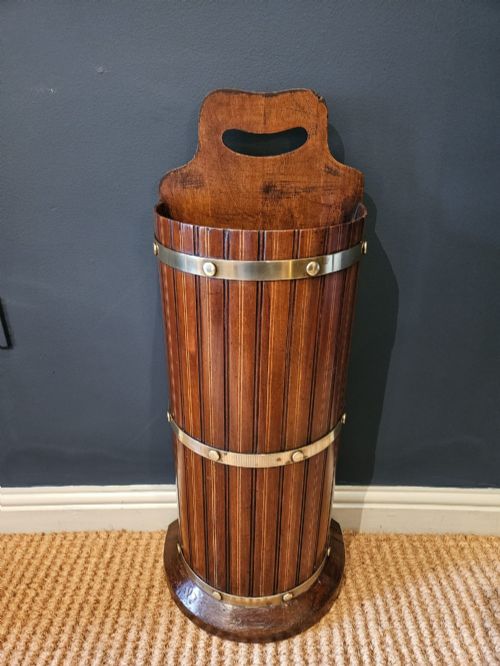
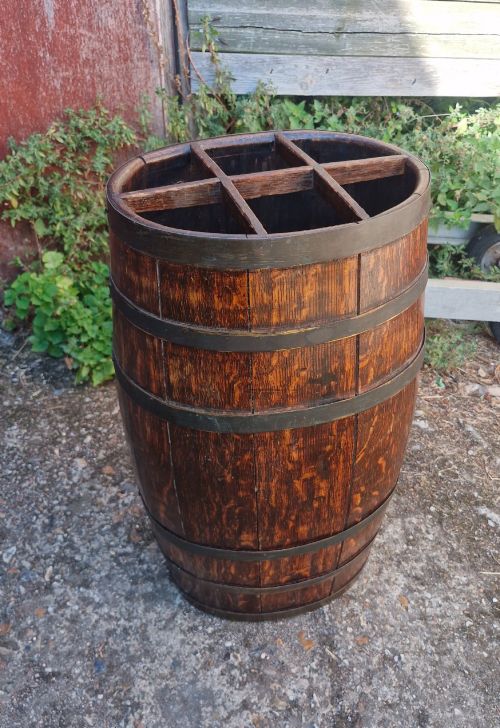
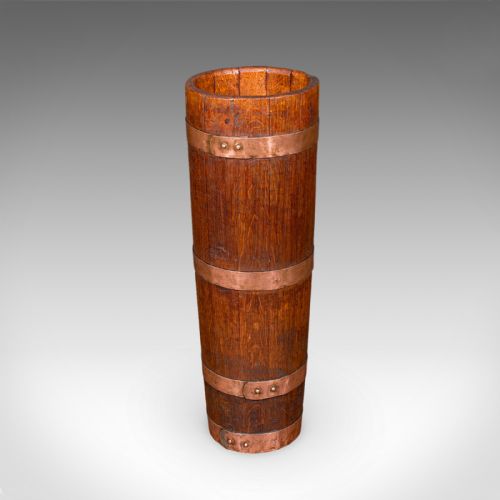
The pieces appearing here span from the early nineteenth century through to the Edwardian period and the early twentieth century. Oak examples built with coopered staves dominate the selection, often finished with metal bands for reinforcement.
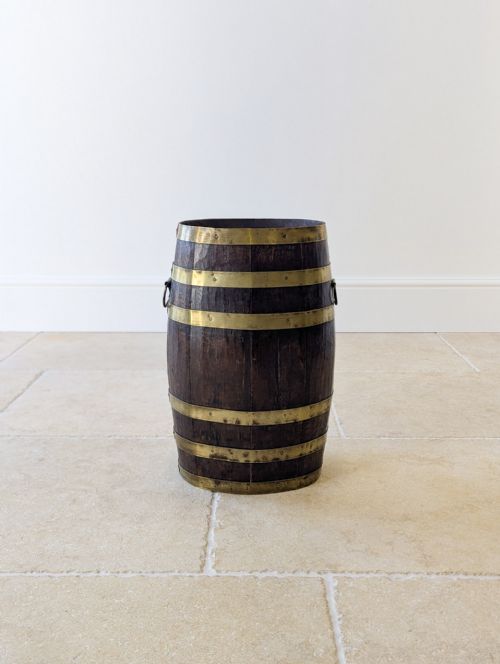
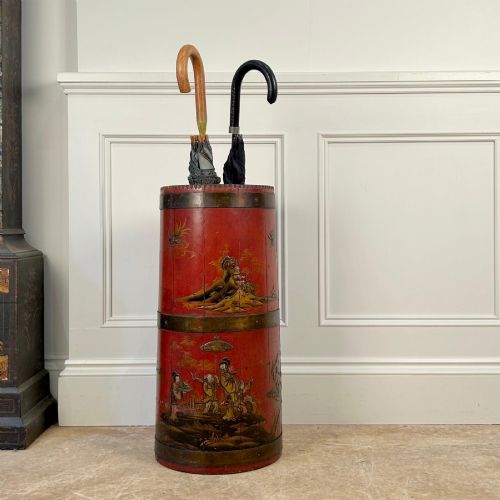
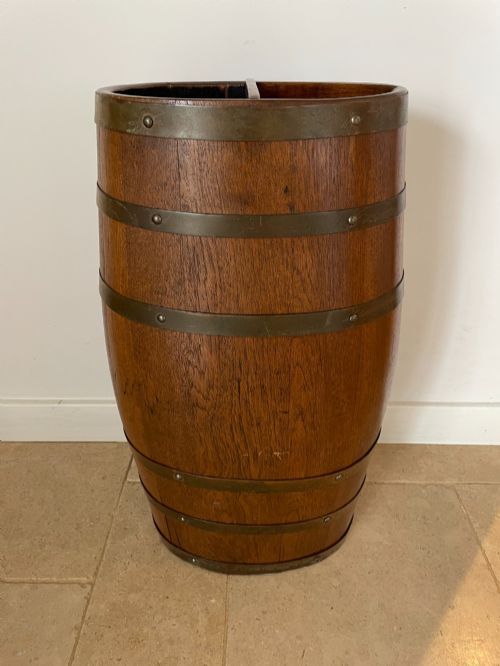
Alongside straightforward timber casks, variations include oval profiles, painted folk art surfaces, and pieces incorporating brass braces or lion head ring handles. Originating largely from English country houses and Scottish halls, these containers combine practical utility with traditional craftsmanship.
How they were made
Makers constructed these vessels primarily using timber staves shaped by hand and assembled around a base, employing traditional cooperage techniques to ensure a tight, durable fit. Oak remains the most common wood, valued for its strength and resistance to moisture.
To hold the staves firmly in place, artisans fitted metal bands made of brass, copper, or iron around the circumference. These metal braces were often secured with rivets and sometimes detailed with engraved coats of arms or ring handles.
Some sturdy barrels secretly spent their early days holding whisky before retiring to the hallway as polite stick holders.
What varies in quality
Quality in these pieces rests upon the precision of the cooperage and the harmony of the materials. Tighter stave joints and heavier gauge metal bands separate finer examples from simpler utilitarian vessels.
The choice of decorative hardware also defines the upper tier of the range, where cast brass elements, lion head ring handles, or specialised japanned finishes elevate a functional container into a considered interior piece.
R.A. Lister
The Barrel Umbrella Stand Glossary
- Coopered
- Made by a cooper using curved wooden staves bound together with hoops of metal or wood. This method creates the characteristic cylindrical or oval shape of barrels and buckets.
- Staves
- The narrow vertical strips of wood that form the sides of a barrel or tub. Their tapered edges must fit together precisely to hold the vessel's shape.
- Japanned
- Finished with a hard, black or dark lacquer derived from European imitations of Asian lacquerware. This technique appears on decorative surfaces from the Edwardian period.
- Saltglaze
- A glossy, slightly textured finish created by throwing common salt into the kiln during high-temperature pottery firing. It forms a durable coating on stoneware vessels.
- Chinoiserie
- European decorative style reflecting Chinese artistic motifs and landscapes. It appears on painted or lacquered items from the early twentieth century.
Barrel Umbrella Stand: Frequently Asked Questions
How do I use a barrel umbrella stand?
Place the stand in your hallway or boot room to catch drips from wet brollies and keep walking sticks tidy. Most incorporate metal liners or waterproof interiors to protect the timber base from standing moisture.
Ensure the vessel sits on a level surface away from direct heat sources, which can dry out the staves and cause the metal hoops to loosen over time.
How do I tell Victorian stands from later ones?
Victorian examples frequently display heavy oak construction with hand-forged brass bands and deeper patination acquired through decades of hallway use. Early pieces from the mid-nineteenth century often feature traditional cooperage without modern fixings.
Later Edwardian and 1920s versions may introduce lighter timbers, machine-rolled metal bindings, or decorative surface treatments like japanning and Chinoiserie motifs.
Are these stands suitable for daily use?
These vessels were built for practical service in country houses and domestic halls, making them well-suited for everyday holding of umbrellas and sticks. Their robust oak staves and metal bracings are designed to withstand frequent contact.
Routine maintenance involves wiping away internal moisture and occasionally treating the timber to preserve the natural grain and prevent the wood from drying.
What materials are used in these stands?
Oak is the predominant timber found across these pieces, selected for its density and traditional association with coopered vessels. Mahogany also appears in select examples.
Metals such as brass, copper, and iron provide structural reinforcement through external bands, handles, and decorative loops, contrasting with the warm tones of the wood.