




Entryway Umbrella Storage
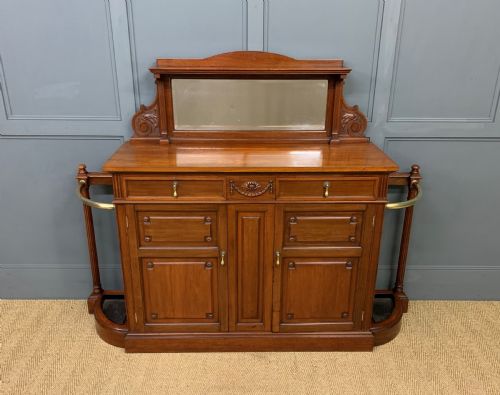
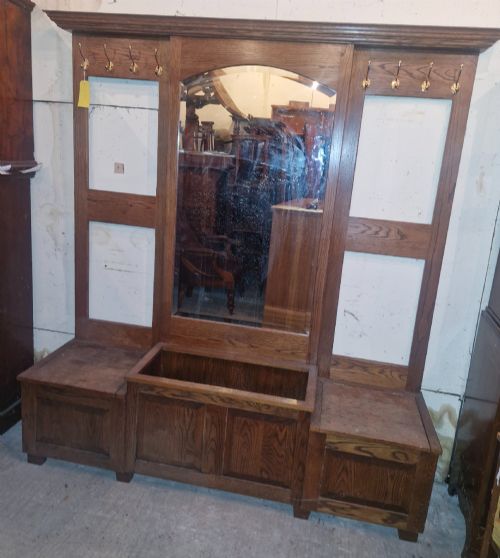
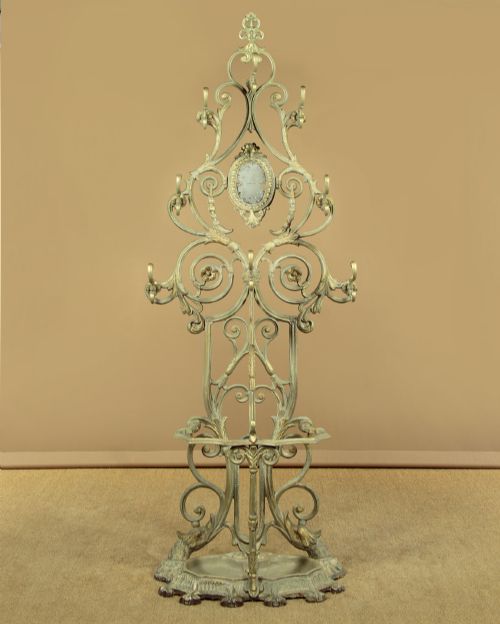
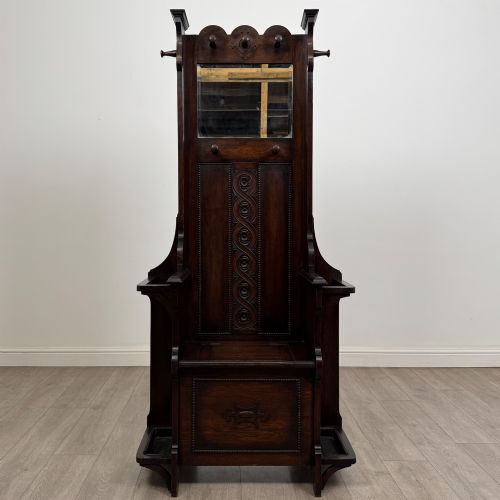
These entryway umbrella storage pieces keep walking sticks and wet rainwear contained while anchoring a hall.
Entryway Umbrella Storage
When you search for entryway umbrella storage, you encounter functional Victorian and Edwardian furniture designed to greet visitors in a hallway or vestibule. These items organise wet gear and walking sticks as soon as you step inside the house.
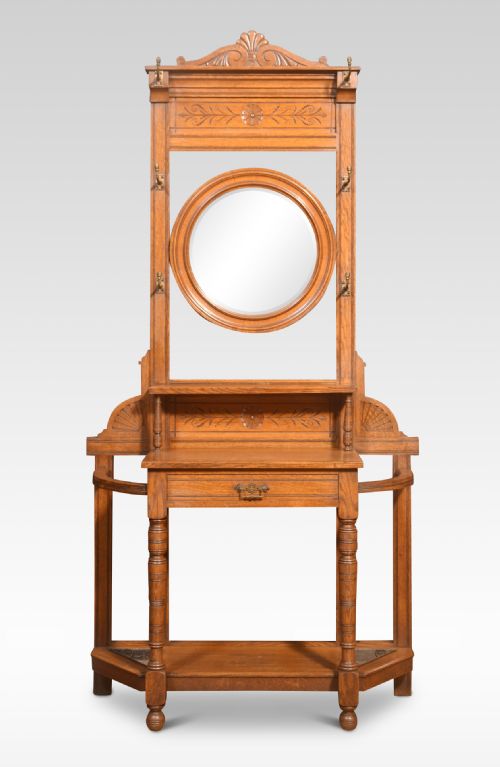
The most common forms on this page are sturdy hall stands that combine umbrella wells with coat hooks, mirrors, and sometimes small seats or cupboards. You also find dedicated stick stands and umbrella stands made specifically to hold long implements upright.
Originating predominantly from the nineteenth and early twentieth centuries, these pieces utilise dense timbers like oak and walnut alongside robust metals such as brass and cast iron.
How they were made
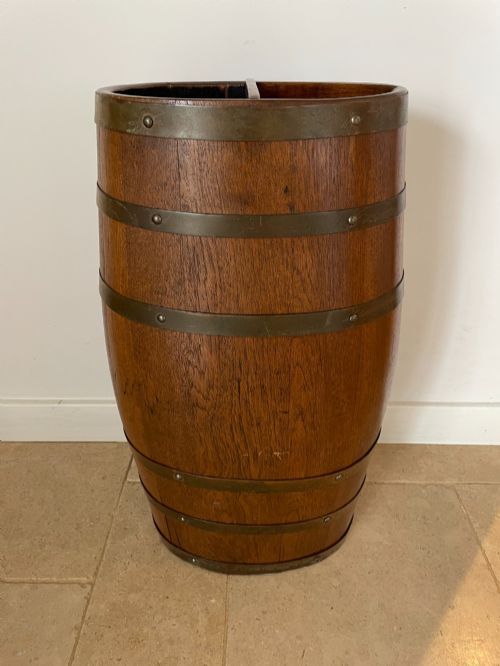
Cabinet makers utilised solid oak, walnut, and mahogany, often employing coopering techniques with wooden staves bound by metal hoops for round or oval umbrella buckets. These traditional woodworking methods ensured the timber could withstand constant moisture from wet umbrellas.
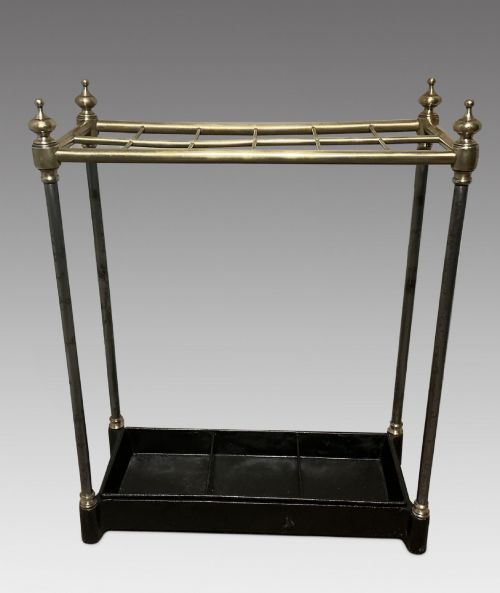
Foundries cast heavy iron and brass into ornate frames, demi-lune designs, and structural supports that prevented the stands from tipping under the weight of heavy walking sticks. Metal components were frequently paired with mirrored glass panels and turned wooden pillars.
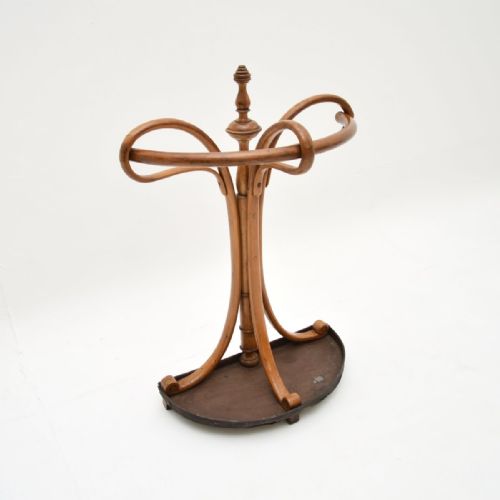
Bentwood techniques appeared by the early twentieth century, allowing manufacturers to steam and bend wood into continuous, graceful curves for lighter umbrella stands.
The listings span from the mid-nineteenth century through the 1960s, featuring oak, walnut, brass, and cast iron.
What varies in quality
The grade of timber and the complexity of the joinery set finer hall stands apart from utilitarian examples. Dense, figured oak or walnut with well-executed panel work represents a higher standard of construction.
Hardware retention and structural integration also dictate quality. Pieces that retain their original metal drip trays, cast iron framework, and matching coat hooks demonstrate superior original manufacture.
Shoolbred and Co·Thonet
The Entryway Umbrella Storage Glossary
- Hall stand
- A large piece of hallway furniture combining coat hooks, a mirror, umbrella storage, and occasionally a seat or small cupboard.
- Stick stand
- A compact holder designed specifically for walking sticks, riding crops, and umbrellas.
- Demi lune
- A half-moon shape often seen in the design of corner or wall-flush umbrella stands.
- Coopered
- Made from curved wooden staves assembled together like a barrel, typical of wooden umbrella buckets.
- Bentwood
- Wood that has been heated with steam and bent into curved shapes, popular in early twentieth century stands.
Entryway Umbrella Storage: Frequently Asked Questions
What is the difference between a hall stand and an umbrella stand?
A hall stand is a substantial multi-functional piece of furniture that includes coat hooks, a mirror, and storage for hats alongside the umbrella wells.
An umbrella stand is a smaller, dedicated vessel or frame meant solely for holding wet rainwear and walking sticks in a compact footprint.
How do I protect my floors from wet umbrellas?
Most period umbrella stands include an original metal drip tray positioned at the base to catch water running off wet canopies.
Ensure your stand retains its tray or place a modern shallow dish inside the base to protect wooden flooring from moisture.
Where should I place an umbrella stand in my hall?
Position these stands near the front door where residents and visitors naturally pause to shed coats and rain gear upon entry.
Corner designs work well in narrow hallways, while large hall stands require a clear wall space to anchor the room visually.
How do I identify a Victorian hall stand?
Victorian examples often feature dark timbers like oak, walnut, or mahogany, accompanied by heavily carved details, cast iron framing, and bevelled mirror plates.
They frequently display nineteenth-century design characteristics such as Aesthetic Movement styling or robust turned pillars.