



Coopered Stick Stand
A coopered stick stand brings traditional vessel-making craft into the hallway, holding wet umbrellas in sturdy lengths of oak braced with metal.
Coopered Stick Stand
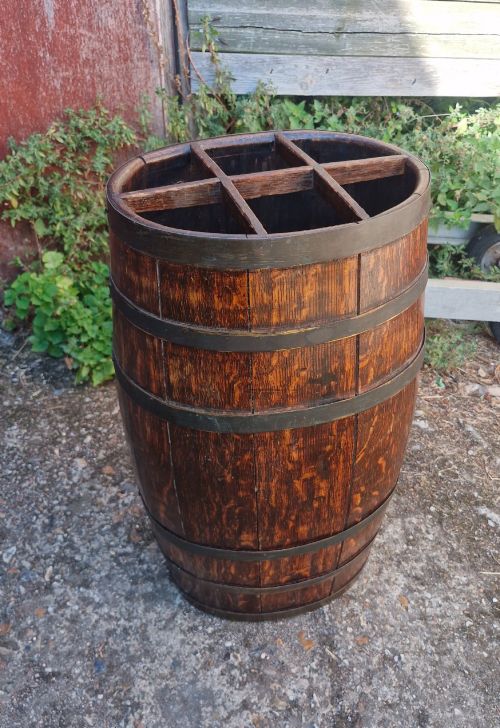
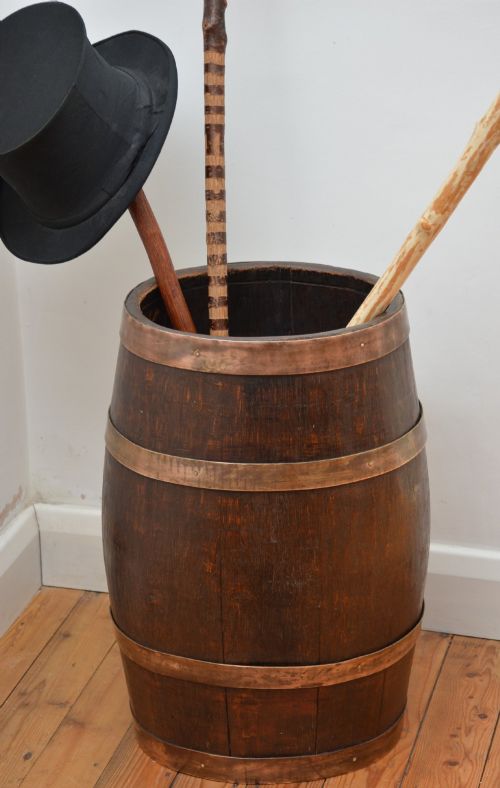
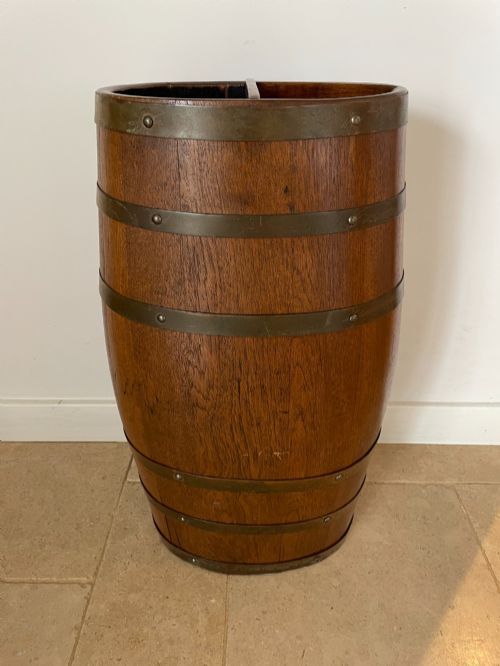
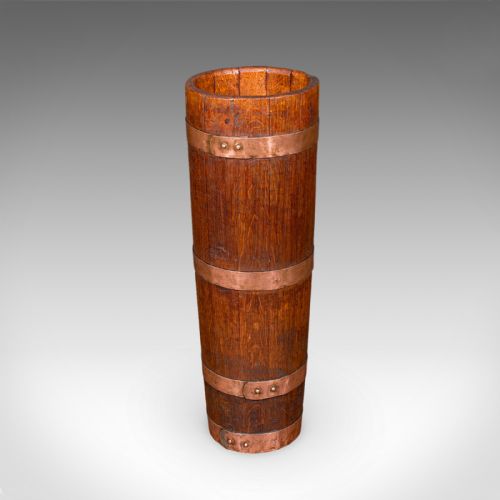
A coopered stick stand is a cylindrical or oval vessel designed to hold walking sticks and umbrellas in a hallway or boot room. When you search for a coopered stick stand, you encounter pieces shaped from vertical wooden staves rather than turned from a single block.
Most examples appearing on this page date from the Victorian and Edwardian periods, reflecting the heavy use of such items in nineteenth and early twentieth century country houses. These pieces typically take the form of miniature barrels or tapering tubs intended to catch water from wet weather gear.
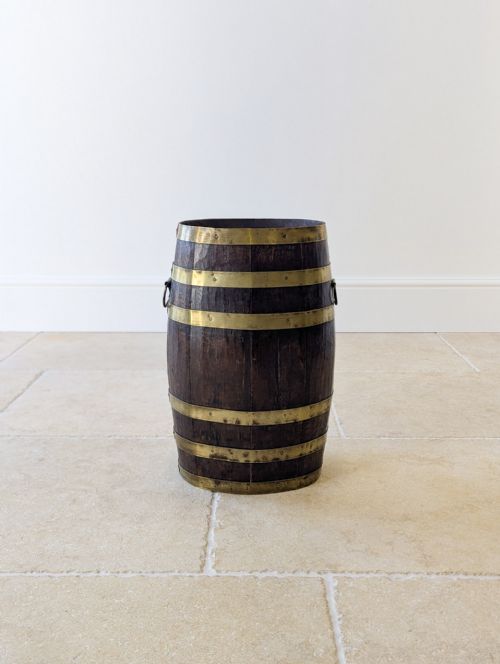
Makers constructed these stands primarily in oak, often selecting timber that showed strong grain patterns. The resulting objects range from simple cylindrical buckets to oval barrels fitted with metal loops to guide handles.
Markers of quality and finish
Quality in a coopered stick stand lies in the precision of the stave joints and the weight of the metal bindings. Superior pieces display closely fitted timber that maintains its form without shrinking away from the original metal hoops.
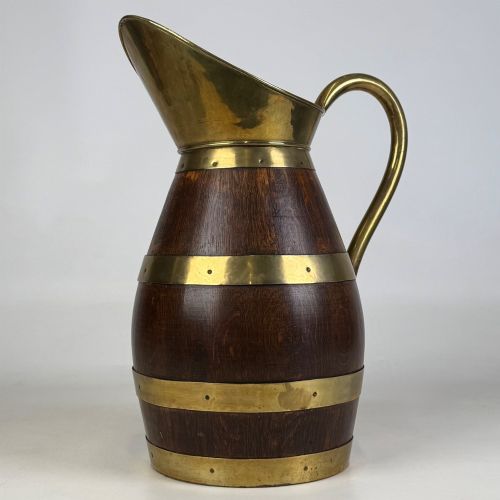
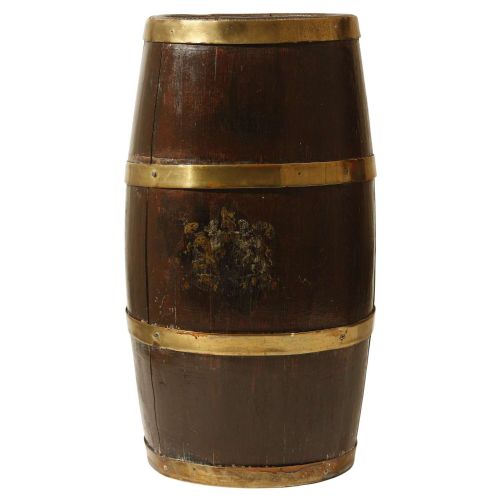
The choice of materials also elevates certain examples, particularly those incorporating heavy brass bands, cast iron loops, or painted heraldic crests. Finer specimens often feature internal lead or metal liners designed to protect the timber base from standing water.
Some Victorian examples feature hand-painted family crests, turning a humble umbrella bucket into a miniature coat of arms for the hallway.
R.A. Lister
The Coopered Stick Stand Glossary
- Coopered
- Constructed from narrow vertical wooden staves fitted together with bevelled edges to form a hollow vessel. This method derives directly from traditional barrel-making techniques used for holding liquids.
- Stave
- A narrow strip of wood with bevelled edges that forms the curved side of a barrel or stick stand. Craftsmen tapered these pieces carefully to ensure the finished vessel achieved a secure, tight circumference.
- Brass bound
- Fitted with external metal hoops made of brass to secure the wooden staves in place. These bright bands provide structural support while creating a decorative contrast against the dark oak.
- Umbrella loop
- An iron or brass ring attached to the exterior or top of a stand to keep long walking sticks and umbrellas separated. This fitting prevents items from tipping outward and spilling onto the hallway floor.
- Country house
- A term denoting sturdy, functional furnishings made for large domestic estates during the Victorian and Edwardian eras. These objects prioritised durable construction and practical utility.
Coopered Stick Stand: Frequently Asked Questions
What is a coopered stick stand?
A coopered stick stand is a small barrel-shaped vessel made from wooden staves and metal bands, designed specifically for holding umbrellas and walking sticks in a hallway.
Craftsmen built these items using traditional vessel-making methods to ensure the wood could handle damp walking gear without leaking.
How do I date a stick stand?
Dating relies on examining the materials, fixings, and overall style of the timber and metalwork. Victorian examples often feature heavier oak and hand-riveted brass bands, while Edwardian pieces sometimes display lighter proportions.
Makers occasionally included stamps or painted crests that help pin down the decade of manufacture.
Did these stands have liners?
Many original stick stands included internal metal or ceramic pans to catch rainwater dripping from wet umbrellas. These liners protected the bottom oak staves from rotting over decades of daily use.
When a liner is missing, the interior base often shows distinct staining from water exposure.
Where should I place one at home?
These pieces suit entrance halls, boot rooms, and porches where walking sticks and wet umbrellas accumulate. Their narrow footprint allows them to fit neatly against hallway walls or beside coat racks.
Keeping them away from direct heat sources prevents the oak staves from drying out and shrinking.