
Barrel Back Armchair
When you need a barrel back armchair, you are looking for a deeply curved seat designed to wrap the sitter in warmth.
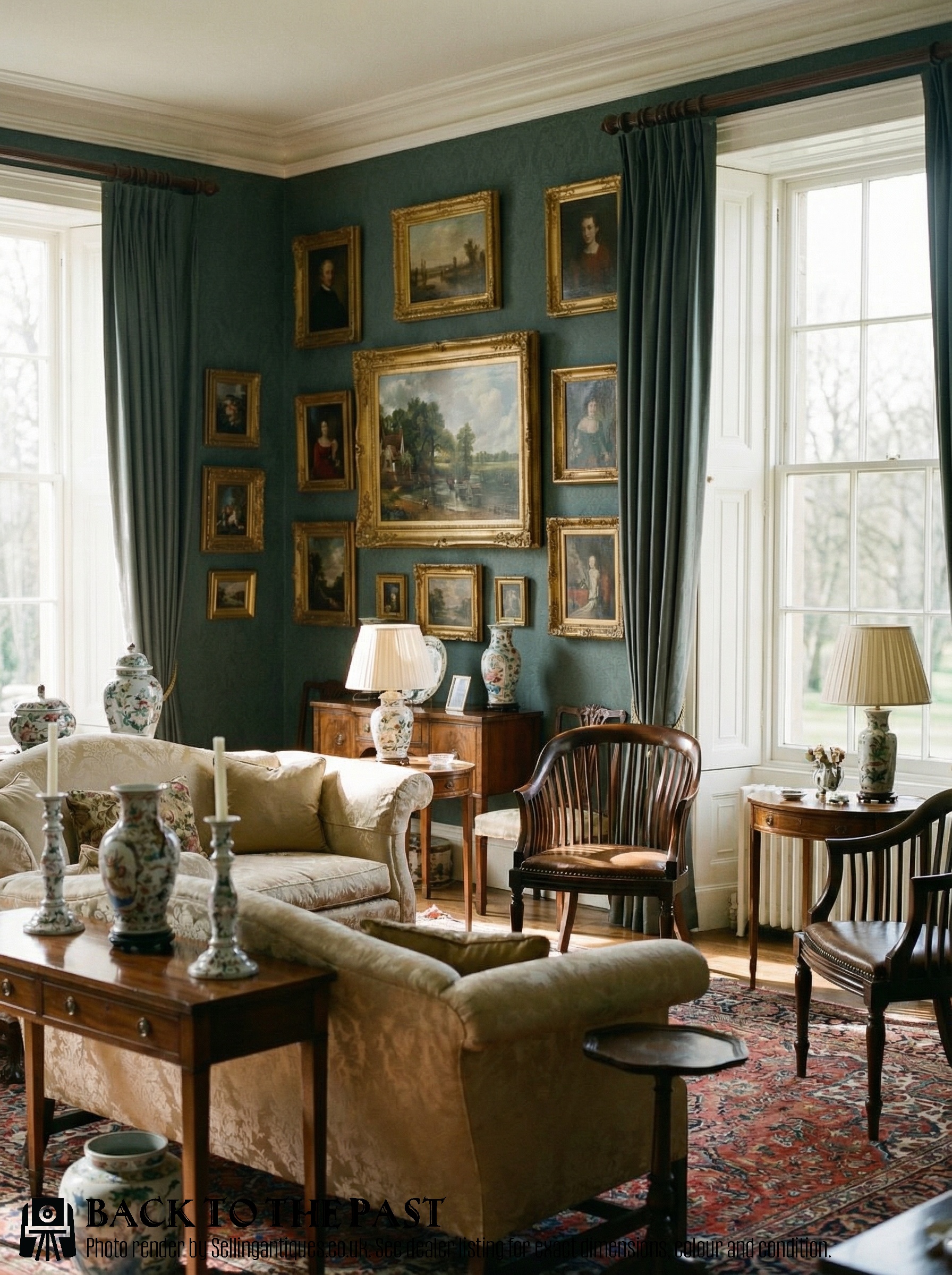
Barrel Back Armchair
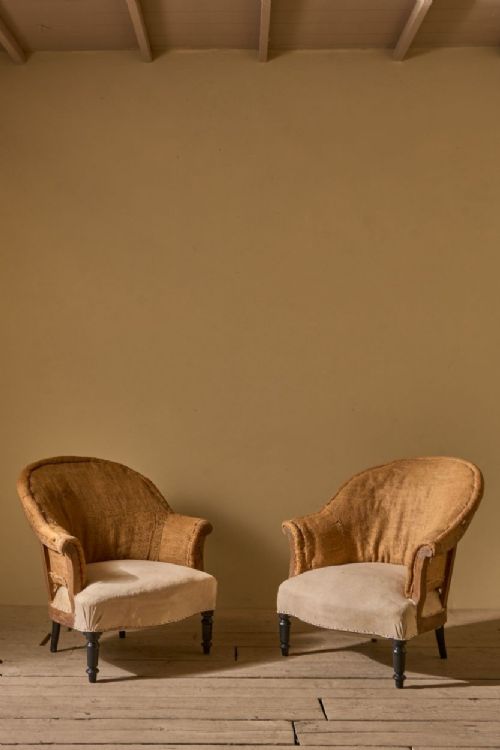
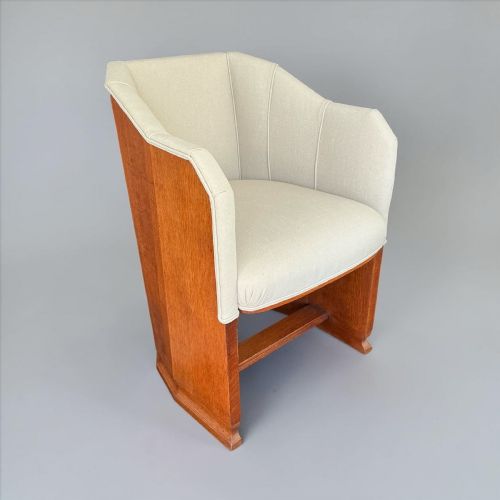
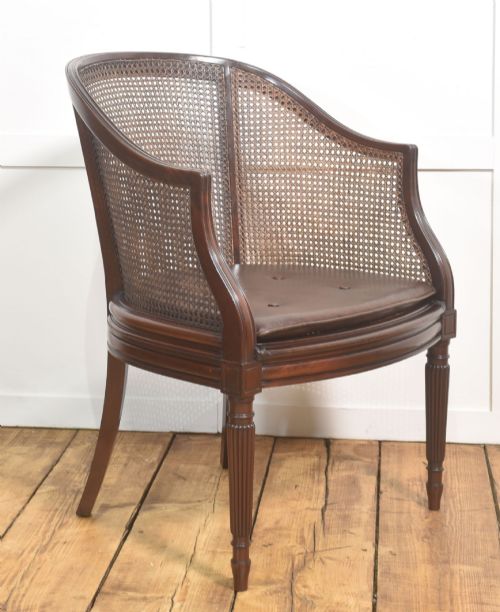
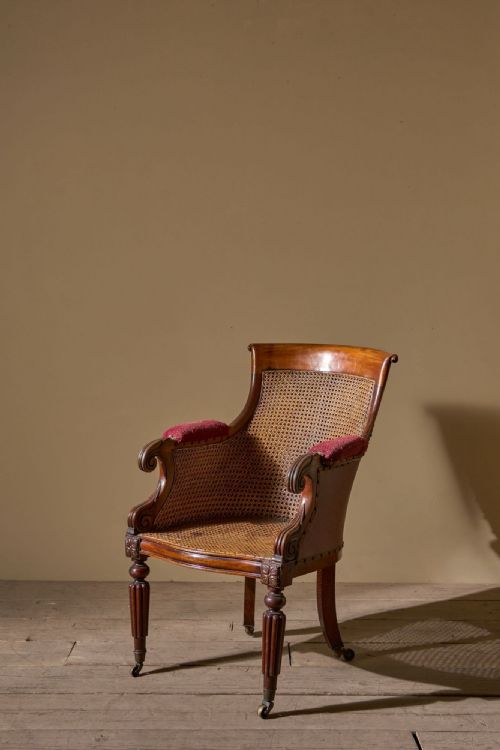
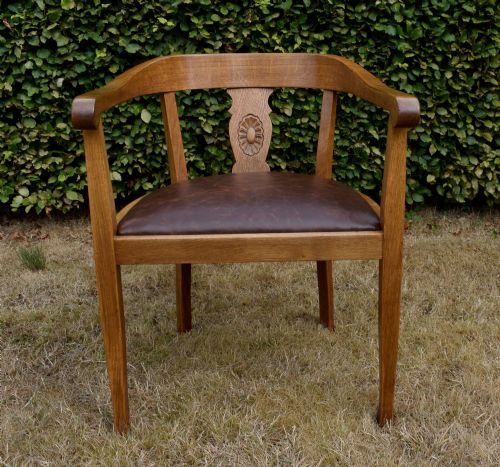
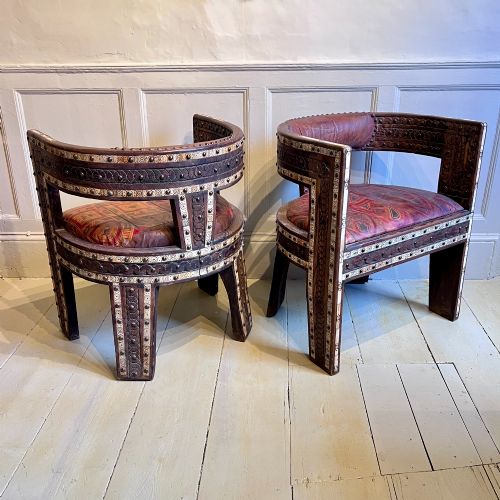
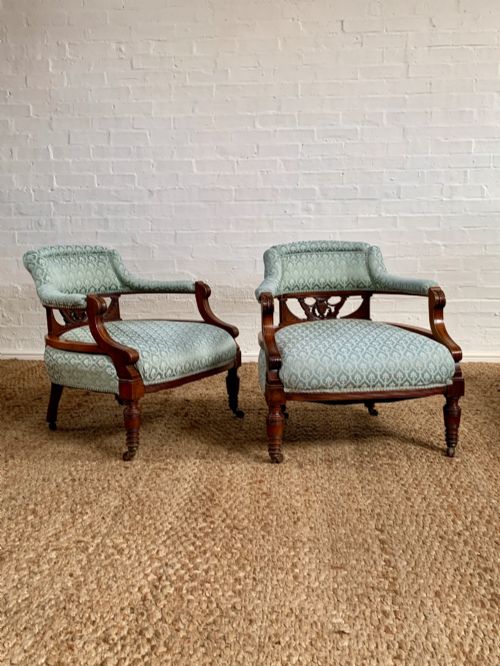
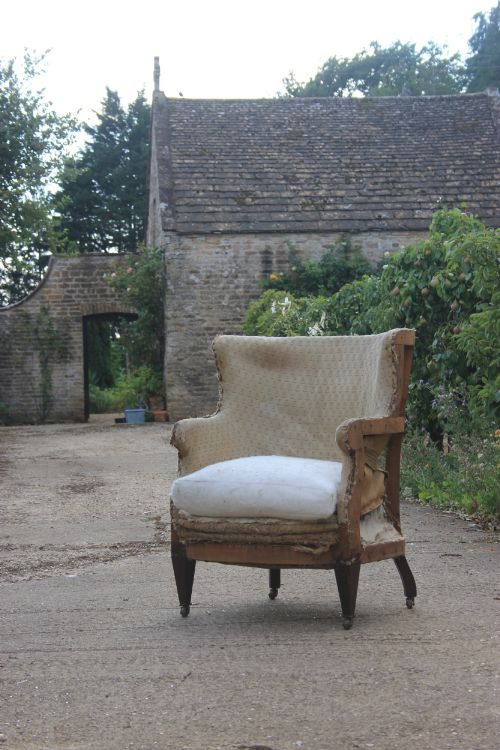
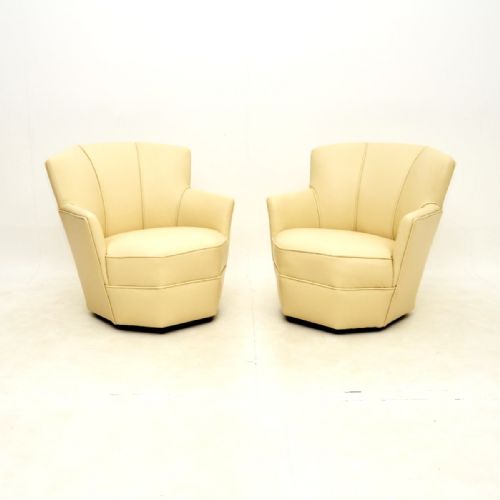
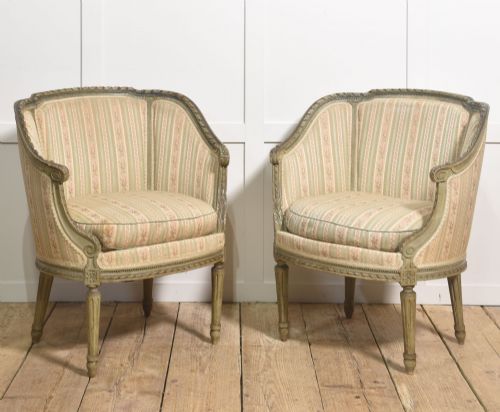
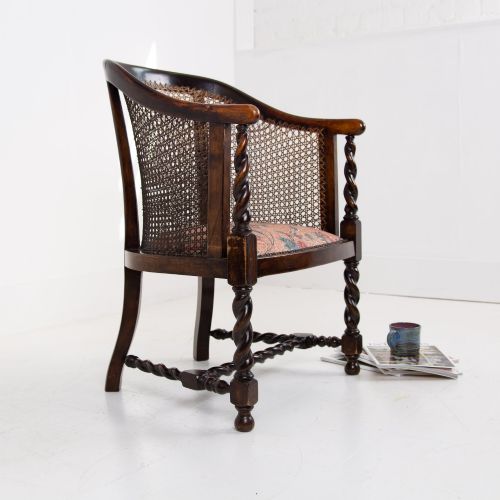
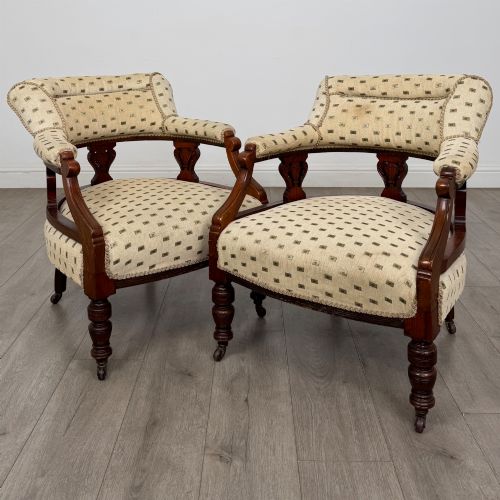
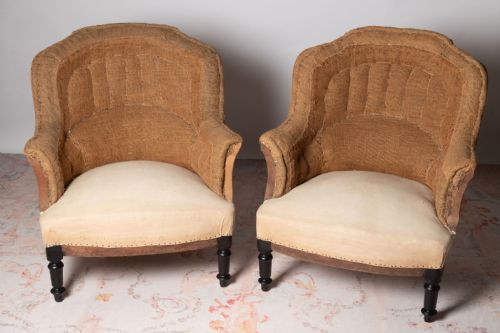
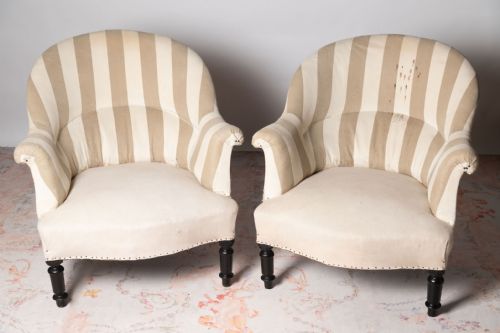
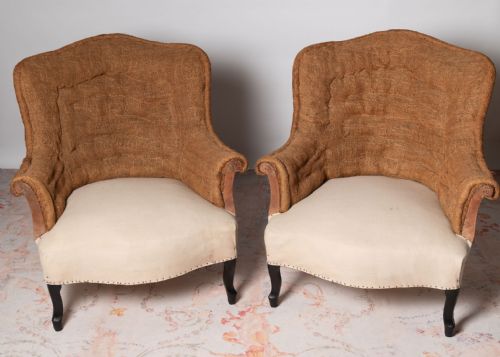
A barrel back armchair brings a continuous, semicircular upholstered back that flows directly into low arms, creating a protective enclosure designed to keep draughts away from the sitter. This specific seating form appears across multiple eras in the evidence, from substantial Georgian examples to lighter Edwardian interpretations.
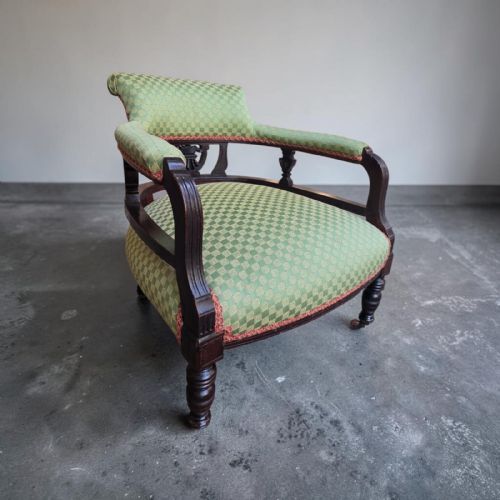
The versions most commonly met on this page span the Victorian and Edwardian periods alongside robust early twentieth century iterations. Makers built these chairs in mahogany, walnut, and oak, often mounting them on sturdy legs or castors to aid movement across heavy carpets.
Beyond standard domestic seating, the archives show specialised iterations including library chairs, porter chairs, and low parlour forms. These variations reflect how different rooms demanded specific heights and depths of enclosure for reading, resting, or conversation.
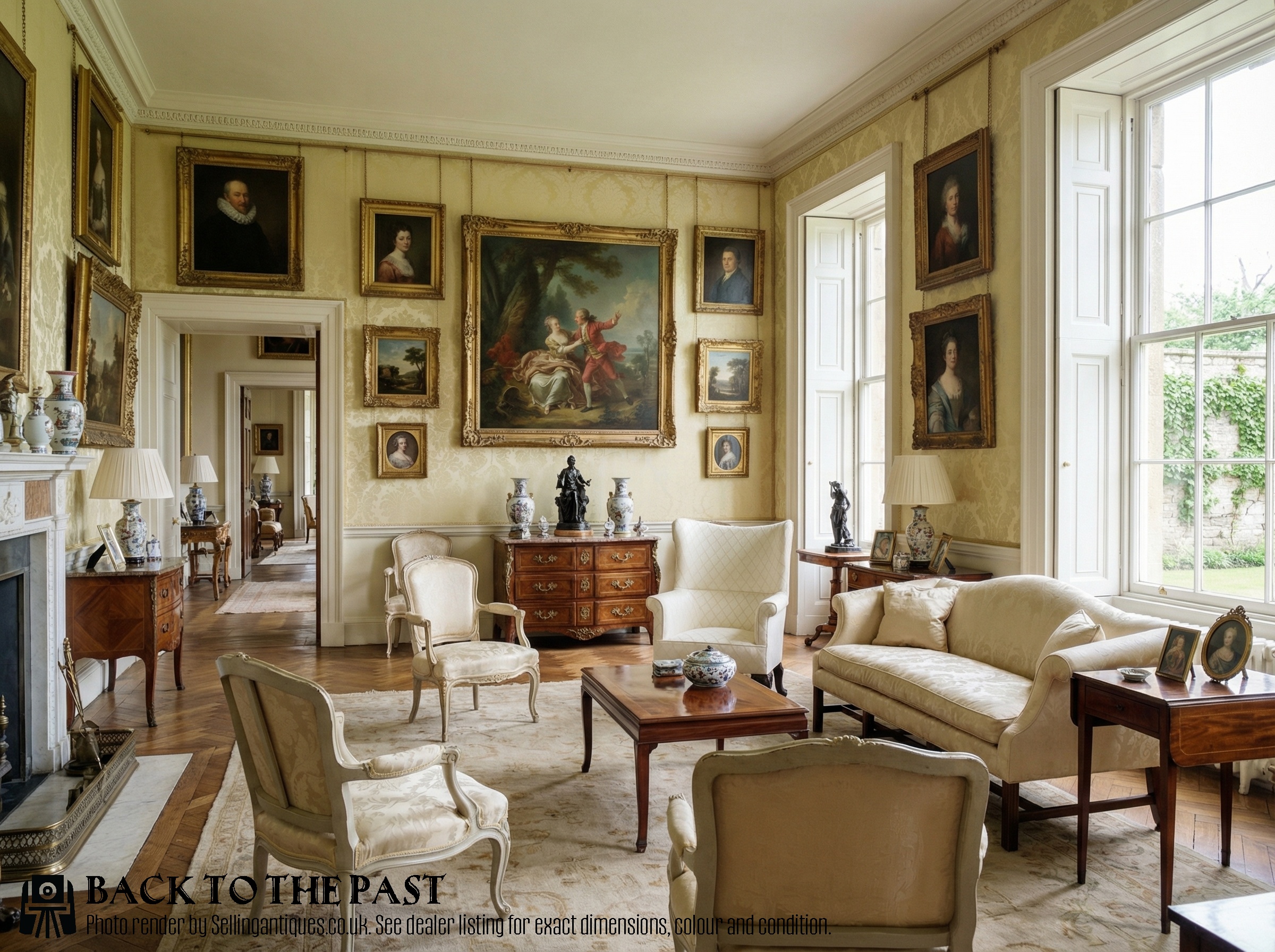
How they were made
Traditional construction relies on a sturdy hardwood frame, typically mahogany, oak, or walnut, shaped to form the signature curved tub or barrel enclosure. Joinery involves precise tenons and dowels to withstand the outward pressure exerted by the curved backrest over decades of use.
Upholstery forms the primary tactile element, utilising traditional stuffing materials beneath outer coverings of leather, velvet, hessian, or woven fabric. Brass tacks frequently secure the edges of the hide or textile directly to the wooden frame, adding a clean structural line.
Barrel Back Armchair Retail Price Guide 2026
Typical asking prices for barrel back armchair among the pieces listed under this phrase on Sellingantiques today, from the lower quarter to the upper quarter. They describe what is for sale here now, not the wider market.
Listings feature barrel back armchairs spanning the Georgian, Victorian, Edwardian, and Art Deco periods, constructed in mahogany, oak, walnut, leather, and velvet.
What varies in quality
The distinction between standard examples and the finest pieces lies in the fluidity of the timber frame's curve and the integrity of the underlying woodwork. Superior pieces maintain a balanced proportion where the height of the enclosed back matches the generosity of the seat without appearing clumsy.
Material selection dictates the upper tier of craftsmanship, particularly where makers employed dense, richly grained mahogany or hand-tooled leather that ages gracefully. The quality of the upholstery execution, from the tension of the springs to the neatness of the stitching, determines the lasting comfort of the chair.
Hary and Lou Epstein
The Barrel Back Armchair Glossary
- Tub chair
- A seating form characterised by a low, rounded back that wraps continuously around the sides, similar in profile to a barrel back armchair. This shape provides enclosed comfort by blocking side breezes.
- Wing armchairs
- Seating featuring projecting side panels attached to the backrest designed to trap heat and shield the sitter from draughts. They frequently appear in leather across the nineteenth century records.
- Fauteuils
- An open-framed French armchair with upholstered seat and backrests, distinct from the fully enclosed barrel forms. These emerge in revival styles such as Louis XV and Louis XVI.
- Ormolu
- Gilt bronze mounts applied to furniture for decorative enrichment, commonly seen on nineteenth century revival pieces. This technique adds metallic highlights to polished wooden surfaces.
- Hessian
- A coarse woven fabric typically utilised as a foundational layer for upholstery webbing and stuffing within traditional chair construction. It provides hidden structural support beneath outer textiles.
Barrel Back Armchair: Frequently Asked Questions
How do I style a barrel back armchair?
Place the chair in a corner or beside a fireplace where its curved silhouette can function as a standalone feature. Pairing it with a low side table creates a dedicated reading nook.
Consider the surrounding textures in your room, balancing leather upholstery with softer wool rugs or wooden furniture. The compact footprint of these chairs allows them to fit comfortably into bedrooms and reception rooms alike.
Are these chairs comfortable for daily use?
The deep seat and enclosed sides offer exceptional physical support, making these chairs well suited for extended periods of reading or relaxing. Many period examples provide robust internal springing.
Comfort levels depend on the condition of the internal padding and upholstery webbing. Pieces that retain firm support or have undergone careful re-upholstery deliver a reliable sit for modern living.
How can I tell a Georgian chair from a Victorian one?
Georgian pieces often display restrained lines, dense mahogany timber, and subtle carving on the legs, reflecting eighteenth century proportion. Victorian examples tend to be heavier, sometimes incorporating deeper buttoning or elaborate show-wood.
Examining the underside, the type of screws, and the wear on the wood helps indicate the manufacturing era. Comparing construction methods alongside regional styles clarifies the age of the piece.