



Baroque Giltwood Chairs
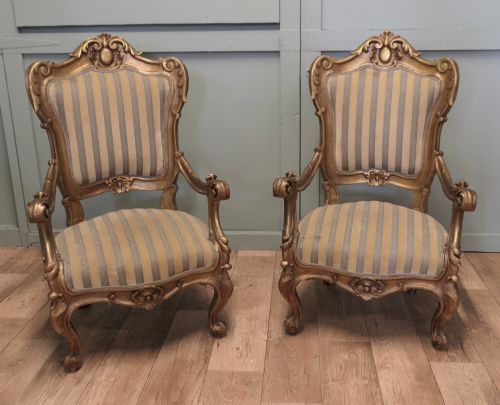
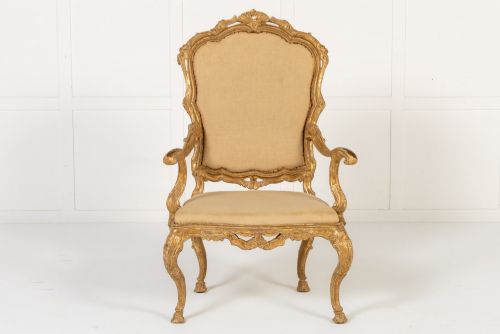
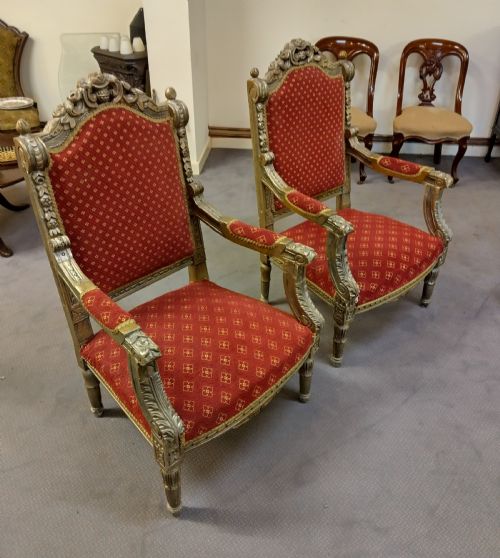
Baroque giltwood chairs are substantial seating pieces defined by gold-finished carved timber and grand proportions, offering both historical weight and dramatic presence.
Baroque Giltwood Chairs
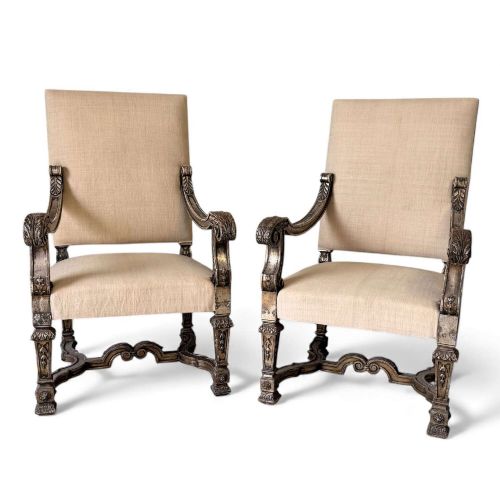
Baroque giltwood chairs comprise large-scale seating forms originating primarily across the 18th and 19th centuries, appearing frequently as matching pairs of armchairs or throne armchairs. The selection also includes Continental hall chairs and Savonarola chair forms alongside standard armchair variants.
Italian and French regional influences dominate the surviving examples, often executed in revived baroque or rococo styles. These pieces combine commanding dimensions with elaborate carved wooden frames designed to anchor a room.
Buyers seeking baroque giltwood chairs encounter forms ranging from high-backed throne armchairs to lower hall seating. The core of the inventory relies on 19th-century interpretations and earlier 18th-century Italian craftsmanship.
How they were made
Artisans carved structural timber frames directly from woods such as timber, applying layers of gesso to create a smooth surface for gilding. This foundational gesso layer received either gold leaf or silver leaf finishes to produce the characteristic metallic lustre.
Upholstery completed the chairs, utilising traditional materials including linen and various decorative fabrics secured to the carved frames. The interaction between the metallic gilt finish and the textile seat defines the physical construction of these pieces.
Baroque Giltwood Chairs Retail Price Guide 2026
Typical asking prices for baroque giltwood chairs among the pieces listed under this phrase on Sellingantiques today, from the lower quarter to the upper quarter. They describe what is for sale here now, not the wider market.
Even the folding Savonarola chairs manage to look like they demand a small crown before you sit down.
What varies in quality
The sophistication of the carved wood details dictates much of the distinction between individual chairs. Well-executed carving displays crisp relief and deep undercut work on the frames, whereas lesser examples present softer, shallower definition.
The application and survival of the gilt or silver leaf finish also influence the overall character of the piece. Intact gesso grounds and consistent metal leaf layers separate superior examples from those with heavy surface loss or later repainting.
The Baroque Giltwood Chairs Glossary
- Giltwood
- Timber coated with gold leaf over a prepared gesso ground. This finish provides the bright metallic surface characteristic of formal antique seating.
- Gesso
- A plaster mixture applied to wood frames to create a smooth base for gilding. It allows carvers to achieve sharp decorative details before metal leaf application.
- Throne armchair
- A tall, imposing chair designed with high backs and prominent armrests. Such pieces denote elevated status and grand interior schemes.
- Savonarola chair
- A folding armchair constructed from multiple intersecting wooden curves. This form references Renaissance design traditions.
- Silver leaf
- A thin metallic sheet composed of silver applied to furniture surfaces. It offers a cooler reflective tone compared to traditional gold leaf.
Baroque Giltwood Chairs: Frequently Asked Questions
How do I distinguish 18th and 19th-century pieces?
Eighteenth-century examples typically display hand-carved nuances and patination inherent to their period of origin. Nineteenth-century pieces often reflect revivalist movements with heavier proportions and machine-assisted preparation.
Examining the construction joints and the wear patterns on the gesso layer helps clarify the manufacturing era.
Are these chairs comfortable for daily use?
Most surviving examples prioritize formal presence and upright posture over modern ergonomic lounging. The rigid wooden frames and traditional upholstery fillings create a firm sit.
They function best for occasional seating or as decorative room elements rather than primary television chairs.
How do I care for giltwood surfaces?
Giltwood requires dry dusting with a soft brush to prevent the delicate metal leaf from abrading. Moisture and harsh cleaning agents damage both the gilding and the underlying gesso.
Keeping these chairs away from direct sunlight and steady heat sources preserves the stability of the wood and the finish.