





Italian Throne Chairs
Italian throne chairs are commanding seating forms defined by carved timber and high backs, built to project authority in grand domestic interiors.
Italian Throne Chairs
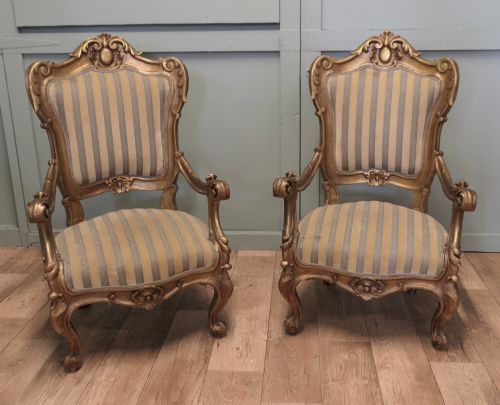
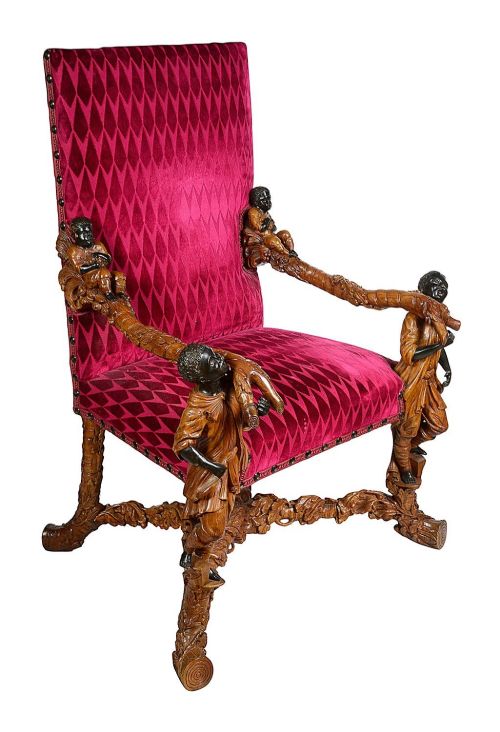
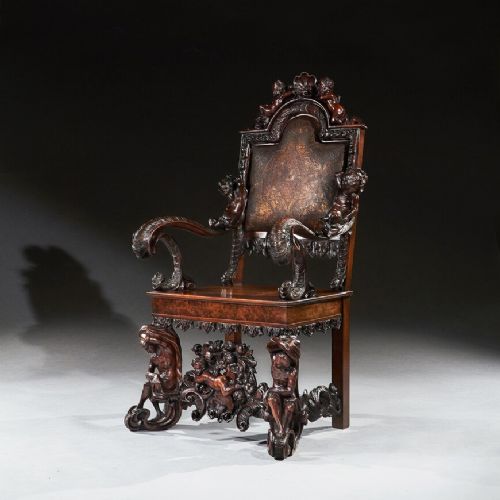
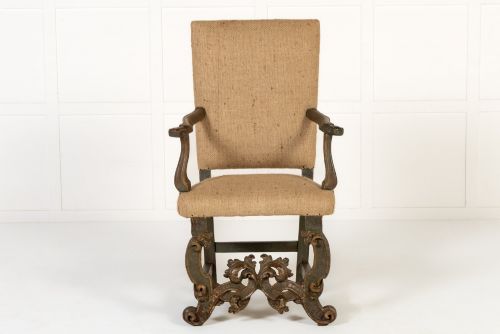
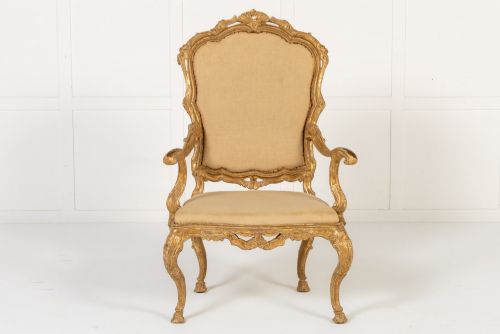
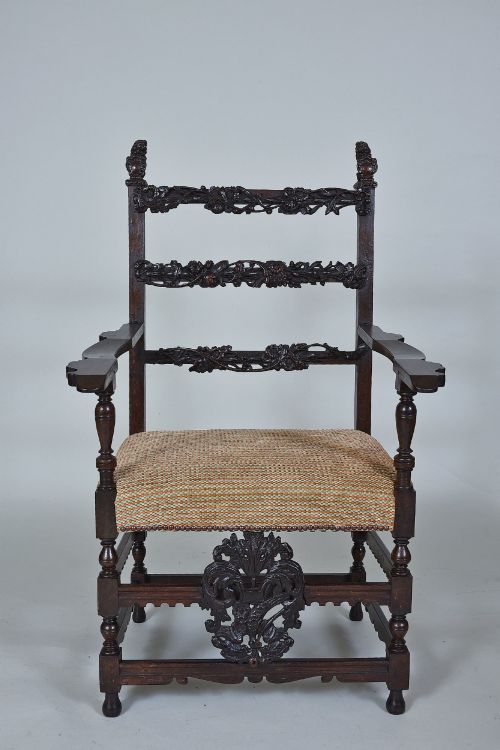
When you search for Italian throne chairs, you encounter large scale armchairs spanning the seventeenth, eighteenth, and nineteenth centuries. These commanding seats are designed with high upright backs and substantial armrests intended for formal rooms.
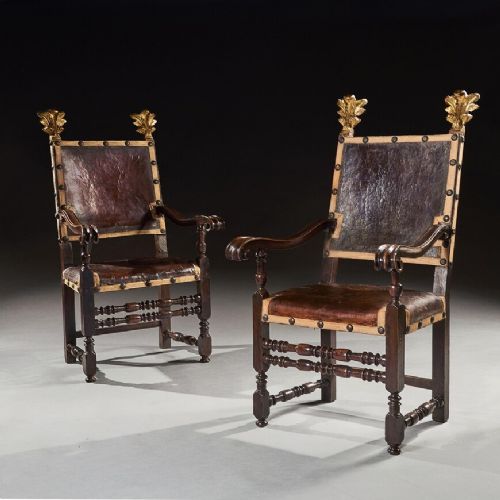
The pieces on this page heavily feature eighteenth century and nineteenth century examples alongside earlier seventeenth century survivals. Forms range from noble audience armchairs to revival pieces inspired by earlier baroque and rococo models.
Venetian baroque and Italian renaissance revival styles dominate the selection. These seating forms often appear in pairs or as individual grand armchairs rather than larger suites.
Materials and Construction
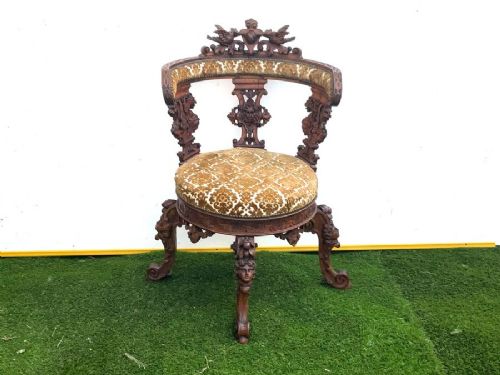
Walnut serves as the primary structural timber across these listings, providing the dense foundation required for deep relief carving. Carved wood construction allows for elaborate scrollwork, figures, and structural framing.
Giltwood, gold leaf, and parcel gilt treatments are applied directly to the timber frames to create reflective surfaces. Upholstery materials include leather, hessian, and brass elements to secure the coverings.
Italian Throne Chairs Retail Price Guide 2026
Typical asking prices for italian throne chairs among the pieces listed under this phrase on Sellingantiques today, from the lower quarter to the upper quarter. They describe what is for sale here now, not the wider market.
Several armchairs come in matched pairs, perfect for nobles who refused to sit alone.
Assessing Quality and Execution
The depth and crispness of the hand carving separate standard frames from exhibition quality work. Master carvers manipulate walnut and apply giltwood with precise control over musculature, foliage, and structural symmetry.
Scale dictates presence, with large scale armchairs commanding greater visual weight in a room. The integration of original leather or period gilding enhances the historical integrity of the piece.
Andrea Brustolon
The Italian Throne Chairs Glossary
- Parcel Gilt
- Partial gilding applied to specific areas of a wooden frame to highlight carved details against dark walnut. This technique creates contrast between the reflective gold leaf and the exposed wood.
- Giltwood
- Timber coated with a thin layer of gold leaf over a prepared base. It provides a brilliant metallic finish common on baroque and rococo seating.
- Baroque Revival
- A nineteenth century stylistic movement that resurrects the dramatic curves, heavy carving, and grandeur of the seventeenth century. Pieces from this era copy earlier forms with academic precision.
- Audience Armchair
- A high backed seating form designed for receiving visitors in a noble household. These chairs elevate the sitter to project status and authority.
Italian Throne Chairs: Frequently Asked Questions
What is an Italian throne chair?
An Italian throne chair is a high backed, heavily carved armchair originating from Italy between the seventeenth and nineteenth centuries. These pieces were built for noble use in large halls and audience rooms.
They rely on substantial walnut frames and often feature giltwood or leather upholstery. Their imposing scale separates them from standard domestic seating.
Where were these chairs placed?
These chairs stood in the principal reception rooms, galleries, and audience chambers of Italian palazzos. Their elevated backs and imposing frames denoted the seat of the head of the household or an honoured guest.
Today, they function well as anchor pieces in large living rooms, studies, or entrance halls where their scale can be appreciated.
How do I date an Italian armchair?
Dating relies on stylistic shifts from the severe architectural lines of the seventeenth century to the flamboyant curves of eighteenth century rococo. Nineteenth century revival pieces often combine these elements with heavier carving techniques.
Wood type, patination, and the application of gold leaf or parcel gilt provide further clues to the period of manufacture.
Are these chairs comfortable?
Italian throne chairs prioritize architectural presence and status over modern lounging comfort. Their upright wooden backs and firm squabs encourage an erect posture.
Upholstery options like leather or hessian provide a traditional sitting surface that complements the rigid timber frame.