
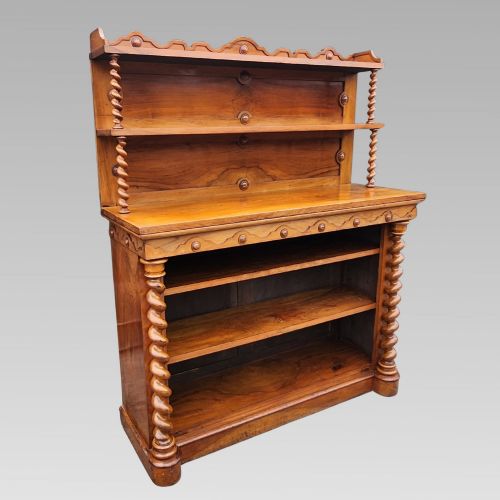


Barley Twist Display Shelf
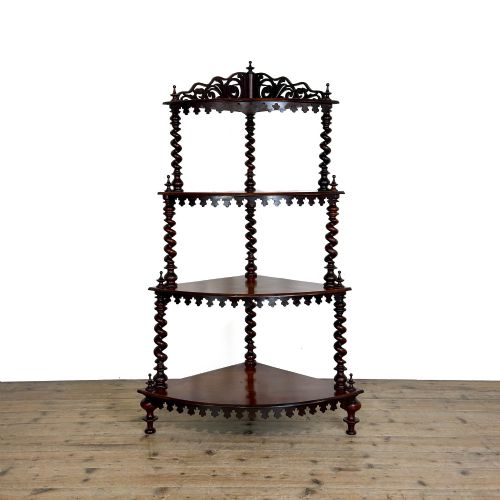
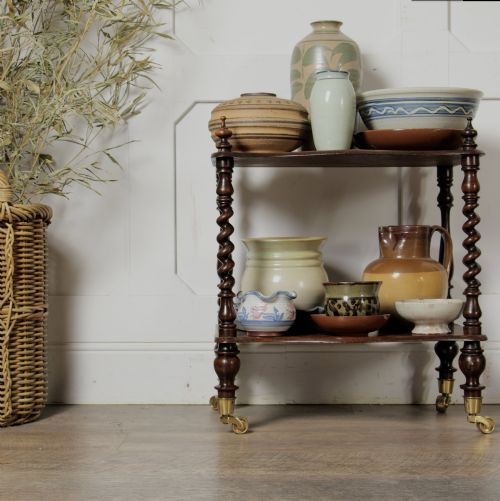
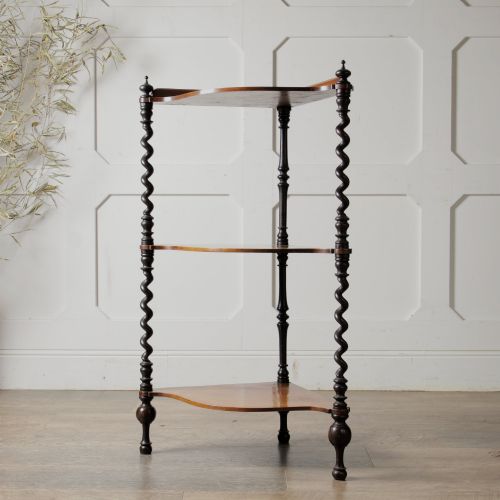
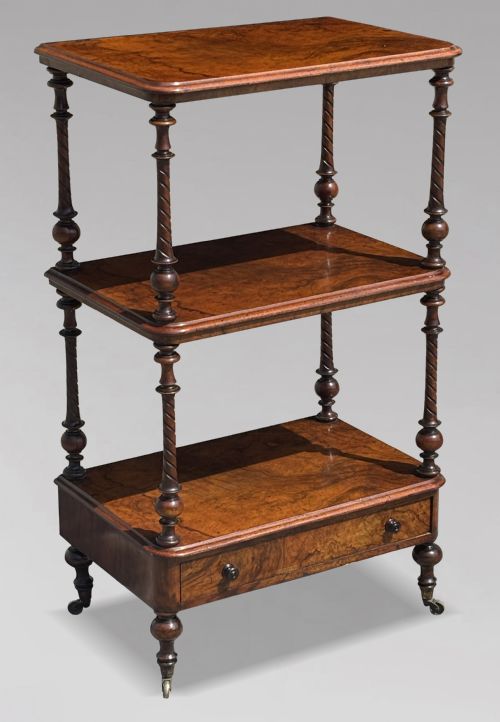
A barley twist display shelf brings tiered timber and distinctive turned columns together to hold books and ornaments in any room.
Barley Twist Display Shelf
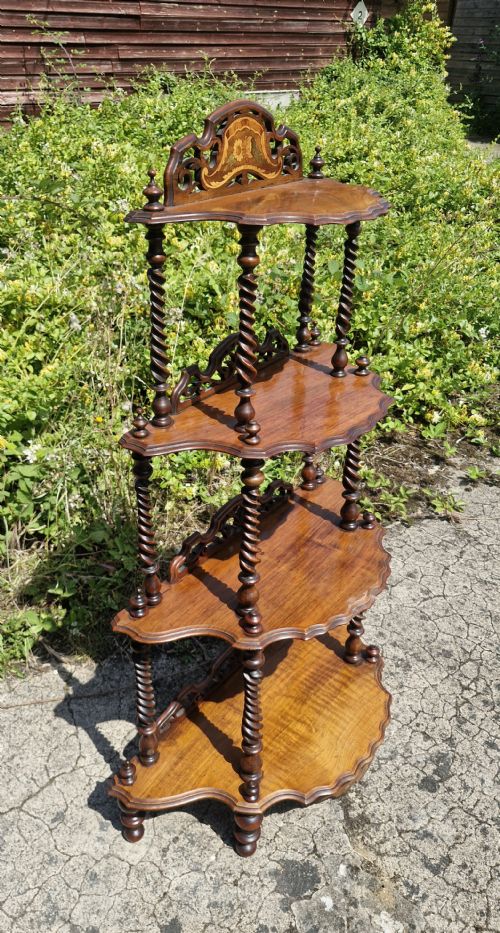
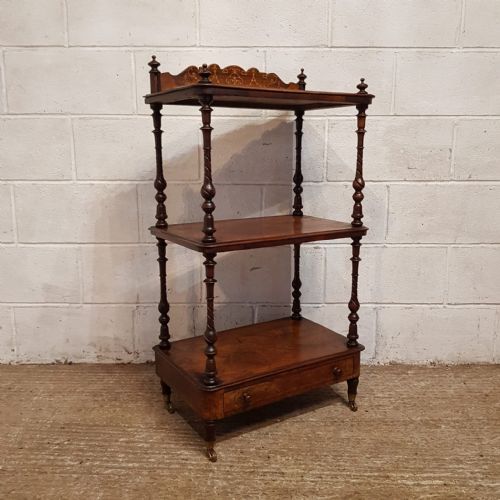
A barley twist display shelf often takes the form of a whatnot, etagere, or multi-tiered stand designed to showcase small objects and books. These pieces trace back primarily to the Victorian era and the nineteenth century, utilising vertical tiers supported by turned wooden columns.
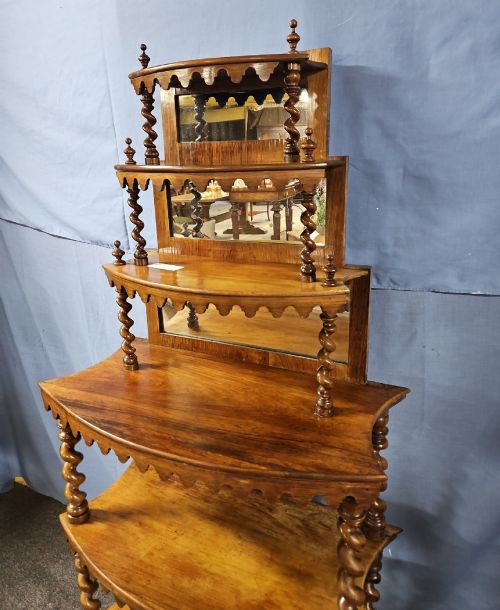
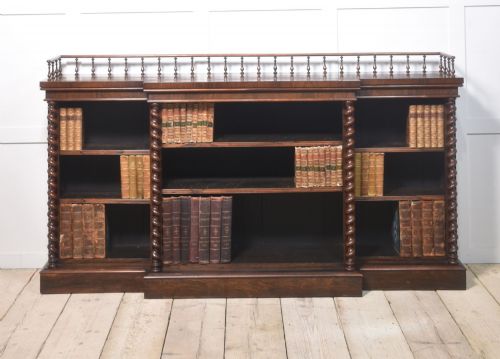
Buyers seeking this phrase encounter corner units, freestanding multi-tier stands, and pieces incorporating drawers or side cabinets. Walnut, rosewood, and mahogany form the structural core of these tiered display units, accompanied by oak and padouk.
Materials and construction methods
Cabinet makers built these tiered stands using dense hardwoods including walnut, rosewood, mahogany, and oak, often selecting burr walnut veneers for decorative surfaces. Selected pieces incorporate glass, marble, brass, and wood inlay to enrich the display tiers.
The characteristic spiral columns demand precise woodturning technique to achieve uniform hollow or solid twist profiles across multiple tiers. Joinery methods connect these turned supports to horizontal shelves, occasionally integrating single drawers or corner configurations.
Makers occasionally turned hollow spiral columns on these stands, achieving lightness without losing the strength needed to hold porcelain.
Distinctions in quality and execution
Quality rests upon the selection of timber veneers, such as burr walnut or figured mahogany, and the crispness of the turned spiral columns. Better examples display careful jointing across multiple tiers, balanced proportions, and integrated details like fine wood inlay or brass fittings.
Simpler regional or later pieces rely on plain timber without decorative grain or inlay, showing less complexity in the turning work of the shelf supports. The presence of additional functional elements, such as drawers or corner adaptations, separates standard units from more ambitious display pieces.
The Barley Twist Display Shelf Glossary
- Whatnot
- An open multi-tiered piece of furniture designed for displaying ornaments, books, or small objects. These tiered stands emerged strongly during the nineteenth century.
- Etagere
- A piece of furniture consisting of a set of open shelves for displaying small articles. The form shares close similarities with the whatnot and corner display stand.
- Barley twist
- A spiral turning resembling a twisted barley sugar stick, used extensively as a decorative support column on furniture legs and uprights. This form appears frequently on nineteenth-century stands.
- Burr walnut
- A prized timber veneer taken from the warted growths of walnut trees, displaying complex and swirling grain patterns. Cabinet makers utilised this material for high-status Victorian display furniture.
- Canterbury
- A low stand traditionally fitted with divisions for holding sheet music, books, or papers, sometimes combined with display tiers above. Certain Victorian examples integrate this compartment form into the lower section of a whatnot.
Barley Twist Display Shelf: Frequently Asked Questions
What is a barley twist display shelf?
A barley twist display shelf is a multi-tiered piece of furniture featuring spiral-turned wooden columns that support horizontal surfaces for ornaments and books.
These pieces typically date from the Victorian period and appear as freestanding stands, corner units, or etageres.
How were these shelves used originally?
Victorian households utilised these tiered stands in parlours and drawing rooms to display collections of small ornaments, ceramics, and books.
The open design allowed decorative objects to be viewed from multiple angles within the room.
What woods were used for these shelves?
Cabinet makers constructed these display pieces using rich hardwoods including walnut, burr walnut, rosewood, mahogany, and oak.
Finer examples occasionally incorporate exotic timbers like padouk alongside decorative elements of brass, glass, and wood inlay.