


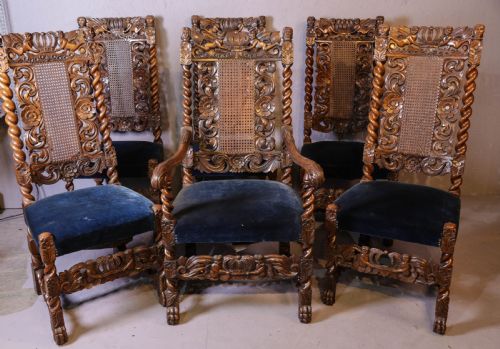


Barley Twist Dining Chairs
Barley twist dining chairs bring centuries of turned wooden elegance and robust seating to the modern dining room.
Barley Twist Dining Chairs
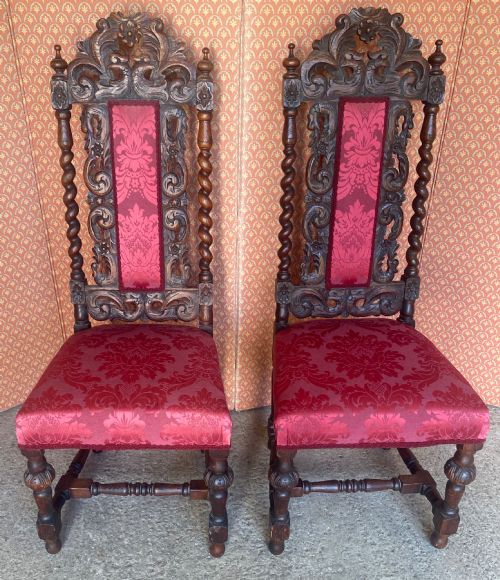
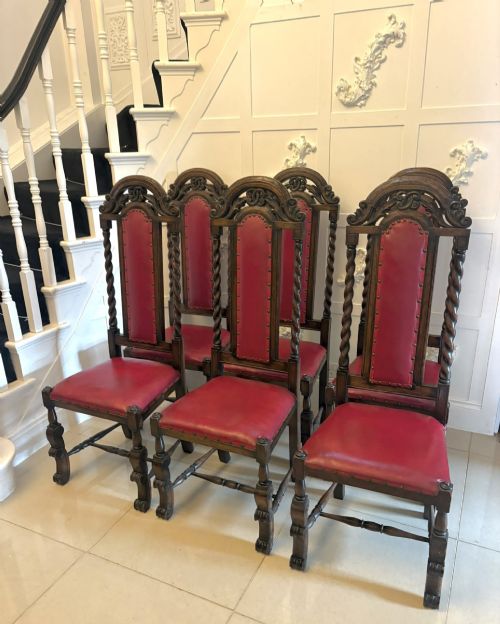
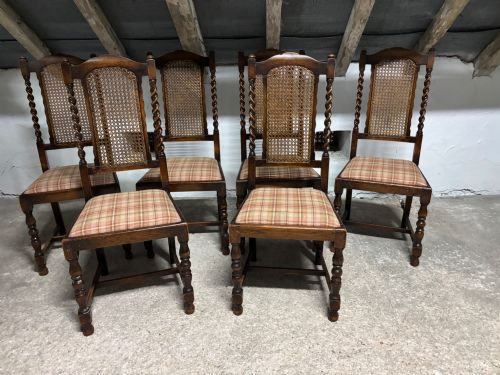
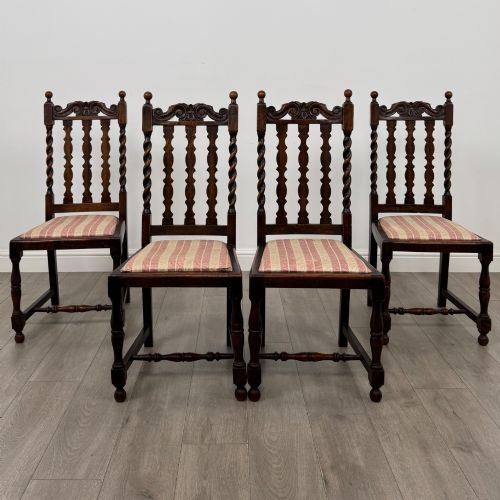
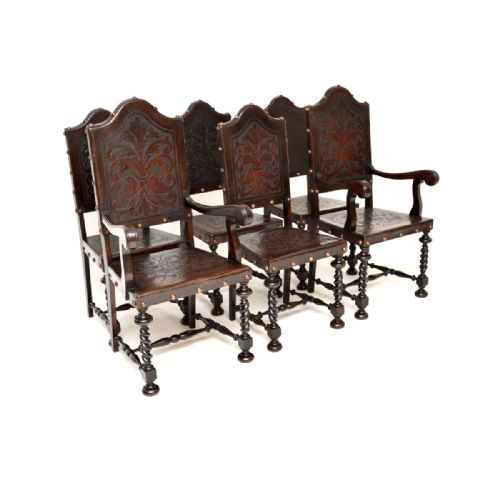
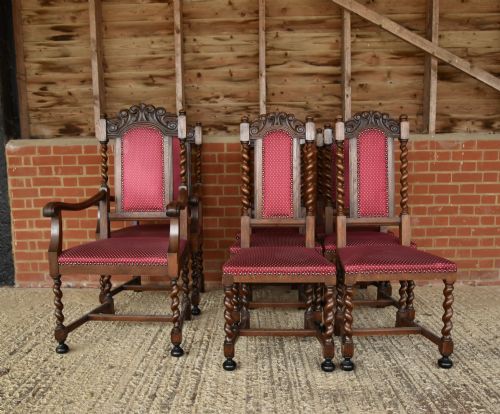
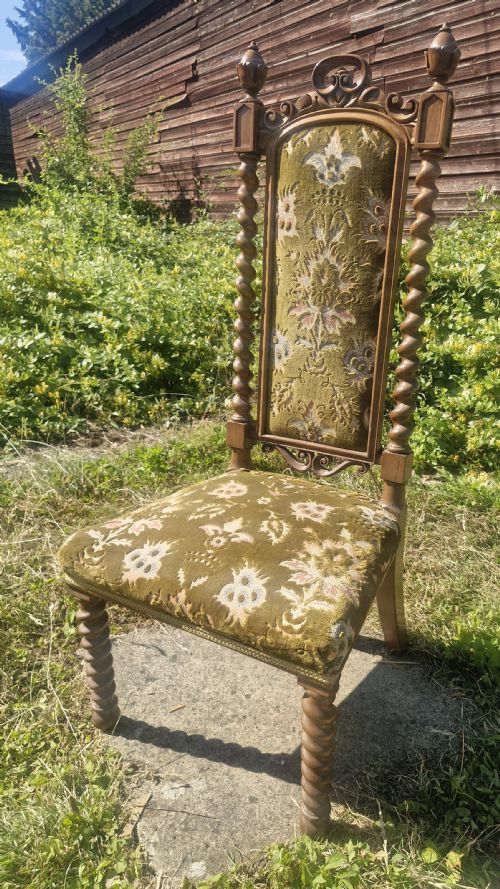
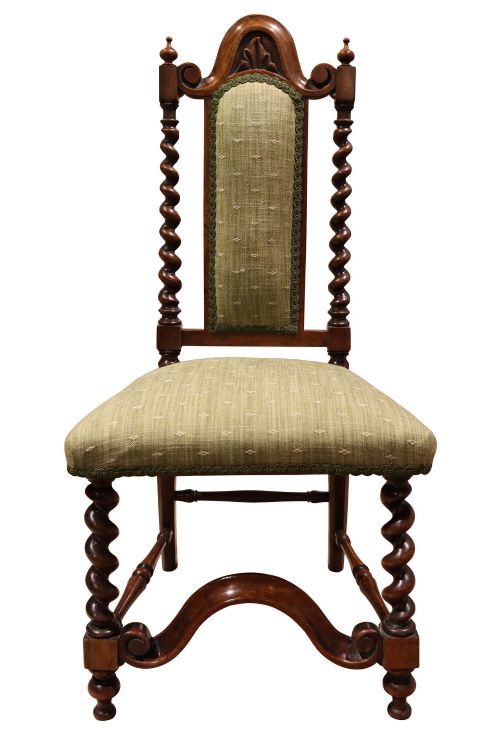
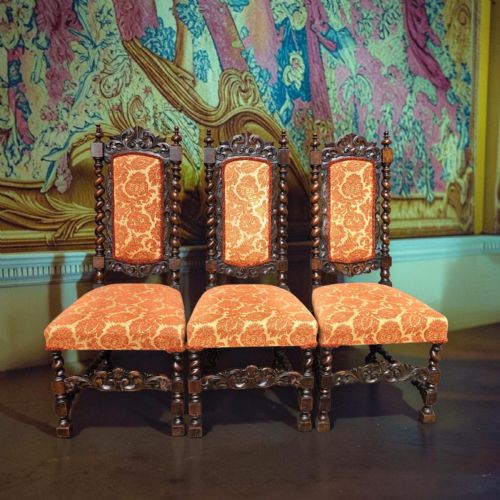
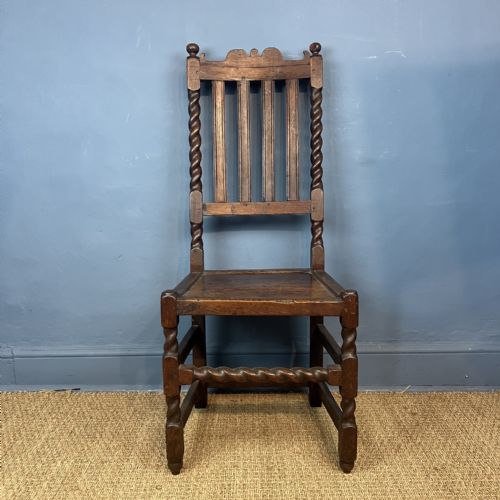
Barley twist dining chairs encompass seating built with spiral turned wooden legs, uprights, or stretchers, drawing heavily on seventeenth century furniture traditions. A buyer searching this phrase encounters everything from sturdy oak Edwardian sets to nineteenth century Victorian revival pieces and earlier walnut models. Dining chairs, carver armchairs, and side chairs dominate the selections available, frequently appearing in matched sets of four, six, or eight.
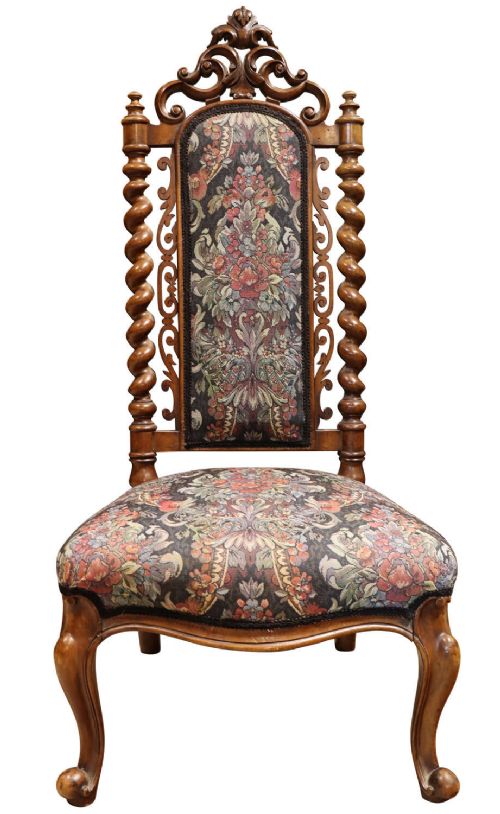
The aesthetic bridges several revival styles, most notably Jacobean, Carolean, and Victorian Gothic. Many examples rely on solid oak frameworks, while walnut and ash also appear across the historical periods represented. The turning technique itself creates a sense of movement and architectural depth that distinguishes these seats from plain turned or straight legged furniture.
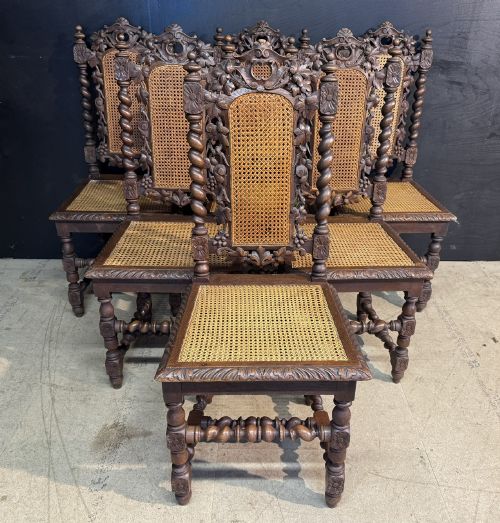
Most pieces met on this page date from the nineteenth and early twentieth centuries, reflecting a sustained Victorian and Edwardian enthusiasm for seventeenth century design motifs. Buyers find both high backed formal dining seats and more rustic country house variations fitted with cane, leather, or upholstered pads. This mix allows for integration into both traditional interiors and more eclectic contemporary spaces.
Materials and turning techniques
Makers relied primarily on dense hardwoods like oak, walnut, and ash to construct these frames, ensuring the turned spirals could support structural weight without splitting. Oak dominates the record, frequently exhibiting deep grain patterns enhanced by traditional polishing or waxing methods. Walnut and rosewood appear in finer Victorian models, offering a smoother surface texture and darker natural tones.
The characteristic spiral columns were produced using lathe turning combined with hand chiselling or specialised cutting techniques to achieve the uniform twist. Joinery typically involved traditional mortise and tenon construction, often reinforced with wooden pegs or sturdy H stretchers between the legs. Upholstered elements utilised materials such as leather, tapestry, velvet, and cane, secured with brass tacks or woven directly into the wooden framework.
Barley Twist Dining Chairs Retail Price Guide 2026
Typical asking prices for barley twist dining chairs among the pieces listed under this phrase on Sellingantiques today, from the lower quarter to the upper quarter. They describe what is for sale here now, not the wider market.
The archive records complete dining suites featuring up to ten chairs alongside matching drawleaf tables.
Determinants of quality and craftsmanship
Quality rests significantly on the precision of the timber turning and the integrity of the underlying joinery. Superior examples display crisp, sharply carved spirals without excessive sanding that softens the profile. The choice of timber also dictates grade, with quarter sawn oak yielding superior durability and attractive medullary ray flecks.
Originality of components elevates a set, particularly when frames retain matching timber patination and genuine period upholstery materials like embossed leather or hand woven cane. Sets that remain complete without mismatched replacements command greater appreciation among collectors seeking historical consistency around the dining table.
Liberty & Co·Edwards and Roberts·Denby and Spinks Leeds
The Barley Twist Dining Chairs Glossary
- Barley twist
- A spiral turning resembling the stalk of barley, popular in seventeenth century furniture and revived during the Victorian and Edwardian eras. This decorative motif appears on legs, stretchers, and vertical back supports.
- Carver armchair
- A dining chair featuring arms, traditionally placed at the head of a dining table and paired with matching side chairs. These often share the same barley twist uprights and upholstery.
- Jacobean Revival
- A nineteenth century architectural and furniture style emulating the heavy carved oak aesthetic of the early seventeenth century. Pieces from this movement frequently incorporate dark finishes and prominent twist turnings.
- Cane
- Woven rattan material utilised for chair seats and backs, offering flexibility and lightness. It appears frequently in Edwardian and late nineteenth century dining seating.
- H stretcher
- A horizontal wooden brace connecting the legs of a chair in the shape of the letter H to provide structural rigidity. These stretchers frequently feature the same spiral turning as the primary legs.
Barley Twist Dining Chairs: Frequently Asked Questions
How do I care for antique oak chairs?
Maintain wooden surfaces by applying a traditional beeswax polish sparingly to preserve the natural lustre and protect the grain. Avoid placing antique seating near direct heat sources or in fluctuating humidity to prevent timber shrinkage.
Inspect the joinery periodically to ensure structural stability remains firm during daily use. Clean upholstered pads or leather gently with appropriate specialist conditioners rather than harsh chemical agents.
Can I mix these chairs with a modern table?
Pairing antique turned seating with a contemporary dining table creates a striking contrast that highlights the architectural detail of the spiral woodwork. The warm tones of oak and walnut complement minimalist glass, metal, or modern wooden surfaces effectively.
Ensure the seat height and arm clearance match the dimensions of the table apron for comfortable dining ergonomics. Selecting chairs with neutral upholstery helps bridge different historical periods within the same room scheme.
How do I distinguish Victorian revivals from seventeenth century originals?
Examine the tool marks, timber shrinkage patterns, and assembly methods visible beneath the seat and around the joints. Seventeenth century pieces often display hand sawn components and irregular pegging, whereas nineteenth century revivals show machine assistance and standardised construction.
Check the overall patination and wear distribution across the foot rails and handholds. Revival furniture manufactured during the Victorian and Edwardian periods possesses a distinct weight and finish that reflects nineteenth century workshop practices.
What is the difference between a side chair and a carver?
Side chairs are built without arms, designed to tuck neatly along the sides of a dining table. Their compact footprint allows more seats to fit comfortably around standard dining arrangements.
Carver armchairs include integrated armrests, offering a more commanding presence usually reserved for the heads of the table. They share matching barley twist legs and back designs to maintain visual harmony within a set.