
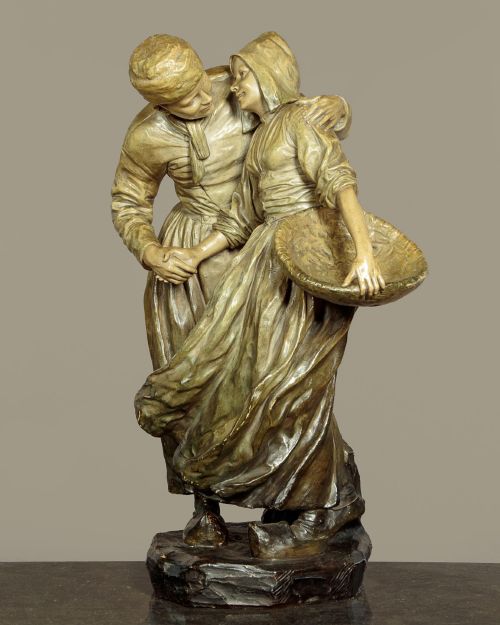


Austrian Art Pottery
Austrian art pottery brings sculptural elegance to a room, uniting flowing organic forms with vibrant glazes.
Austrian Art Pottery
When you search for Austrian art pottery, you encounter a distinctive array of decorative objects spanning the late nineteenth century and the early decades of the twentieth century. These pieces encompass sculptural figure groups, monumental vases, jardinieres, and ewers shaped during periods such as the Edwardian era and the late nineteenth century. Collectors find that the forms frequently merge classical revival motifs with the sinuous lines of the Art Nouveau style.
The objects on this page showcase a rich variety of ceramic types, including earthenware, terracotta, majolica, and porcelain. Vases and decorative plates dominate the selections, alongside figurative sculptures and spill vases that highlight the technical ambition of Central European kilns. Most items date from around 1890 to 1920, reflecting a fertile period of artistic design and manufacturing in Austria.
Materials and production
Potters utilised earthenware, terracotta, and porcelain as the primary bases for these sculptural and decorative works, often applying lustrous glazes to achieve rich surface textures. Majolica techniques allowed workshops to produce vibrant depictions of birds, sunflowers, and natural subjects with deep colour saturation.
Selected works received delicate highlights of gold leaf, enhancing the intricate contours of classical figures and ornate ewers. Model numbers and maker stamps were frequently impressed into the clay during shaping before the pieces underwent firing and glazing.
Listings feature works spanning the nineteenth century, Edwardian era, and the 1920s, constructed from earthenware, terracotta, porcelain, and glazed ceramic.
Judging the work
Quality in these ceramics rests upon the crispness of the modelling in figure groups and the fluidity of the organic lines in vases. Finer examples display meticulous attention to detail in facial expressions, drapery, and applied surface decoration without loss of definition.
The sophistication of the glaze application also distinguishes superior pieces, where smooth colour transitions and brilliant finishes elevate simple earthenware or terracotta into striking sculptural statements.
Goldscheider·Julius Dressler·Ernst Wahliss·Turn Vienna·Eichwald
The Austrian Art Pottery Glossary
- Terracotta
- A porous, fired clay body ranging in colour from light orange to deep red-brown. It served as a primary medium for large figurative sculptures and portrait groups.
- Majolica
- A type of earthenware coated with an opaque tin-glaze that provided a smooth canvas for painted decoration. It is frequently seen on nineteenth-century pieces depicting natural subjects.
- Earthenware
- Pottery fired at lower temperatures, resulting in a porous body that requires glazing to hold liquids. It forms the foundation for many sculptural vases and spill vases.
- Jardiniere
- A large ornamental pot designed to hold live plants or floral arrangements. These vessels often incorporate elaborate handles and moulded botanical motifs.
- Spill vase
- A slender vessel traditionally kept on a mantelpiece to hold wooden spills used for lighting candles or fires. They often take playful or figurative shapes in ceramic.
Austrian Art Pottery: Frequently Asked Questions
How do I identify Austrian art pottery?
Look for impressed model numbers, factory stamps, and distinct stylistic traits associated with the late nineteenth and early twentieth centuries. Many pieces display the characteristic flowing lines of Art Nouveau or the balanced proportions of Classical Revival design.
Materials range from heavy terracotta and earthenware to delicate porcelain and majolica. Examining the crispness of the modelled details and the richness of the glaze helps confirm the origin of the workshop.
Where should I display large vases?
Monumental vases and jardinieres require stable surfaces that can support their substantial weight and draw the eye as focal points in a room. Placing them on sturdy pedestals, low tables, or deep windowsills allows their sculptural forms and glazed surfaces to catch natural light.
Keep these ceramic works away from high-traffic walkways where accidental knocks might occur. Allowing adequate space around each piece lets the intricate details of the modelling be fully appreciated.
How do I care for glazed ceramics?
Dust these decorative objects gently with a soft, dry cloth to prevent the accumulation of particles within the recessed areas of the glaze. Avoid using liquid cleaners or chemical agents, which can harm porous earthenware or delicate gold leaf highlights.
Position the pieces away from direct, prolonged sunlight to protect painted surfaces and coloured glazes from fading over time. Handle figurative sculptures and ewers by their main bodies rather than fragile applied handles or rims.
What defines the Art Nouveau style here?
Art Nouveau pieces are characterised by asymmetrical compositions, whiplash curves, and motifs drawn from nature such as flowers, birds, and female figures with flowing hair. This aesthetic broke away from strict historical revivals to embrace organic movement.
In these ceramics, the styling influences both the overall silhouette of the vase and the detailed moulding of handles and borders. The resulting works feel dynamic and unified in their decorative intent.