

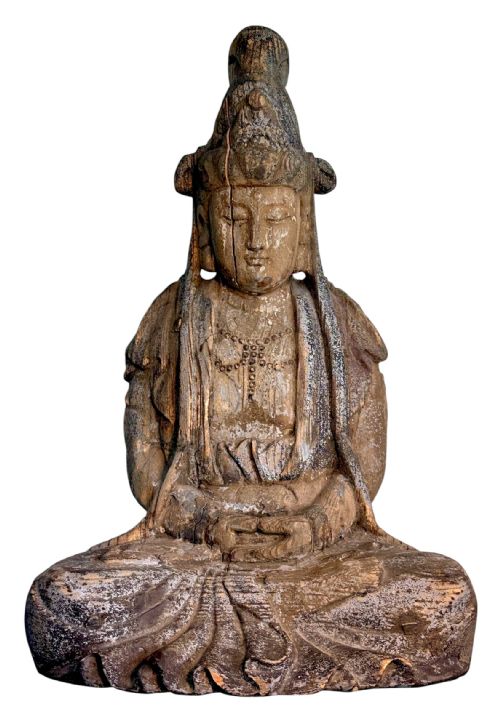


Asian Wood Carving Sculpture
These pieces of asian wood carving sculpture span diverse traditions, offering figurative representations and deities shaped by skilled hands over centuries.
Asian Wood Carving Sculpture
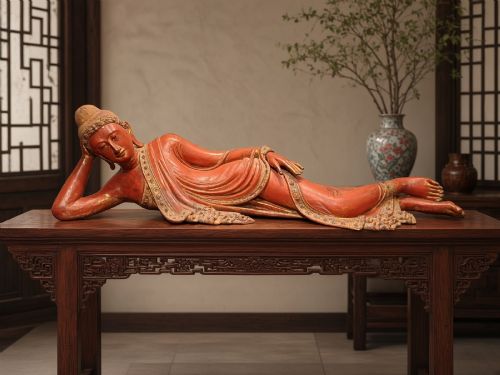
When searching for an asian wood carving sculpture, a buyer encounters a rich assortment of figurative works, mythological guardians, and religious icons. The selection ranges from monumental temple figures and reclining Buddhas to miniature netsuke and detailed okimono.
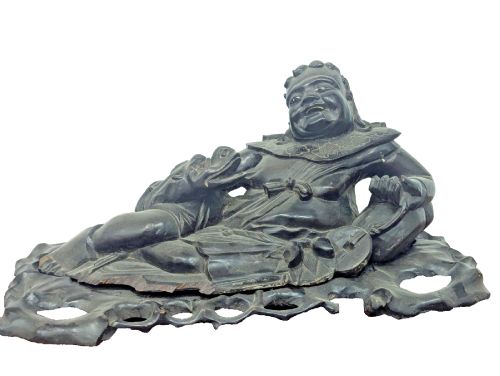
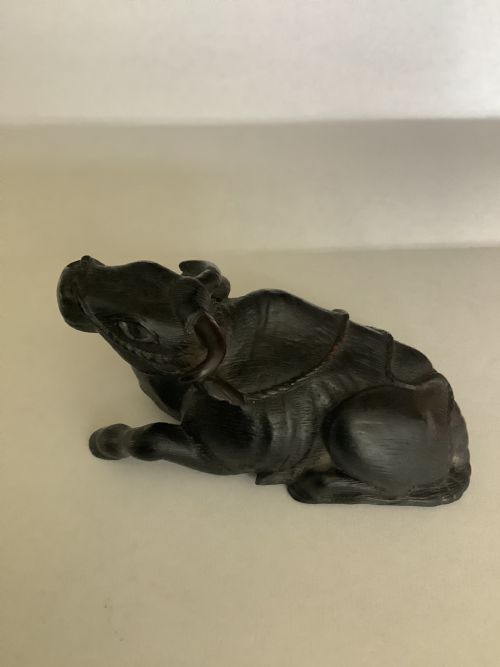
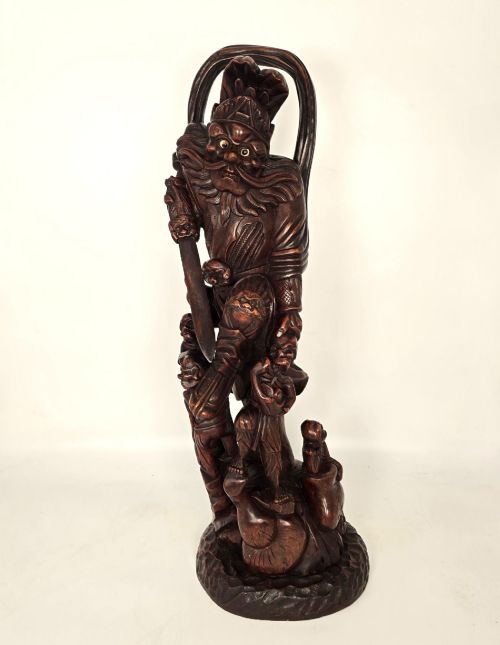
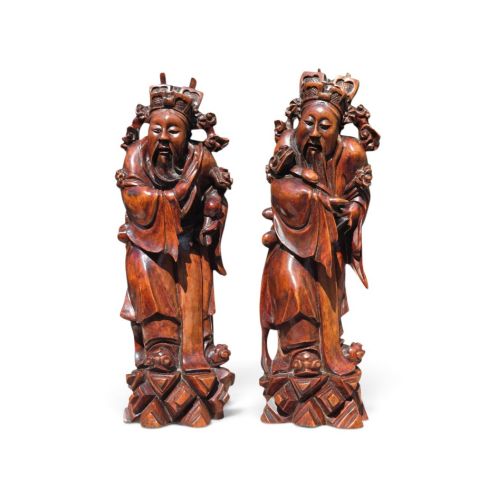
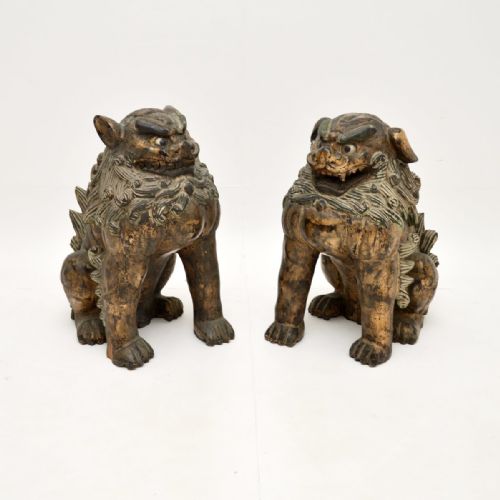
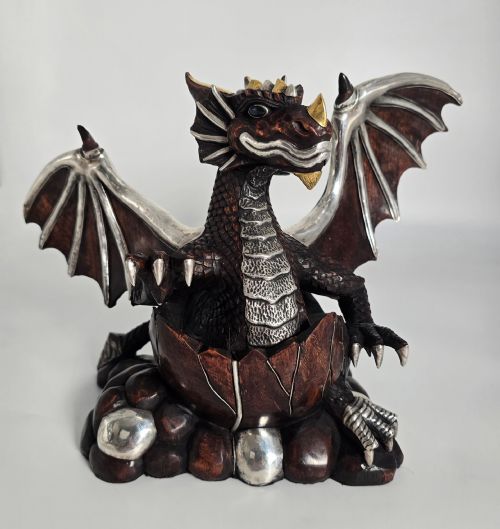
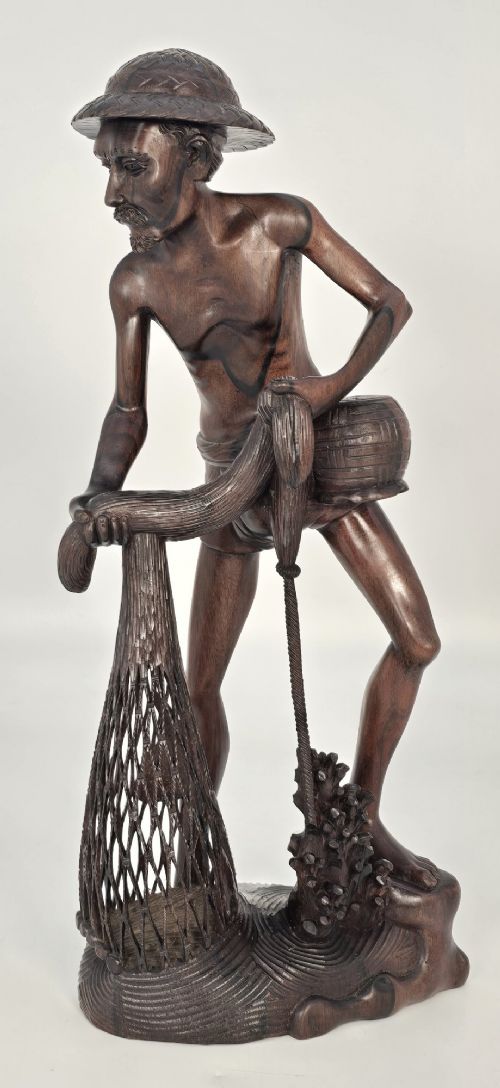
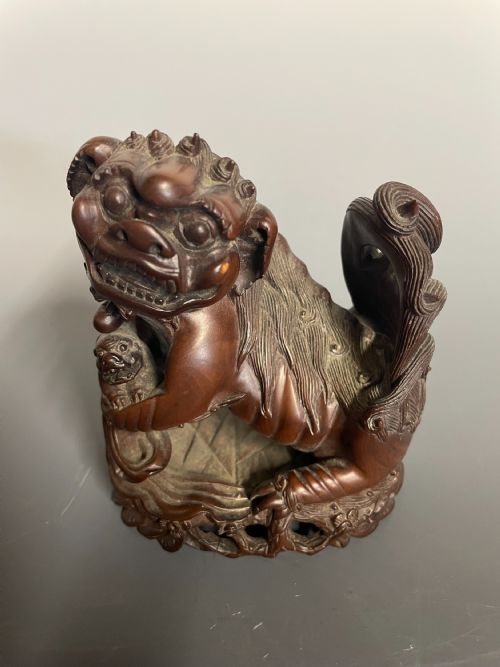
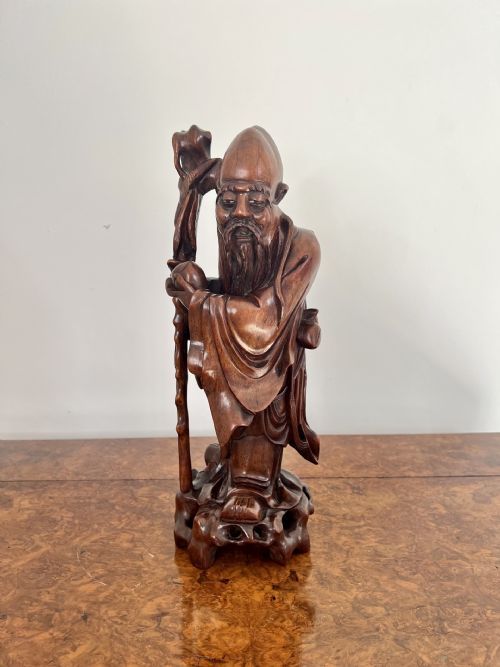
The pieces on this page originate from distinct regional workshops, notably Chinese Qing Dynasty creations, Japanese Edo and Meiji period works, and Burmese carvings. Figures of Daoist immortals, Foo dogs, and temple guardians frequently appear alongside domestic scenes involving fishermen and scholars.
Forms vary from life-sized architectural sculptures to intricate table ornaments fashioned from root wood and boxwood. Giltwood, polychrome paint, and natural hardwood finishes define the physical presence of these historical items.
Materials and Techniques
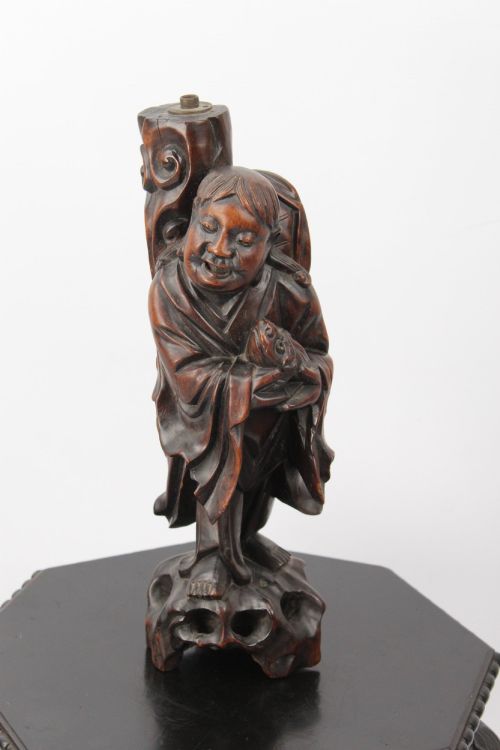
Artisans utilised dense hardwoods, boxwood, and erratic root wood to fashion these sculptures, often selecting materials that allowed for deep undercutting and minute detail. Root wood formations guided the final posture of scholars or mythical animals, matching the natural grain to the subject.
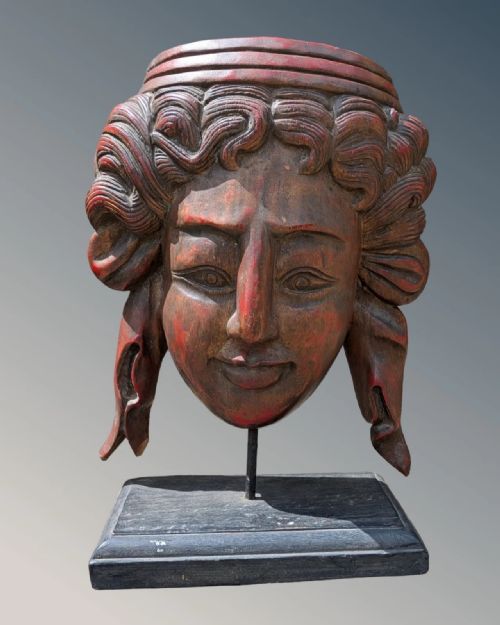
Surface decoration frequently involved layers of gold leaf, lacquer, and polychrome pigments applied over a gesso ground. Master carvers combined high-relief chiselling with delicate incisions, utilising brass mounts or mixed metals for added ornamentation on dragon and guardian figures.
Several scholars and fishermen are coaxed straight out of knotted tree roots, proving that nature sometimes makes half the sculpture.
Defining Quality
Depth of relief and anatomical conviction separate superior examples from standard workshop production. A master carver achieves tension in the posture of a guardian king or fluidity in the robes of a deity through confident, deliberate chisel strokes.
The preservation of original surface treatments, such as gold leaf and polychrome pigments, dictates the historical integrity of the piece. Integrated grain utilisation in root wood sculptures distinguishes inspired artistic decisions from mechanical cutting.
The Asian Wood Carving Sculpture Glossary
- Okimono
- A Japanese freestanding ornamental carving designed for display, typically placed in a domestic alcove. These figures often depict historical personages, folklore characters, or animals.
- Netsuke
- A small Japanese toggle carved from boxwood or hardwood, used to secure a pouch or small container to a traditional kimono sash. They feature an intricate carved design with perforated channels for a cord.
- Foo Dog
- A traditional guardian lion sculpture originating in Chinese art, typically shown guarding sacred spaces or domestic thresholds. Pairs often comprise a male holding a brocade ball and a female restraining a cub.
- Root wood
- A natural timber medium utilising the gnarled underground growth of trees to inspire irregular, organic sculptural forms. Craftsmen incorporate the natural twists and voids into figures of scholars or mythical beasts.
Asian Wood Carving Sculpture: Frequently Asked Questions
What is an okimono?
An okimono is a traditional Japanese decorative carving intended for interior display rather than functional use. These pieces often illustrate figures from daily life, mythology, or folklore with notable attention to detail.
Created primarily during the Meiji period, they showcase the technical mastery of Japanese woodcarvers working in boxwood or mixed hardwoods.
How are Foo dogs used?
Foo dogs function as traditional protective guardians placed at the entrances of temples, palaces, and homes. They ward off malevolent spirits and project authority.
In sculptural pairs, one animal typically guards a symbolic sphere while the other restrains a young cub beneath its paw.
What is root wood carving?
Root wood carving is a discipline where the natural, gnarled growth patterns of tree roots dictate the final form of the sculpture. Artisans work with the existing twists and burls to reveal figures like scholars or mythical beasts.
This method celebrates organic asymmetry and ensures each piece is entirely unique in its silhouette.
How do I identify Chinese temple figures?
Chinese temple figures typically represent Daoist immortals, civil officials, or fierce guardian kings like Lokapala. They frequently exhibit remnants of original polychrome paint and gold leaf over a carved wood base.
Their monumental scale and authoritative postures reflect their original placement within sacred architectural settings.