





Japanese Carved Wood Okimono
These japanese carved wood okimono are sculptural ornaments of figures and animals that bring intricate detail and craftsmanship to a cabinet or desk.
Japanese Carved Wood Okimono
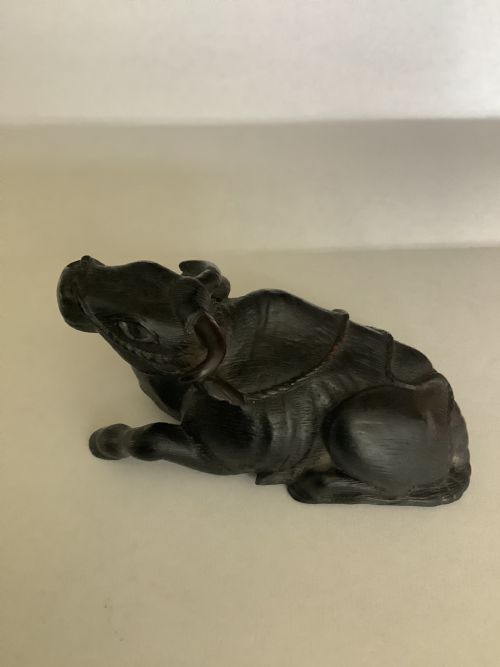
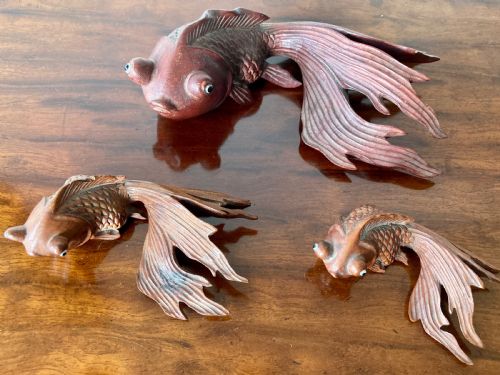
A japanese carved wood okimono is a standalone decorative sculpture, representing figures, deities, and animals drawn from nature and folklore. You will frequently encounter compact animal studies, human figures, and mythological subjects among these items.
The objects span the nineteenth century, including the Meiji and Edo periods, alongside later Edwardian examples. They take forms ranging from small handheld netsuke and paperweights to larger standing figures and sculptural models.
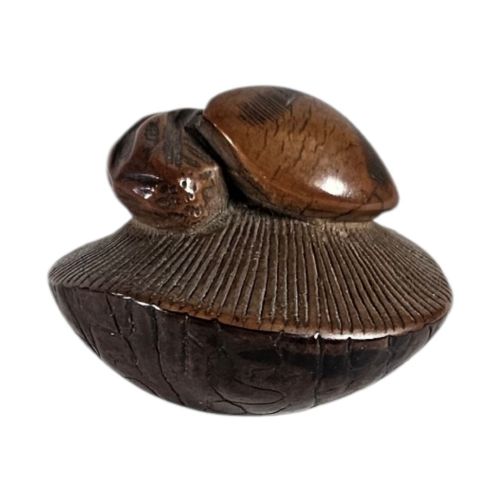
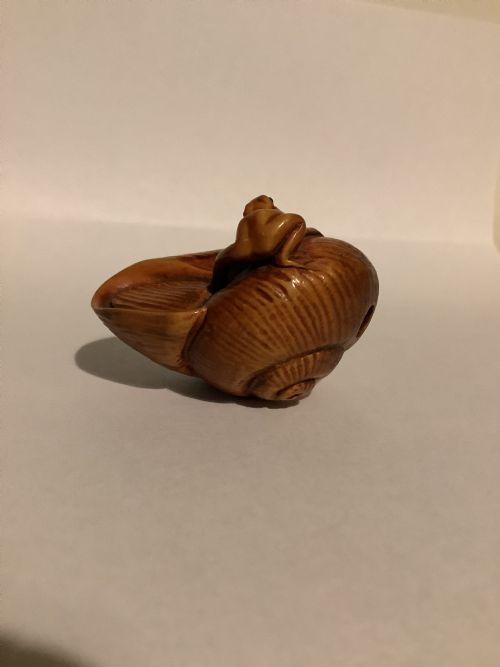
Many of the examples found here originate from Japanese workshops, capturing subjects such as tigers, deities like Fukurokuju and Ebisu, and everyday creatures like snails, rodents, and rabbits.
The spectrum of quality
Quality rests entirely upon the precision of the carving and the sensitivity with which the subject is rendered. Superior examples display life in the posture of an animal or the expression of a face, while lesser pieces remain stiff and lack anatomical conviction.
Depth of relief, the handling of natural textures like fur and shell, and the crispness of signature panels separate workshop pieces of high ambition from standard decorative carvings.
Signatures appear frequently on these pieces, linking them directly to Meiji period workshops.
Tomochika·Gyoko·Nishikawa Suketsugu
The Japanese Carved Wood Okimono Glossary
- Okimono
- A Japanese ornamental display piece designed for placement on a shelf or in a tokonoma alcove. These sculptures are meant purely for viewing rather than fastening clothing.
- Netsuke
- A small carved toggle historically used to secure a pouch or container to a kimono sash. They share materials and motifs with okimono.
- Meiji Period
- The era in Japanese history spanning from eighteen sixty-eight to nineteen twelve, noted for the high standard of craftsmanship exported abroad. Pieces from this time often exhibit remarkable surface detail.
- Boxwood
- A dense, pale wood favoured by carvers for its fine grain and resistance to splitting. It allows for microscopic tool marks.
- Edo Period
- The period preceding the Meiji era, running from seventeen hundred and three to eighteen sixty-eight. Carvings from this time reflect traditional Japanese aesthetic conventions.
Japanese Carved Wood Okimono: Frequently Asked Questions
What is an okimono used for?
An okimono functions as a decorative display object rather than a functional tool or garment accessory. They were placed in interior spaces to be admired for their artistic merit and subject matter.
Collectors typically position them on shelves, desks, or within display cabinets where the fine carving can be appreciated up close.
How do I know if it is Meiji period?
Meiji period pieces often display a heightened realism and intricate surface detailing influenced by international exhibitions and trade during that era. Signatures carved into the base or body also become more common on works from this timeframe.
Material choices like boxwood and hardwood, combined with subject matter such as prowling tigers and mythological figures, align closely with nineteenth-century Japanese production.
Are netsuke different from okimono?
Netsuke were originally made with cord holes to function as toggles for traditional Japanese garments. Okimono are purely decorative sculptures intended for display without functional attachments.
Despite this difference in original purpose, both categories share identical carving techniques, materials, and subject matter.
How should I care for wooden okimono?
Wooden sculptures require stable environmental conditions away from direct sunlight and rapid humidity fluctuations to prevent the timber from splitting. Dusting gently with a soft, dry brush preserves the carved surface without introducing moisture.
Applying oils or polishes is generally unnecessary and can harm the historical finish of antique wood.