


Asian Hall Console Table
An asian hall console table brings character to a passageway, offering a surface grounded in centuries of craftsmanship.
Asian Hall Console Table
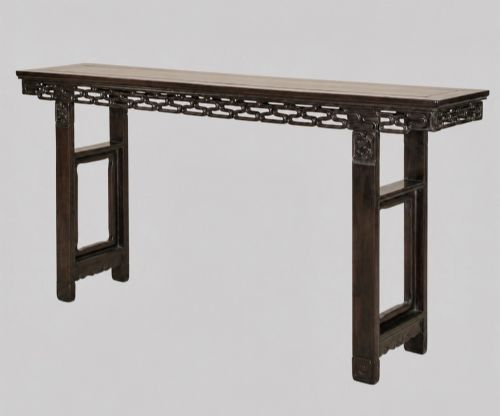
When you search for an asian hall console table, you encounter forms rooted in historical Chinese design, primarily altar tables, side tables, and writing desks. These pieces serve as functional hallway surfaces and sculptural statements, originating from periods spanning the eighteenth century through the early twentieth century.
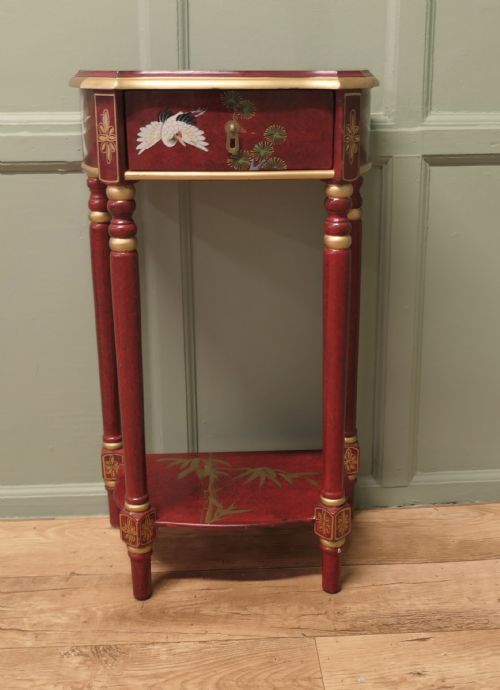
The selection on this page relies heavily on elm and various hardwoods such as hongmu and rosewood, alongside lacquered finishes in red or black. Formats range from provincial elm tables with simple drawer configurations to elaborately carved altar tables and Chinoiserie designs.
How They Were Made
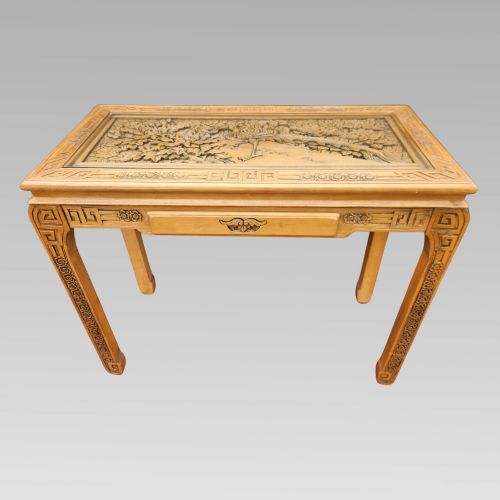
Cabinetmakers utilised dense timbers like elm, hongmu, and camphorwood, constructing frames often designed to accommodate traditional joinery without reliance on metal fasteners. Carved ornamentation, where present, was worked directly into the hardwood or built up under layers of lacquer.
Surface treatments include traditional red and black lacquering, occasionally paired with marble inset tops or brass hardware accents. These finishes protect the timber while providing the deep lustre seen on altar and side tables from the nineteenth century.
Periods represented across the inventory include the eighteenth, nineteenth, and early twentieth centuries.
What Varies in Quality
The distinction between standard examples and finer pieces lies in the selection of timber, such as heavy hongmu versus domestic elm, and the crispness of any hand-carved dragon motifs or structural moulding. Timber stability and the preservation of original red or black lacquer surfaces also dictate the standing of a console or altar table.
Proportion and scale play significant roles, with larger altar tables and matched pairs commanding greater presence in a hallway. The integrity of the original joints and the subtlety of the provincial or dynastic detailing separate routine side tables from exceptional collector pieces.
The Asian Hall Console Table Glossary
- Altar table
- A traditional Chinese table featuring upturned flange ends, originally designed for ritual use but adapted for domestic halls. These pieces typically present a long, narrow surface supported by recessed legs.
- Hongmu
- A translation meaning red wood, used to describe dense, durable tropical hardwoods favoured in Qing dynasty furniture. This heavy material takes a fine polish and supports intricate carving.
- Elm
- A resilient domestic timber utilised widely in Chinese provincial cabinetmaking for its tough grain and flexibility. Elm tables often display simpler lines than their hardwood counterparts.
- Chinoiserie
- European artistic interpretation of Chinese decorative styles, applied to furniture and interiors, particularly during the eighteenth and nineteenth centuries. This style emphasises fanciful landscapes and oriental motifs.
- Demi-lune
- A half-moon shaped table designed to stand flat against a wall, frequently found in pairs within formal entryways.
Asian Hall Console Table: Frequently Asked Questions
Where should an altar table go?
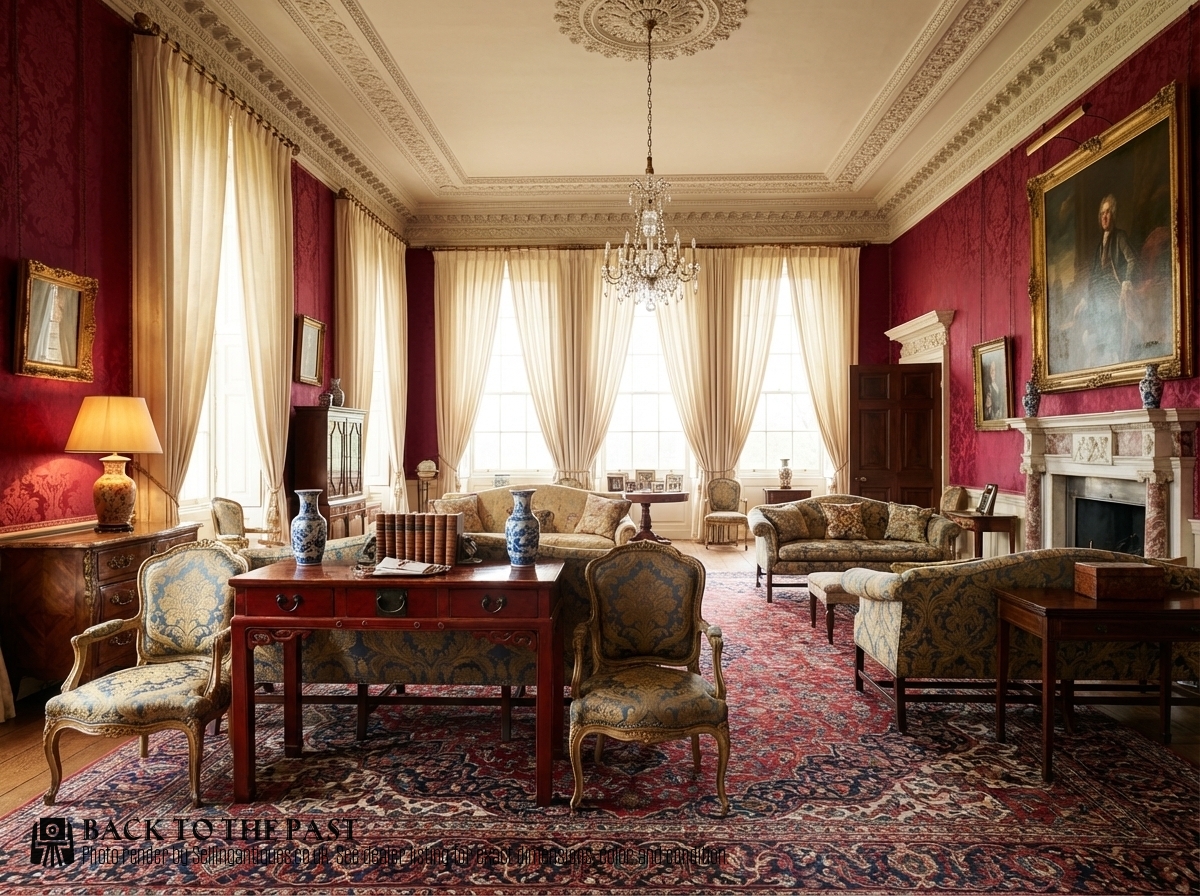
An altar table suits a wide hallway, entrance passage, or living room wall where its narrow depth and decorative ends can be appreciated without blocking foot traffic.
Historically placed against walls for display, these pieces function well today as slim surface areas for lamps, bowls, or decorative objects.
How do I care for lacquer furniture?
Lacquered surfaces require gentle dusting with a soft, dry cloth and protection from direct sunlight and extreme humidity fluctuations to prevent cracking.
Avoid chemical polishes or abrasive cleaners, which can dull the historical sheen of red or black lacquered elm and hardwood.
What is the difference between an altar table and a console?
Altar tables traditionally feature distinctive upturned flanges at the short ends of the top board, a feature derived from ritual architecture.
Standard console and side tables present flat edges, focusing on drawer storage or carved aprons rather than ceremonial flange profiles.
How are periods identified on these tables?
Periods are assessed through timber patination, construction methods, tool marks left by cabinetmakers, and stylistic markers associated with dynasties like the Qing.
Provincial pieces often show simpler construction details, whereas formal pieces from the nineteenth century display deeper carving and denser hardwoods.