


Red Lacquer Sideboard
A red lacquer sideboard brings warmth and deep pigment into a room, offering striking storage grounded in centuries of Asian cabinet-making.
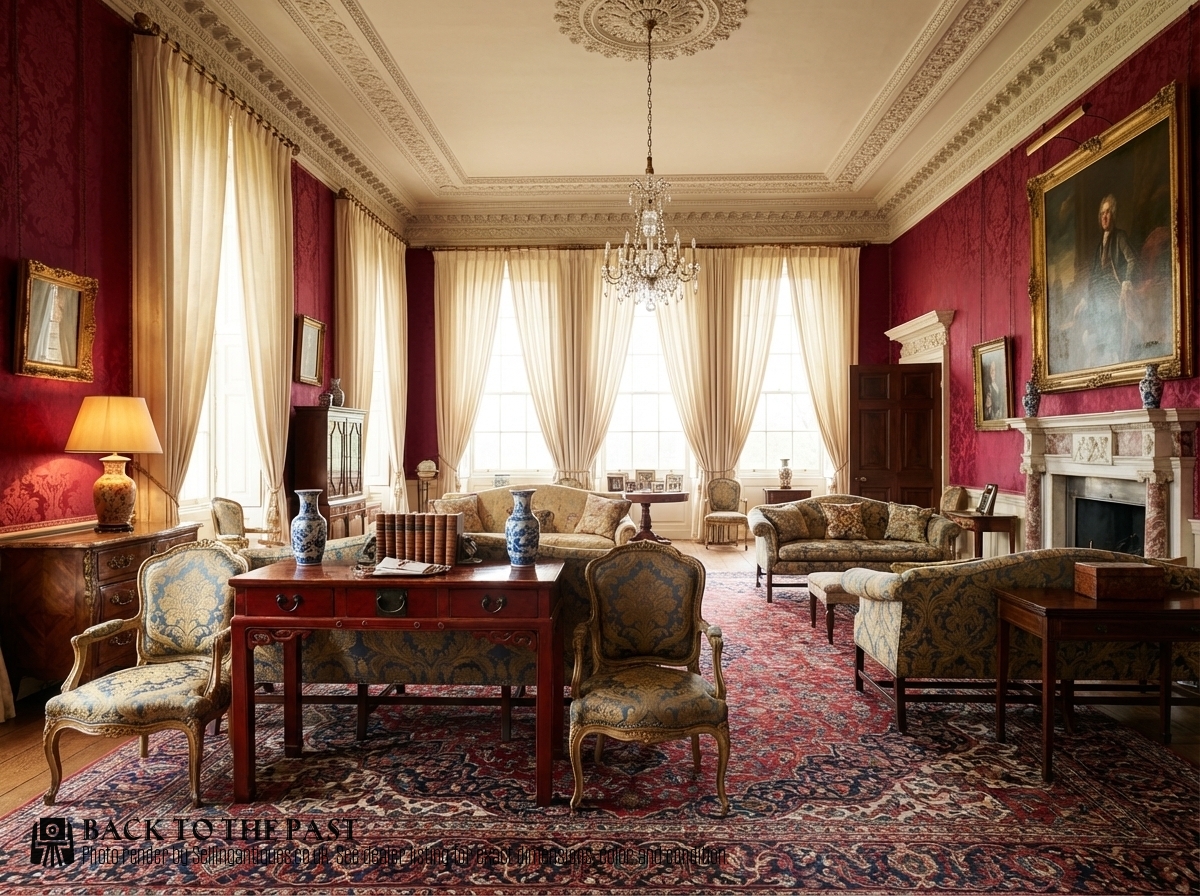
Red Lacquer Sideboard
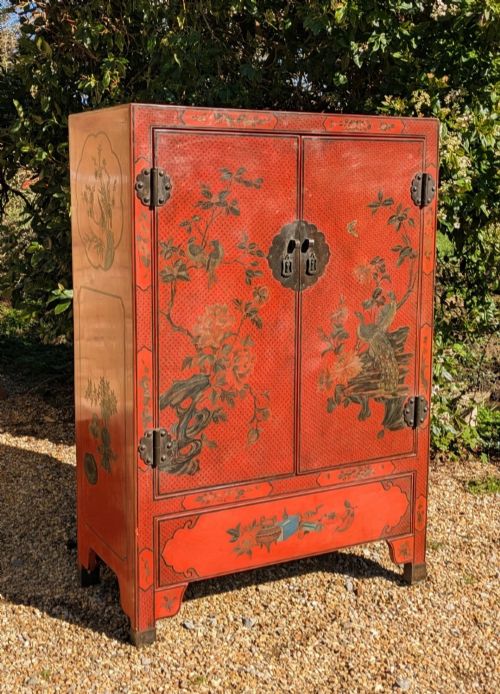
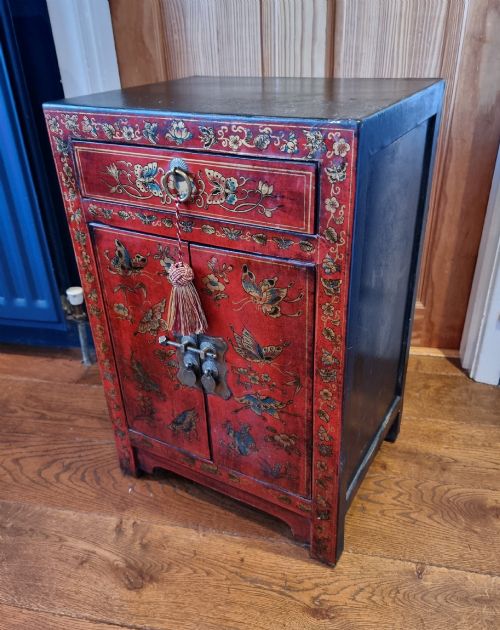
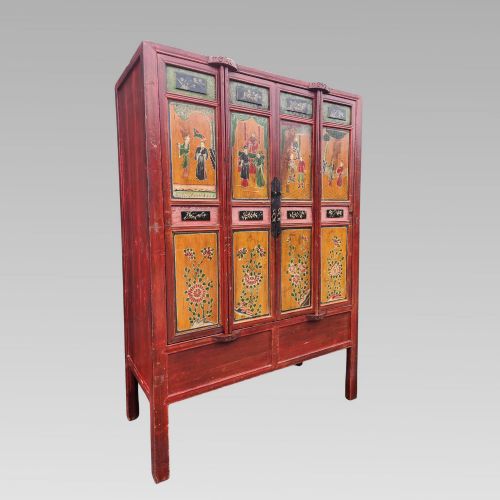
When searching for a red lacquer sideboard, a buyer meets substantial cabinets, console tables, and cupboards originating from China, often dating from the nineteenth and early twentieth centuries. These pieces cross paths with styles such as Qing Dynasty, Chinese Regional, and Chinoiserie, alongside forms like marriage cabinets and altar tables.
The version most commonly encountered on this page is the nineteenth-century Chinese lacquer cabinet or side cabinet, frequently showing traces of age in the surface pigment. Alongside cabinets, console tables and side tables appear under this description, echoing the low profile and broad surface of a sideboard.
Makers and regional workshops in China produced these pieces using native timbers like elm and softwood, finished with layers of lacquer. The resulting furniture ranges from simple provincial storage to heavily carved and gilded statement pieces intended for formal rooms.
Materials and construction
The foundation of these pieces relies on traditional timber framing, utilising woods such as elm and softwood to build sturdy carcases for cabinets and console tables. Master joiners constructed these frames to withstand the application of multiple coats of resin.
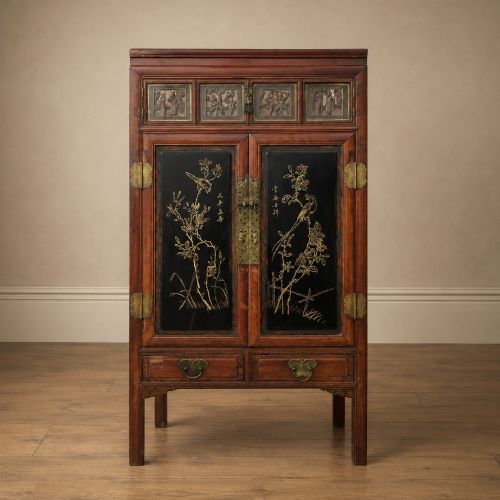
Workers built up the signature finish through the meticulous application of red lacquer over wood, sometimes incorporating gold leaf, black pigments, and intricate carving. Giltwood and brass hardware, such as hinges and mounting plates, complete the construction of the finer examples.
Marriage cabinets were traditionally packed with dowry linens, meaning today's sideboards likely started life as bridal luggage.
Judging the quality
Quality reveals itself in the depth of the red lacquer surface and the crispness of any carved or gilded detailing, distinguishing finely finished export pieces from simpler provincial items. The integrity of the underlying timber frame and the survival of original brass mounts also govern the standing of an individual piece.
The harmony between the form, such as a console table or a marriage cabinet, and the preservation of its original decorative scheme determines its desirability. Pieces retaining rich layers of pigment and authentic regional character sit comfortably above those with compromised surfaces.
The Red Lacquer Sideboard Glossary
- Chinoiserie
- European decorative style reflecting Chinese artistic influences, frequently seen in the painted and lacquered motifs of twentieth-century cabinets. It interprets traditional East Asian scenes for Western interiors.
- Lacquer
- Protective and decorative coating applied in numerous thin layers over wood, derived from natural tree sap. It cures into a hard, glossy surface capable of taking deep red and black pigments.
- Qing Dynasty
- The last imperial dynasty of China, ruling from sixteen forty-four to nineteen twelve. Many cabinets and sideboards on this page date from the later decades of this period.
- Altar table
- Long, narrow table traditionally used in Chinese domestic and ceremonial spaces, often featuring upturned flange ends. They serve as low sideboards in modern settings.
- Giltwood
- Timber that has been coated with a thin layer of gold leaf or gold paint. It frequently highlights the carved details on nineteenth-century cabinets.
Red Lacquer Sideboard: Frequently Asked Questions
How do I use a red lacquer sideboard in a modern room?
A red lacquer sideboard functions effectively as a focal point in a dining room, hallway, or living space, providing substantial surface area and enclosed storage. Its rich pigment contrasts well with neutral walls and contemporary furnishings.
Position the piece against a plain background to let the red finish and any carved or gilded details stand out without visual competition.
What is the difference between a cabinet and a console table?
Cabinets provide enclosed storage behind doors, making them suitable for hiding tableware, books, or media equipment. Console tables and altar tables are open structures with a top surface and legs, intended for display.
Both forms appear under the sideboard description due to their capacity to anchor a wall and hold decorative objects.
How do I date a red lacquer piece?
Dating relies on examining the construction methods of the timber frame, the wear patterns on the lacquer, and the style of the brass hardware. Nineteenth-century pieces often show distinct hand-planed timbers and natural ageing in the pigment.
Twentieth-century examples, including Art Deco and Chinoiserie interpretations, display different execution in the surface finish and structural joints.
How do I care for antique lacquer furniture?
Antique lacquer requires protection from direct sunlight and extreme humidity fluctuations to prevent the surface from drying or cracking. Dust the piece gently with a soft, dry cloth rather than using commercial cleaning sprays.
Maintaining a stable indoor climate ensures the longevity of both the timber carcase and the delicate red finish.