


Asian Display Cupboard
An asian display cupboard brings architectural timber and deep lacquer to a room, offering height and grounded presence.
Asian Display Cupboard
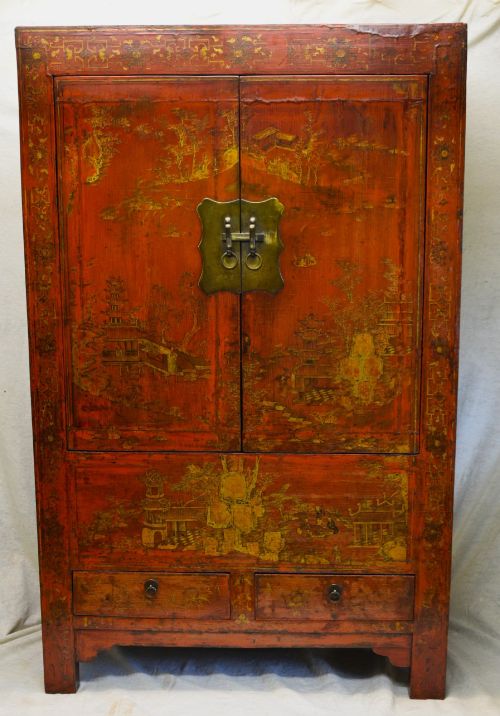
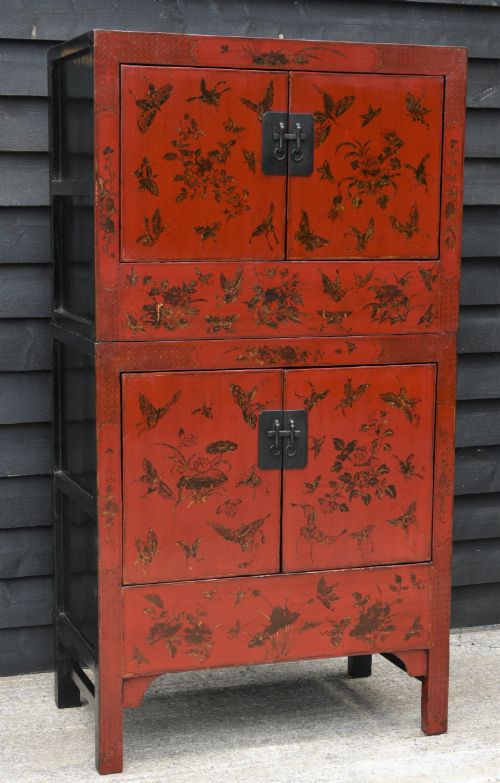
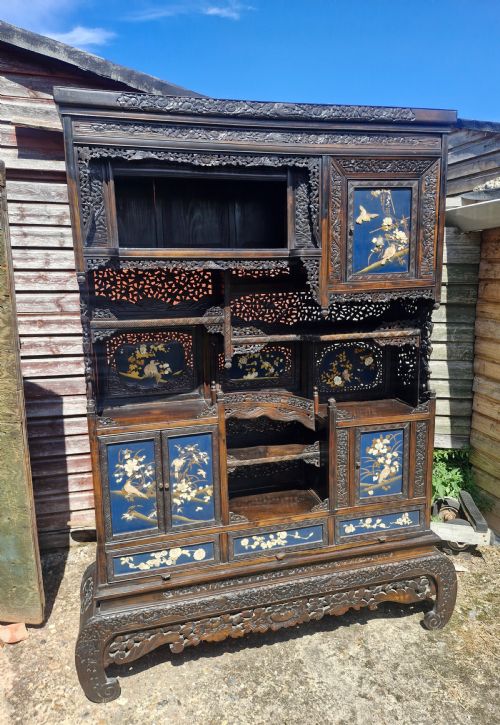
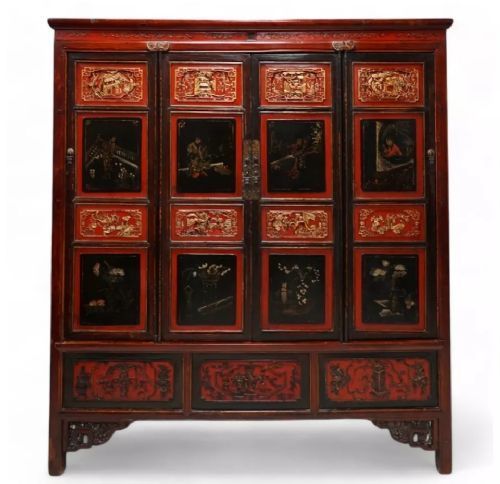
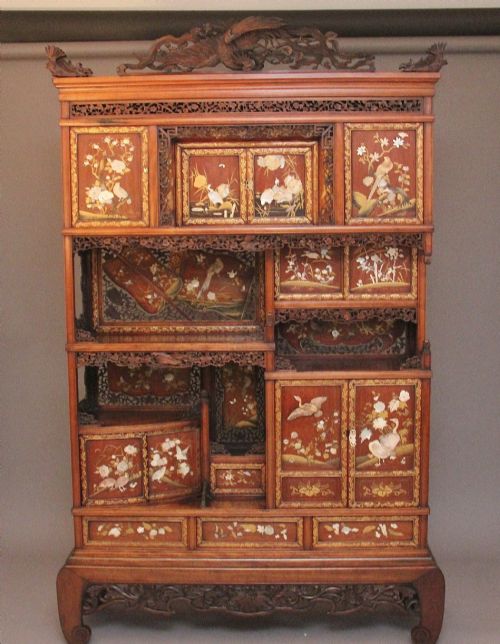
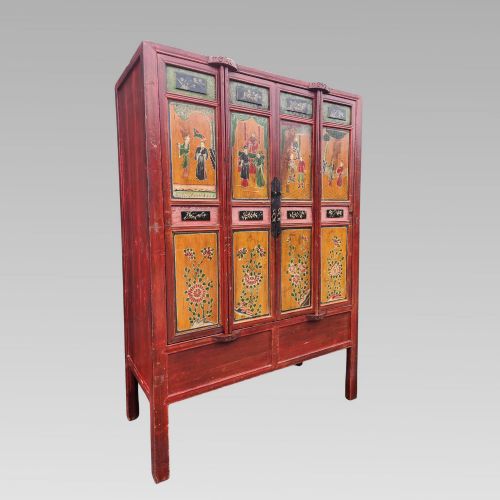
When you search for an asian display cupboard, you encounter substantial storage forms originating from China and Japan. These pieces range from towering marriage cabinets finished in red lacquer to intricate Japanese shodana cabinets designed for showing small objects.
The version most commonly met on this page is the nineteenth-century Chinese lacquered cupboard or the Japanese Meiji period display cabinet on stand. They combine practical timber frames with striking surface decoration intended to anchor a room.
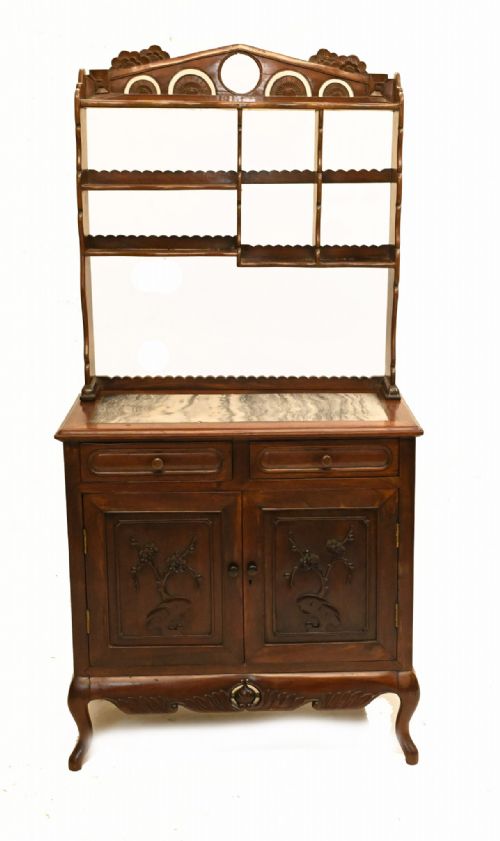
The selection includes specific regional types such as Chinese elm noodle cabinets and compound zitan storage pieces alongside Western-influenced Chinoiserie interpretations. Each piece serves as both functional storage and a distinct focal point.
How they were made
Cabinet makers built these pieces using native timbers including elm, zitan, and general hardwoods selected for structural stability. Joinery relied on traditional framing techniques that allowed solid wood panels to expand and contract without splitting.
Surfaces received elaborate finishes involving layers of lacquer, sometimes applied in red or black and enhanced with carved details. Artisans incorporated decorative elements such as brass hardware, bone inlay, and mother-of-pearl to accent the timber and lacquer work.
Several cupboards are specifically designated as marriage cabinets, built to carry heavy blessings and household goods into a new home.
What varies in quality
The standard of an asian display cupboard depends heavily on the depth of the lacquer finish and the crispness of any carved decoration. Superior examples show meticulous hand-applied layers and precisely fitted hardware that sits flush with the timber.
Construction integrity also dictates worth, particularly in how well joints have survived through the nineteenth and early twentieth centuries. Pieces retaining their original brass mountings and undisturbed surface patinas represent the higher tier of craftsmanship.
The Asian Display Cupboard Glossary
- Shodana
- A traditional Japanese multi-shelved display cabinet designed for exhibiting small treasures and curiosities. These pieces often feature asymmetrical shelving and delicate sliding doors.
- Chinoiserie
- A European artistic style reflecting Chinese aesthetic influences, popular in furniture decoration. It typically employs lacquered finishes and painted motifs of figures, birds, and flowers.
- Zitan
- A dense, heavy Asian hardwood prized for its dark colour and fine grain. It was frequently utilised for high-status furniture during the Qing dynasty.
- Cinnabar
- A bright scarlet mineral pigment used to create deep carved lacquer surfaces. Artisans carved intricate pictorial scenes directly into the thick layers of hardened lacquer.
- Sijiangui
- A traditional Chinese compound wardrobe or cabinet system comprising a large lower section and a matching top box. The name translates to four-piece stacking cupboard.
Asian Display Cupboard: Frequently Asked Questions
How do I style an asian display cupboard?
These tall cabinets work best against plain walls where their colour and carved details can command attention without visual competition. Use the interior shelves to display ceramics or books, letting the timber and lacquer provide a strong architectural backdrop.
Because many examples feature vibrant red or deep black finishes, coordinate them with neutral furnishings to balance the room. Allow adequate clearance around the piece so its height and proportions remain the focal point of the space.
What is the difference between Chinese and Japanese cabinets?
Chinese examples on this page tend to focus on architectural storage, such as large marriage cabinets and noodle cupboards built from elm or hardwood. They emphasise bold brass hardware, blocky proportions, and striking red or black lacquer surfaces.
Japanese pieces from the Meiji or Taisho periods often take the form of shodana cabinets with asymmetrical shelving designed for display. These frequently incorporate delicate carving, ebonised finishes, and intricate joinery suited for smaller ornamental objects.
How do I care for lacquered wood?
Keep lacquered furniture out of direct sunlight to prevent the finish from fading or becoming brittle over time. Maintain a stable room temperature to protect the underlying timber from shrinking or expanding excessively.
Dust the surface gently with a soft, dry cloth rather than using chemical polishes or wet wipes. Protecting the lacquer from sharp impacts ensures the delicate layered finish remains intact for years to come.
How do I date these cabinets?
Dating relies on observing construction methods, timber types, and stylistic markers associated with periods like the Qing dynasty or Meiji era. Nineteenth-century examples often show hand-cut joinery marks and natural wear patterns in the lacquer.
Later pieces from the early twentieth century may incorporate transitional hardware or differing regional construction traits. Comparing the specific brass mountings and surface preparation helps narrow down the era of manufacture.