
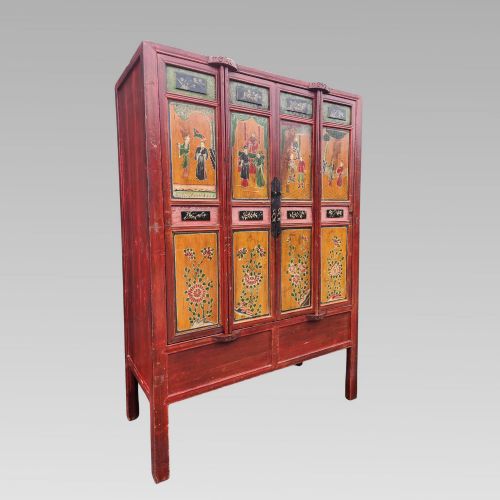


Antique Chinese Wardrobe
An antique chinese wardrobe brings architectural presence and rich surface colour to a room, offering deep enclosed storage through traditional cabinet forms.
Antique Chinese Wardrobe
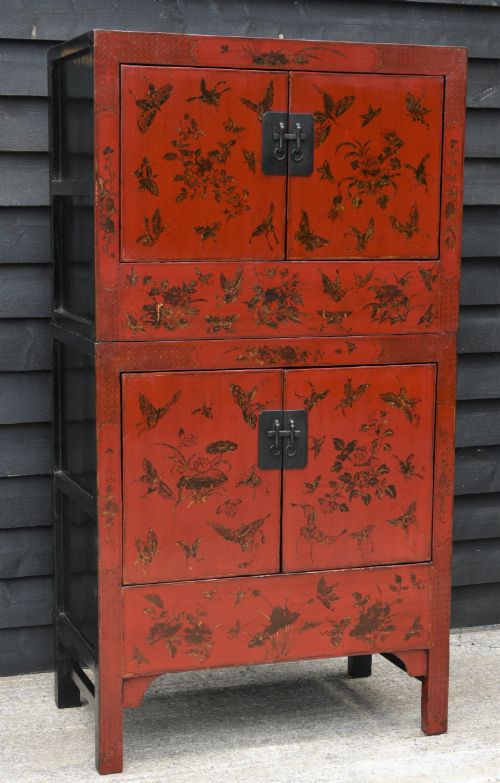
An antique chinese wardrobe encompasses large storage pieces ranging from tall compound cabinets to marriage and wedding cabinets, often built in towering proportions with substantial internal capacity. These items emerge primarily from the nineteenth century and the early nineteen hundreds, reflecting traditional domestic functions across distinct historical periods.
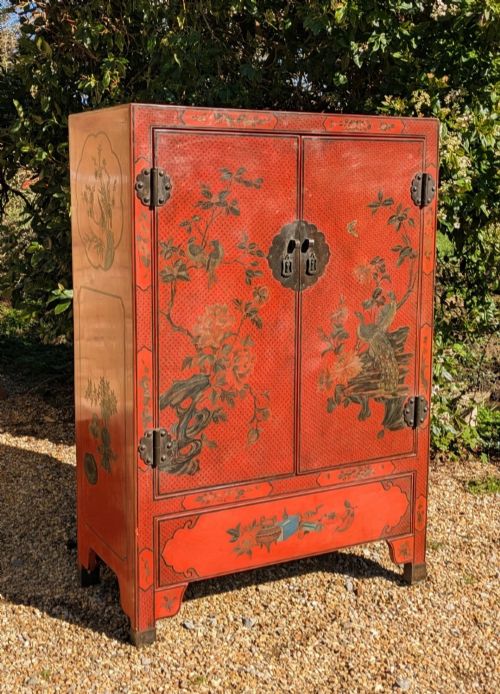
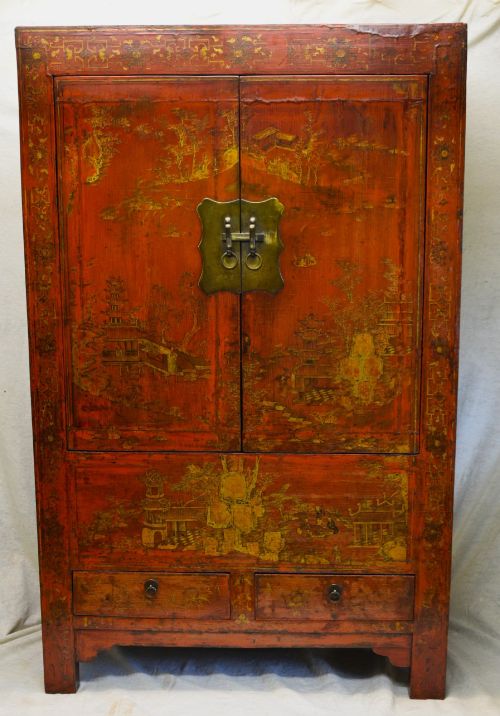
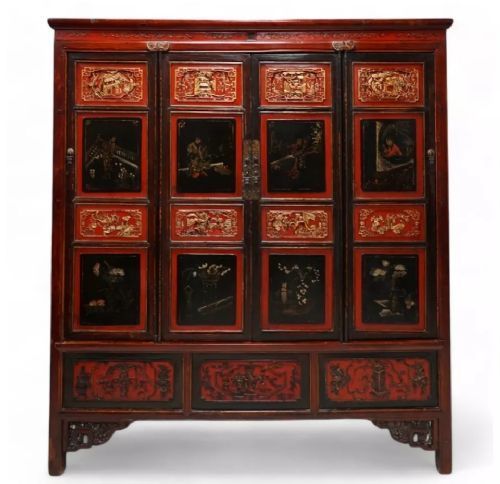
Buyers frequently encounter red lacquered elm or hardwood marriage cabinets featuring distinct brass hardware alongside corner cabinets and compound designs. The selection spans formal Qing Dynasty pieces and export styles, showing how these large storage vessels served elite and mercantile households alike.
Materials and construction
Joinery relies on dense timbers such as elm, teak, camphor wood, and zitan, selected for structural stability and worked into heavy framing members. Carved hardwood elements demonstrate traditional mortise and tenon techniques that allow large panels to expand and contract across seasonal shifts.
Surfaces receive layers of lacquer, sometimes finished with gold leaf highlights or detailed dragon carvings. Brass and iron mountings, including hinges and pin locks, secure the heavy doors while providing functional contrast to dark wood or bright lacquer.
Listings feature items dated from the nineteenth century up to nineteen twenty, incorporating materials like brass, gold leaf, lacquer, iron, and hardwoods.
Judging the work
Execution of carved detail and the depth of lacquer finish distinguish finer examples from simpler utilitarian pieces. Crisp detailing on dragon motifs and balanced proportions in compound cabinets reflect skilled workshop production.
The choice of primary timber dictates structural integrity, with dense hardwoods and well-figured elm holding carved edges more cleanly than softer woods. Original metalwork and intact surface treatments preserve the historical integrity of the piece.
The Antique Chinese Wardrobe Glossary
- Marriage cabinet
- A large storage cupboard traditionally given as part of a bride's dowry. These tall cabinets usually feature two doors opening to internal shelving and hidden compartments.
- Compound cabinet
- A two-part storage system consisting of a smaller upper chest stacked securely onto a larger lower cupboard. This form maximises vertical storage in traditional interiors.
- Lacquer
- A durable natural resin applied in multiple coats to wood surfaces, providing a smooth protective barrier. It often serves as a base for red or black colouration and decorative painting.
- Zitan
- A dense, heavy hardwood prized in traditional furniture making for its dark tone and fine grain. It accepts intricate carving without splintering.
Antique Chinese Wardrobe: Frequently Asked Questions
What is a marriage cabinet?
A marriage cabinet is a traditional tall storage piece built to hold household textiles and garments as part of a dowry. These cabinets often feature bright red lacquer and brass hardware.
Inside, they typically provide removable shelves and hidden floor compartments for securing valuables. Their imposing height makes them a focal point in domestic settings.
How do compound cabinets work?
Compound cabinets consist of two distinct sections, with a smaller storage box stacked directly onto a larger base cupboard. This modular construction helped transport heavy furniture across long distances.
When combined, the stacked units create a towering silhouette with unified vertical panelling. The upper section often mirrors the door arrangement of the lower base.
Which woods were used?
Cabinet makers utilised local and imported timbers including elm, camphor wood, teak, and dense zitan. Elm provides a strong structural frame with distinct grain patterns suitable for clear finishes or lacquer.
Camphor wood offers a fragrant interior that repels insects, making it practical for clothing storage. Hardwoods like zitan allow for sharp, detailed relief carving.
How do I care for lacquer?
Lacquer surfaces require stable indoor humidity and protection from direct sunlight to prevent drying and cracking. Dusting with a soft, dry cloth maintains the sheen without abrasive friction.
Avoid placing these pieces near active heat sources or damp exterior walls. Gentle handling of brass pins and locks preserves the original hardware.